
Listen to this Post
Introduction: A Sudden Collapse in U.S. Aviation History
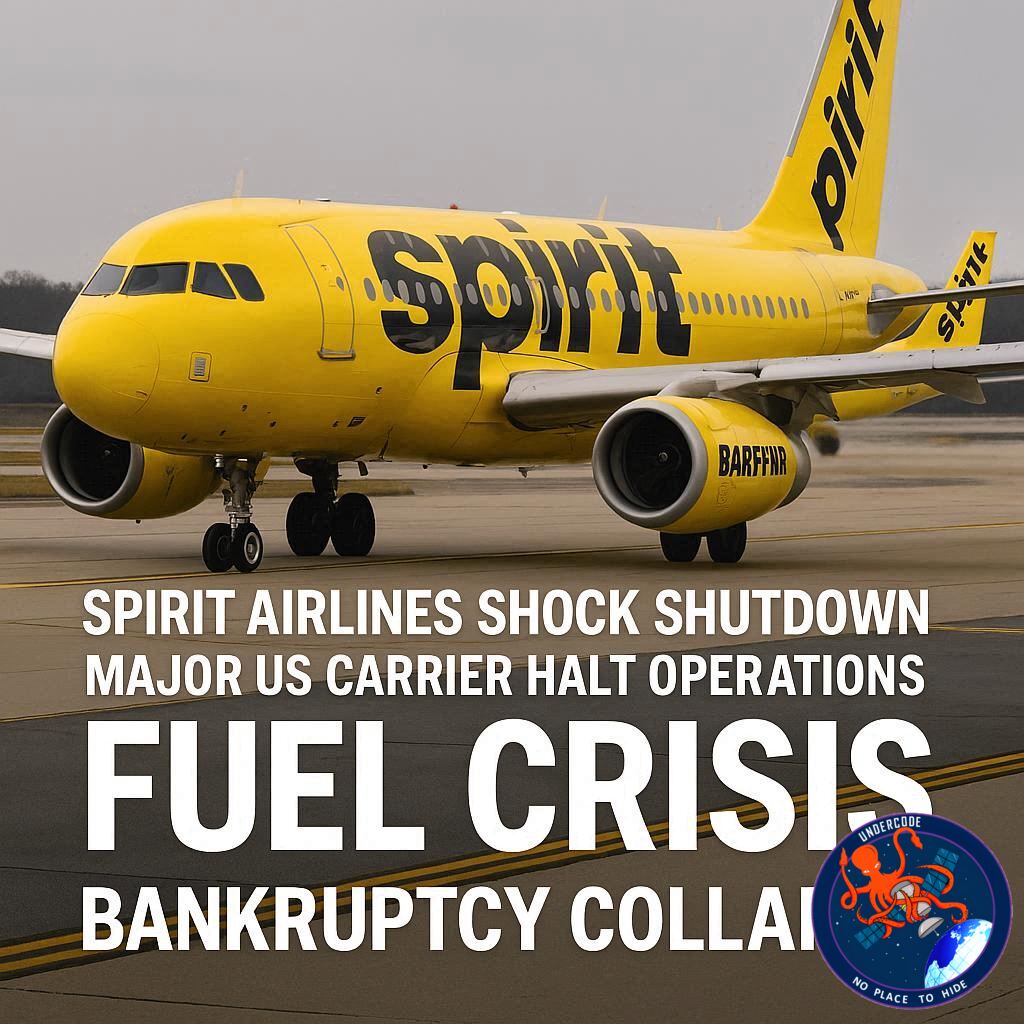
Spirit Airlines is facing one of the most dramatic collapses in modern U.S. aviation history, with operations expected to stop abruptly at 3 a.m. ET on Saturday. The move would mark the first major U.S. airline shutdown in nearly 25 years, sending shockwaves through the travel industry, financial markets, and millions of passengers who rely on low-cost air travel. The decision follows failed emergency negotiations, soaring fuel prices, and an unsuccessful attempt to secure a last-minute government-backed rescue deal.
Full the Situation
Spirit Airlines is reportedly preparing to announce that it will cease all flight operations starting at 3 a.m. ET on Saturday morning.
The decision comes after intense financial pressure pushed the carrier beyond recovery during its second bankruptcy process.
Rising jet fuel prices were the final trigger that broke the airline’s restructuring plans.
The company had been attempting to secure an emergency rescue package with government support.
Negotiations reportedly included discussions with the Trump administration.
However, the proposed deal failed to gain approval from a key group of creditors.
Those creditors strongly opposed terms that would have given the government majority ownership control.
Without agreement, the rescue effort collapsed at the last stage of negotiations.
Millions of passengers holding future Spirit tickets are now left uncertain.
Approximately 17,000 employees are expected to lose their jobs immediately.
The shutdown would eliminate around 9,000 scheduled flights in the coming month alone.
That represents roughly 1.8 million passenger seats affected in a short timeframe.
Travelers are being advised to seek refunds through card issuers or bankruptcy claims.
Passengers already in transit will need to find alternative airlines at higher last-minute fares.
Industry-wide airfare increases are expected as capacity in the U.S. market shrinks.
Spirit’s ultra-low-cost model made it a major disruptor in U.S. aviation pricing.
However, the same low-margin structure made it extremely vulnerable to fuel spikes.
Jet fuel costs have nearly doubled since geopolitical tensions disrupted global supply.
Airlines across the industry have been raising fares and fees to offset costs.
Spirit, heavily dependent on budget travelers, struggled to pass on those increases.
The airline had already filed for bankruptcy twice, most recently in 2025.
A restructuring plan earlier this year briefly raised hopes of recovery.
That plan collapsed after a sudden surge in global oil prices.
The aviation industry has long been volatile due to fuel costs and demand shifts.
Even major carriers operate on thin profit margins despite large revenues.
Spirit’s shutdown would be the most significant U.S. airline failure since 2001.
Industry consolidation means most air traffic is now controlled by four major airlines.
The removal of Spirit’s capacity is expected to tighten supply further.
That reduction will likely push ticket prices higher across the market.
The airline’s collapse marks a rare full shutdown rather than acquisition or merger recovery.
What Undercode Say:
Structural Weakness Hidden Behind the Low-Cost Model
Spirit Airlines’ downfall highlights a fundamental contradiction in ultra-low-cost aviation models.
While the airline successfully disrupted ticket pricing for years, its reliance on minimal margins left no buffer for external shocks.
Rising fuel prices exposed the fragile foundation of its cost structure, where even slight increases in operating expenses became unsustainable.
Fuel Crisis as the Final Catalyst, Not the Root Cause
The sharp increase in jet fuel prices acted as the immediate trigger, but not the sole reason for collapse.
The airline had been financially unstable for years, repeatedly signaling doubts about its long-term viability.
The energy shock simply accelerated an already ongoing decline that restructuring efforts failed to correct.
Failed Negotiations and Governance Conflict
The breakdown in rescue negotiations reflects deeper conflicts between government intervention strategies and creditor protections.
Creditors rejecting state control signals resistance to nationalization-style bailout structures in the airline sector.
This tension ultimately prevented the emergency funding solution from materializing.
Industry Consolidation Pressures Intensify
The disappearance of Spirit reinforces the dominance of major U.S. carriers that already control most domestic routes.
With reduced competition, fare increases are structurally likely, especially in high-demand travel seasons.
This event further accelerates consolidation trends that have been shaping aviation for decades.
Employment and Consumer Shockwaves
The immediate loss of 17,000 jobs underscores how airline collapses extend beyond financial markets into labor instability.
Meanwhile, passengers face direct financial and logistical disruption, particularly those mid-journey or with prepaid tickets.
The consumer burden is amplified by limited low-cost alternatives in the domestic market.
Market Signal of Vulnerability in Discount Airlines
Spirit’s failure sends a warning signal to other budget carriers operating under similar cost-heavy exposure models.
Without fuel hedging or stronger capital reserves, other airlines may face similar systemic risks under global energy volatility.
🔍 Fact Checker Results
Spirit Airlines is reportedly halting operations due to financial collapse and failed restructuring negotiations.
The shutdown follows confirmed industry-wide pressure from rising jet fuel costs and debt restructuring failure.
No official long-term continuation plan or acquisition rescue has been confirmed at this stage.
📊 Prediction
The U.S. airline industry is likely to experience short-term fare increases due to reduced seat capacity and tighter competition.
Remaining low-cost carriers may either raise prices or face similar financial stress if fuel prices remain elevated.
Long-term, this collapse may accelerate consolidation, strengthening dominance of major legacy airlines across domestic routes.
🕵️📝Let’s dive deep and fact‑check.
References:
Reported By: edition.cnn.com
Extra Source Hub (Possible Sources for article):
https://stackoverflow.com
Wikipedia
OpenAi & Undercode AI
Image Source:
Unsplash
Undercode AI DI v2
Bing
🔐JOIN OUR CYBER WORLD [ CVE News • HackMonitor • UndercodeNews ]
📢 Follow UndercodeNews & Stay Tuned:
𝕏 formerly Twitter 🐦 | @ Threads | 🔗 Linkedin | 🦋BlueSky | 🐘Mastodon


