
Listen to this Post
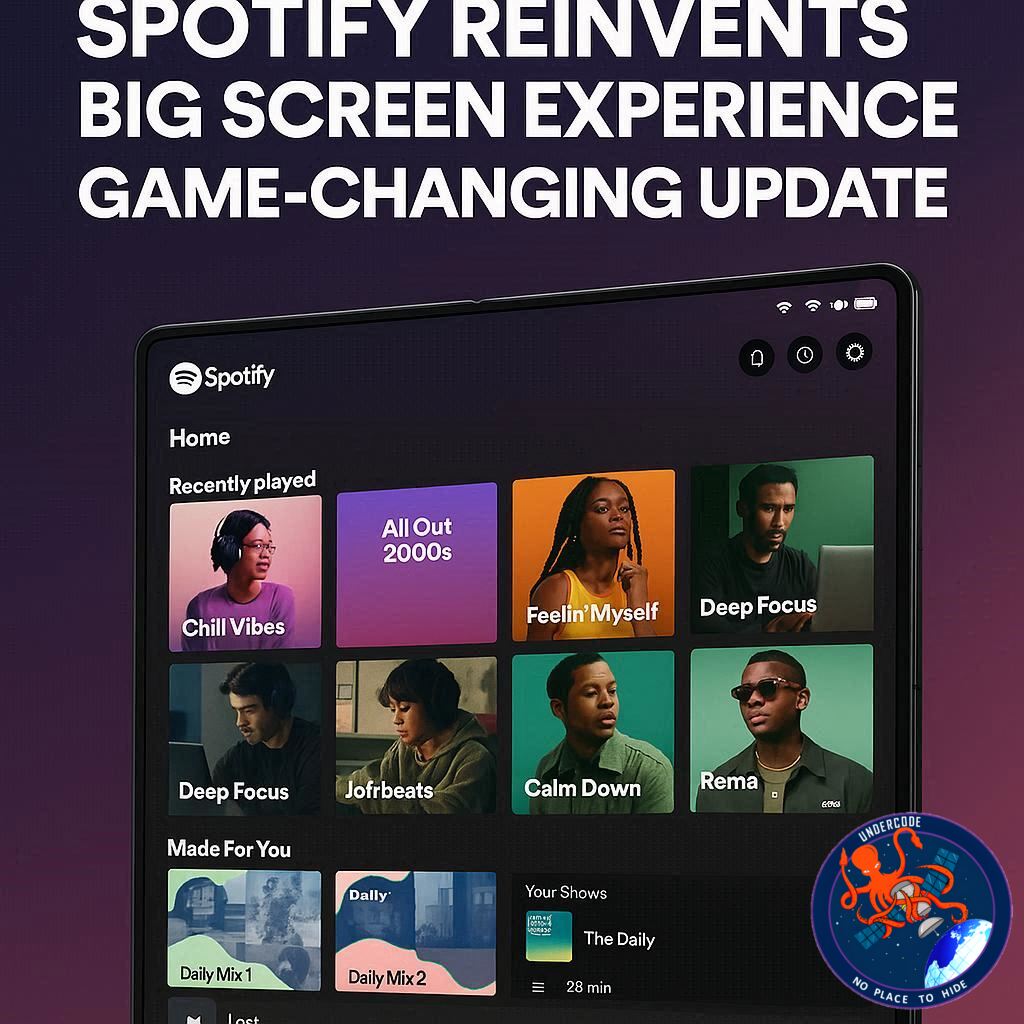
A Fresh Start for Large-Screen Music Streaming
The evolution of mobile technology has outpaced the software designed to support it. While foldable phones and tablets have reached impressive hardware milestones, the app ecosystem has often struggled to keep up. Now, Spotify is stepping in to close that gap with a bold redesign aimed specifically at large-screen devices.
This latest update is not just a visual refresh. It represents a deeper shift in how users interact with music, video, and discovery on devices like the Samsung Galaxy Z Fold and Samsung Galaxy Tab. By embracing the full potential of larger displays, Spotify is attempting to redefine multitasking and media consumption in one seamless experience.
A Smarter Layout Built for Multitasking
At the core of this update is a redesigned interface that finally makes proper use of extra screen space. Instead of forcing users into a single view, Spotify now introduces a dual-pane layout. This allows music playback to run alongside browsing features without compromise.
Users can now explore new tracks, playlists, or artists while keeping playback controls constantly visible. This eliminates the need to switch between screens, a small but significant improvement that enhances usability.
Whether the device is held vertically or horizontally, the interface dynamically adapts. The “Now Playing” section, complete with lyrics and queue, sits comfortably next to an exploration sidebar. For those who prefer focus, either section can be expanded into full-screen mode instantly.
Seamless Transition Between Audio and Video
Spotify is no longer just about music. The platform has been quietly pushing into video content, challenging platforms like YouTube. This update reinforces that ambition.
A newly emphasized “Switch to Video” button makes transitioning between audio and video content effortless. Instead of burying the feature, Spotify brings it front and center, signaling a clear intent to blend listening and viewing into one unified experience.
This move reflects a broader industry trend where users expect multimedia flexibility without friction. Spotify is positioning itself to meet that demand head-on.
Familiar Navigation with a Modern Twist
Despite the changes, Spotify has retained the core navigation elements that users already know. The bottom tab bar still includes Home, Search, Your Library, and Create. This ensures that the learning curve remains minimal.
The redesign feels like a natural extension of the smartphone experience rather than a completely new system. That balance between familiarity and innovation is crucial, especially for users transitioning between devices.
Expanding Beyond Phones and Tablets
The update is rolling out across foldables and tablets, including devices like the Galaxy Z Fold series and Galaxy Tab lineup. It has also made its way to iPads, signaling a broader cross-platform strategy.
But Spotify’s ambitions do not stop there. Reports suggest the company is exploring an app for Android XR-based smart glasses, including upcoming products like the Samsung Galaxy Glasses. If true, this could mark the beginning of a new frontier in immersive audio and visual experiences.
The Bigger Picture of App Evolution
For years, the biggest limitation of foldable devices has not been hardware but software optimization. Apps often treated large screens as stretched versions of smartphones rather than unique environments.
Spotify’s redesign directly addresses this issue. By embracing a layout that encourages multitasking and interaction, it sets a new benchmark for how apps should function on these devices.
What Undercode Say:
The Real Problem Was Never Hardware
The narrative around foldables has been misleading. Many critics blamed the devices themselves for not gaining mainstream traction. In reality, the hardware has been more than capable for years.
The true bottleneck has always been software. Most apps simply scaled up rather than evolved. Spotify’s update is a rare example of a company acknowledging that difference and designing accordingly.
A Strategic Move Toward Ecosystem Dominance
Spotify is not just improving usability. It is making a calculated move to dominate across device categories. By optimizing for tablets, foldables, and potentially XR glasses, the company is building an ecosystem that follows the user everywhere.
This mirrors strategies seen from companies like Apple, but Spotify is doing it within the content layer rather than hardware.
The Silent Push Into Video Territory
The emphasis on video is not accidental. Spotify understands that user attention is shifting toward visual content. Platforms like YouTube have long dominated this space, but Spotify is now positioning itself as a hybrid platform.
If executed well, this could redefine how users consume music, merging passive listening with active watching.
Multitasking as the Future Standard
The dual-pane design is more than a feature. It reflects a broader shift toward multitasking as a default expectation. Users no longer want isolated experiences. They want fluid interaction between discovery and consumption.
Spotify’s update aligns perfectly with this behavioral shift.
The Risk of Overcomplication
However, there is a fine line between innovation and clutter. Adding more features and panels can overwhelm users if not executed carefully.
Spotify appears to have balanced this well so far, but long-term success will depend on maintaining simplicity while expanding functionality.
The XR Opportunity Could Be Massive
The mention of Android XR support is perhaps the most intriguing part of this development. Smart glasses represent the next major computing platform.
If Spotify becomes an early leader in that space, it could secure a significant advantage over competitors. Audio and immersive visuals are a natural fit for XR environments.
A Signal to the Entire Industry
This update is not just about Spotify. It sends a message to the entire app ecosystem. Large-screen devices are no longer niche. They demand dedicated design approaches.
Developers who ignore this shift risk falling behind.
The Beginning of a New App Design Era
What we are seeing here is the early stage of a broader transformation. Apps will increasingly move away from single-screen experiences toward adaptive, multi-pane environments.
Spotify is simply one of the first major platforms to fully commit to this direction.
Fact Checker Results
✅ Spotify has officially rolled out a redesigned app optimized for large-screen devices
✅ Dual-pane multitasking and improved video integration are confirmed features
❌ No official confirmation yet on a full release timeline for XR-based smart glasses support
Prediction
Spotify will continue expanding into video and immersive formats, challenging traditional platforms
Foldable and tablet app design will become a competitive differentiator across the industry
XR integration could position Spotify as a leader in next-generation media consumption 🚀
🕵️📝✔️Let’s dive deep and fact‑check.
References:
Reported By: www.sammobile.com
Extra Source Hub (Possible Sources for article):
https://www.facebook.com
Wikipedia
OpenAi & Undercode AI
Image Source:
Unsplash
Undercode AI DI v2
Bing
🔐JOIN OUR CYBER WORLD [ CVE News • HackMonitor • UndercodeNews ]
📢 Follow UndercodeNews & Stay Tuned:
𝕏 formerly Twitter 🐦 | @ Threads | 🔗 Linkedin | 🦋BlueSky | 🐘Mastodon


