
Listen to this Post
Introduction: A Coastal Takeover for Space Exploration
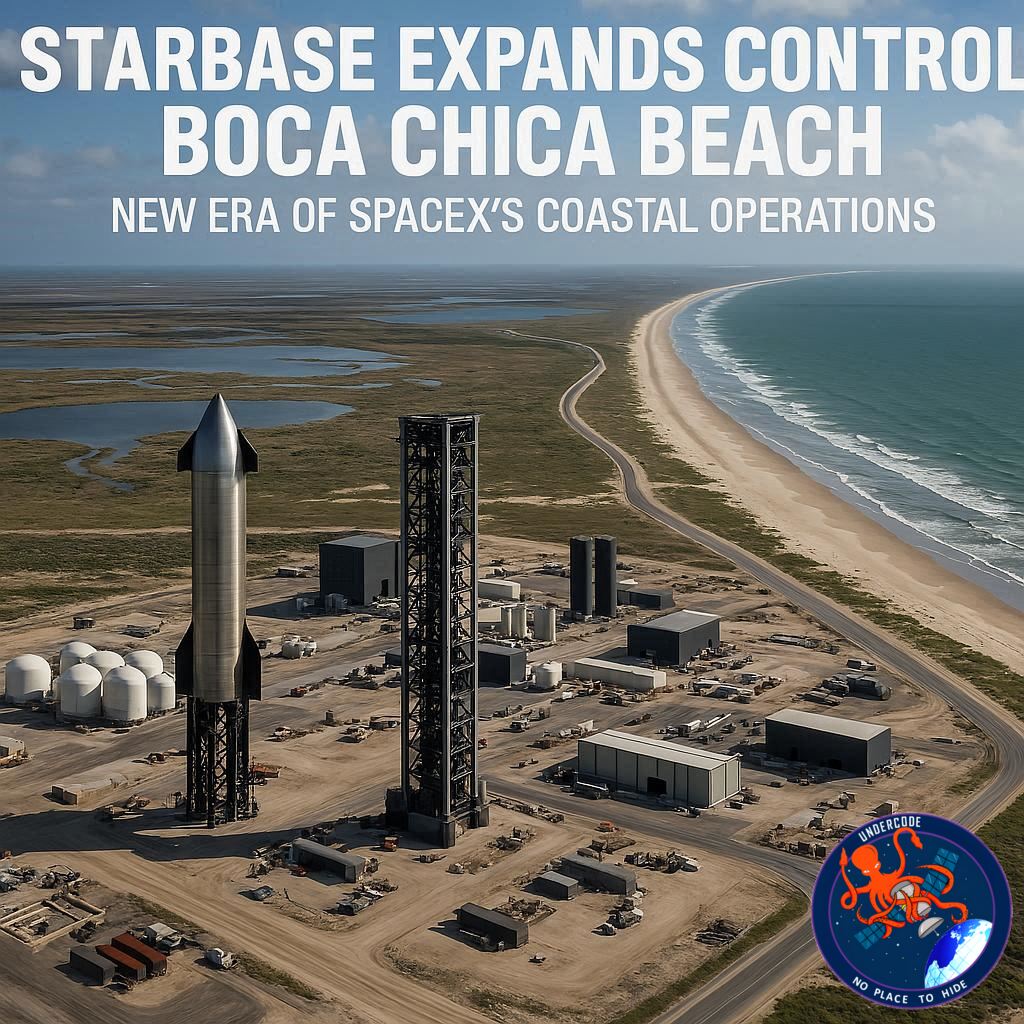
SpaceX’s ambitious footprint in South Texas continues to grow as Starbase, the company town near Boca Chica, takes on expanded control over the surrounding coastline. The recent transfer of authority over a two-mile stretch of Boca Chica Beach from Cameron County to Starbase signals a new phase in the company’s efforts to integrate its space operations with local infrastructure. This move not only underscores Elon Musk’s growing influence in the region but also raises questions about public access, environmental stewardship, and the evolving relationship between private enterprises and government oversight.
Starbase Gains Beach Authority
On September 25, Cameron County commissioners approved an agreement granting Starbase oversight of Boca Chica Beach. The arrangement allows the city to manage beach access and dune protection along approximately two miles of coastline adjacent to SpaceX’s launch site. Previously, these responsibilities rested with county officials, including the county judge, who had the authority to approve road closures and manage public access during SpaceX operations. The transfer of power to Starbase formalizes the company’s growing autonomy in the region, giving it the ability to coordinate closures and logistical needs for rocket launches and testing activities.
Expanded Role in Road and Launch Management
Following the approval, Starbase quickly exercised its authority, issuing a notice for a road closure on October 9. The closure facilitates moving a Starship rocket to its launch pad ahead of the upcoming test flight scheduled for October 13. This test marks the 11th attempt for the Starship, SpaceX’s heavy-lift rocket designed for deep space missions. Once fully operational, SpaceX intends to launch Starship from Boca Chica up to 25 times annually, underscoring the strategic importance of controlling surrounding infrastructure to support its ambitious schedule.
Beach Access Under State Law
Despite taking over local control, Starbase is legally obligated to enforce Texas’ Open Beaches Act. This ensures the public retains access to the beach while Starbase manages construction permitting, dune protection, and other infrastructure projects. Protected dune zones, signage, and barriers will be installed to prevent trespassing, ensuring compliance with state regulations. The arrangement reflects a delicate balancing act between facilitating SpaceX operations and preserving public access to one of Texas’ natural coastal resources.
Balancing Public Access and Private Interests
The transfer of authority highlights the growing tension between private enterprise ambitions and public interests. Critics argue that Starbase’s control could prioritize corporate operations over local recreational use, potentially restricting access to Boca Chica Beach during launches or other activities. Meanwhile, supporters point to economic development opportunities, arguing that SpaceX’s presence boosts local employment and tourism while positioning Texas as a hub for commercial space exploration.
Economic and Strategic Implications
Starbase’s increased control aligns with SpaceX’s broader strategy of vertically integrating operations at its launch site. By overseeing roads, beaches, and coastal infrastructure, the company can optimize logistics, streamline launch preparations, and minimize external regulatory hurdles. This centralization of authority may accelerate testing schedules, reduce delays, and ensure safer handling of Starship rockets, which are among the most complex launch vehicles ever built.
Environmental Considerations
With greater oversight, Starbase also assumes a heightened responsibility for environmental stewardship. Coastal dune systems are fragile ecosystems that protect inland areas from storm surges and provide habitat for wildlife. Proper management of construction, pedestrian traffic, and industrial activity is crucial to prevent ecological degradation. Observers will be watching to see how Starbase balances these environmental obligations with the operational demands of a high-frequency launch facility.
What Undercode Say: Navigating Corporate Governance and Coastal Management
Starbase’s new authority represents a bold experiment in corporate governance over public land. The city’s dual mandate—facilitating SpaceX operations while maintaining public beach access—creates a complex management scenario that few other private entities have ever navigated. On one hand, the company’s control over logistics, closures, and dune protection could result in unprecedented operational efficiency, allowing SpaceX to maximize Starship testing frequency. Centralized decision-making can reduce bureaucratic delays, especially when coordinating large-scale road closures or managing sensitive coastal zones.
However, there are significant risks. Public access could gradually erode if SpaceX prioritizes operational needs over recreation. The Open Beaches Act provides legal safeguards, but enforcement could be complicated when corporate and civic interests converge. Local stakeholders may perceive reduced autonomy, leading to potential political friction between Starbase, Cameron County, and Texas state authorities.
Economically, Starbase’s control may bring increased revenue and job creation to the region, particularly through tourism, service contracts, and space-related industries. This expansion of influence mirrors broader trends in private space companies acquiring quasi-sovereign authority over infrastructure critical to their operations. Such moves are not without controversy, as they blur the lines between private enterprise and public governance.
From a strategic perspective, the agreement positions SpaceX to maintain uninterrupted launch schedules, crucial for maintaining investor confidence and technological momentum. Operational predictability can accelerate Starship development timelines, which are essential for long-term goals such as Mars colonization and interplanetary cargo missions.
Environmentally, Starbase faces a balancing act that will test its credibility as a responsible steward. The impact of high-frequency launches on local ecosystems, noise levels, and dune preservation requires careful monitoring. How the city integrates sustainable practices into its operational model could set a precedent for other private launch facilities worldwide.
Politically, the transfer of authority reflects growing trust from state and county authorities in SpaceX’s management capabilities. It also signals a shift toward more privatized oversight of critical infrastructure, which could inspire similar arrangements elsewhere. This trend raises questions about the future of public land use, the role of corporate interests in governance, and the limits of regulatory oversight in regions dominated by strategic private operations.
Socially, Boca Chica could become a microcosm for observing the interaction between corporate power, public access, and local community interests. If managed successfully, the city could serve as a model for how private companies operate in highly sensitive public spaces without alienating local populations. Conversely, mismanagement could spark legal battles, protests, and long-term reputational risks.
Technologically, Starbase’s centralized management will likely enhance launch efficiency, reduce downtime, and improve data collection from test flights. With control over local infrastructure, SpaceX can streamline logistics, enforce safety protocols more rigorously, and accelerate iterative design improvements for Starship rockets.
Ultimately, Starbase’s expanded authority is a high-stakes experiment in combining corporate ambition with civic responsibility. The outcome will shape the narrative around SpaceX’s long-term viability as a commercial space leader and its approach to coexisting with public interests in highly visible, strategically important locations.
Fact Checker Results
✅ Starbase now controls 2 miles of Boca Chica Beach, confirmed by Cameron County approval.
✅ The city is responsible for enforcing the Open Beaches Act while supporting SpaceX operations.
❌ Claims of unrestricted beach access may be misleading during closures for Starship testing.
Prediction: The Future of Boca Chica and SpaceX Operations
Starbase is likely to continue expanding operational control, potentially extending oversight to nearby roads and facilities. Beach closures for Starship activities may become more frequent, especially as the company ramps up testing toward 25 annual launches. This could enhance SpaceX’s efficiency and global competitiveness while requiring continuous monitoring of public access, environmental impact, and community relations. If successful, Starbase could serve as a blueprint for integrating private space operations into local governance frameworks worldwide.
🕵️📝✔️Let’s dive deep and fact‑check.
References:
Reported By: timesofindia.indiatimes.com
Extra Source Hub:
https://www.reddit.com
Wikipedia
OpenAi & Undercode AI
Image Source:
Unsplash
Undercode AI DI v2
🔐JOIN OUR CYBER WORLD [ CVE News • HackMonitor • UndercodeNews ]
📢 Follow UndercodeNews & Stay Tuned:
𝕏 formerly Twitter 🐦 | @ Threads | 🔗 Linkedin | 🦋BlueSky | 🐘Mastodon


