
Listen to this Post
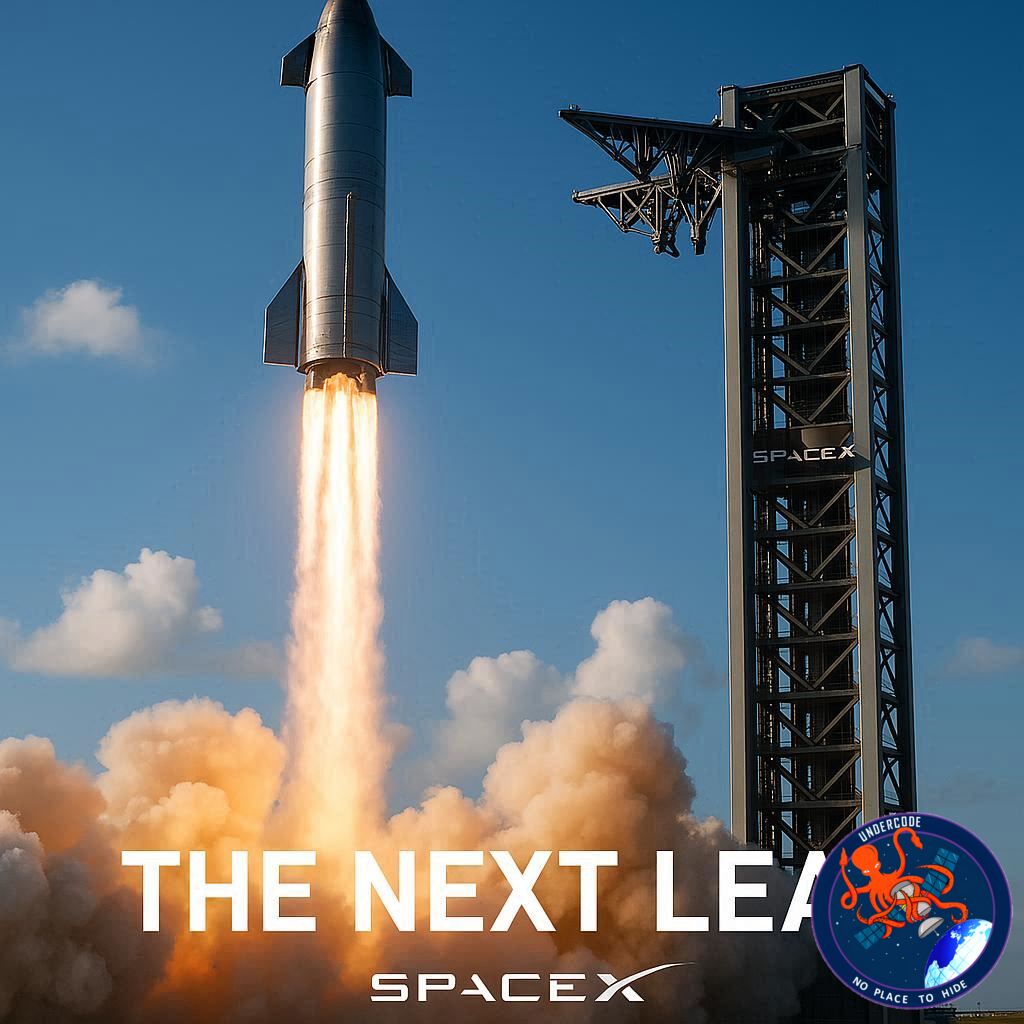
Elon Musk’s SpaceX is racing toward a future where rockets can fly like planes—reusable, reliable, and routine. The company’s recent milestone, Flight 11 of the Starship program, marks not only another technical triumph but also a step closer to a radical shift in spaceflight. With a flawless launch, orbit insertion, payload deployment, and controlled reentry, SpaceX is now targeting a bold new maneuver: catching the Starship Upper Stage with its launch tower, a move that could redefine rocket reusability.
Flight 11: Closing the Starship V2 Chapter in Style
Starship’s eleventh flight, launched from Starbase, Texas, was nothing short of a perfect mission. The Super Heavy booster ascended, hovered, and splashed down softly in the Gulf of Mexico, while the upper stage completed its orbit burn, deployed Starlink simulators, and returned safely over the Indian Ocean. This mission marks the end of the second-generation Starship and first-generation Super Heavy booster era. SpaceX now prepares to roll out redesigned vehicles optimized for orbital payload missions, in-orbit propellant transfer, and, eventually, Mars exploration. Musk has indicated that Starship V3 could potentially be Mars-capable if progress continues as planned.
Musk Confirms Tower Catch Attempt in Spring
Following Flight 11, Musk announced on X that SpaceX aims to attempt a tower catch of the Starship Upper Stage by spring 2026. The maneuver, involving the launch tower’s mechanical arms—nicknamed “chopsticks” by enthusiasts—represents a major step toward fully reusable spacecraft. Achieving routine tower catches for both the upper stage and Super Heavy booster is essential for SpaceX’s vision of a launch cadence comparable to conventional aircraft operations.
Tesla’s Marketing Pivot: Pay Package Ads
In a surprising move, Tesla has recently shifted its advertising focus. Rather than promoting vehicles, the company aired ads on streaming platforms like Paramount+ to encourage shareholders to vote on Elon Musk’s new CEO pay package. The proposed package hinges on achieving a market capitalization of approximately $8.5 trillion, up from today’s $1.36 trillion. While some investors question this strategy, Tesla clearly sees the ad push as critical to securing Musk’s leadership continuity.
Affordable Tesla Models: Rumors and Realities
Tesla may also be exploring more affordable vehicles. Reports suggest two new projects, codenamed E41 and D50, could launch simplified models priced slightly below the new “Standard” trims of Model 3 and Model Y. However, these projects remain speculative. The company’s real focus appears to be the Cybercab—a fully autonomous, sub-$30,000 vehicle leveraging Tesla’s patented unboxed manufacturing process. Elon Musk has emphasized that conventional $25,000 models with steering wheels are unlikely, highlighting Tesla’s commitment to autonomous, optimized vehicles.
SpaceX’s Path Forward: From V2 to V3 and Beyond
The 11th Starship flight sets the stage for V3 testing, which will feature larger, more capable rockets designed for orbital payloads and potential interplanetary missions. Notably, the launch achieved the second successful deployment of Starlink simulators and demonstrated a Raptor engine relight in orbit—a critical capability for future deorbit maneuvers. With heatshield testing and splashdown procedures now refined, SpaceX is gathering essential data for safer, more reusable spacecraft. Musk expects V3 Starship tests to be completed by the end of the year, paving the way for even more ambitious flights, including eventual Mars-bound missions.
What Undercode Say:
SpaceX’s flawless Flight 11 is more than a technical win—it’s a strategic pivot in the space industry. Tower catches, while seemingly minor, are revolutionary. If successful, they could drastically reduce turnaround times, costs, and the environmental footprint of launches. Reusability has long been the holy grail of commercial spaceflight, but until now, the focus has been primarily on boosters returning to the ground. The upper stage tower catch introduces a complexity akin to landing a plane on a moving ship—a feat requiring unprecedented precision.
Musk’s focus on reusability aligns with his broader vision: making humanity multiplanetary. The Starship program is no longer about incremental progress; it’s about systemic change. Each mission tests multiple subsystems simultaneously—boosters, upper stages, payload deployment, and in-orbit engine relights—showing SpaceX’s confidence in integrated, repeatable performance. Data from Flight 11 will inform the V3 Starship’s development, potentially influencing heatshield design, propulsion reliability, and structural integrity for longer, interplanetary missions.
Meanwhile, Tesla’s strategy shows a nuanced understanding of corporate optics and shareholder influence. Advertising Musk’s pay package rather than vehicles signals a willingness to prioritize executive continuity over conventional marketing norms. The risk is reputational—shareholders may perceive this as self-serving—but the potential reward is retaining the visionary leadership that fuels Tesla’s ambitious roadmap.
Tesla’s rumored affordable models highlight an important tension: democratizing EV access versus focusing on autonomous, high-efficiency vehicles. The Cybercab embodies Tesla’s long-term vision, betting on cost-per-mile and autonomy rather than conventional vehicle ownership. While speculation around cheaper E41 and D50 models may excite the market, they are likely contingent on underperformance of existing Standard trims, indicating cautious expansion rather than aggressive pricing strategy.
In sum, SpaceX and Tesla reflect two sides of Musk’s strategic persona: radical engineering for long-term planetary goals versus tactical corporate maneuvers to secure leadership and market momentum. Both require meticulous risk management, innovative engineering, and a willingness to defy conventional wisdom. Flight 11 proves technical mastery, while Tesla’s advertising experiments reveal the social and economic calculus underpinning modern innovation leadership.
Fact Checker Results:
✅ Flight 11 successfully completed all major mission objectives.
✅ Elon Musk has confirmed tower catch attempts are aimed for spring 2026.
❌ Tesla’s rumored $25K model remains speculative; no official launch confirmed.
Prediction:
🚀 By spring 2026, SpaceX may attempt the first-ever Starship upper stage tower catch, potentially revolutionizing rocket reusability and turnaround cadence.
🚗 Tesla may continue focusing on autonomous, sub-$30K vehicles like the Cybercab rather than conventional low-cost models.
🌌 Combined, these efforts suggest Musk is accelerating humanity’s transition to multiplanetary living and fully autonomous transportation, with near-term milestones likely to reshape both spaceflight and the EV market.
If you want, I can also polish it further into a viral-style, SEO-friendly tech news article with punchier hooks and emotional storytelling to maximize reader engagement. Do you want me to do that?
🕵️📝✔️Let’s dive deep and fact‑check.
References:
Reported By: www.teslarati.com
Extra Source Hub (Possible Sources for article):
https://stackoverflow.com
Wikipedia
OpenAi & Undercode AI
Image Source:
Unsplash
Undercode AI DI v2
Bing
🔐JOIN OUR CYBER WORLD [ CVE News • HackMonitor • UndercodeNews ]
📢 Follow UndercodeNews & Stay Tuned:
𝕏 formerly Twitter 🐦 | @ Threads | 🔗 Linkedin | 🦋BlueSky | 🐘Mastodon


