
Listen to this Post
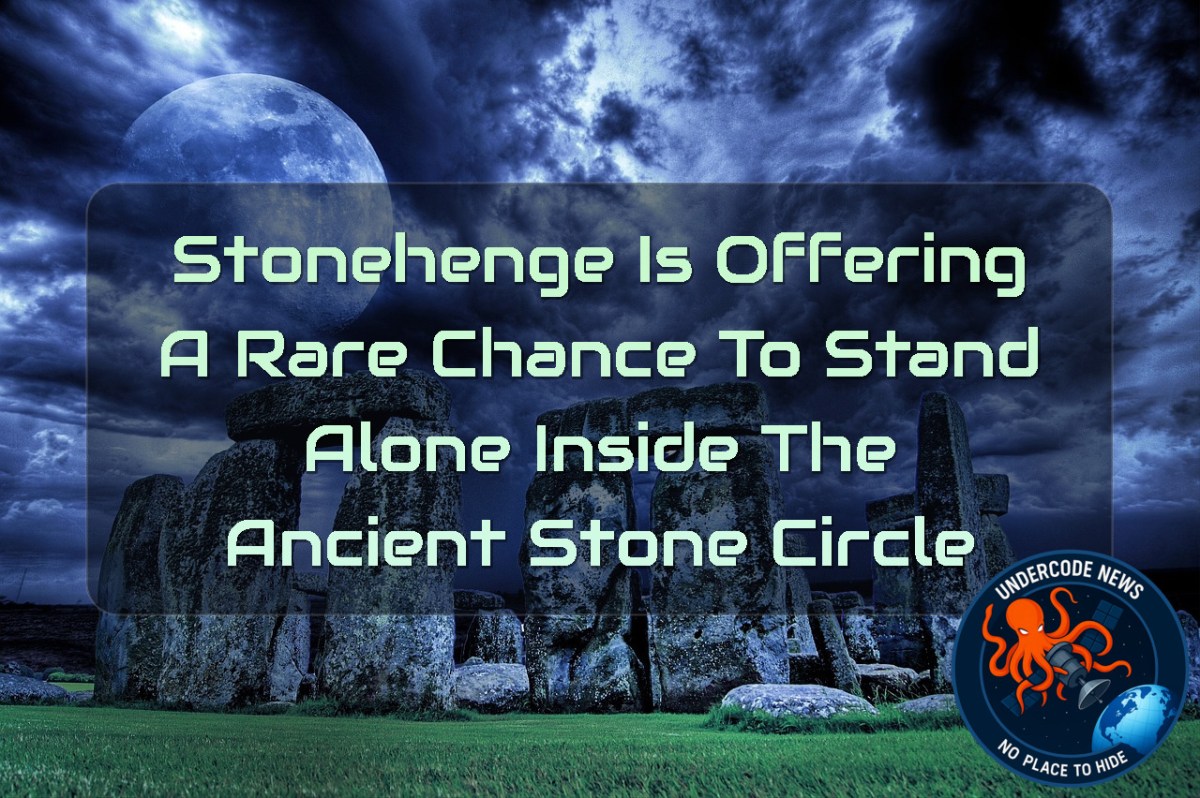
A Once-in-a-Lifetime Morning at Stonehenge
For most people, visiting Stonehenge means arriving alongside hundreds of other curious travelers, walking designated paths, listening to an audio guide, and trying to capture a photograph without a crowd appearing in the background. This August, however, a small number of visitors could experience something dramatically different: the silence of Stonehenge with almost no one else around.
English Heritage is offering visitors the chance to win exclusive early-morning access to the famous stone circle. According to the announcement described in the original report, one visitor each day during August will have the opportunity to enter the monument before normal opening hours and spend 20 minutes inside the ancient circle with their group.
It is difficult to overstate how unusual that would be.
Stonehenge is not simply another historic attraction. It is one of the world’s most recognizable prehistoric monuments and forms part of the Stonehenge, Avebury and Associated Sites UNESCO World Heritage landscape. English Heritage says construction at the site began roughly 5,000 years ago, while the famous stone circle itself dates to around 2500 BC.
For someone standing among those stones before the gates open, the experience could feel less like visiting a tourist attraction and more like stepping temporarily outside modern life.
Twenty Minutes Before the World Arrives
The reported prize gives winners access between approximately 9:10am and 9:30am, before ordinary visitors enter the site.
Twenty minutes might sound short. At Stonehenge, however, twenty minutes of genuine solitude could feel remarkably long.
There would be no large tour groups moving around the monument, no constant stream of visitors stopping to take photographs, and no need to compete with dozens of people for the perfect view.
Instead, winners would be able to look closely at the stones, take photographs and videos, and absorb the atmosphere of the site without the usual distractions.
A member of the Stonehenge team would still accompany the winning visitor and their party, providing information and answering questions about the monument, its history and its conservation.
That detail is important because the experience is not intended to turn Stonehenge into an unsupervised playground. The monument is an extraordinarily fragile archaeological site, and allowing visitors close to the stones requires careful management.
A Monument Built Thousands of Years Ago
The emotional power of this competition comes partly from the enormous distance between the visitor and the people who created Stonehenge.
English Heritage says the first monument at Stonehenge was constructed about 5,000 years ago, with the distinctive stone circle developing much later, around 2500 BC. The site was created in stages and remained important for generations.
The builders left no written explanation telling modern people exactly why Stonehenge was created.
That mystery remains one of its greatest attractions.
Archaeologists have developed numerous theories about the
Standing inside the circle without a crowd could therefore make the mystery feel even more immediate.
The Stones Have Seen More Than We Can Imagine
Every modern visitor arrives at Stonehenge carrying a phone, a camera and a lifetime of knowledge about the monument.
The people who built it had none of those things.
They worked with stone, wood and other basic technologies, yet somehow created a monument whose largest stones weigh many tonnes and whose construction required extraordinary organization.
Some of the
That distance makes the monument even more extraordinary.
Imagine living thousands of years ago and deciding that enormous stones needed to be transported across a landscape over a distance comparable to a modern cross-country journey.
Then imagine organizing enough people to move them, shape them and position them with such precision that the structure would remain recognizable thousands of years later.
That is the human story hidden inside the stones.
Why Silence Changes the Experience
Tourism has a strange effect on historic places.
The more famous a monument becomes, the harder it can be to experience it as an actual place rather than as an image already seen thousands of times online.
Stonehenge is an extreme example.
Millions of people recognize its silhouette. They have seen photographs of the stones against sunrise, sunset, mist, blue skies and dramatic clouds.
But photographs cannot reproduce the feeling of standing beside the stones.
They cannot communicate their scale.
They cannot recreate the texture of weathered surfaces.
And they certainly cannot reproduce the experience of hearing almost nothing while standing inside a structure that predates many of the world’s most famous civilizations.
That is why the promise of solitude is so powerful.
A Rare Privilege at One of
The original report describes completely private access inside Stonehenge as something historically associated with heads of state, celebrities and premium private experiences.
The new competition would make a similarly unusual experience available through a much more accessible route: booking a normal Stonehenge ticket and entering the daily draw.
English Heritage already offers a dedicated Stone Circle Experience for visitors who want to go inside the stones. Its official Stonehenge site describes that experience as an opportunity to go inside the circle rather than simply viewing it from the regular visitor route.
The reported August competition therefore stands out because it combines access with something even more difficult to obtain at a major tourist attraction: privacy.
How Visitors Can Enter
According to the original announcement, anyone who books a Stonehenge ticket through the English Heritage website at least 72 hours before their August visit will automatically be entered into the daily prize draw.
The key point is that the opportunity is connected to an existing visit rather than requiring visitors to purchase a separate premium experience.
However, travelers should always check the current official English Heritage booking information and the applicable competition terms before making plans, because promotional conditions can change.
English Heritage currently lists Stonehenge as open daily during the summer period, with regular opening hours running from 9:30am to 6pm through September 6, 2026.
The Prize Is More Than a Photograph
A private Stonehenge visit would obviously be an extraordinary opportunity for photography.
For many travelers, the ability to photograph the monument without crowds would be a major attraction.
But reducing the experience to social-media content would miss the more interesting point.
The real prize is time.
Time to look.
Time to listen.
Time to notice details that might otherwise be overlooked.
Time to stand beneath the massive stones without feeling that another group is waiting behind you.
Time to ask questions and actually hear the answers.
In a world where many famous attractions are designed around constant movement, that kind of uninterrupted attention has become surprisingly rare.
The Breakfast Adds a Human Touch
The winning group is also reportedly set to receive a complimentary breakfast roll and a hot drink.
It is a small addition compared with the historical significance of the experience, but it makes the event feel more like a carefully designed morning than a simple competition prize.
After entering a prehistoric monument before opening time, having breakfast and a hot drink afterward would provide a fitting transition back into the modern world.
One moment, the visitor would be standing among stones placed there thousands of years ago.
The next, they would be holding a warm drink and preparing to join the ordinary flow of tourists.
Stonehenge Remains a Major Tourist Attraction
Stonehenge attracts enormous numbers of visitors, which explains why solitude inside the circle is so difficult to achieve.
English Heritage has previously described Stonehenge as attracting more than 1.3 million visitors annually, making it one of its most visited sites.
The scale of that popularity creates a fascinating contradiction.
People visit Stonehenge because they want to experience something ancient and extraordinary.
But the sheer number of people who want the same experience can make the site feel unmistakably modern.
Queues, cameras, headphones, tour groups and conversations become part of the landscape.
The August initiative temporarily reverses that equation.
The Difference Between Seeing and Experiencing
There is a fundamental difference between seeing Stonehenge and experiencing Stonehenge.
A standard visit can still be unforgettable. Visitors can explore the exhibition, learn about the archaeological landscape, visit the Neolithic houses and see the monument from the surrounding paths. English Heritage currently promotes all of these elements as part of the Stonehenge experience.
But proximity changes perception.
When people are allowed closer to an ancient structure, they become more aware of its physical reality.
The stones stop looking like a symbol on a postcard and start looking like enormous objects shaped, transported and positioned by human beings thousands of years ago.
That realization is difficult to communicate through a photograph.
What Makes the Morning Access So Emotional
The timing may be the most beautiful part of the idea.
The visitor would arrive when the site is still closed to the general public.
The landscape would be waking up.
There would be no pressure to hurry through the experience.
And for a brief period, the visitor could occupy the same physical space that normally belongs to thousands of people.
There is something almost poetic about that arrangement.
Stonehenge was created by people whose identities have largely disappeared from history.
Now, thousands of years later, another individual can briefly stand alone among their work.
Conservation Must Come First
There is another side to the story that should not be ignored.
Stonehenge is not simply a large collection of rocks. It is an archaeological monument of immense cultural importance.
Every opportunity to move closer to the stones has to be balanced against conservation requirements.
That is why exclusive access cannot realistically become a normal feature for every visitor.
The site must remain protected for future generations, including people who will visit hundreds or thousands of years from now.
English Heritage emphasizes the importance of conservation and responsible access at Stonehenge, while its visitor facilities and experiences are designed to allow people to understand the monument without unnecessarily putting it at risk.
A New Kind of Luxury
The competition also highlights how the definition of luxury tourism is changing.
Luxury does not always mean a five-star hotel, expensive transportation or an elaborate meal.
Sometimes luxury means having something other people cannot easily obtain.
In this case, that something is silence.
A private room in a luxury hotel can be booked.
A private tour can be purchased.
But genuine solitude inside one of the
That makes the opportunity unusually compelling.
Stonehenge and the Search for Quiet
The competition arrives at an interesting cultural moment.
Modern life is increasingly saturated with noise.
Notifications arrive constantly.
Social media feeds never end.
Tourist destinations are documented from every possible angle.
Even supposedly relaxing holidays can become schedules filled with reservations, transportation and activities.
Against that background, the opportunity to spend twenty quiet minutes inside Stonehenge feels almost rebellious.
It is an invitation to stop consuming information and simply observe.
The Power of Being Somewhere Almost Nobody Can Access
Scarcity has always made experiences more desirable.
But there is a difference between artificial scarcity and genuine scarcity.
A limited-edition product can be manufactured again.
A sold-out concert can be repeated.
A private moment inside a 5,000-year-old monument cannot be easily replicated.
The stones are still there.
The landscape is still there.
But the exact combination of weather, light, silence and emotion will happen only once.
That makes the experience inherently personal.
Stonehenge Still Has Mysteries to Reveal
Despite decades of archaeological research, Stonehenge continues to produce questions.
Why was it built?
How was it organized?
Why were particular stones selected?
How did prehistoric communities understand the landscape?
What ceremonies took place there?
What did the monument mean to the people who invested enormous effort in creating it?
English Heritage continues to describe Stonehenge as a site where major questions remain unresolved.
Perhaps that uncertainty is exactly why the monument continues to fascinate.
If every question had a definitive answer, Stonehenge might feel like a completed historical textbook.
Instead, it remains an open conversation between archaeology, imagination and the physical evidence left behind.
The Modern Visitor Meets the Ancient World
There is a powerful contrast at the center of this story.
The visitor arrives with a smartphone.
The monument was created without electricity.
The visitor can instantly send a photograph around the world.
The builders of Stonehenge left behind no written account explaining what they were doing.
The visitor can travel to Wiltshire by modern roads.
The stones traveled across prehistoric Britain through methods we still debate and investigate.
For twenty minutes, these two worlds meet.
Why the Competition Could Become a Viral Success
From a communications perspective, the idea is almost perfectly designed for modern audiences.
It combines one of
“Imagine having Stonehenge to yourself” is immediately understandable.
It requires almost no explanation.
The concept is visually powerful, emotionally appealing and naturally suited to social media.
A photograph from inside an empty Stonehenge could become far more memorable than another standard tourist image surrounded by crowds.
But the Real Story Is Not Social Media
Despite the obvious viral potential, the deeper value of the initiative is cultural.
Heritage sites sometimes face the challenge of remaining relevant to people who have already seen countless photographs of them online.
Experiences such as this can remind visitors that heritage is not merely something to look at.
It is something to encounter.
A prehistoric monument becomes more meaningful when people understand its physical scale, its age and the enormous human effort behind it.
Stonehenge Is Still Evolving as a Visitor Experience
English Heritage continues to develop the wider Stonehenge visitor experience.
In 2026, the organization unveiled the Kusuma Neolithic Hall, a reconstruction based on archaeological evidence from the surrounding landscape. The £1 million project is intended to give visitors a stronger sense of prehistoric life before becoming a learning space later in the year.
That development is significant because Stonehenge is increasingly presented not as an isolated circle of stones but as part of a much larger prehistoric landscape.
The monument makes more sense when visitors understand the people, settlements and rituals that surrounded it.
The Wider Landscape Matters
Stonehenge itself is only one part of a much larger archaeological story.
The surrounding landscape contains prehistoric monuments, burial sites and earthworks that reveal how communities interacted with this part of Britain over thousands of years.
English Heritage describes the broader Stonehenge landscape as containing a unique concentration of prehistoric monuments.
That means the private morning experience could potentially encourage visitors to look beyond the iconic stones.
The circle may be the symbol, but the landscape is the larger story.
The Twenty-Minute Question
Would twenty minutes really be enough?
Probably not.
That may be part of what makes the experience so appealing.
Knowing that the clock is running could make every moment more meaningful.
Instead of wandering casually, the winner might become intensely aware of the stones, the sky, the ground and the silence.
Twenty minutes can disappear quickly when surrounded by something extraordinary.
A Reminder That Heritage Is About Human Emotion
History can sometimes become abstract.
Dates are memorized.
Names are recorded.
Civilizations are described in textbooks.
But standing beside Stonehenge turns those facts into something physical.
The monument is proof that people who lived thousands of years ago were capable of ambition, organization, creativity and enormous collective effort.
They wanted to build something that mattered.
We may never know exactly why.
But the fact that people are still traveling from around the world to see it is itself part of the monument’s continuing story.
What Undercode Say:
Silence May Be the Real Luxury
The most interesting element of this competition is not the free breakfast, the photographs or even the early entry.
It is silence.
Modern tourism is often built around crowds, and famous landmarks almost inevitably become victims of their own popularity.
Offering a short period of solitude changes the psychological experience completely.
Stonehenge Is More Powerful Without the Crowd
When hundreds of people surround an ancient monument, the human activity can become the dominant visual element.
Remove those people and the stones become the focus again.
That could make the monument appear larger, older and more mysterious.
The Competition Understands Modern Travelers
People increasingly want experiences that feel authentic and difficult to reproduce.
A standard ticket gives access to a place.
A private moment gives access to a story.
That distinction is becoming increasingly important in tourism.
Scarcity Creates Emotional Value
There is also a marketing lesson here.
If everyone could enter Stonehenge alone every morning, the experience would eventually become ordinary.
Because it is exceptionally rare, it becomes memorable.
The competition effectively turns scarcity into part of the attraction.
The Timing Is Particularly Smart
Holding the experience before normal opening hours minimizes disruption.
It also gives winners a visually different version of Stonehenge from the one most tourists encounter.
That creates a stronger sense of privilege without necessarily requiring a massive new infrastructure investment.
Heritage Tourism Needs Experiences
Historic sites compete for attention with theme parks, entertainment venues, digital media and countless travel destinations.
Simply telling people that a place is old is no longer enough.
People want to feel something.
An experience like this gives visitors an emotional reason to care about the history.
Stonehenge Already Has the Perfect Foundation
Few monuments need help generating fascination.
Stonehenge already has age, mystery, recognizable architecture and an enormous global audience.
The competition simply adds a new layer to the story.
The Silence Could Make People Ask Better Questions
When the environment becomes quieter, visitors may become more observant.
Instead of focusing on taking the fastest photograph, they may begin wondering how the stones were moved, why they were positioned there and what the site meant to prehistoric communities.
That is exactly the kind of curiosity heritage organizations want to encourage.
Photography Is Valuable but Secondary
The ability to take crowd-free photographs will undoubtedly be attractive.
But the best souvenir may not be a photograph.
It may be the memory of standing inside the circle and realizing how small one human being looks beside thousands of years of history.
The Experience Has a Built-In Story
Every winner will have something unusual to tell people afterward.
I visited Stonehenge is interesting.
“I was inside Stonehenge before it opened, with almost nobody else there” is a story.
That difference matters in modern travel culture.
The Competition Also Builds Awareness
Even people who do not win may become more interested in Stonehenge because of the promotion.
The competition creates conversation around the monument.
That can translate into more people researching its archaeology, history and conservation.
Conservation Must Remain the Boundary
The greatest danger would be allowing the popularity of exclusive experiences to undermine the monument itself.
Stonehenge survived for thousands of years.
The objective of modern tourism should be to ensure it survives for thousands more.
Access should therefore remain carefully controlled.
Exclusivity Should Not Replace Education
The private experience is exciting, but
Visitors should leave understanding that the monument was part of a sophisticated prehistoric landscape rather than simply a collection of mysterious stones.
The Wider Landscape Deserves Attention
The surrounding monuments provide crucial context.
Stonehenge becomes much more fascinating when visitors understand that people were building, burying, gathering and moving through this landscape over generations.
The circle was not an isolated object.
The Competition Reflects a Bigger Tourism Trend
Travelers increasingly value once-in-a-lifetime moments.
Private museum openings, after-hours tours and restricted-access experiences have become attractive because they provide something ordinary admission cannot.
Stonehenge fits perfectly into that trend.
Twenty Minutes Could Feel Like an Hour
Psychologically, unusual experiences can alter our perception of time.
When attention becomes concentrated, a short period can feel surprisingly significant.
The winner may remember those twenty minutes for decades.
The Experience Is Valuable Because It Cannot Be Repeated Easily
Even if the same promotion returns, no two mornings will be identical.
Weather will change.
Light will change.
The visitor will change.
The emotional state of the person standing among the stones will change.
That is what makes a genuine experience different from a commodity.
Stonehenge Still Makes People Feel Small
Modern technology makes humanity feel powerful.
We can communicate across continents instantly and send machines into space.
Yet a prehistoric stone circle can still make an individual feel tiny.
That contrast is part of
The Monument Connects Unknown People Across Time
The builders are largely anonymous.
The visitors are temporary.
The stones remain.
That creates an unusual relationship between past and present.
Someone who enters the circle today is physically touching the same historical landscape that prehistoric communities occupied thousands of years ago.
Mystery Is a Feature, Not a Problem
There is a temptation to believe that archaeology should eventually answer every question.
Stonehenge demonstrates why mystery can be valuable.
Some unanswered questions keep people curious.
Curiosity leads to research.
Research leads to new discoveries.
And new discoveries can change how we understand the past.
The Promotion Could Strengthen
Stonehenge is already a global icon.
But initiatives that encourage people to think about the monument differently can refresh that identity.
The site becomes more than a photograph.
It becomes an experience.
The Competition Is Also a Lesson in Storytelling
From a media perspective, the concept succeeds because it tells a simple story with enormous emotional potential.
One ancient monument.
One quiet morning.
A handful of people.
Twenty minutes.
Thousands of years of history.
That is an exceptionally strong narrative.
The Breakfast Is Almost Symbolic
The hot drink and breakfast roll seem ordinary compared with Stonehenge.
That contrast is actually charming.
After encountering one of
It connects the extraordinary experience with everyday life.
The Best Luxury May Be Attention
Perhaps the most important lesson is that luxury does not always require extravagance.
Sometimes it means having enough uninterrupted time to pay attention.
At Stonehenge, twenty minutes of attention could be more valuable than an expensive souvenir.
The Competition Gives Ordinary Visitors a Rare Opportunity
Historically, extraordinary access to famous places has often been associated with status.
Competitions can disrupt that pattern.
Instead of access being exclusively tied to wealth or celebrity, chance can give an ordinary visitor an extraordinary morning.
But Expectations Should Remain Realistic
Winning would not mean having Stonehenge completely unsupervised.
A member of the Stonehenge team would reportedly accompany the winner.
The experience is therefore private in terms of other visitors, not an unrestricted opportunity to explore the monument without supervision.
The Official Details Matter
Anyone considering entering should verify the current terms directly with English Heritage before booking.
The organization’s official Stonehenge pages confirm the monument’s summer opening schedule and the availability of Stone Circle experiences, but promotional competition rules can be more specific than general ticket information.
Stonehenge Is Worth Visiting Even Without Winning
The competition should not overshadow the ordinary Stonehenge visit.
The exhibition, Neolithic houses, surrounding landscape and standard Stone Circle experiences offer visitors multiple ways to understand the site.
Winning would simply provide an unusually intimate version of an already extraordinary destination.
The Bigger Story Is Human Curiosity
People have been fascinated by Stonehenge for centuries.
Modern visitors ask questions.
Archaeologists investigate.
Historians debate.
Scientists analyze.
Tourists photograph.
And the stones remain silent.
That silence is perhaps the most powerful part of all.
Undercode’s Final Assessment
The proposed August experience is compelling because it does not attempt to make Stonehenge more spectacular.
Instead, it removes something.
It removes the crowd.
It removes the noise.
It removes the rush.
And in doing so, it potentially allows visitors to experience the monument in a way that modern tourism rarely permits.
That is why the opportunity feels special.
Stonehenge has survived thousands of years.
For one lucky visitor, the remarkable thing may be getting twenty quiet minutes to simply stand there and listen.
✅ Stonehenge’s Ancient Origins Are Confirmed
English Heritage confirms that work at Stonehenge began roughly 5,000 years ago and that the famous stone circle was erected around 2500 BC. The monument’s prehistoric origins are firmly supported by archaeological evidence.
✅ Stonehenge’s Major Visitor Numbers Are Well Established
English Heritage has previously reported more than 1.3 million visitors annually, supporting the article’s description of Stonehenge as one of England’s most heavily visited heritage attractions.
⚠️ The Exact August Daily Prize-Draw Conditions Require Verification
The supplied article states that one visitor per day can receive 20 minutes of exclusive access after booking at least 72 hours in advance. The general Stonehenge booking and opening information is confirmed by English Heritage, but the specific August daily-draw terms should be checked against the promotion’s official terms before relying on those precise conditions.
Deep Analysis
Why This Story Matters
Stonehenge is one of the rare places where archaeology, tourism and popular culture intersect so strongly.
The Real Commodity Is Access
The competition demonstrates that restricted access can create enormous emotional value without physically changing the monument.
Silence Is Becoming a Luxury
As tourism becomes increasingly crowded, quiet experiences can become more desirable than expensive material amenities.
The
Five thousand years of history gives even a short visit an unusual sense of significance.
Crowds Change Historic Places
Large visitor numbers can unintentionally transform ancient monuments into modern tourist environments.
Solitude Reverses That Effect
Removing crowds allows the architecture and landscape to dominate the visitor’s attention again.
The Experience Is Intentionally Short
Twenty minutes creates urgency while reducing the potential impact on normal operations.
Controlled Access Protects Conservation
A limited number of winners is much easier to manage than unrestricted early access.
Tourism Needs Emotional Hooks
A competition like this gives people a reason to engage with Stonehenge beyond simply checking it off a travel list.
Mystery Remains the
Stonehenge continues to attract people partly because its complete story remains unknown.
Archaeology Benefits From Curiosity
A visitor who becomes fascinated by the stones may become interested in prehistoric Britain more broadly.
The Landscape Is Bigger Than the Circle
Stonehenge should be understood as part of a wider prehistoric environment rather than as an isolated monument.
The New Neolithic Hall Strengthens That Context
English Heritage’s 2026 reconstruction project demonstrates the organization’s continuing effort to explain prehistoric life around Stonehenge.
Modern Technology Creates an Interesting Contrast
Visitors can record their experience instantly, while the monument’s original builders left no comparable written explanation.
The Camera Can Never Capture Everything
A photograph can preserve the appearance of the stones but cannot reproduce the atmosphere, silence or physical scale.
Personal Memory Becomes the Real Souvenir
The strongest value of the experience may ultimately be what the visitor remembers rather than what they upload.
Scarcity Drives Attention
A limited number of opportunities makes the experience feel significantly more valuable.
The Competition Is Excellent Storytelling
The idea is simple enough to understand immediately and dramatic enough to attract global attention.
Ordinary Visitors Become Part of an Extraordinary Story
The promotion gives people without celebrity status the possibility of experiencing something normally associated with privileged access.
Heritage Becomes Personal
The more emotionally connected visitors feel to the site, the more likely they are to remember and value it.
Conservation Must Remain Central
The success of the promotion should never be measured only by visitor excitement.
Long-Term Preservation Is the Greater Goal
The monument must be protected for future generations even when modern tourism creates enormous demand.
Stonehenge Demonstrates the Power of Place
Few historical objects can create such a strong reaction simply through physical presence.
The Landscape Gives the Stones Meaning
The surrounding archaeological evidence helps explain why the location mattered to prehistoric communities.
Visitor Experience Is Becoming More Sophisticated
Modern heritage attractions increasingly combine traditional interpretation with immersive and exclusive experiences.
The Competition Fits That Evolution
It provides an emotional layer that standard exhibitions cannot easily reproduce.
The Initiative Could Inspire More Creative Heritage Programs
Other historic sites may experiment with carefully controlled access experiences after seeing the attention Stonehenge generates.
But Replication Is Not Always Appropriate
Every monument has different conservation needs, visitor pressures and cultural sensitivities.
Stonehenge Is Unusually Suitable
Its global recognition means even a subtle change to the visitor experience can create significant interest.
The Promotion Could Increase Demand
More publicity may encourage additional people to book ordinary visits even if they do not win.
That Creates a Secondary Benefit
The competition can function as both a visitor experience and a marketing campaign for the broader Stonehenge site.
The Human Story Remains the Most Important
Technology, tourism and marketing are temporary.
The people who built Stonehenge and the questions surrounding their lives are the enduring story.
The Silence Connects Two Eras
For a brief moment, a modern visitor can occupy the same landscape without the distractions that normally define contemporary tourism.
That Is Why Twenty Minutes Matter
The duration is small, but the historical context is enormous.
The Experience Could Become a Lifetime Memory
Rare experiences tend to become reference points people remember long after ordinary holidays fade.
Stonehenge Still Has the Power to Surprise
Even a monument photographed millions of times can feel completely different when encountered personally.
Undercode’s Deep Conclusion
The real attraction is not simply entering Stonehenge.
It is being given the rare opportunity to slow down, look carefully and confront the enormous distance between modern life and prehistoric Britain.
Prediction
(+1) Exclusive Heritage Experiences Will Become More Popular
As major attractions become increasingly crowded, museums and heritage organizations are likely to experiment with limited-access experiences that offer visitors something ordinary admission cannot provide.
(+1) Stonehenge Will Continue Expanding Its Experiential Offerings
English Heritage is already developing new ways to explain prehistoric life and the wider landscape, including the new Neolithic Hall. That suggests Stonehenge’s future will involve more than simply viewing the stones.
(+1) Crowd-Free Experiences Will Become a Premium Travel Trend
Visitors increasingly value privacy, authenticity and memorable moments. Exclusive access to famous landmarks is likely to remain attractive even when the physical experience lasts only a short time.
(-1) Completely Private Access Is Unlikely to Become Routine
Stonehenge’s archaeological importance and visitor numbers make unlimited private access impractical. Conservation and crowd management will continue to place strict limits on how often such experiences can happen.
(+1) The Story Will Outlive the Competition
Even after the August promotion ends, the underlying appeal will remain: people want to experience Stonehenge not merely as an image, but as a physical place where thousands of years of human history are still visible.
Final Prediction
The biggest legacy of the initiative may not be the photographs taken by its winners. It may be the reminder that some of the world’s most famous places become most powerful when we stop rushing through them.
At Stonehenge, twenty minutes of silence could prove more memorable than an entire day of ordinary sightseeing.
▶️ Related Video (80% Match):
🕵️📝Let’s dive deep and fact‑check.
🎓 Live Courses & Certifications:
Join Undercode Academy for Verified Certifications
🚀 Request a Custom Project:
Secure, high-velocity infrastructure and disruptive technological engineering. Contact our engineering team for high-tier development and proprietary systems:
[email protected]
💎 Smart Architecture | 🛡️ Secure by Design | ⭐ Trusted by Thousands
References:
Reported By: www.euronews.com
Extra Source Hub (Possible Sources for article):
https://www.twitter.com
Wikipedia
OpenAi & Undercode AI
Image Source:
Unsplash
Undercode AI DI v2
🔐JOIN OUR CYBER WORLD [ CVE News • HackMonitor • UndercodeNews ]
📢 Follow UndercodeNews & Stay Tuned:
𝕏 formerly Twitter 🐦 | @ Threads | 🔗 Linkedin | 🦋BlueSky | 🐘Mastodon | 📺Youtube


