
Listen to this Post
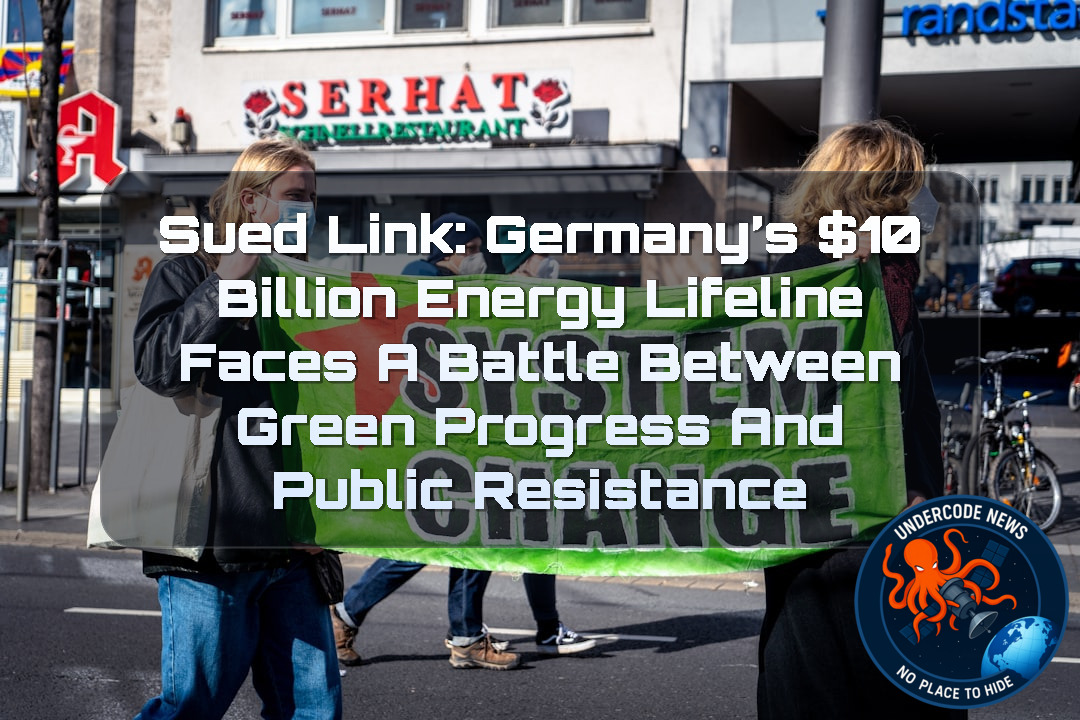 Introduction: A Power Line That Represents Germany’s Energy Future
Germany has committed itself to one of the world’s most ambitious clean energy transformations. As coal-fired power plants are retired and renewable energy becomes the backbone of electricity generation, one challenge has become impossible to ignore: how do you transport massive amounts of clean electricity from where it is generated to where it is needed?
The answer is SuedLink, one of Europe’s largest underground electricity transmission projects. Stretching approximately 700 kilometers, this enormous infrastructure initiative aims to connect the wind-rich northern regions of Germany with the country’s heavily industrialized southern states. While supporters see it as the missing link in Germany’s renewable energy revolution, critics argue that the project comes with significant environmental, financial, and social costs.
The debate surrounding SuedLink reflects a broader global challenge. Nations everywhere are discovering that producing renewable energy is only half the battle. Building the infrastructure needed to deliver that energy often proves to be even more controversial.
Germany’s Renewable Energy Challenge
An Energy Grid Built for a Different Era
Germany’s existing electricity grid was designed decades ago, when power generation was concentrated around coal, nuclear, and gas plants located close to industrial centers.
Today’s energy landscape looks dramatically different.
Large offshore wind farms and northern onshore wind parks generate enormous amounts of electricity far away from the factories and cities that consume most of it. Southern Germany, especially after the country’s nuclear phase-out, increasingly depends on electricity generated hundreds of kilometers away.
Without modern transmission infrastructure, renewable electricity cannot efficiently reach consumers.
What Is SuedLink?
A Massive Underground Transmission Corridor
SuedLink is a high-voltage direct current (HVDC) transmission line extending roughly 700 kilometers across Germany.
Unlike traditional overhead power lines, much of SuedLink is being installed underground.
This underground approach was chosen to reduce visual impacts on landscapes and respond to public concerns about large transmission towers. Although underground installation is considerably more expensive, project planners believe it offers a better balance between engineering requirements and public acceptance.
With an estimated investment of approximately €10 billion, SuedLink ranks among Germany’s largest infrastructure projects.
Why Germany Needs SuedLink
Moving Wind Energy Where It Is Needed Most
Northern Germany frequently produces more renewable electricity than local demand requires.
Meanwhile, southern Germany often experiences electricity shortages, especially during periods of low local renewable generation.
Without sufficient transmission capacity, renewable electricity cannot flow efficiently across the country.
Instead, wind farms are sometimes forced to reduce production despite favorable weather conditions.
At the same time, conventional power plants elsewhere must increase output to meet demand.
This imbalance creates unnecessary costs while limiting the full benefits of renewable energy.
Reducing Expensive Grid Interventions
Billions of Euros Could Be Saved
Grid operators currently spend enormous sums managing congestion across Germany’s electricity network.
Officials estimate these intervention measures cost approximately €2 billion to €3 billion every year.
These expenses include redispatch operations, renewable generation curtailment, and emergency balancing measures that keep the electricity system stable.
Supporters argue SuedLink could dramatically reduce these recurring costs by allowing electricity to move more efficiently throughout the national grid.
Over time, the infrastructure investment could offset a substantial portion of these annual expenses.
A Foundation for
Supporting Climate Goals
Germany’s long-term climate strategy depends heavily on expanding renewable electricity.
Wind and solar power continue growing rapidly, but generation alone cannot guarantee energy security.
Transmission infrastructure forms the invisible backbone of the clean energy economy.
Without projects like SuedLink, Germany risks slowing renewable expansion because new generation capacity cannot be effectively integrated into the national grid.
Public Opposition Continues
Citizens Push Back Against Construction
Despite its strategic importance, SuedLink has encountered determined resistance.
Local
Many residents question whether the
Others remain concerned about construction impacts on their communities and farmland.
Property owners have also challenged land acquisition processes required for the underground cables.
These concerns have generated legal disputes and public demonstrations.
Environmental Concerns
Protecting Forests and Natural Habitats
Environmental organizations have raised additional objections.
Although renewable energy itself supports climate protection, building large-scale infrastructure can disturb ecosystems.
Critics worry about:
Forest clearing
Habitat fragmentation
Soil disruption
Groundwater impacts
Long-term ecological consequences
Construction through environmentally sensitive areas remains one of the project’s most controversial aspects.
Developers insist extensive environmental assessments have been completed and mitigation measures are incorporated into construction planning.
The Economic Debate
Is €10 Billion Worth the Investment?
The
Supporters argue that delaying modernization would ultimately cost even more through inefficient grid management, higher electricity prices, and slower renewable deployment.
Opponents believe Germany should invest more heavily in decentralized energy production, battery storage, and regional grid improvements instead of one massive transmission corridor.
The debate reflects two competing visions of future energy systems:
One favors large national infrastructure.
The other emphasizes localized energy independence.
Engineering Complexity
Building Hundreds of Kilometers Underground
Installing underground high-voltage cables is a far more complicated engineering challenge than erecting overhead transmission towers.
Engineers must account for:
Soil composition
Agricultural land restoration
River crossings
Highway crossings
Railway infrastructure
Protected natural areas
Every kilometer requires detailed geological surveys and precise construction planning.
The project therefore represents both an energy initiative and one of Germany’s most demanding civil engineering efforts.
Current Project Status
Construction Continues Despite Challenges
Despite lawsuits, protests, and planning revisions, project developers maintain that construction remains on schedule.
Current expectations indicate SuedLink could begin transmitting electricity within approximately two years if major delays are avoided.
Completion would significantly strengthen
Global Significance
A Blueprint for Future Energy Infrastructure
Many countries face challenges similar to
Renewable energy resources are often located far from population centers.
Massive transmission investments will likely become increasingly common across Europe, North America, and Asia.
SuedLink serves as a real-world case study showing that the transition to clean energy involves more than installing wind turbines and solar panels.
Modern grids require equally ambitious investments in transmission networks.
Success or failure may influence how future energy infrastructure is planned worldwide.
Deep Analysis
Technical Perspective: High-Voltage Grid Operations
SuedLink primarily relies on High Voltage Direct Current (HVDC) technology because it minimizes transmission losses over long distances and allows precise control of power flow between regions.
Example Linux commands engineers and analysts may use while working with power-system data, GIS datasets, or monitoring infrastructure:
Monitor system resources during simulations
top
htop
Check network connectivity between monitoring stations
ping grid-node.example
traceroute grid-node.example
View system logs
journalctl -xe
Analyze CSV sensor data
awk -F, '{print $2}' powerflow.csv
Search event logs
grep "Voltage" grid.log
Securely copy monitoring files
scp grid.log analyst@server:/analysis/
Display disk usage
df -h
Archive engineering reports
tar -czf suedlink_reports.tar.gz reports/
Verify file integrity
sha256sum grid_model.dat
Run Python-based power analysis
python3 powerflow.py
These commands illustrate the types of administrative and analytical tasks often associated with infrastructure monitoring, operational diagnostics, and engineering workflows. While they are not unique to SuedLink, they demonstrate the technical ecosystem supporting modern energy projects.
What Undercode Say:
Energy Transition Is More Than Building Wind Farms
The SuedLink debate highlights one of the biggest misconceptions surrounding renewable energy. Generating clean electricity is relatively straightforward compared to redesigning an entire national power system around it.
Infrastructure Often Becomes the Real Bottleneck
Countries frequently celebrate renewable energy targets while underestimating the complexity of transmission networks. Without modern grids, additional wind turbines and solar farms can actually increase inefficiencies rather than solve them.
Public Trust Determines Infrastructure Success
Large-scale infrastructure projects increasingly depend on transparency and community engagement. Technical feasibility alone no longer guarantees successful implementation. Citizens expect meaningful consultation and environmental accountability before construction begins.
Underground Transmission Is a Strategic Compromise
Burying transmission lines reduces visual impact and can improve public acceptance, but it significantly increases project costs and engineering complexity. Policymakers must weigh long-term societal benefits against higher upfront investments.
Economic Costs Extend Beyond Construction
The €10 billion price tag often dominates headlines, yet annual grid congestion costs of €2 to €3 billion demonstrate that inaction also carries a substantial financial burden. Evaluating only construction expenses provides an incomplete picture.
Environmental Trade-Offs Require Careful Management
Renewable infrastructure is not environmentally neutral. Construction activities can disturb ecosystems even when the end goal is reducing greenhouse gas emissions. Sustainable development requires minimizing these impacts through rigorous planning and restoration efforts.
Energy Security Depends on Grid Flexibility
Modern electricity systems must rapidly adapt to changing renewable output. HVDC technology offers operators greater control over power flows, helping maintain stability as intermittent renewable generation grows.
Industrial Competitiveness Is Closely Linked to Reliable Power
Southern Germany hosts energy-intensive industries that depend on consistent electricity supplies. Improved transmission capacity can reduce supply constraints and support long-term industrial resilience.
Legal Challenges Reflect Democratic Oversight
Opposition and court proceedings can delay projects, but they also ensure infrastructure developments comply with environmental regulations and property rights. Balancing efficiency with due process remains essential.
A Lesson for the World
As more nations pursue decarbonization, transmission projects like SuedLink will become increasingly common. Success will require engineering excellence, environmental stewardship, transparent governance, and sustained public dialogue.
Prediction
(+1)
If SuedLink is completed on schedule, it is likely to become a benchmark for future renewable transmission projects across Europe. Similar underground HVDC corridors could emerge in neighboring countries seeking to integrate offshore wind, solar farms, and cross-border electricity markets more efficiently. Advances in grid digitalization, AI-assisted monitoring, and energy storage will further enhance the value of large-scale transmission networks, making them a cornerstone of Europe’s long-term energy security and climate strategy.
✅ Verified Infrastructure Facts
✅ SuedLink is a planned underground transmission line of approximately 700 kilometers designed to transport renewable electricity between northern and southern Germany. The project’s estimated investment is around €10 billion, and it plays a central role in Germany’s energy transition strategy.
✅ Verified Economic Context
✅ Germany’s electricity grid has experienced costly congestion and redispatch measures due to renewable energy bottlenecks. Estimates of annual intervention costs in the €2 billion to €3 billion range are consistent with publicly reported figures regarding grid management challenges.
✅ Verified Public Debate
✅ It is accurate that SuedLink has faced opposition from local citizens, environmental groups, and landowners over issues including environmental impact, construction through forests, land use, and property rights. At the same time, project developers continue to state that construction is progressing toward future operation within the planned timeframe.
▶️ Related Video (78% Match):
https://www.youtube.com/watch?v=GnwLqgBWQqU
🕵️📝Let’s dive deep and fact‑check.
🎓 Live Courses & Certifications:
Join Undercode Academy for Verified Certifications
🚀 Request a Custom Project:
Secure, high-velocity infrastructure and disruptive technological engineering. Contact our engineering team for high-tier development and proprietary systems:
[email protected]
💎 Smart Architecture | 🛡️ Secure by Design | ⭐ Trusted by Thousands
References:
Reported By: www.dw.com
Extra Source Hub (Possible Sources for article):
https://www.discord.com
Wikipedia
OpenAi & Undercode AI
Image Source:
Unsplash
Undercode AI DI v2
🔐JOIN OUR CYBER WORLD [ CVE News • HackMonitor • UndercodeNews ]
📢 Follow UndercodeNews & Stay Tuned:
𝕏 formerly Twitter 🐦 | @ Threads | 🔗 Linkedin | 🦋BlueSky | 🐘Mastodon | 📺Youtube


