
Listen to this Post
Introduction: The Rising Threat of Cyber Extortion
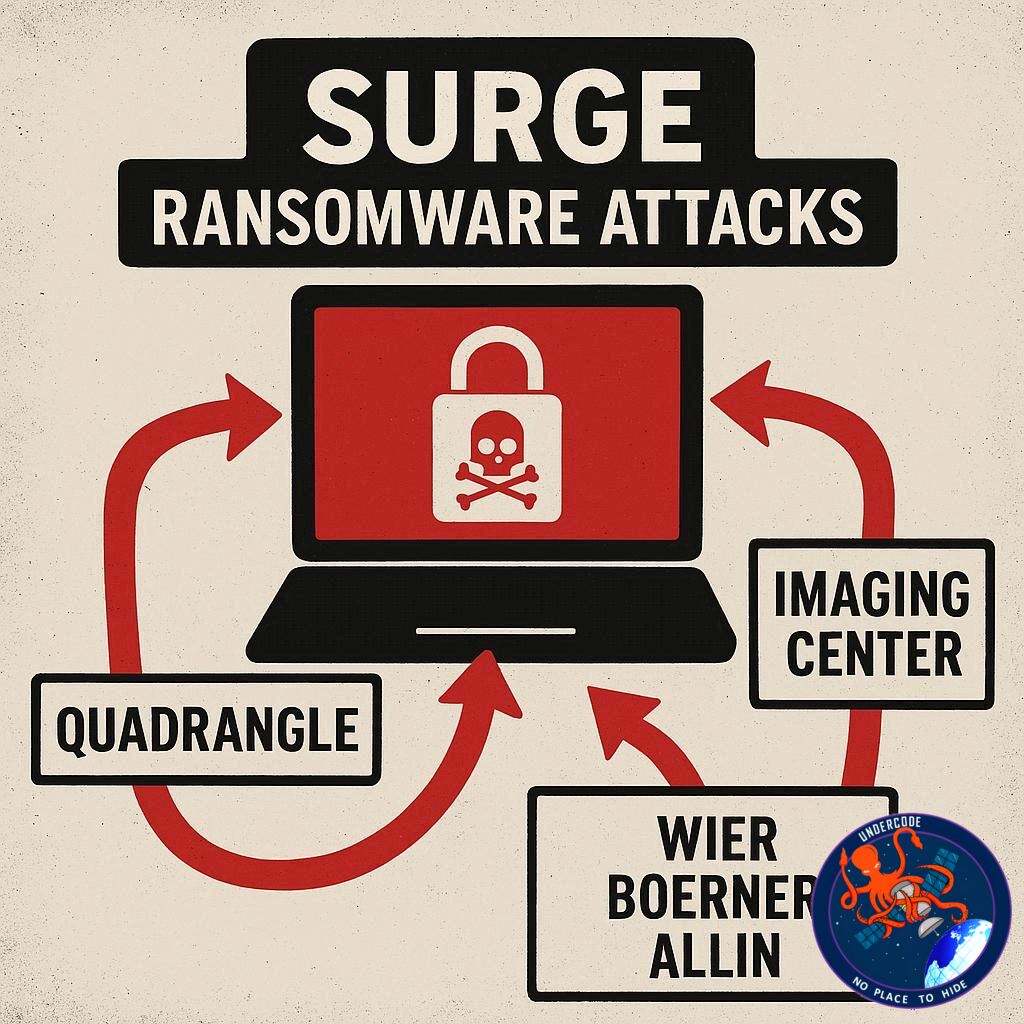
Ransomware attacks are escalating at an alarming pace, targeting healthcare and legal institutions alike. In recent developments, the notorious ransomware groups “incransom” and “interlock” have reportedly victimized Quadrangle Imaging Center and Wier Boerner Allin, respectively. With cybercriminals becoming increasingly sophisticated, understanding these threats is crucial for businesses, IT professionals, and security enthusiasts alike.
Recent Attacks: What Happened?
The ThreatMon Threat Intelligence Team, monitoring activity on the dark web, confirmed the attacks on August 22, 2025. The incransom group added Quadrangle Imaging Center to its growing list of victims, highlighting the vulnerability of medical institutions to ransomware extortion. Shortly after, the interlock group targeted Wier Boerner Allin, a legal firm, signaling that cybercriminals are diversifying their targets beyond healthcare.
These attacks were detected in real-time by ThreatMon’s monitoring platform, which collects Indicators of Compromise (IOC) and command-and-control (C2) data. Both incidents underscore the rising sophistication of ransomware groups, exploiting security gaps and demanding high-profile payoffs.
The Dark Web Connection 🌐
Both incransom and interlock operate through dark web channels, offering stolen data and extortion services. The dark web acts as a marketplace for cybercriminals, allowing ransomware groups to coordinate attacks, leak sensitive data, and demand ransoms anonymously. Experts warn that organizations failing to monitor dark web threats face increasing exposure to data breaches and financial losses.
Implications for Healthcare and Legal Sectors 🏥⚖️
The targeting of a medical imaging center and a legal firm emphasizes that no industry is immune. Healthcare institutions often store sensitive patient data, making them high-value targets. Legal firms, with confidential client files, are equally at risk. A single breach can result in compromised patient privacy, legal liabilities, and reputational damage.
What Undercode Say: Analytical Insights 🔍
Threat intelligence suggests a broader pattern behind these attacks. The incransom and interlock groups employ double-extortion tactics, encrypting files and threatening to release stolen data publicly if ransoms aren’t paid. Analytics indicate that ransomware attacks are trending toward multi-industry targeting, no longer confined to financial or healthcare sectors.
Organizations with outdated security protocols, unpatched software, or weak access controls are particularly vulnerable. ThreatMon’s data shows that these groups leverage automated scanning tools to identify weaknesses, followed by sophisticated malware deployment. Cybersecurity teams are increasingly pressured to implement proactive monitoring, endpoint detection, and employee training to counter these attacks.
Financially, ransomware can demand anywhere from tens of thousands to millions of dollars per incident, often negotiated in cryptocurrency to evade law enforcement. Beyond direct costs, downtime and operational disruption add significant losses. Analytics also reveal that coordinated threat intelligence sharing between institutions can drastically reduce the probability of successful attacks, yet adoption remains inconsistent.
Moreover, ransomware trends suggest the use of AI-driven malware, capable of adapting in real-time to bypass defenses. Predictive modeling and AI-assisted threat detection are becoming critical tools for preempting attacks. ThreatMon’s historical data indicates that early detection often prevents ransomware from reaching encryption stages, minimizing operational impact.
The social engineering aspect of ransomware remains a key vulnerability. Employees unknowingly clicking malicious links or downloading infected attachments act as entry points. Continuous awareness campaigns and simulated phishing exercises are proving effective in reducing these human factor vulnerabilities.
As ransomware evolves, cybersecurity regulations are tightening. Governments are increasingly enforcing mandatory breach reporting and establishing frameworks for ransom negotiation transparency. Companies failing to comply face legal repercussions alongside operational risks.
Overall, the trend is clear: ransomware attacks are not only increasing in frequency but also in complexity, scale, and cross-industry impact. Institutions must adopt holistic cybersecurity strategies, combining real-time monitoring, AI-driven analysis, and employee vigilance to survive this growing threat landscape.
Fact Checker Results ✅❌
✅ ThreatMon confirmed both Quadrangle Imaging Center and Wier Boerner Allin as ransomware victims.
✅ incransom and interlock are active ransomware groups exploiting healthcare and legal sectors.
❌ No evidence suggests attacks are limited to one industry; multiple sectors are targeted simultaneously.
Prediction 🔮
Cybersecurity analysts predict a continued rise in multi-industry ransomware attacks throughout 2025 and beyond. AI-driven malware will become more prevalent, targeting unpatched systems and exploiting human error. Companies investing in real-time threat intelligence, robust endpoint security, and employee training are likely to reduce ransomware impact significantly. Organizations ignoring these trends risk major operational, financial, and reputational damage.
Would you like me to also create a clickbait meta description and SEO keywords for this article to maximize reach?
🕵️📝✔️Let’s dive deep and fact‑check.
References:
Reported By: x.com
Extra Source Hub:
https://www.linkedin.com
Wikipedia
OpenAi & Undercode AI
Image Source:
Unsplash
Undercode AI DI v2
🔐JOIN OUR CYBER WORLD [ CVE News • HackMonitor • UndercodeNews ]
📢 Follow UndercodeNews & Stay Tuned:
𝕏 formerly Twitter 🐦 | @ Threads | 🔗 Linkedin | 🦋BlueSky | 🐘Mastodon


