
Listen to this Post
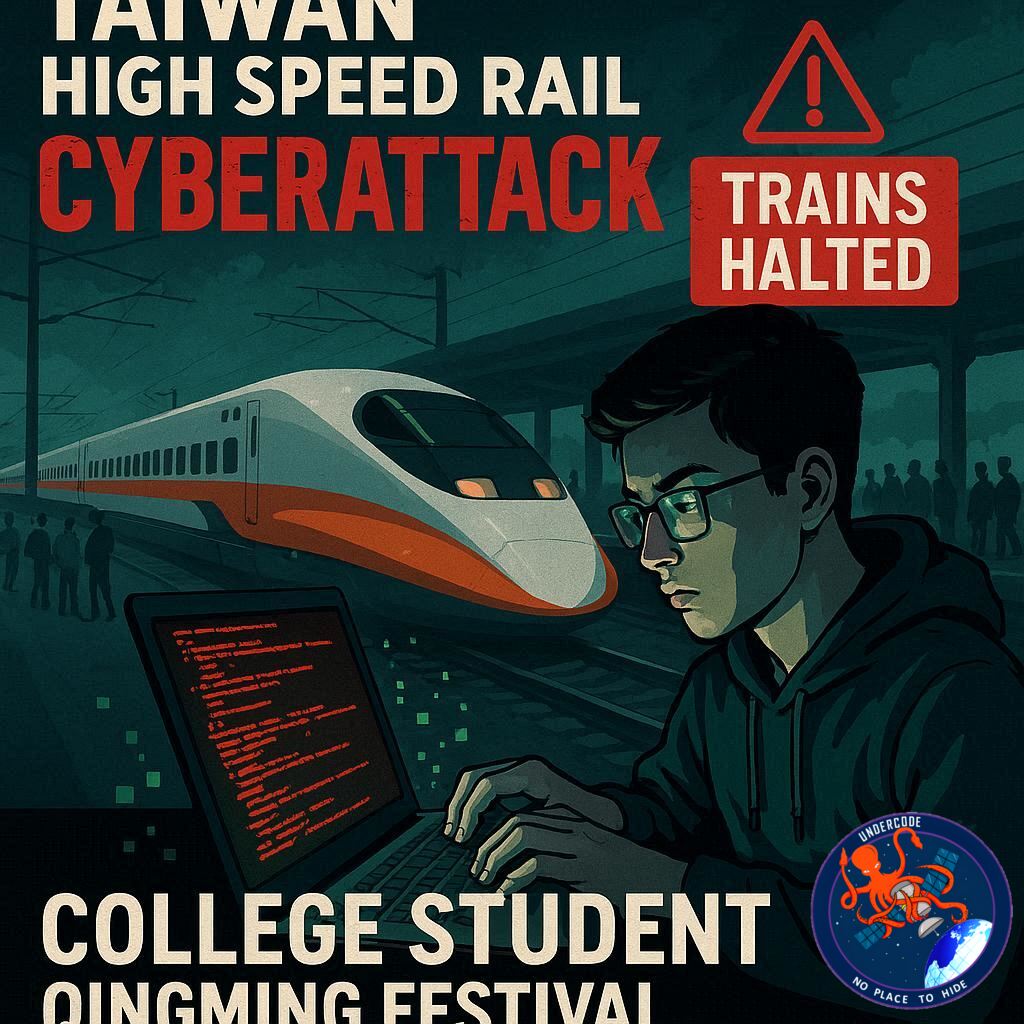
During the Qingming Festival holiday, Taiwan’s High-Speed Rail (THSR) experienced a major cybersecurity incident when three trains were suddenly forced into emergency stops, leaving passengers stranded for nearly 48 minutes. Initially suspected as a mechanical fault, authorities later confirmed that the disruption was caused by a deliberate cyber-physical attack carried out by a 23-year-old college student who exploited vulnerabilities in THSR’s communication systems. This incident is now regarded as one of the most serious cyber threats to Taiwan’s transit infrastructure in recent years, raising pressing concerns about the safety and resilience of modern railway systems.
The attack specifically targeted THSR’s operational technology (OT) and internal communications, which coordinate train movements and emergency alerts. Investigators revealed that the attacker first gained unauthorized access to the railway’s core computer network. Using electromagnetic interference tools and specialized wireless broadcasting equipment, the suspect impersonated a highly restricted Tetra mobile communication device. These devices, issued exclusively to authorized personnel, include a General Alarm (GA) function designed for life-threatening emergencies, automatically triggering emergency stops when activated.
The attacker cloned a legitimate high-speed rail radio signal and broadcasted a false GA alert originating from Taichung Station. The THSR control center, following standard safety protocols, immediately initiated emergency stops on three trains. The spoofed signal was indistinguishable from a genuine alert, effectively bypassing safety verification checks. Cybersecurity experts describe this as a cyber-physical attack, combining digital intrusion with radio frequency manipulation—a technique that is exceptionally hard to detect in real time.
Following the stops, THSR operators identified anomalies in the signal’s origin and conducted a full audit of all Tetra devices to rule out insider threats. Once internal devices were confirmed secure, authorities reported the breach to local police. A joint investigation by the Railway Police Bureau and the Criminal Investigation Bureau quickly traced the malicious signal to the suspect. Law enforcement raided three locations, seizing electronics and wireless broadcasting equipment used in the attack. The 23-year-old suspect was released on bail but now faces serious charges, including endangerment of public transportation, unauthorized system intrusion, and illegal use of communication-interference equipment. Convictions carry substantial prison sentences.
The incident underscores a growing vulnerability in transit systems worldwide: as railways increasingly rely on radio-based OT networks for real-time coordination, they become more susceptible to signal spoofing and electromagnetic interference. Experts are urging rail operators to strengthen signal authentication and anomaly detection systems to prevent similar attacks in the future.
What Undercode Say:
The THSR cyberattack demonstrates the stark realities of modern transit system vulnerabilities. Rail networks, once considered largely immune to digital threats, now face significant exposure as they adopt more complex communications and automation systems. Radio-based OT networks are efficient but inherently vulnerable, and the THSR incident illustrates how easily these systems can be exploited.
From a technical perspective, the attack exploited multiple layers of security weaknesses: digital network access, insufficient device authentication, and the lack of real-time anomaly detection for radio signals. The combination of cyber and physical methods—a hallmark of cyber-physical attacks—makes mitigation extremely challenging. Most traditional cybersecurity measures focus on data breaches, ransomware, or phishing attacks, not signal spoofing that directly controls physical machinery.
Operationally, the emergency response by THSR was both a strength and a limitation. Protocols were correctly followed, ensuring passenger safety, but the system’s rigidity allowed a single fraudulent signal to halt multiple trains simultaneously. This suggests that while safety-first approaches are vital, there needs to be flexibility for distinguishing false alarms in real time.
The human factor also played a critical role. The attacker was a single individual exploiting gaps in a system designed for large organizations. This raises questions about insider threat assumptions: can small-scale actors with technical skills cause disproportionate disruption in critical infrastructure? In this case, yes.
Strategically, this incident is a warning to transportation authorities worldwide. Investment in cybersecurity must parallel investment in physical infrastructure. Rail operators should integrate signal encryption, multi-factor authentication for OT devices, and AI-powered anomaly detection systems. Simulation-based training for operators to recognize abnormal alerts could also reduce the impact of future attacks.
In broader terms, the attack exposes the escalating risk of “low-cost, high-impact” cyber-physical disruptions. Governments, transit authorities, and private operators need coordinated policies for incident reporting, threat intelligence sharing, and legal enforcement to deter malicious actors. Public awareness is also crucial—passengers must understand that digital threats are real and that occasional delays may be part of rigorous safety protocols rather than operational failures.
Finally, the THSR case may accelerate the global debate on cyber-physical security standards in transportation. As railways adopt 5G, AI-driven automation, and IoT-integrated operations, vulnerabilities multiply. Policymakers must balance innovation with resilience, ensuring that efficiency gains do not come at the cost of systemic fragility. In essence, the Qingming Festival attack is a wake-up call: modern transit is only as secure as its weakest digital link, and that link is now glaringly visible.
Fact Checker Results:
The attacker was confirmed to be a 23-year-old college student who exploited the railway’s communication systems.
The incident involved radio signal spoofing and not a mechanical failure, corroborated by official THSR statements.
Emergency stops lasted approximately 48 minutes, as verified by THSR operational reports.
Prediction:
Given the increasing digitization of railway operations worldwide, similar cyber-physical attacks are likely to rise. Future threats may involve coordinated attacks on multiple transit networks simultaneously or the use of AI to bypass detection systems. Governments and railway operators will likely implement more stringent authentication protocols, encrypted communication channels, and AI-based monitoring tools. Public transit may see an industry-wide push toward cyber resilience, with regulations enforcing mandatory cybersecurity audits and real-time threat simulations. In the next five years, cyber-physical security could become as integral to rail operations as braking systems and track maintenance, transforming the sector into a testing ground for advanced infrastructure protection worldwide.
🕵️📝Let’s dive deep and fact‑check.
References:
Reported By: cyberpress.org
Extra Source Hub (Possible Sources for article):
https://www.instagram.com
Wikipedia
OpenAi & Undercode AI
Image Source:
Unsplash
Undercode AI DI v2
Bing
🔐JOIN OUR CYBER WORLD [ CVE News • HackMonitor • UndercodeNews ]
📢 Follow UndercodeNews & Stay Tuned:
𝕏 formerly Twitter 🐦 | @ Threads | 🔗 Linkedin | 🦋BlueSky | 🐘Mastodon


