
Listen to this Post
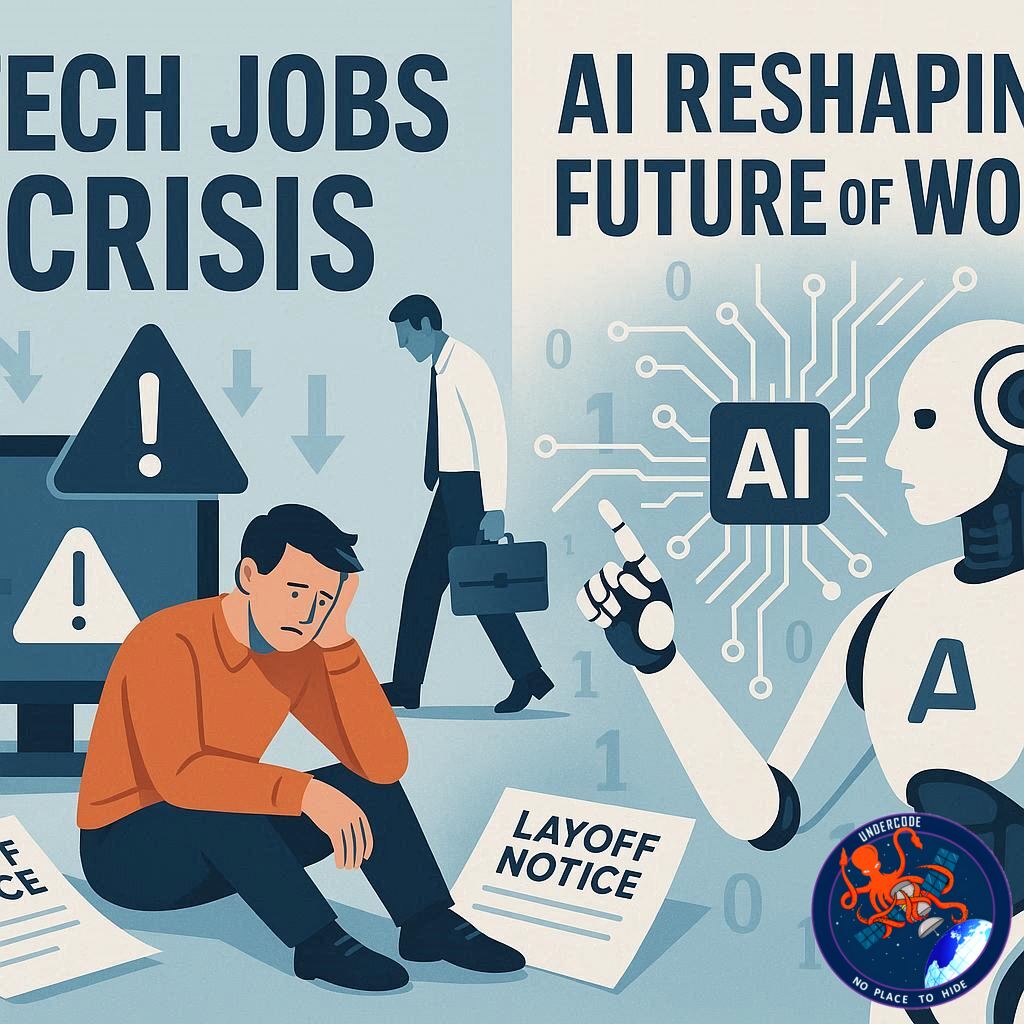
The technology sector, once seen as a bulletproof career path, is entering a turbulent new phase. After years of relentless growth, job cuts, hiring freezes, and shrinking demand for once-popular roles are shaking the industry. The shift is so pronounced that Indeed, the largest job site in the U.S., has issued a warning: not all tech roles are safe anymore.
While roles connected to artificial intelligence, machine learning, and cloud systems are thriving, more traditional jobs are rapidly losing relevance. The rise of automation, economic pressure, and a push for efficiency are driving this transformation. Companies are no longer hiring en masse but instead focusing on leaner teams with highly specialized skills that directly fuel revenue and innovation.
The Collapse of Certain Tech Roles
According to Indeed’s recent study, several once-essential positions are now on the decline:
Front-End Developers: The explosion of low-code platforms and pre-built templates is cutting demand for basic coding skills.
QA Testers: Automated testing tools and AI-driven quality assurance are replacing manual testing.
IT Support Specialists: Cloud platforms and self-service troubleshooting have reduced the need for in-house help desks.
Blockchain Developers: The crypto collapse and tighter regulations have drained demand for blockchain expertise.
Why the Tech Sector Is Shifting
Brendon Bernard, senior economist at Indeed, explained that the tech industry’s reorientation stems from three main drivers:
- Automation & AI: Many tasks once requiring entire teams are now handled by machine learning systems and intelligent tools.
- Remote Work: The work-from-home revolution has changed IT infrastructure, reducing demand for on-site support.
- Economic Pressures: Companies are hiring selectively, prioritizing roles that generate clear value or align with long-term innovation strategies.
As Bernard noted, “While there isn’t a smoking gun linking AI to the plunge, automation trends could be a reason the weakness persists.”
The Jobs Still in Demand
Not all is bleak. Certain high-skill roles are actually booming. These include:
AI/ML Engineers – Specialists in training and deploying intelligent systems.
Cybersecurity Analysts – Protecting networks in a digital-first world.
Cloud Architects – Designing resilient, scalable infrastructure.
Data Scientists – Turning massive datasets into business insights.
These roles reflect where companies are investing most heavily: intelligent automation, security, and data-driven decision-making.
Winners and Losers: The Numbers
Indeed’s report reveals just how stark the shifts are:
Largest Declines in Job Postings
Web Developer: –72%
.NET Developer: –68%
Java Developer: –68%
Front-End Developer: –67%
iOS Developer: –62%
UX Designer: –61%
Programmer Analyst: –58%
QA Engineer: –57%
Senior Java Developer: –55%
Software Test Engineer: –53%
Largest Increases in Job Postings
SAP Lead: +356%
AI/ML Engineer: +334%
Oracle HCM Manager: +263%
Data Center Technician: +144%
SAP Consultant: +98%
Oracle Consultant: +67%
Staff Software Engineer: +60%
Machine Learning Engineer: +59%
Technology Lead: +51%
Platform Engineer: +43%
What Undercode Say:
The tech industry’s reshaping is less about collapse and more about evolution. What we’re witnessing is the natural selection of skills in a market under pressure. The once-comfortable idea that learning to code guaranteed a stable future has vanished. Instead, the sector is splitting into two camps:
- High-value innovators who work with AI, data, and advanced systems.
- Commoditized roles increasingly replaced by automation or cheap alternatives.
This realignment mirrors past industrial shifts. Just as factory automation reduced the need for assembly-line workers, today’s AI is cutting demand for roles once considered “core.” But unlike manufacturing, tech evolves at lightning speed—meaning careers can become obsolete within just a few years.
What’s striking is the speed of decline. A 72% drop for web developers suggests not just a gradual slowdown but a near-collapse of demand for traditional coding skills. Companies don’t want generalists—they want hyper-specialists who can design intelligent architectures, secure them, and scale them globally.
The winners are clear: AI/ML, cybersecurity, and cloud. But even here, the demand is not infinite. These roles require deep expertise and constant upskilling. An AI engineer who doesn’t adapt to the next breakthrough risks being replaced as quickly as the front-end developer of yesterday.
On the flip side, blockchain’s decline is a cautionary tale. Once hailed as the “next internet,” its demand collapsed after regulatory crackdowns and market implosions. This proves hype-driven career bets can be dangerous without solid fundamentals.
For job seekers, the lesson is twofold:
Don’t chase fads blindly. Today’s hottest role could vanish tomorrow.
Anchor your skills in long-term fundamentals: AI, security, cloud, and data. These areas are less vulnerable to short-term cycles.
For companies, the challenge is workforce planning. Many organizations may realize too late that cutting too deeply into traditional roles could create vulnerabilities—especially in user support or quality control. While automation is powerful, it isn’t flawless. Balancing efficiency with resilience will define the winners of the next decade.
In essence, the job market is sending a brutal but clear message: adapt or become obsolete.
🔍 Fact Checker Results
✅ Tech layoffs and hiring freezes are well-documented across the U.S. in 2024–2025.
✅ AI, ML, and cybersecurity roles are consistently listed among the fastest-growing in job market reports.
❌ Blockchain roles are not entirely dead; niche demand remains, but far below the 2021 hype.
📊 Prediction
Within the next five years, 70% of entry-level coding and support roles could be automated or outsourced, while demand for AI, cloud, and cybersecurity experts will triple. The job market will no longer reward “knowing how to code” as a generic skill—instead, the winners will be those who master specialized technologies and continuously evolve alongside AI itself.
🕵️📝✔️Let’s dive deep and fact‑check.
References:
Reported By: timesofindia.indiatimes.com
Extra Source Hub:
https://www.facebook.com
Wikipedia
OpenAi & Undercode AI
Image Source:
Unsplash
Undercode AI DI v2
🔐JOIN OUR CYBER WORLD [ CVE News • HackMonitor • UndercodeNews ]
📢 Follow UndercodeNews & Stay Tuned:
𝕏 formerly Twitter 🐦 | @ Threads | 🔗 Linkedin | 🦋BlueSky | 🐘Mastodon


