
Listen to this Post
Introduction
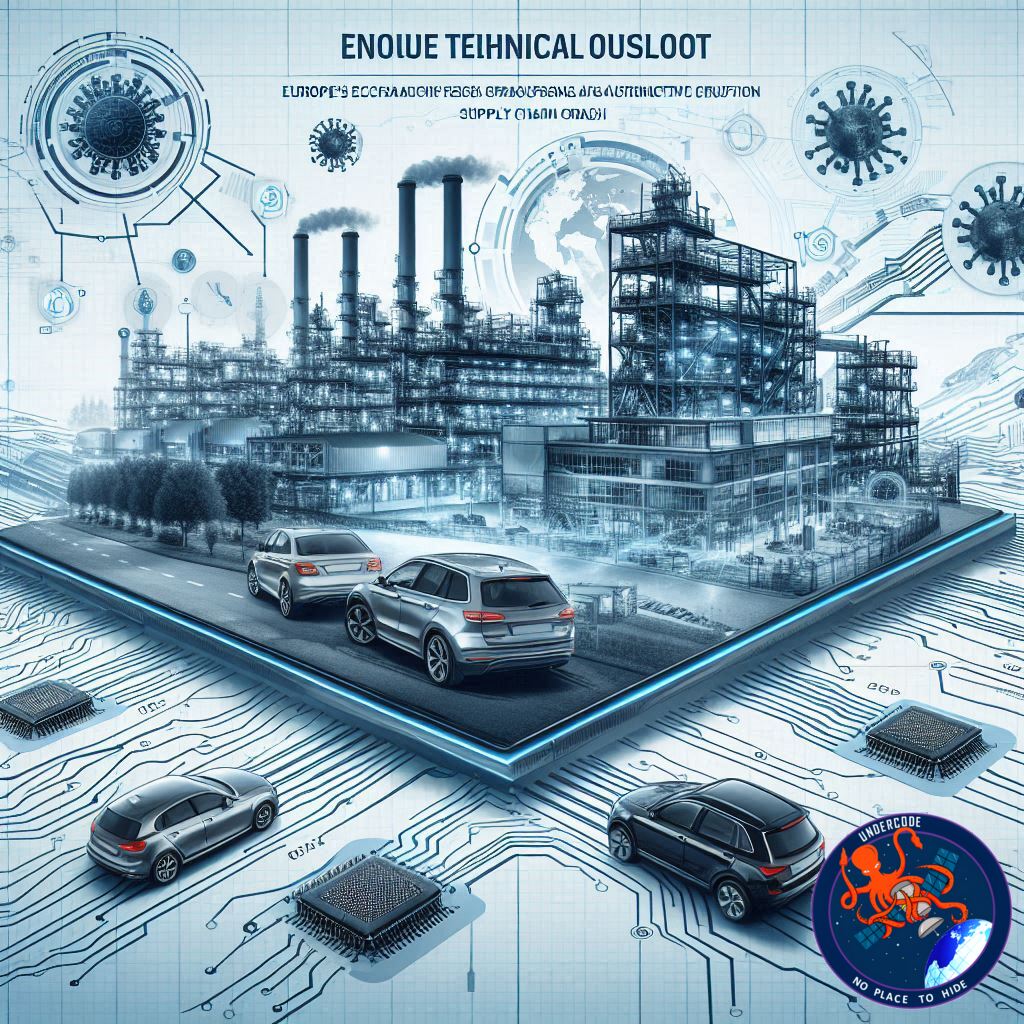
Europe’s automotive industry is bracing for another supply-chain shock. After years of pandemic-driven chip shortages, logistical bottlenecks, and geopolitical turbulence, carmakers are now confronting a new and unexpected disruption. This time, the crisis is unfolding not because of global scarcity, but due to a corporate conflict inside a single semiconductor producer, Nexperia. Despite China loosening export restrictions, a bitter internal dispute between Nexperia’s Dutch operations and its Chinese subsidiary has placed the entire automotive sector on alert, with production lines reportedly weeks away from potential shutdowns. What follows is a deep look into how a governance battle inside one company managed to put Europe’s largest manufacturers on the defensive again.
Europe’s Looming Automotive Supply Emergency
The European car industry is entering a tense phase as manufacturers warn of a “devastating” chip shortage emerging from inside Nexperia, a global supplier of low-margin but essential automotive components. These chips, often overlooked because they are neither advanced nor high-cost, power the fundamental functions of modern vehicles: airbags, lighting systems, window controls, and dozens of other safety and comfort features. Despite China easing its export ban on Nexperia chips, the core disruption now stems from within the company itself.
At the center of the turmoil is a conflict between Nexperia’s Dutch headquarters and its Chinese subsidiary. Silicon wafers, produced in the UK, Netherlands, and Germany, are typically shipped to Nexperia China for assembly before being distributed worldwide. Yet the Dutch arm has halted wafer exports to China, creating a bottleneck that threatens to cascade through global automotive supply chains. Although China’s relaxation of earlier export controls allowed some shipments to restart, the refusal of the Dutch team to resume normal supply flows has kept the situation fragile.
Automakers across Europe are alarmed. According to executives who spoke to The Financial Times, manufacturers have only a few weeks of chip inventory left, and the remaining supply inside Nexperia’s Chinese facilities is expected to run out by early to mid-December. One unnamed automotive executive emphasized that if wafers do not begin moving out of Germany and the EU, production lines will grind to a halt. Teams are now scrambling to source alternative suppliers, but the industry knows that replacing such specialized components cannot be done overnight.
European trade body Acea acknowledged that China’s policy reversal was a step forward, yet the overall crisis remains unresolved. Without immediate resumption of wafer exports to China, manufacturers will continue to face shortages. Volkswagen described the situation as “dynamic and uncertain,” noting that while its German factories remain unaffected for now, the risk of future disruption cannot be dismissed.
This internal conflict traces back to a broader governance struggle. In October, the Dutch government seized control of Nexperia and removed its Chinese chief executive, citing “serious governance shortcomings,” including unauthorized financial activities and false communications issued within the company. Following this intervention, Nexperia Netherlands suspended direct wafer shipments, accusing the Chinese unit of refusing payments, creating unauthorized bank accounts, and issuing misleading letters to suppliers and partners. The Dutch economy ministry insists that no Dutch or EU export controls are blocking shipments, reinforcing that the crisis stems entirely from internal corporate dysfunction, not governmental policy.
The consequences of this dispute ripple far beyond Nexperia’s internal boundaries. For automotive manufacturers already navigating a delicate supply environment, the inability to secure basic electronic components poses both operational and financial risks. As the year closes, Europe’s carmakers face the possibility of halted production, delayed deliveries, and rising uncertainty about the stability of critical semiconductor supply lines.
What Undercode Say:
The unfolding crisis around Nexperia is more than a simple supply-chain disruption. It reflects the collision of industrial policy, ownership structures, and strategic dependence within Europe’s manufacturing ecosystem. The automotive sector thrives on precision and stability, so even minor irregularities inside a supplier can escalate into widespread production risk. Here, we see a perfect example of systemic vulnerability. A governance fight inside a single semiconductor company has jeopardized multiple global carmakers.
The irony is striking. Europe has spent years discussing the importance of semiconductor independence, pumping billions into chip manufacturing initiatives, yet a dispute between two branches of one mid-tier chipmaker is enough to destabilize supply. This raises a larger question about strategic resilience. If a basic wafer assembly flow can be derailed by internal company politics, the region remains dangerously exposed.
Nexperia’s structure itself is a source of friction. A Dutch-based entity under Chinese ownership was always going to face scrutiny, especially as governments worldwide tighten control over semiconductor assets. When the Dutch state intervened and removed the Chinese chief executive, it inadvertently triggered counter-reactions and operational breakdowns that now impact the wider industry. This is not merely a supply issue; it is a governance crisis with geopolitical undertones.
From a business strategy perspective, the automotive sector’s vulnerability highlights an over-reliance on just-in-time inventory models. Carmakers assumed that low-value chips would always be available, but these components are precisely where supply chains are most fragile. High-end processors attract investment and scrutiny, but basic chips often rely on older factories, tight margins, and complex cross-border assembly networks. When stress hits these lower-tier segments, production can collapse rapidly.
What is particularly concerning is the speed at which the shortage is unfolding. Executives estimate only weeks of usable stock remain. This timeline is unprecedented compared to past shortages, which developed gradually. The fact that companies are searching for alternative suppliers, knowing full well that switching requires re-engineering and regulatory approval, illustrates the desperation of the situation.
The wider geopolitical context cannot be ignored. Europe is caught between its need for secure chip supply and its desire to maintain political alignment with Western partners who encourage reduced reliance on Chinese-linked industries. Nexperia symbolizes this tension: a European-based manufacturer owned by a Chinese parent, now at the center of a governance storm involving national oversight and cross-continental operational dependencies.
Ultimately, the dispute highlights the fragility of globalization in semiconductor manufacturing. For years, companies optimized cost and efficiency by distributing wafer production, assembly, and packaging across multiple countries. Now, a single interruption in this chain—triggered not by war or natural disaster but by corporate infighting—can threaten entire industrial sectors.
The automotive industry is right to raise the alarm. This is not simply a temporary delay. It is a warning sign. As vehicles become more electronics-heavy and digitalized, dependency on stable chip supply will only intensify. If the sector cannot insulate itself from internal disputes within suppliers, it risks facing repeated cycles of disruption. The key question is whether Europe will respond by restructuring supply chains, accelerating on-shore production capabilities, or continuing to rely on a fragile network of globally dispersed operations.
🔍 Fact Checker Results
China’s export restrictions on Nexperia chips were indeed lifted, but internal conflicts continue to block wafer shipments.
Dutch authorities confirmed no governmental export controls are currently preventing Nexperia exports.
Carmakers have publicly warned of limited chip inventories lasting only weeks.
📊 Prediction
The Nexperia conflict is likely to push Europe toward stronger semiconductor safeguards, including more state intervention and accelerated regional chip manufacturing. 🚗
If the internal dispute is not resolved quickly, mid-December could mark the beginning of rolling disruptions across major European factories. 🔧
Long term, expect automotive companies to diversify away from single-chain suppliers and push for multi-country redundancy in wafer processing and chip assembly. 🌍
🕵️📝✔️Let’s dive deep and fact‑check.
References:
Reported By: timesofindia.indiatimes.com
Extra Source Hub (Possible Sources for article):
https://www.quora.com
Wikipedia
OpenAi & Undercode AI
Image Source:
Unsplash
Undercode AI DI v2
Bing
🔐JOIN OUR CYBER WORLD [ CVE News • HackMonitor • UndercodeNews ]
📢 Follow UndercodeNews & Stay Tuned:
𝕏 formerly Twitter 🐦 | @ Threads | 🔗 Linkedin | 🦋BlueSky | 🐘Mastodon


