
Listen to this Post
Introduction: A Bold Experiment in Smartphone Design
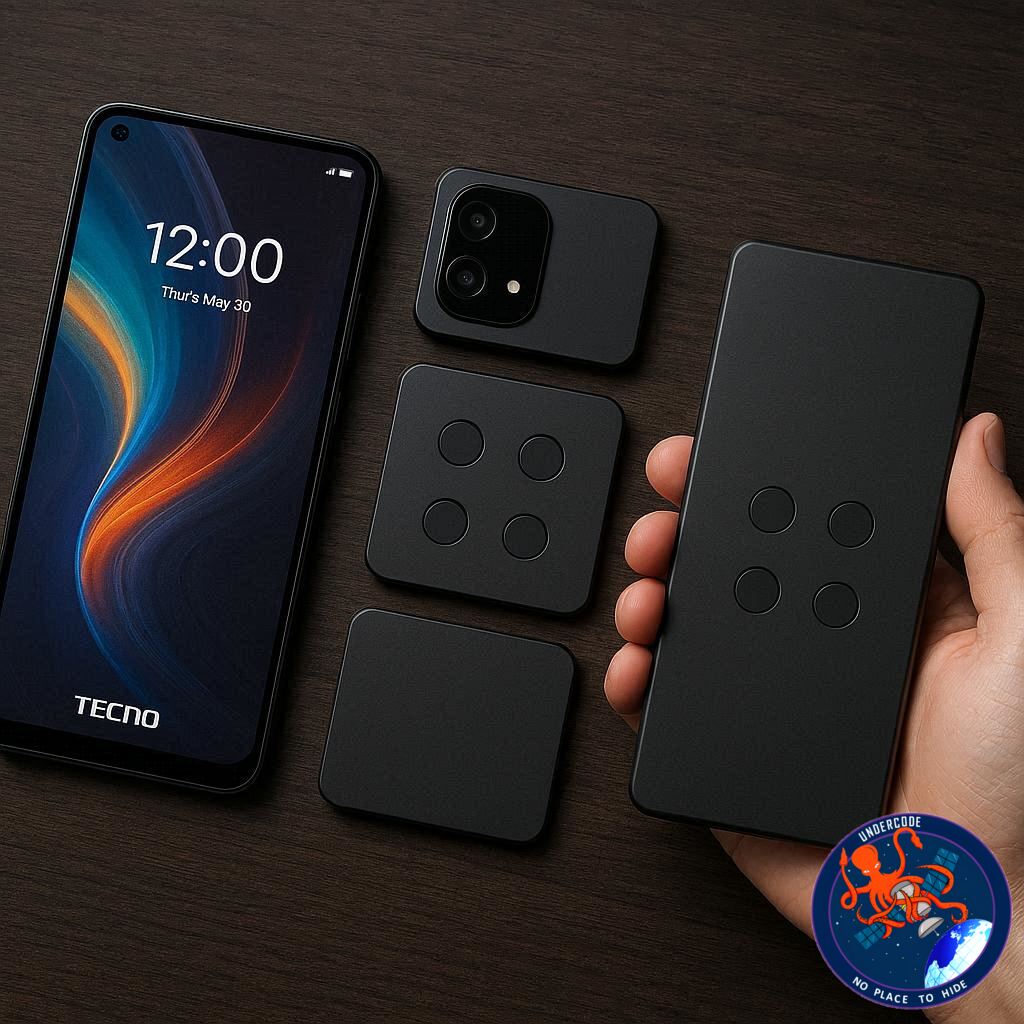
At major technology exhibitions, experimental devices often reveal where the industry might go next. During Mobile World Congress, one of the most talked-about prototypes came from Tecno, a brand known for presenting unconventional smartphone ideas. This year the company showcased a magnetic modular phone concept that quickly generated attention online. The idea behind the device is simple but ambitious: a smartphone that can be expanded with attachable components such as batteries, camera lenses, and accessories. While the concept demonstrates creativity and forward thinking, early hands-on impressions reveal that the technology is still far from ready for commercial release.
Tecno’s Modular Phone Concept
The experimental modular phone introduced by Tecno at Mobile World Congress is designed around a magnetic attachment system that allows users to add different modules to the back of the device. The base phone itself is extremely thin and lightweight, visually reminiscent of what many imagine a future iPhone Air might look like. On its rear panel are magnets and pogo pins, allowing accessories to connect and communicate with the device. Despite the promising idea, the magnets appear relatively weak, making the attached modules feel unstable and slightly wobbly during handling.
Although Tecno did not release a full specification sheet, several technical details were visible during demonstrations. The phone appears to run on the MediaTek Dimensity 8350 chipset, paired with 12GB of RAM and 256GB of internal storage. The internal battery capacity is about 3,000mAh, which may sound small compared to modern flagship devices, but the modular design compensates for this limitation through attachable battery packs. Each external battery module also provides 3,000mAh of power, and the units can be stacked together. With three modules attached simultaneously, the total potential battery capacity reaches 12,000mAh, a remarkable figure for a smartphone setup.
Beyond battery expansion, Tecno demonstrated several additional modules. One of the simplest was a wallet attachment, similar in concept to magnetic accessories used with many modern phones. However, due to the weak magnets, the attachment did not feel particularly secure. More ambitious modules focused on camera functionality. One attachment provided a 3x optical telephoto lens by placing a magnifying lens over the phone’s camera. While the physics of such a lens works correctly, the resulting images initially appeared upside down, a common effect with magnification optics that ideally should be corrected through software. Surprisingly, the device did not include an ultrawide camera module, leaving a gap in the potential photography system.
Tecno also showcased a much more advanced 100x optical telephoto module. Unlike the simple lens attachment, this component functions almost like a separate camera device. It connects to the phone using Wi-Fi and sends image data directly to the phone’s viewfinder. During demonstrations, however, the connection showed noticeable lag, which could have been caused either by poor wireless conditions on the exhibition floor or limitations in the technology itself. In addition to these camera accessories, the company displayed several other attachments, including an action camera module, a lavalier microphone with wind protection, a ring light combined with a mirror for selfies, and even a small Bluetooth speaker. Many of these accessories function independently without needing to physically connect to the phone, raising questions about whether they truly qualify as modular components rather than simple accessories.
Despite the creative concept, the device remains a prototype with no official release date. Early impressions suggest that while the modular ecosystem has interesting ideas, improvements are needed in magnetic strength, camera functionality, and overall reliability before the device could realistically enter the consumer market.
What Undercode Say: The Real Challenge Behind Modular Smartphones
The Dream of Customizable Smartphones
The idea of modular smartphones has fascinated technology enthusiasts for more than a decade. The concept promises ultimate customization: users could upgrade only the parts they care about, extend battery life instantly, or add specialized features like professional cameras or audio equipment. In theory, this approach could extend device lifespan and reduce electronic waste while giving consumers far more flexibility than traditional sealed smartphones.
Lessons from Past Experiments
The industry has already experimented with similar ideas. One notable example was Moto Mods, developed by Motorola. Those accessories allowed users to attach projectors, speakers, and battery packs to compatible devices. While the system worked surprisingly well, adoption remained limited. The core problem was not the technology itself but the ecosystem. Consumers hesitated to invest in modules when future phones might not support them.
Hardware Ecosystems Require Long-Term Commitment
This is the same challenge facing Tecno’s concept today. A modular system only works if the company commits to maintaining the same attachment design across multiple phone generations. If the form factor changes after a single year, every module instantly becomes obsolete. That kind of risk discourages both customers and third-party developers from investing in the platform.
Magnetic Attachment Limitations
Tecno’s magnetic system is another critical issue. Weak magnets make accessories feel unreliable, which undermines user confidence. Magnetic systems need precise engineering to ensure both stability and easy removal. Companies like Apple refined this concept through MagSafe accessories, showing that strong magnets and precise alignment can make modular attachments feel seamless. Tecno’s early implementation appears far less refined.
Camera Modules Show Potential but Need Refinement
The camera attachments reveal both the promise and the problem of modular design. The 3x telephoto lens demonstrates that optical upgrades can be achieved without redesigning the entire phone. However, the inverted images suggest incomplete software optimization. Meanwhile, the 100x telephoto module behaves more like a separate device than an integrated camera system, requiring Wi-Fi communication and introducing lag.
The Difference Between Accessories and True Modules
Another important observation is that several showcased attachments function independently of the phone. A Bluetooth speaker, microphone, or ring light does not require direct hardware integration to work. Labeling them as modules stretches the definition of modularity. True modular hardware should expand the phone’s capabilities in ways that standard wireless accessories cannot.
Market Timing and Consumer Demand
Despite these shortcomings, Tecno’s experiment arrives at an interesting moment. Smartphone innovation has slowed in recent years. Many flagship devices offer only incremental improvements in cameras, processors, or display technology. A modular approach could reintroduce excitement into the market by allowing users to personalize devices in new ways.
The Strategic Role of Concept Devices
Concept phones often serve a different purpose than commercial products. They allow companies to test public reactions, explore engineering challenges, and gather feedback before committing to mass production. Even if Tecno never releases this exact device, the ideas explored here could influence future smartphone designs.
Why the Idea Still Matters
Ultimately, Tecno’s modular phone may not yet be ready for consumers, but the concept highlights an important direction for hardware innovation. As smartphones approach maturity, meaningful differentiation will likely come from flexibility and ecosystem design rather than raw specifications alone.
Fact Checker Results
Tecno did present a modular magnetic smartphone concept at Mobile World Congress, though it currently has no release date. ✅
The device reportedly uses a MediaTek Dimensity 8350 chip with stackable battery modules totaling up to 12,000mAh. ✅
Camera modules showed lag and inverted imaging during demonstrations, indicating unfinished implementation. ❌
Prediction
The modular smartphone concept will likely continue appearing as experimental prototypes over the next few years. 📱
However, widespread adoption will depend on long-term ecosystem commitments and stronger hardware integration. 🔧
If a major manufacturer successfully standardizes modular attachments, the idea could reshape smartphone upgrades. 🚀
🕵️📝✔️Let’s dive deep and fact‑check.
References:
Reported By: www.zdnet.com
Extra Source Hub (Possible Sources for article):
https://www.reddit.com/r/AskReddit
Wikipedia
OpenAi & Undercode AI
Image Source:
Unsplash
Undercode AI DI v2
Bing
🔐JOIN OUR CYBER WORLD [ CVE News • HackMonitor • UndercodeNews ]
📢 Follow UndercodeNews & Stay Tuned:
𝕏 formerly Twitter 🐦 | @ Threads | 🔗 Linkedin | 🦋BlueSky | 🐘Mastodon


