Listen to this Post
Introduction: A Growing Cybersecurity Concern in Digital Healthcare
The rapid rise of telehealth platforms has made healthcare more accessible than ever—but it has also expanded the attack surface for cybercriminals. In a troubling development, Hims & Hers, a popular digital health company, recently disclosed a data breach linked to compromised authentication systems. While the company reassures users that sensitive medical records remain safe, the incident highlights how even indirect systems like customer support platforms can become gateways for data exposure. This breach underscores a critical lesson: in today’s interconnected digital ecosystem, even a single weak link can jeopardize user trust and privacy.
the Incident: What Happened and What Was Exposed
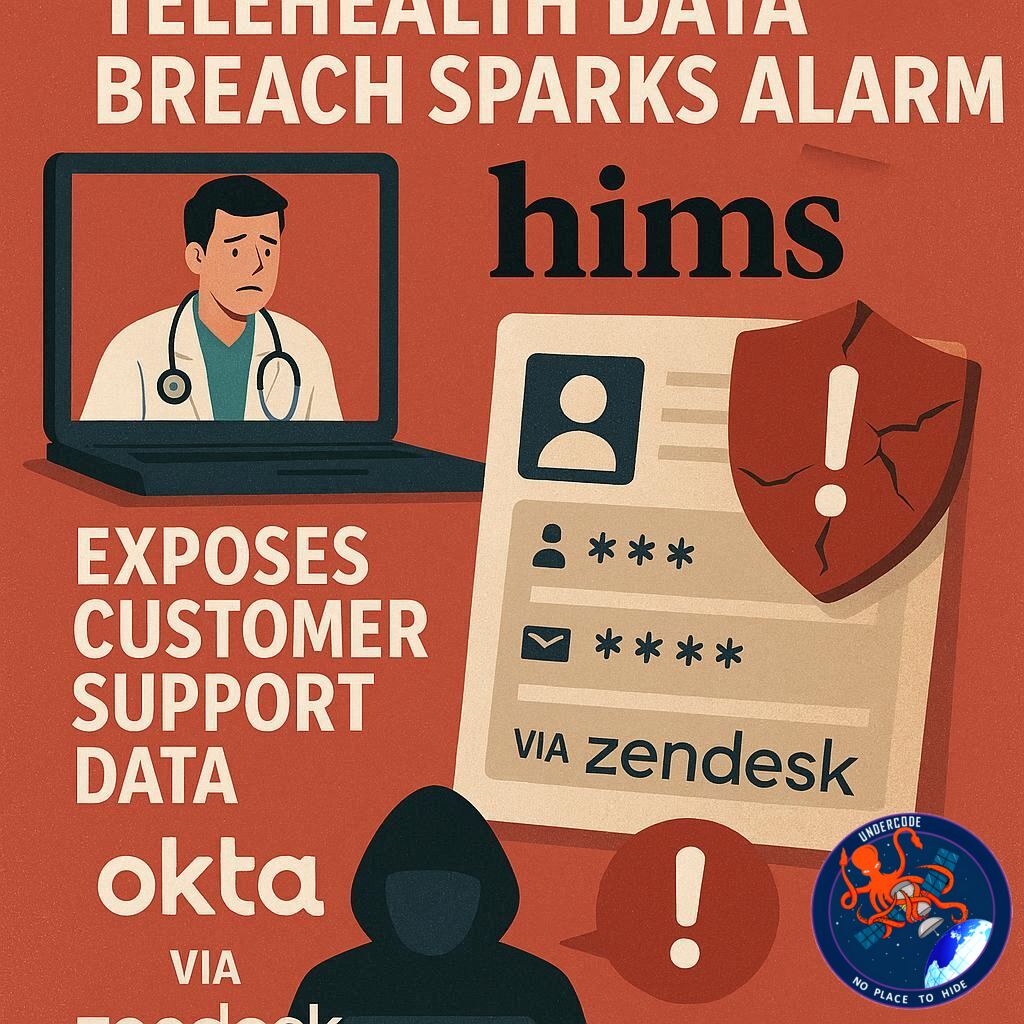
Hims & Hers confirmed a cybersecurity incident involving unauthorized access to its customer support system hosted on Zendesk. The breach originated from compromised Okta Single Sign-On (SSO) credentials, which were reportedly linked to the well-known hacking collective ShinyHunters. By exploiting these credentials, attackers were able to infiltrate Zendesk accounts used by customer support teams.
The exposed data primarily consisted of customer support tickets. These tickets often include personal information such as names, email addresses, and potentially other identifying details shared during support interactions. However, the company clarified that no medical records, prescriptions, or highly sensitive health data were accessed during the breach.
Despite the limited scope compared to worst-case scenarios, the exposure of personally identifiable information (PII) still poses risks such as phishing attacks, identity theft, and social engineering. In response, Hims & Hers has taken steps to contain the breach, secure affected systems, and notify impacted users.
To mitigate potential harm, the company is offering 12 months of free credit monitoring services to those affected. This is a standard industry practice following breaches involving personal data, aimed at helping users detect suspicious financial activity early.
The breach also raises questions about third-party dependencies. Zendesk, a widely used customer support platform, and Okta, a major identity management provider, are both critical components in modern SaaS ecosystems. When one link in this chain is compromised, it can have cascading effects across multiple organizations.
This incident is part of a broader trend where attackers increasingly target authentication systems and third-party integrations rather than core databases. By doing so, they exploit trust relationships between services, often bypassing traditional security controls.
The involvement of ShinyHunters is particularly noteworthy. The group has been associated with several high-profile breaches in recent years, often targeting large datasets and selling them on underground forums. Their methods frequently involve credential theft and exploitation of weak authentication mechanisms.
While Hims & Hers acted quickly to contain the issue, the incident serves as a reminder that cybersecurity is not just about protecting core systems but also about securing every connected service. Even systems that seem peripheral—like customer support platforms—can contain valuable data for attackers.
Ultimately, the breach reinforces the importance of strong identity security practices, including multi-factor authentication (MFA), continuous monitoring, and rapid incident response. It also highlights the need for companies to carefully vet and secure their third-party vendors.
What Undercode Say: Deep Analysis of the Breach and Its Broader Implications
The Weakest Link Was Identity, Not Infrastructure
This breach was not caused by a traditional vulnerability like unpatched software or misconfigured servers. Instead, it stemmed from compromised identity credentials via Okta SSO. This reflects a broader shift in cyberattacks—hackers are increasingly targeting identity systems because they provide high-value access with minimal effort.
Third-Party Risk Is No Longer Optional to Manage
Zendesk and Okta are both industry-standard tools, trusted by thousands of organizations. Yet this incident demonstrates that even top-tier vendors can become entry points. Businesses must now treat third-party risk management as a core cybersecurity function, not an afterthought.
Customer Support Systems Are High-Value Targets
Support tickets may seem harmless, but they often contain rich personal context. Attackers can use this information to craft highly convincing phishing campaigns. In many ways, this data is more immediately exploitable than encrypted medical records.
ShinyHunters’ Continued Evolution
The involvement of ShinyHunters signals a level of sophistication and persistence. This group has repeatedly demonstrated its ability to exploit authentication weaknesses rather than brute-force entry into hardened systems. Their tactics show a clear understanding of modern SaaS architectures.
Limited Damage Does Not Mean Low Risk
Although medical records were not exposed, the breach should not be underestimated. Personal data leaks can lead to long-term consequences, including identity theft and targeted scams. The psychological impact on users—loss of trust—is equally significant.
Credit Monitoring Is a Reactive Measure
Offering 12 months of credit monitoring is helpful but ultimately reactive. It does not prevent misuse of data; it only helps detect it after the fact. Companies need to invest more in proactive defenses rather than relying on post-incident remedies.
The Rising Importance of Zero Trust Architecture
This incident reinforces the importance of Zero Trust principles. Systems should not automatically trust authenticated users without continuous verification. Even valid credentials should be treated with skepticism if behavior deviates from normal patterns.
MFA Alone Is Not Enough
While multi-factor authentication is essential, it is not foolproof. Attackers are increasingly using techniques like session hijacking and phishing proxies to bypass MFA. Organizations must adopt layered security approaches beyond basic MFA.
Regulatory Pressure Will Likely Increase
As telehealth platforms handle sensitive user data, incidents like this may attract regulatory scrutiny. Governments could impose stricter compliance requirements on how companies manage identity and third-party integrations.
User Awareness Remains Critical
End users also play a role in cybersecurity. Awareness about phishing risks and cautious sharing of personal information in support interactions can reduce the impact of such breaches.
The SaaS Ecosystem Is Interconnected—and Fragile
Modern businesses rely on a web of interconnected services. This creates efficiency but also introduces systemic risk. A breach in one service can ripple across multiple organizations, amplifying the impact.
Incident Response Speed Matters More Than Ever
Hims & Hers’ ability to quickly identify and respond to the breach helped limit damage. Rapid detection and containment are now critical metrics of cybersecurity maturity.
Data Minimization Could Have Reduced Exposure
If less personal data were stored in support tickets, the impact of the breach would have been smaller. Companies should adopt data minimization practices—collect and retain only what is absolutely necessary.
Attackers Are Exploiting Trust Relationships
SSO systems are built on trust between services. Attackers are now exploiting these trust relationships, turning convenience into vulnerability.
Transparency Builds Trust—But Only to a Point
Hims & Hers was transparent about the breach, which helps maintain credibility. However, repeated incidents can erode trust regardless of transparency.
Cybersecurity Is a Continuous Process
This breach is not an isolated event but part of an ongoing battle. Organizations must continuously evolve their defenses to keep up with increasingly sophisticated attackers.
Fact Checker Results
Verification of Key Claims
✅ The breach involved Zendesk and Okta SSO compromise, aligning with known attack patterns targeting identity systems.
✅ No medical records were exposed, consistent with the company’s official statement.
❌ The assumption that limited exposure equals low risk is misleading; even PII leaks can have severe consequences.
📊 Prediction
The future of cybersecurity in telehealth will likely shift toward stricter identity controls and deeper third-party audits. Companies will invest heavily in Zero Trust frameworks and behavioral analytics to detect anomalies in real time. Meanwhile, attackers like ShinyHunters will continue refining identity-based attacks, making credential security the primary battlefield in the next wave of cyber threats.
🕵️📝✔️Let’s dive deep and fact‑check.
References:
Reported By: x.com
Extra Source Hub (Possible Sources for article):
https://www.github.com
Wikipedia
OpenAi & Undercode AI
Image Source:
Unsplash
Undercode AI DI v2
Bing
🔐JOIN OUR CYBER WORLD [ CVE News • HackMonitor • UndercodeNews ]
📢 Follow UndercodeNews & Stay Tuned:
𝕏 formerly Twitter 🐦 | @ Threads | 🔗 Linkedin | 🦋BlueSky | 🐘Mastodon