
Listen to this Post
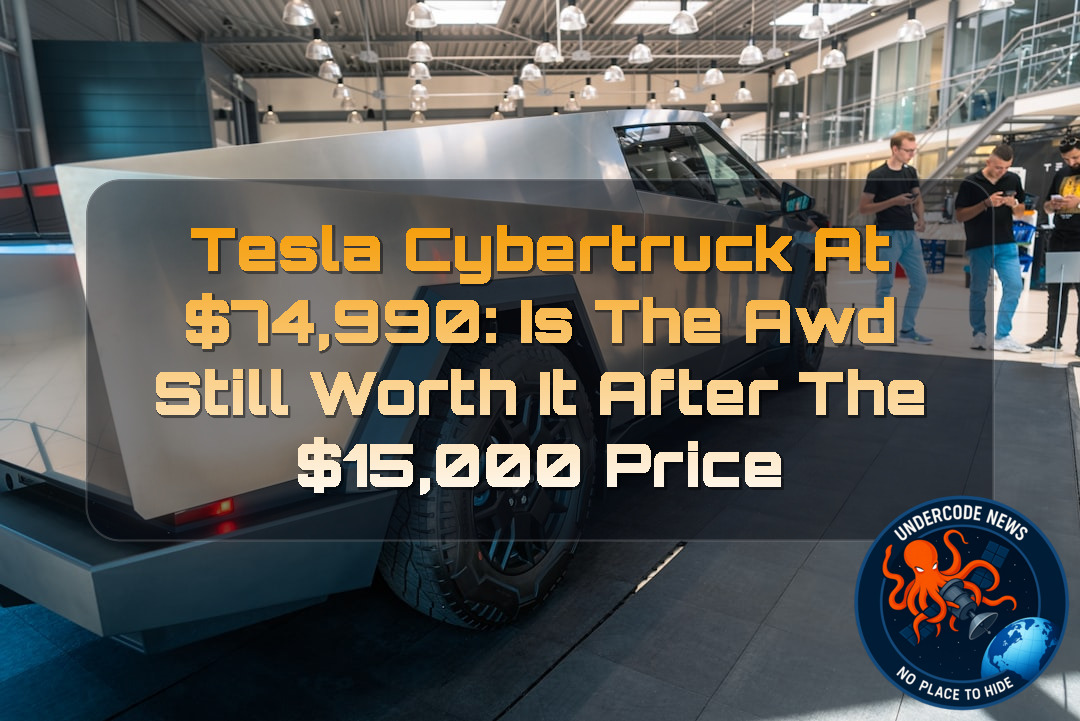 A Pickup That Became Harder to Justify Overnight
Tesla’s Cybertruck has always been a vehicle surrounded by extremes. It is visually unlike almost anything else on the road, brutally quick for a pickup, packed with unconventional engineering, and equipped with technologies that make traditional trucks feel surprisingly old-fashioned. But there is one question that has become much harder to answer: Is the Cybertruck AWD still a great deal now that its price has climbed to $74,990?
At roughly $60,000, the answer was relatively easy for enthusiasts. The all-electric pickup offered an unusual combination of performance, maneuverability, interior space, technology, and futuristic design at a price that made it difficult to ignore. After Tesla raised the AWD price from $59,990 to $74,990, however, the calculation changed dramatically.
The truck itself did not suddenly become worse. The problem is that buyers are now being asked to pay $15,000 more for essentially the same fundamental proposition.
That makes the Cybertruck an interesting test of Tesla’s strategy. Is the vehicle genuinely worth the premium because of its unique technology and driving experience, or was its earlier pricing simply too aggressive to last?
The Cybertruck’s New Pricing Changes the Entire Conversation
Tesla recently increased the price of the base Cybertruck All-Wheel-Drive model to $74,990, up from $69,990. The Premium All-Wheel-Drive version also increased by $5,000, moving from $79,990 to $84,990.
The Cyberbeast remains at $99,990.
The increases make the least expensive Cybertruck substantially more expensive than the truck Tesla originally presented to the public years ago. When the Cybertruck was unveiled in 2019, Tesla’s top configuration was advertised at $69,990. Today, the entry AWD model costs more than that original top-tier figure.
That comparison illustrates just how dramatically the
At $60,000, the AWD Was Almost Impossible to Ignore
The original $59,990 AWD price created an unusually strong value proposition.
For that money, buyers were getting a vehicle with four-wheel drive, impressive acceleration, a large cabin, substantial storage, Tesla’s software ecosystem, and one of the company’s most distinctive driving technologies: steer-by-wire.
The combination made the Cybertruck feel less like a conventional pickup and more like a completely different category of vehicle.
It was not necessarily the strongest work truck in every specification, but it offered something many competitors could not: an entertaining, technology-heavy electric pickup that was also remarkably easy to drive.
At $74,990, the Value Equation Becomes More Complicated
A $15,000 increase is not a minor adjustment.
For many buyers, $74,990 moves the Cybertruck into a price bracket where comparisons with established electric pickups and premium gasoline-powered trucks become much more serious.
At this price, buyers are no longer simply asking whether the Cybertruck is cool.
They are asking whether its advantages justify giving up capabilities that competing trucks may offer, including greater towing capacity, higher payload ratings, or longer range depending on the configuration.
That does not make the Cybertruck a bad purchase. It simply means the buyer needs to know exactly what kind of truck they want.
The Cybertruck Still Looks Like Nothing Else
The
There is almost no middle ground.
Some people see an ambitious interpretation of the future of transportation. Others see a strange, oversized geometric vehicle that looks completely disconnected from traditional pickup design.
Neither reaction is objectively correct because styling is inherently subjective.
For buyers who love the design, the Cybertruck has something almost impossible to replicate: presence. It does not blend into traffic. It does not look like a conventional pickup with an electric drivetrain underneath.
It looks like Tesla deliberately attempted to redefine what a truck should look like.
Exterior Quality Still Matters
The exterior is not without criticism.
The reviewed AWD example reportedly displayed noticeable panel-gap issues, particularly around the hood and front quarter panels. At the same time, another Cyberbeast used for comparison reportedly showed significantly better panel alignment.
That distinction is important.
One
Nevertheless, at a price approaching $75,000, buyers have every right to expect excellent exterior fit and finish.
The Wheels Are Functional but Not Everyone Will Love Them
The reviewed AWD configuration came with 18-inch Molten Wheels as standard equipment, while larger 20-inch Core Wheels paired with 35-inch tires are available.
The standard setup may not be
For a truck with such an aggressive exterior design, wheel selection can have a surprisingly large effect on its overall appearance.
Inside the Cybertruck, Comfort Is One of the Biggest Surprises
The
It is comfortable.
The reviewed truck uses textile seating material rather than the vegan leather found in other configurations. While the reviewer preferred the ventilated seats associated with the leather interior, the textile material was considered more comfortable personally.
That is an important reminder that the Cybertruck is not merely a technology demonstration.
It is also a vehicle intended to cover serious distances.
Long-Distance Comfort Could Be a Major Selling Point
One of the strongest observations from the review came after an extremely long driving day.
The reviewer described traveling approximately 610 miles and spending around 14 hours driving around Pennsylvania without experiencing the level of physical fatigue normally associated with such a long day behind the wheel.
That is a remarkable compliment for any vehicle.
The
For people who regularly take long road trips, that characteristic could matter more than raw acceleration figures.
Tesla May Have Accidentally Built a Luxury Road-Trip Truck
The
But its comfort may ultimately be one of its most underrated qualities.
A pickup that can carry large amounts of equipment while also providing a relaxed long-distance driving experience occupies a useful middle ground between a work vehicle and a premium road-trip machine.
The reviewer went so far as to describe it as a “living room on wheels.”
That characterization helps explain why the Cybertruck can appeal even to people who initially dislike the design.
The Ride Is Surprisingly Smooth
Pickup trucks traditionally prioritize toughness over softness.
The Cybertruck challenges that assumption.
Despite its enormous size and aggressive exterior, the reviewed AWD model was described as perhaps the smoothest-riding Tesla available.
That is particularly impressive because potential buyers might reasonably expect a large electric pickup to feel heavy, stiff, or cumbersome.
Instead, the Cybertruck reportedly delivers a surprisingly forgiving ride.
Steer-by-Wire Changes How the Cybertruck Feels
The most important technological feature may not be its enormous battery, acceleration, or futuristic body.
It may be steer-by-wire.
Traditional vehicles mechanically connect the steering wheel to the front wheels. The Cybertruck takes a fundamentally different approach.
This allows Tesla to dramatically alter the steering characteristics depending on driving conditions and steering input.
In practice, the technology makes a huge vehicle feel substantially more manageable.
That is one of the reasons the Cybertruck can feel so different from a conventional pickup.
A Huge Truck That Does Not Drive Like One
Size can be intimidating.
The Cybertruck is physically large, yet its steering system helps make the vehicle feel far more agile than its dimensions would suggest.
This is particularly valuable in parking lots, urban streets, tight turns, and other situations where traditional full-size pickups can feel cumbersome.
The technology does not make the Cybertruck physically smaller.
It changes how the driver interacts with that size.
Speed Remains One of the
Electric powertrains have transformed the expectations for pickup performance.
The Cybertruck is not simply capable of accelerating quickly for a truck.
It delivers the instant torque that has become one of the defining characteristics of high-performance EVs.
That means the Cybertruck can combine the practicality of a pickup with the acceleration sensation more commonly associated with sports cars.
For many owners, that combination may be one of the reasons they continue finding excuses to drive it.
Even EV Skeptics May Be Surprised
One of the more interesting observations from the review involved people who were not natural Cybertruck supporters.
According to the reviewer, people who disliked electric vehicles, disliked the Cybertruck’s appearance, or traditionally used trucks for work were impressed after driving or riding in it.
They reportedly appreciated the speed, handling, space, capability, Full Self-Driving technology, and general feel of the vehicle.
That does not prove the Cybertruck will convert every skeptic.
But it highlights an important point: experiencing the vehicle can produce a very different reaction from simply looking at photographs.
Full Self-Driving Adds Another Layer to the Value Proposition
Tesla’s Full Self-Driving system is another major differentiator in the Cybertruck equation.
The reviewed discussion points to a subscription price of $99 per month, allowing customers to access the feature without necessarily purchasing it outright.
For buyers interested in
Instead of treating FSD as an enormous upfront expense, a customer can consider it as an ongoing subscription.
Whether the feature is worth that monthly cost depends heavily on how often it is used and how much the driver values Tesla’s evolving automated-driving capabilities.
The Interior Is Not Perfect
The
One notable complaint is the limited number of USB-C ports at the front.
The front area reportedly has only one USB-C connection, and it is hidden inside the center console.
For a vehicle marketed toward technology-focused consumers, that feels unnecessarily restrictive.
The rear seats receive two ports, but front occupants may still find themselves wishing for more convenient charging options.
Cleaning the Windshield Could Be Easier
Another surprisingly practical complaint involves the windshield.
The
The reviewer specifically recommended using a cleaning tool with an extended handle to reduce the strain involved.
It is a small issue compared with the vehicle’s major engineering achievements, but small annoyances become more noticeable when living with a vehicle every day.
The Cybertruck Is Not Automatically the Best Work Truck
This distinction is critical.
Calling the Cybertruck one of the best vehicles Tesla makes is not the same thing as calling it the best pickup for every job.
Traditional truck buyers often prioritize towing capacity, payload, bed utility, range under load, durability, serviceability, and operating costs.
The Cybertruck competes extremely well in some of these areas.
But the reviewer acknowledges that other pickups can offer greater towing or payload capability and, depending on configuration and conditions, greater usable range.
That means the
Its strongest advantage is the total driving experience.
Production Problems Have Also Complicated the Story
The
Production has also faced challenges.
Tesla recently became involved in a legal dispute with Angstrom Automotive Group involving manufacturing tooling and parts connected to Cybertruck production.
According to the supplied report, Tesla sought emergency court intervention after the supplier planned to close a Texas facility where Tesla’s tooling was stored.
The dispute reportedly involved hundreds of finished parts and equipment needed for Cybertruck manufacturing.
A Court Order May Have Helped Production Recover
A temporary restraining order and writ of replevin reportedly allowed Tesla to access the facility and recover its tooling.
Shortly afterward, aerial observers reportedly saw roughly 100 or more Cybertrucks in an outbound lot at Giga Texas.
That does not constitute a perfect production measurement.
Vehicles can remain in outbound lots for days, and aerial counts cannot reveal every detail of the manufacturing process.
However, the apparent increase after a period of thinner inventory suggests that the supplier dispute may have been an important bottleneck.
Supply Chain Stability Is Critical for Cybertruck Economics
The supplier dispute illustrates a broader challenge facing any automaker.
A highly specialized vehicle can become vulnerable when its production depends on unusual components, tooling, or suppliers.
Tesla’s ability to scale Cybertruck production efficiently depends on maintaining reliable access to those parts.
This is particularly important because the company is simultaneously trying to balance manufacturing efficiency, new trims, pricing, and demand.
A vehicle can be extremely desirable and still struggle if production economics are difficult.
Tesla Is Quietly Making the Cybertruck Stronger
Tesla’s engineering work on the Cybertruck did not stop after deliveries began.
One of the more interesting updates involves the material used for underbody protection.
According to the supplied report, Tesla has moved from aluminum to carbon fiber for certain underbody panels.
The
That is a fascinating combination.
Usually, consumers associate stronger and lighter materials with higher cost.
If Tesla can achieve greater durability and lower weight while also reducing costs, the change could benefit both the vehicle and the manufacturing process.
Carbon Fiber Could Improve More Than Durability
The material change is reportedly not simply about strength.
Tesla also found that carbon fiber allowed the company to better form areas around bolts, improving the airflow beneath the truck.
Even small aerodynamic improvements matter on an electric vehicle.
Reducing aerodynamic drag can help efficiency, particularly during highway driving.
That means an underbody material change could theoretically contribute to several improvements at once: durability, weight, manufacturing economics, and aerodynamic efficiency.
Tesla’s Continuous Engineering Philosophy Is Visible Here
The Cybertruck demonstrates
Instead of treating the launch specification as permanently fixed, the company can modify components as engineers discover better solutions or manufacturing efficiencies.
That approach can be beneficial for long-term product development.
However, it can also frustrate owners who purchase an earlier version and later see hardware improvements introduced into newer vehicles.
The Cybertruck therefore remains a moving target.
The Real Question Is What Kind of Buyer You Are
The $74,990 price cannot be judged in isolation.
For someone who needs maximum towing and payload capability at the lowest possible cost, the Cybertruck may not be the obvious choice.
For someone who wants a traditional work truck with familiar styling, the Cybertruck may also be difficult to justify.
But for a driver who wants an electric pickup that feels technologically advanced, exceptionally quick, spacious, comfortable, and dramatically different from everything else, the equation changes.
Cybertruck Versus Model Y: The Experience Is Fundamentally Different
The reviewer compares the Cybertruck favorably with the Model Y and argues that the truck is the more exciting Tesla overall.
That comparison makes sense from an emotional perspective.
The Model Y is smaller, more conventional, and easier to live with in many situations.
The Cybertruck provides far more physical presence, greater storage flexibility, a pickup bed, a different driving position, and the unusual experience created by steer-by-wire.
For someone who values those qualities, the Cybertruck can feel like a substantial upgrade in experience rather than merely a larger vehicle.
The
There is an important paradox at the heart of the Cybertruck.
The product itself can be extremely impressive.
The price is what makes the purchase difficult.
At approximately $60,000, the truck could be framed as an unusually ambitious bargain.
At $75,000, it becomes a premium purchase.
That distinction matters enormously.
Customers become less forgiving of cosmetic imperfections, missing features, compromises in range, or lower work-truck specifications when they are spending close to $75,000.
Demand Is Still the Big Unknown
Tesla’s price increase can be interpreted in several ways.
One interpretation is that Tesla believes demand is strong enough to support higher prices.
Another is that Tesla is adjusting pricing to improve margins after using aggressive pricing to stimulate orders.
There may also be production and supply considerations.
The price increase alone does not prove that Cybertruck demand is booming.
But it does indicate that Tesla believes the market can absorb higher pricing for at least some versions of the vehicle.
The Original $59,990 Price May Have Been Unsustainable
Tesla reportedly said when the lower AWD price was introduced that the price would remain in place for only a limited period because of the initial order response.
That detail is significant.
The $59,990 figure created a powerful psychological anchor.
Once customers saw the Cybertruck advertised at that level, a later move toward $75,000 naturally felt like a dramatic deterioration in value.
Even if
The Cybertruck Is Now Competing With Its Own History
This may be the most difficult problem Tesla faces.
The company is not merely asking consumers to compare a $74,990 Cybertruck with other trucks.
It is asking them to forget that the vehicle was once promoted at a dramatically lower price.
A product can remain excellent while becoming less compelling as its price rises.
That is exactly what appears to have happened here.
Why the AWD Still Makes the Most Sense
Among the three configurations, the AWD model remains the most compelling choice for buyers who do not specifically need the Cyberbeast’s additional performance.
The base AWD retains many of the features that make the Cybertruck unique.
It has the same basic design, steer-by-wire system, spacious cabin, electric powertrain, and overall technological character.
Paying considerably more for the higher trims may make sense for certain buyers, but the AWD appears to offer the best balance.
The Cyberbeast Is a Different Kind of Purchase
At $99,990, the Cyberbeast enters a different category.
Its appeal is primarily centered around performance and exclusivity.
For someone who wants the most powerful Cybertruck and is willing to pay for it, the Cyberbeast can make sense.
But for the average buyer, the AWD appears to provide a stronger value proposition.
The extra money required to move toward the top configuration is difficult to justify unless the additional performance is a priority.
The Cybertruck Is More Than a Pickup
The most compelling way to understand the Cybertruck is not as a conventional truck.
It is an experiment in combining several categories.
It is a pickup, an EV, a high-performance vehicle, a technology platform, and a futuristic design statement at the same time.
That combination creates strengths that conventional specifications cannot completely capture.
A spreadsheet may show that another truck can tow more.
The spreadsheet cannot measure how much easier steer-by-wire makes the Cybertruck feel to drive.
The Emotional Factor Is Real
People buy vehicles with their heads, but they also buy them with their emotions.
The Cybertruck is arguably one of the most emotionally charged vehicles Tesla has ever produced.
Some people love it.
Some people hate it.
Very few people are indifferent.
That can be a powerful advantage for Tesla because vehicles that generate strong emotional reactions can become cultural products rather than simple transportation appliances.
The $75,000 Cybertruck Needs to Be Loved, Not Just Liked
At $59,990, a buyer could rationalize the Cybertruck through its value.
At $74,990, the buyer increasingly needs to want the Cybertruck.
That is a subtle but important shift.
A $15,000 increase makes rational compromises harder to overlook.
If someone loves the design, technology, comfort, and driving experience, the higher price may still be acceptable.
If someone is merely curious about the truck, there are now more reasons to keep shopping.
Deep Analysis
Command: Evaluate the Price Before the Technology
The first command for evaluating the Cybertruck is simple: ignore the hype and look at the price.
At $74,990, this is no longer an obvious bargain. It is a premium purchase that requires a buyer to value the Cybertruck’s unique characteristics.
Command: Separate Truck Capability From Driving Experience
The second command is to separate traditional truck performance from general vehicle enjoyment.
The Cybertruck may not win every towing or payload comparison, but that does not mean it cannot be the better vehicle for a particular owner.
Command: Treat Steer-by-Wire as a Core Feature
Steer-by-wire should not be treated as a gimmick.
It fundamentally changes how a large vehicle can behave on the road and is one of the strongest reasons the Cybertruck feels different from conventional pickups.
Command: Consider the Long-Distance Experience
The reported 610-mile driving day is particularly interesting because comfort becomes more valuable as mileage increases.
A vehicle that remains comfortable after many hours can deliver an advantage that acceleration numbers cannot communicate.
Command: Examine the Interior as a Daily Environment
The
The spacious design, comfortable seating, quiet electric drivetrain, and technology-focused environment contribute to the feeling that the vehicle is designed for extended use rather than occasional novelty.
Command: Do Not Ignore the Small Annoyances
The limited front USB-C availability and difficult windshield cleaning may sound insignificant.
They are not.
Daily ownership is built from small interactions, and small frustrations become increasingly important after the novelty disappears.
Command: Question the Panel-Fit Consistency
Panel-gap issues deserve attention because buyers paying premium prices expect premium assembly quality.
One example does not establish a universal defect, but Tesla should continue improving consistency.
Command: Watch Production Carefully
The Angstrom dispute demonstrates how quickly supply-chain problems can affect output.
For Tesla, stable Cybertruck production is critical because the company needs enough volume to support the vehicle economically.
Command: Monitor the New Materials
The move toward carbon-fiber underbody panels is a good example of Tesla’s continuous engineering approach.
If the material really delivers greater durability, lower weight, lower cost, and slightly improved efficiency, it represents meaningful engineering progress.
Command: Understand the Demand Signal
A price increase can be interpreted as confidence in demand, but it should not automatically be treated as proof of overwhelming demand.
Actual deliveries and sustained sales will provide a much clearer picture.
Command: Remember the Original Price
The original $59,990 price remains important because it established the Cybertruck’s value benchmark.
Consumers naturally compare today’s product against yesterday’s price.
Command: Compare the Whole Vehicle
A serious buyer should compare more than range and towing numbers.
Steering behavior, ride quality, interior comfort, software, charging infrastructure, storage, performance, and daily usability all matter.
Command: Identify the Perfect Cybertruck Customer
The ideal buyer is probably someone who wants a futuristic electric pickup, values technology and driving enjoyment, appreciates distinctive design, and does not require class-leading traditional truck specifications.
Command: Identify the Wrong Cybertruck Customer
Someone who primarily needs maximum payload, maximum towing, predictable conventional truck ergonomics, or the lowest purchase price may find better alternatives elsewhere.
Command: Think Beyond the Purchase Price
The monthly FSD subscription option also changes the ownership calculation.
Instead of treating advanced driver assistance as an enormous upfront purchase, some customers may prefer a recurring subscription model.
Command: Watch
Tesla’s price increases may also reveal a larger strategy.
The company cannot indefinitely rely on low pricing to generate demand if it wants sustainable margins.
Command: Watch for Further Price Changes
The recent $5,000 increases may not be the end of Cybertruck pricing adjustments.
If demand remains healthy, Tesla could have more room to experiment with pricing.
Command: Watch Customer Reaction
The most important indicator will be whether buyers continue ordering the AWD at $74,990.
If sales remain healthy, Tesla will have strong evidence that the market accepts the new positioning.
Command: Watch Inventory
Production increases without corresponding deliveries would tell a different story.
A growing inventory of unsold vehicles would suggest that higher prices may be creating resistance.
Command: Measure Real-World Efficiency
The new underbody design could make incremental efficiency improvements.
Small aerodynamic gains can become meaningful over thousands of miles, especially for a large EV.
Command: Think About Depreciation
A buyer should also consider how future pricing changes might affect used Cybertruck values.
Frequent price adjustments can make resale-value predictions more difficult.
Command: Remember That Novelty Fades
The
Long-term ownership will ultimately depend on whether the vehicle remains practical and enjoyable after the novelty disappears.
Command: Focus on the Driving Experience
This is ultimately where the Cybertruck appears to make its strongest argument.
If the vehicle genuinely feels smoother, easier to maneuver, faster, and more comfortable than conventional trucks, those advantages can justify a premium for the right buyer.
Command: Do Not Confuse Popularity With Value
A vehicle can be highly desirable without being the best value.
The
Command: Evaluate Your Actual Usage
A buyer who drives long distances and uses the truck as a daily vehicle may value the Cybertruck differently from someone who spends every weekend towing heavy equipment.
Use cases should determine the purchase.
Command: Consider the Model Y Alternative
Tesla’s Model Y remains a more conventional option and may be easier to justify for buyers who do not need a pickup.
But for those who want truck utility combined with Tesla’s technology, the Cybertruck offers a fundamentally different experience.
Command: Look at the Entire Tesla Lineup
The
It is not simply another crossover or sedan.
It gives Tesla a vehicle with a very different identity.
Command: Judge the AWD on Its Own Merits
The AWD model does not need to outperform every truck in every category.
It needs to deliver enough capability while offering advantages that competitors cannot easily reproduce.
Command: Treat $75,000 as a Premium Threshold
Once the price approaches $75,000, expectations change.
The Cybertruck needs to deliver a premium ownership experience, not merely impressive specifications.
Command: Watch
The carbon-fiber underbody update suggests Tesla is still searching for ways to simplify production while improving the vehicle.
That could become increasingly important as the Cybertruck matures.
Command: Separate Engineering From Marketing
Tesla’s claims about strength, durability, and technology should always be evaluated against real-world evidence.
The
Command: Consider the Competition
The electric pickup market is becoming increasingly competitive.
The
Its defense is being unmistakably different.
Command: Ask Whether Different Is Worth $15,000
This may be the central question.
The Cybertruck at $74,990 is asking customers to pay significantly more than the original AWD launch price.
The buyer must decide whether the unique experience is worth the premium.
Command: Focus on the Long-Term Product
The most encouraging aspect of the Cybertruck story may be Tesla’s continued hardware development.
The company is still changing materials, improving manufacturing, and refining the vehicle.
That suggests the Cybertruck should continue evolving.
Command: Judge the Cybertruck as a Complete Package
When all factors are combined, the Cybertruck remains an impressive vehicle.
Its weaknesses are real, but so are its strengths.
Command: Final Analytical Verdict
At $60,000, the Cybertruck AWD looked like an exceptional deal.
At $75,000, it becomes a much more personal decision.
For the right driver, it can still be worth the money.
For a buyer focused primarily on traditional truck capability per dollar, it is much harder to recommend.
What Undercode Say:
The Price Increase Changes the Narrative
The most important development is not that the Cybertruck suddenly became worse. It is that Tesla changed the value proposition.
The Product Still Has a Strong Identity
Very few vehicles can create the same combination of curiosity, controversy, technology, and emotional response.
Steer-by-Wire Is a Genuine Differentiator
The technology gives Tesla an opportunity to make a large pickup feel much more agile and approachable.
Comfort Could Be More Important Than Speed
The
Tesla Has Built an Unusual Daily Driver
The Cybertruck appears capable of being both a practical truck and a comfortable road-trip vehicle.
The $15,000 Difference Matters
A $15,000 increase is large enough to fundamentally change a buyer’s calculation.
$74,990 Is No Longer a Bargain Price
The Cybertruck must now be evaluated as a premium vehicle rather than a disruptive low-priced EV.
Tesla Is Betting on Differentiation
The higher price suggests Tesla believes the
The Competition Still Has Important Advantages
Other pickups can offer stronger traditional truck specifications in areas such as towing and payload.
Tesla’s Advantage Is the Experience
The
The Interior Is Surprisingly Strong
Comfort appears to be one of the
Small Interior Weaknesses Remain
The limited front USB-C connectivity is an unnecessary compromise in a technology-heavy vehicle.
Manufacturing Quality Needs Consistency
Panel-gap variation remains an area Tesla should continue improving.
Supply Chain Problems Cannot Be Ignored
The supplier dispute demonstrates how vulnerable specialized production can become.
Production Recovery Is Encouraging
The reported increase in vehicles at the outbound lot suggests Tesla may have overcome at least part of the recent bottleneck.
A Lot Full of Trucks Is Not the Same as Sales
Inventory observations should be treated as signals rather than definitive proof of demand.
Carbon Fiber Is an Interesting Engineering Move
Using a lighter and reportedly more durable material underneath the vehicle could improve several aspects simultaneously.
Tesla’s Continuous Updates Are a Strength
The company continues modifying the Cybertruck instead of treating the launch configuration as final.
Continuous Changes Can Also Frustrate Owners
Earlier customers may watch newer versions receive hardware improvements that their vehicles do not have.
The AWD Is Still the Sweet Spot
For most buyers, the AWD seems to provide the best balance between price, performance, technology, and capability.
The Cyberbeast Is for a Different Buyer
The $99,990 Cyberbeast makes more sense for someone prioritizing extreme performance than for someone seeking maximum value.
FSD Adds Another Dimension
The subscription approach makes
The Cybertruck Is Not for Everyone
That is not necessarily a weakness.
Products with a clear identity can be more successful with a specific audience than products designed to appeal to everyone.
Styling Will Always Divide Buyers
Some consumers will never accept the
Technology Can Change That Opinion
People who experience the vehicle may respond differently from people judging it from photographs.
The Original Price Will Keep Haunting Tesla
The $59,990 launch point created an expectation that is difficult to erase.
Tesla Needs to Prove the New Price
The strongest evidence will come from sustained customer demand and deliveries.
The Truck Needs More Than Hype
At nearly $75,000, long-term customer satisfaction will matter more than launch excitement.
The Driving Experience Is the
A buyer may forget a specification difference but remember how a vehicle feels every time they drive it.
The Cybertruck Could Become a Tesla Icon
Its design, technology, and cultural impact give it the potential to become one of Tesla’s most recognizable vehicles.
But Iconic Does Not Mean Cheap
The Cybertruck has moved away from its original value proposition.
The Premium Needs to Be Justified
Tesla must continue improving quality and capability to make the higher price feel reasonable.
Production Efficiency Will Matter
Better materials and supplier stability can help Tesla protect margins while improving the vehicle.
The Next Phase Is More Important Than the Launch
The
The AWD Remains the Rational Choice
Among the current trims, the AWD appears to provide the strongest balance.
The Emotional Choice Is Also the Rational Choice for Some
For buyers who value its unique technology and driving experience, paying more may still make sense.
The Final Verdict Is Conditional
At $75,000, the Cybertruck is no longer an automatic bargain.
But It Remains an Extraordinary Vehicle
Its combination of design, performance, comfort, technology, and maneuverability remains difficult to replicate.
Tesla Has Not Ruined the Cybertruck
It has simply made the purchasing decision more difficult.
The Real Test Begins at $74,990
If buyers continue choosing the AWD at this price, Tesla will have demonstrated that the Cybertruck’s appeal extends beyond its original bargain pricing.
✅ The supplied article reports that Tesla raised the Cybertruck AWD price to $74,990 from $69,990 and the Premium AWD to $84,990, while the Cyberbeast remained at $99,990.
✅ The supplied material reports a temporary restraining order and writ of replevin involving Tesla’s dispute with Angstrom Automotive Group and says Cybertruck inventory at Giga Texas subsequently appeared to increase.
❌ The claim that the Cybertruck is definitively "the best" pickup on the market is an opinion rather than an independently measurable fact; towing, payload, range, price, comfort, technology, and driving preferences can produce different conclusions.
❌ Reports of roughly 100 or more Cybertrucks in an outbound lot should not be interpreted as an exact production or sales figure because vehicles can remain in staging areas for varying periods.
Prediction
(+1) The Cybertruck AWD is likely to remain one of Tesla’s most distinctive and technologically interesting vehicles, particularly for buyers who prioritize driving experience, steer-by-wire, comfort, performance, and design over maximum traditional truck specifications.
(+1) Tesla’s continued engineering changes, including the reported carbon-fiber underbody panels, could gradually improve the Cybertruck’s durability, efficiency, and manufacturing economics.
(+1) If production becomes more stable after supplier-related disruptions, Tesla may be able to maintain a more consistent flow of Cybertrucks to customers and reduce manufacturing bottlenecks.
(-1) The $74,990 starting price will make the Cybertruck harder to recommend to value-focused buyers, especially those who compare it primarily on towing, payload, range, or conventional truck utility.
(-1) The higher price could limit the Cybertruck’s ability to attract customers who were interested at $59,990 but no longer consider the vehicle affordable.
(+1) The AWD is likely to remain the most attractive Cybertruck configuration for mainstream buyers because it retains the vehicle’s signature technology and character without reaching the $99,990 level of the Cyberbeast.
(-1) Tesla may face increasing pressure to demonstrate that Cybertruck demand remains strong at the new prices, particularly as buyers have more electric and conventional pickup alternatives.
(+1) If Tesla succeeds in improving production efficiency while maintaining the Cybertruck’s unique driving experience, the vehicle could become a stronger long-term product even if it never becomes the volume leader of the overall pickup market.
The Final Verdict: Still Special, But No Longer an Obvious Steal
The Cybertruck AWD at $59,990 was easy to romanticize as a bargain.
At $74,990, the argument requires more nuance.
The truck is still exceptionally distinctive. It remains fast, comfortable, technologically ambitious, and unusually easy to maneuver for something of its size. Its steer-by-wire system gives it a personality that conventional pickups cannot easily reproduce, while its spacious interior and smooth ride make it surprisingly capable as a long-distance daily driver.
But the $15,000 increase changes the standard buyers should apply.
The Cybertruck no longer needs to be judged against other vehicles simply by asking which truck has the most features. It needs to be judged as a premium purchase where every compromise matters.
For the buyer who wants maximum towing and payload for every dollar, there are reasons to look elsewhere.
For the buyer who wants a traditional pickup experience, the Cybertruck may never make sense.
But for someone who wants a vehicle that combines pickup utility with extraordinary technology, instant electric performance, a comfortable cabin, steer-by-wire handling, and a design that refuses to disappear into the crowd, the Cybertruck remains difficult to ignore.
At $60,000, it was a steal. At $74,990, it is a statement — and buyers now have to decide whether that statement is worth the premium.
▶️ Related Video (78% Match):
🕵️📝Let’s dive deep and fact‑check.
🎓 Live Courses & Certifications:
Join Undercode Academy for Verified Certifications
🚀 Request a Custom Project:
Secure, high-velocity infrastructure and disruptive technological engineering. Contact our engineering team for high-tier development and proprietary systems:
[email protected]
💎 Smart Architecture | 🛡️ Secure by Design | ⭐ Trusted by Thousands
References:
Reported By: www.teslarati.com
Extra Source Hub (Possible Sources for article):
https://www.quora.com
Wikipedia
OpenAi & Undercode AI
Image Source:
Unsplash
Undercode AI DI v2
🔐JOIN OUR CYBER WORLD [ CVE News • HackMonitor • UndercodeNews ]
📢 Follow UndercodeNews & Stay Tuned:
𝕏 formerly Twitter 🐦 | @ Threads | 🔗 Linkedin | 🦋BlueSky | 🐘Mastodon | 📺Youtube


