
Listen to this Post
Introduction
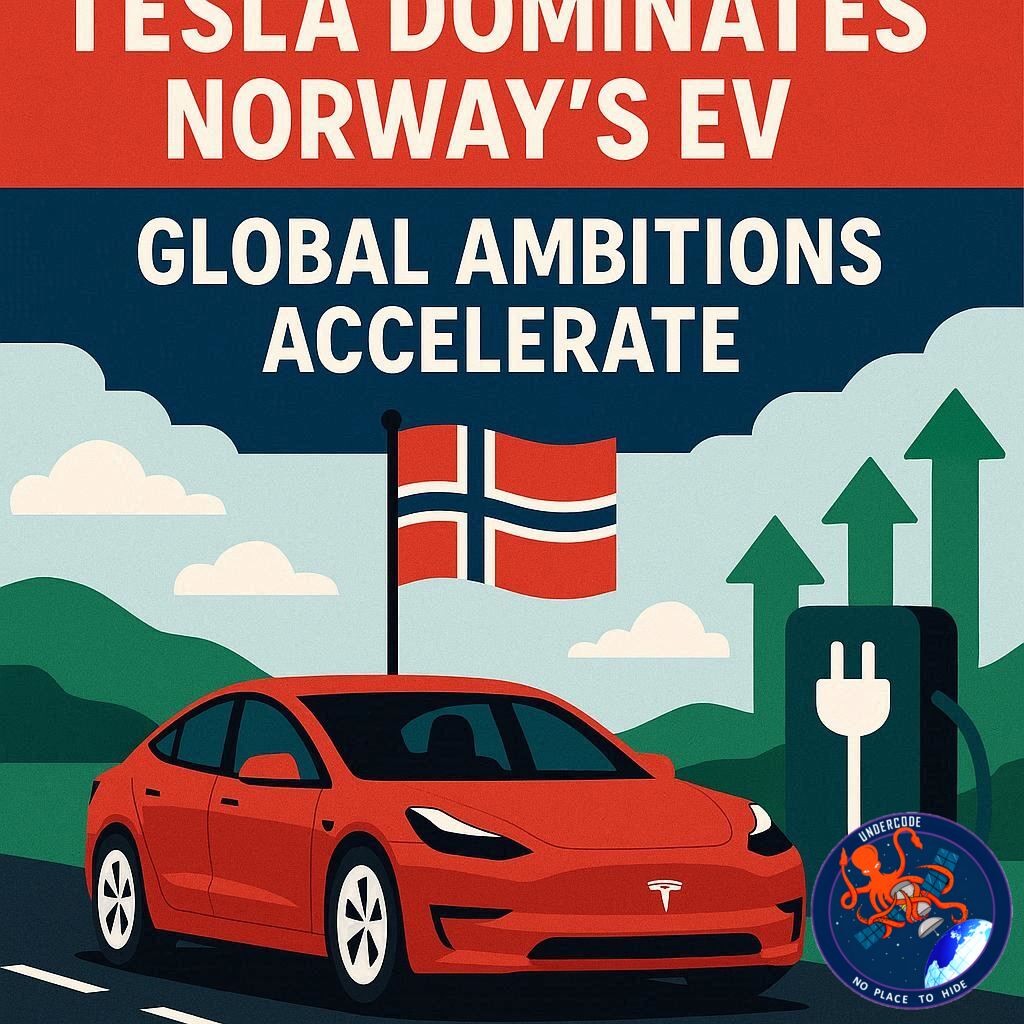
Norway’s electric vehicle (EV) market continues to set astonishing benchmarks, and February 2026 proved yet again that Tesla is leading the charge. With EVs accounting for over 98% of new car registrations, Norway’s transition from fossil fuels to fully electric transport is faster than many experts anticipated. Tesla not only regained its top position in the domestic market but also demonstrated the resilience of its Model Y and the brand’s overall demand, signaling a potential blueprint for global EV adoption. Beyond Norway, Tesla and SpaceX are making headlines with ambitious technology expansions, from Full Self-Driving (Supervised) milestones to next-generation Starlink Mobile satellites promising 5G-level connectivity.
Tesla Reclaims the Norwegian Market Lead
After a challenging January caused by VAT-driven purchasing shifts, February saw Tesla surge back to the top. The Tesla Model Y recorded 1,073 registrations, capturing a 14.8% market share. Overall, Tesla became the leading brand in Norway with 1,210 units sold, translating to a 16.6% share. Toyota, Volkswagen, Volvo, and Skoda rounded out the top five brands, but none approached Tesla’s dominance. The Norwegian Road Traffic Information Council (OFV) reported a total of 7,127 new EV registrations out of 7,272 total cars, meaning fossil-fuel and hybrid vehicles represented just 2% of the market.
Market Recovery After VAT Adjustments
January’s slump, which saw sales drop nearly 75% year-over-year, was largely a timing effect tied to VAT rule changes rather than weakening demand. OFV Director Geir Inge Stokke highlighted that similar trends were observed after VAT adjustments in 2022, where temporary dips were followed by rapid recoveries. February’s rebound confirms that Norway’s EV appetite remains robust, with Tesla positioned to benefit from sustained market momentum.
Tesla Model Y: The Comeback Star
The Model Y’s rebound from seventh place in January to the top of Norway’s February chart underscores its enduring popularity. Tesla’s ability to regain its market share rapidly indicates that timing effects, not consumer preference, drove the temporary slowdown. The ongoing rollout of Tesla’s Full Self-Driving (Supervised) system in Europe may further boost sales, positioning the company for another year of growth in the region.
Tesla Faces Legal Challenges in the U.S.
Meanwhile, Tesla is navigating legal hurdles abroad. A Las Vegas man, Paul Hyon Kim, pleaded guilty to federal arson charges for an attack on a Tesla Collision Center in March 2025. Kim used firearms and Molotov cocktails to damage multiple vehicles. He faces a potential sentence of up to 70 years, with sentencing scheduled for May 27, 2026. The case involved multiple agencies, including the FBI and ATF, highlighting the heightened scrutiny and risks associated with Tesla’s global presence.
SpaceX Prepares Starlink Mobile Expansion
Elon Musk’s SpaceX is pushing the envelope with Starlink Mobile V2, promising full 5G-level connectivity via next-generation satellites. The upgraded V2 satellites will deliver up to 100 times the data density of the current system, functioning as “cell towers in space” with phased-array antennas and laser interlinks. Users can expect streaming, high-speed apps, and voice services comparable to terrestrial networks, enabling connectivity in previously unreachable areas. Starlink Mobile’s global partnerships currently reach 1.7 billion people across 32 countries.
Tesla’s Full Self-Driving Milestone
Tesla’s Full Self-Driving (Supervised) system has now surpassed 8.4 billion cumulative miles, marking significant progress toward Elon Musk’s 10 billion-mile benchmark for safe unsupervised driving. The system leverages massive real-world driving data to improve neural network performance, learning rare and complex scenarios. Growth in FSD miles has been exponential, from 6 million in 2021 to 4.25 billion in 2025, with an additional 1 billion miles logged in just the first 50 days of 2026.
What Undercode Says: Tesla’s Strategic Momentum and Industry Implications
Tesla’s Resilient Market Position
Tesla’s rapid recovery in Norway illustrates that its brand loyalty and Model Y demand remain strong. VAT-driven dips are short-term disruptions, and Tesla’s continued dominance signals that the company’s growth trajectory in mature EV markets remains robust.
Implications of FSD Supervised Expansion
The milestone of 8.4 billion miles demonstrates Tesla’s ability to accumulate real-world driving data at scale. This positions Tesla not only as a car manufacturer but also as a leading AI-driven mobility platform. Full Self-Driving advancements will likely drive further vehicle adoption, insurance integration, and regulatory dialogue in Europe and North America.
Starlink Mobile as a Connectivity Game-Changer
SpaceX’s Starlink Mobile V2 represents a paradigm shift in global communications. By functioning as space-based cellular infrastructure, it could disrupt traditional mobile carriers, particularly in regions lacking terrestrial coverage. Integrating satellite networks with LTE/5G devices creates a new connectivity standard that could support Tesla’s autonomous vehicles globally.
Legal and Security Considerations
The Nevada arson case highlights Tesla’s vulnerability to security threats, particularly as its vehicles and infrastructure become more visible and influential. Legal risks, though currently isolated, may affect public perception and insurance models.
Global EV Market Signals
Norway’s 98% EV market share is a microcosm of the EV transition’s potential. Governments worldwide are incentivizing electrification, and Tesla’s performance provides insight into consumer adoption patterns, charging infrastructure demands, and technology integration trends.
Strategic Growth Outlook
Tesla’s European FSD rollout, continued Model Y dominance, and Starlink Mobile’s technological leap suggest a multi-pronged growth strategy. Each of these elements reinforces Tesla’s ecosystem approach: vehicle sales, autonomous driving, and connected infrastructure working in tandem.
Market Timing and Policy Sensitivity
The market’s sensitivity to VAT adjustments underscores the impact of fiscal policies on EV adoption. Tesla’s ability to navigate such shifts effectively indicates strategic pricing and inventory management capabilities.
Competitive Landscape
While Toyota, Volkswagen, and Volvo maintain steady sales, Tesla’s technology-driven differentiation positions it uniquely. Competitors may need to accelerate EV innovation and autonomous capabilities to challenge Tesla’s trajectory.
Consumer Behavior and Adoption Patterns
The rapid recovery of sales after January demonstrates that early adopters prioritize access to Tesla’s technology and performance. This indicates that consumer preference is increasingly tech-driven rather than price-sensitive, an important consideration for other EV manufacturers.
Integration of Space and Mobility
Starlink Mobile’s capabilities could directly benefit Tesla vehicles in remote or underserved regions, enhancing the feasibility of fully autonomous operations and providing a competitive edge over traditional EV and mobility providers.
Long-Term Data Accumulation Advantage
Accumulating billions of FSD miles provides Tesla with an unparalleled dataset for AI training. Competitors with smaller fleets or slower adoption rates will face significant challenges in matching Tesla’s autonomous capabilities.
Risk Management and PR Implications
Tesla’s high-profile legal incidents underscore the need for proactive risk management and robust public relations strategies to maintain consumer trust and investor confidence.
Regulatory Trends
With FSD deployment pending further approval, Tesla’s interactions with regulators will shape not only company growth but also broader EV and autonomous driving policy frameworks globally.
Technological Synergy
The synergy between Starlink Mobile, autonomous vehicles, and Tesla’s global fleet represents a holistic approach to integrated mobility, potentially creating a new standard for connected transportation systems worldwide.
Investment and Market Confidence
Tesla’s dominance in Norway and technological innovations are likely to bolster investor confidence, reflecting long-term growth prospects despite temporary setbacks from policy-driven sales fluctuations.
Environmental and Policy Implications
Norway’s 98% EV adoption signals a potential pathway for other countries to achieve rapid decarbonization in transport. Tesla’s model offers both a technological and strategic roadmap.
Global Expansion Potential
Beyond Norway, Tesla’s ability to leverage technology, regulatory engagement, and consumer adoption positions it for scalable expansion in Europe, North America, and Asia-Pacific markets.
Consumer Trust in Technology
The combination of FSD performance data, Starlink connectivity, and vehicle quality strengthens Tesla’s brand credibility, likely fostering continued loyalty and new customer acquisition.
Supply Chain Considerations
Maintaining consistent deliveries during VAT and market fluctuations highlights Tesla’s supply chain resilience, an essential factor in sustaining growth in multiple markets simultaneously.
Competitive Differentiation
Tesla’s integrated ecosystem—vehicles, FSD, Starlink—provides differentiation that competitors may find difficult to replicate, reinforcing the company’s first-mover advantage.
Market Predictability and Policy Adaptation
The Norwegian experience demonstrates how external factors, such as tax policy, can temporarily distort sales but not long-term demand trends. Tesla’s strategic agility is a key competitive advantage.
Technological Leadership
Tesla’s neural network-based FSD and space-based connectivity showcase leadership in high-tech mobility solutions, setting benchmarks for innovation across industries.
Brand Resilience
Recovering market share after January’s dip highlights Tesla’s resilience and consumer confidence in its products, an important indicator for global adoption rates.
Integration of Autonomous and Connected Systems
The combined development of FSD and Starlink creates a blueprint for fully integrated, autonomous, and connected transportation systems capable of operating at scale.
Strategic Forecasting
Tesla’s continued data-driven approach, combined with regulatory and technological innovation, positions it well for sustained leadership in EV and autonomous mobility sectors worldwide.
Long-Term Market Influence
Norway’s data suggests Tesla could set trends in fleet electrification, charging infrastructure development, and adoption patterns that other automakers may follow.
Environmental Leadership
Tesla’s dominance contributes directly to reducing emissions, providing a visible case study for policymakers and other automakers in achieving carbon neutrality.
Technological Ecosystem Expansion
The synergy between Tesla vehicles, FSD, and Starlink Mobile reflects an ecosystem approach that enhances customer value while establishing barriers to entry for competitors.
Consumer-Centric Innovation
Tesla’s focus on integrating AI, connectivity, and advanced driving features demonstrates a strong alignment with evolving consumer expectations for technology-driven mobility.
Global Industry Benchmark
By combining vehicle sales, autonomous driving, and satellite connectivity, Tesla is setting a global benchmark for integrated EV and mobility ecosystems.
Investor and Market Signaling
Norway’s market performance and Tesla’s technological advancements send strong signals to investors about the company’s long-term growth trajectory and innovation capacity.
Ecosystem Synergies and Competitive Moats
Tesla’s overlapping capabilities in FSD, Starlink, and vehicle manufacturing create competitive moats, making it challenging for traditional automakers to replicate the company’s integrated model.
FSD Data Advantage
Accumulated driving data gives Tesla a unique advantage in AI training, supporting safer autonomous driving and strengthening regulatory credibility.
Strategic Implications for Competitors
Rivals must consider technology, market agility, and policy adaptation to compete with Tesla’s integrated approach effectively.
Market Signal for Policymakers
Norway’s EV dominance provides a clear signal to policymakers that supportive fiscal policies, infrastructure, and incentives can dramatically accelerate EV adoption.
Technological and Market Leadership
Tesla’s leadership in EV sales, autonomous driving, and connectivity positions the company as a central figure in shaping the future of mobility.
🔍 Fact Checker Results
Norway’s EV market share reached 98% in February 2026 ✅
Tesla Model Y recorded 1,073 registrations with a 14.8% market share ✅
Tesla FSD Supervised cumulative miles surpassed 8.4 billion miles ✅
📊 Prediction
Tesla is likely to maintain its dominance in Norway for the remainder of 2026, supported by policy stability and the launch of FSD in Europe. Global expansion of Starlink Mobile may accelerate Tesla’s autonomous mobility initiatives, potentially reshaping connectivity and self-driving adoption in underserved regions. With continued fleet growth and data accumulation, Tesla could reach the 10 billion FSD mile benchmark within the year, setting the stage for broader regulatory approval and commercialization of autonomous services.
🕵️📝✔️Let’s dive deep and fact‑check.
References:
Reported By: www.teslarati.com
Extra Source Hub (Possible Sources for article):
https://www.quora.com/topic/Technology
Wikipedia
OpenAi & Undercode AI
Image Source:
Unsplash
Undercode AI DI v2
Bing
🔐JOIN OUR CYBER WORLD [ CVE News • HackMonitor • UndercodeNews ]
📢 Follow UndercodeNews & Stay Tuned:
𝕏 formerly Twitter 🐦 | @ Threads | 🔗 Linkedin | 🦋BlueSky | 🐘Mastodon


