
Listen to this Post
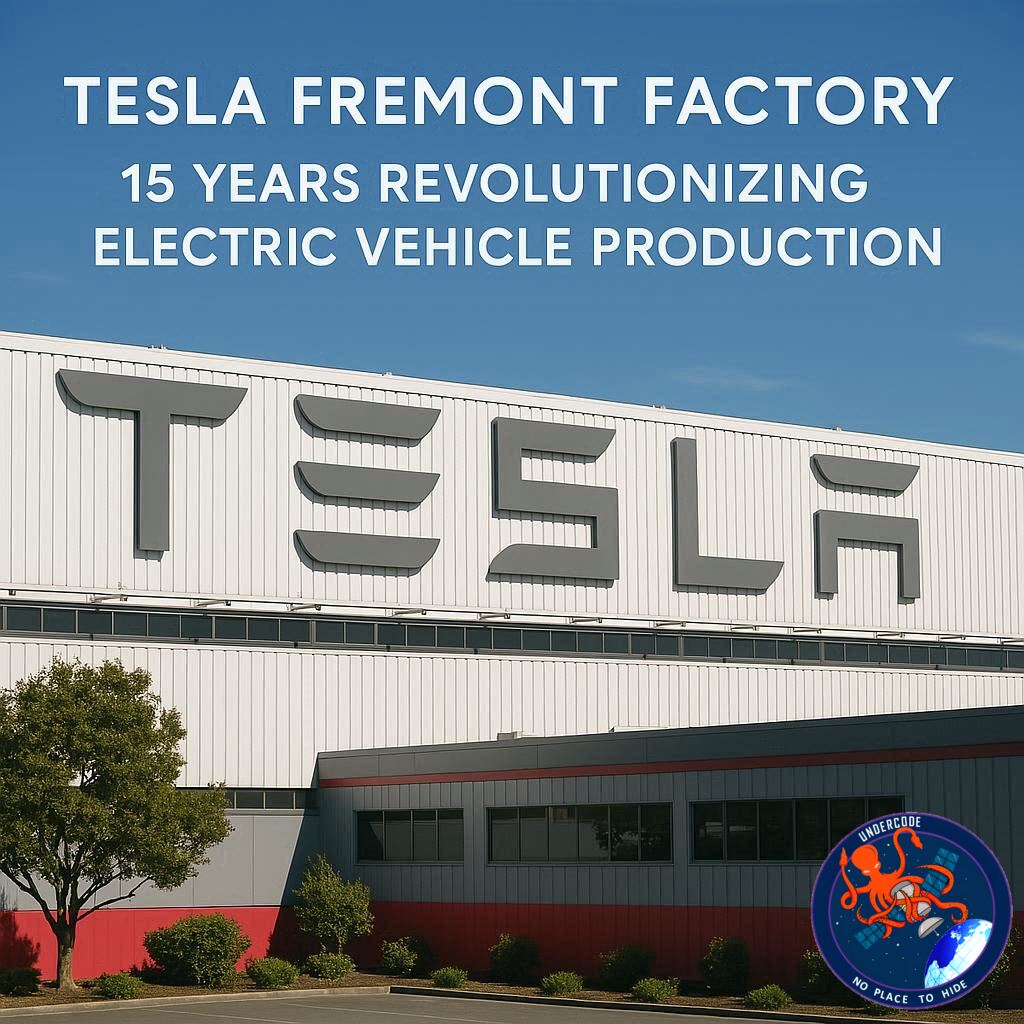
For 15 years, Tesla’s Fremont Factory has stood as a symbol of innovation, resilience, and the transformative power of electric mobility. Since its acquisition in 2010, the Fremont facility has become the beating heart of Tesla’s North American production, driving forward the company’s mission to accelerate the world’s transition to sustainable energy. Beyond producing vehicles, it has created tens of thousands of jobs, attracted billions in regional investment, and reshaped how automotive manufacturing operates in the 21st century.
Celebrating a Milestone in EV Manufacturing
Tesla officially commemorated the Fremont Factory’s 15th anniversary by showcasing a striking photo of several Teslas forming a “15” in front of the facility. Since opening, the factory has produced all four of Tesla’s iconic “S3XY” models—Model S, 3, X, and Y—totaling 3.6 million vehicles. Its presence has generated over 20,000 jobs in California, bolstering the local economy and cementing Tesla as a key industrial player in the state. The anniversary not only highlights Tesla’s production achievements but also underscores the broader shift toward electrification in the automotive sector.
From NUMMI to Tesla: A Transformation Story
The Fremont Factory’s journey began long before Tesla’s acquisition. Originally part of the NUMMI joint venture between General Motors and Toyota, the plant had produced over 8 million vehicles in 26 years. Tesla acquired it for $42 million in May 2010 and immediately began an ambitious transformation. Over 5.3 million square feet were retooled to support the Model S sedan, laying the foundation for the company’s electric vehicle production empire. Today, the Fremont Factory assembles all four core Tesla models, with annual output surpassing 550,000 vehicles—nearly 560,000 alone in 2023. Plans for future products like the next-generation Roadster and Optimus further demonstrate the facility’s strategic importance.
Tesla’s Next-Generation Roadster: A Glimpse Ahead
Tesla recently posted its first job opening explicitly tied to the next-generation Roadster, signaling that production is approaching its early stages. The role involves designing and implementing new battery manufacturing systems, a critical component given the Roadster’s teased 620-mile range and high-performance specs. Elon Musk has also hinted at a major year-end demonstration at the Tesla Design Studio, fueling speculation that the production-ready Roadster may soon be revealed. Since its 2018 unveiling, the Roadster has remained in development, overshadowed by other Tesla launches such as the Model Y, refreshed Model S and X, Cybertruck, and Semi.
Tesla China Expands Renewable Energy Efforts
While Fremont celebrates its legacy, Tesla’s global manufacturing footprint continues to embrace sustainability. Gigafactory Shanghai’s rooftop solar system now generates 11 million kWh annually, reducing carbon emissions by roughly 4,600 tons. Additional installations at the Shanghai Megafactory are expected to contribute another 6 million kWh, furthering Tesla’s commitment to green energy. Beyond manufacturing, Tesla is extending clean energy practices to its service centers and retail operations, demonstrating an integrated approach to sustainability from production to end-use.
Tesla and Political Dynamics
Amid manufacturing milestones, Tesla’s CEO Elon Musk also navigates political landscapes. Former President Donald Trump recently confirmed a positive relationship with Musk following a period of public tension. Their improved rapport underscores Musk’s ability to maintain strategic relationships while focusing on technological and production goals. Meanwhile, Musk continues to voice concerns on policy matters, ensuring Tesla’s ambitions are supported without compromise.
What Undercode Say:
The Fremont Factory stands as more than just a production facility; it is the nerve center of Tesla’s EV strategy and a model of industrial transformation. Its 15-year history reflects a blend of aggressive innovation and adaptive strategy. Acquiring NUMMI and retooling it for electric vehicle production was a gamble that has paid off exponentially, not only in vehicle output but also in shaping California’s industrial landscape. Producing over 3.6 million vehicles and creating tens of thousands of jobs demonstrates how technological vision can drive regional economic growth.
Tesla’s approach to manufacturing integrates vertical integration, rapid iteration, and high scalability. The Fremont Factory has become a template for how EVs can be mass-produced without compromising innovation. Each model rollout, from the Model S to the Y, reflects lessons learned from previous iterations, showing an evolution of engineering, software integration, and efficiency. The Roadster job listing hints at a strategic pivot toward high-performance flagship vehicles, indicating that Tesla is balancing mass-market appeal with cutting-edge niche products.
Global expansion, especially in Shanghai, highlights Tesla’s understanding that sustainability and cost-efficiency are intertwined. Rooftop solar installations and energy storage initiatives demonstrate a holistic approach to clean energy, extending beyond vehicles into operational infrastructure. This aligns with Tesla’s long-term vision of a renewable energy ecosystem where production, storage, and consumption are seamlessly integrated.
Politically, Tesla’s navigation of U.S. administration dynamics reveals a sophisticated balancing act. Positive relations with figures like Trump, alongside vocal advocacy on critical policy issues, suggest that Tesla is positioning itself not only as a technology leader but also as a politically savvy industrial player. The combination of innovation, sustainability, and strategic diplomacy ensures Tesla remains resilient amid global market and policy shifts.
Looking ahead, the Fremont Factory may serve as the prototype for Tesla’s next generation of production hubs, including potential expansions for Optimus and the Roadster. As production efficiency rises, so too does the potential for Tesla to redefine automotive norms globally. Fremont is more than a factory—it is a symbol of industrial reinvention, a laboratory of electric mobility, and a benchmark for future manufacturing excellence.
Fact Checker Results:
✅ Fremont Factory has produced 3.6 million vehicles since 2010.
✅ Tesla has created over 20,000 jobs in California through Fremont operations.
✅ Gigafactory Shanghai rooftop solar generates 11 million kWh annually, reducing 4,600 tons of CO₂ emissions.
Prediction:
🚀 The next-generation Roadster is likely to enter early production phases at Fremont by 2026, with Tesla using it as a testbed for ultra-high-performance EV technologies.
🔋 Tesla will continue expanding renewable energy initiatives globally, integrating solar and storage solutions into every new manufacturing site.
⚡ Fremont may evolve into a multi-product hub, including Optimus and other future Tesla innovations, setting new benchmarks for automated, sustainable vehicle production.
🕵️📝✔️Let’s dive deep and fact‑check.
References:
Reported By: www.teslarati.com
Extra Source Hub (Possible Sources for article):
https://www.stackexchange.com
Wikipedia
OpenAi & Undercode AI
Image Source:
Unsplash
Undercode AI DI v2
Bing
🔐JOIN OUR CYBER WORLD [ CVE News • HackMonitor • UndercodeNews ]
📢 Follow UndercodeNews & Stay Tuned:
𝕏 formerly Twitter 🐦 | @ Threads | 🔗 Linkedin | 🦋BlueSky | 🐘Mastodon


