
Listen to this Post
 Introduction: A Luxury EV Suddenly Becoming the Fastest-Moving Asset in America
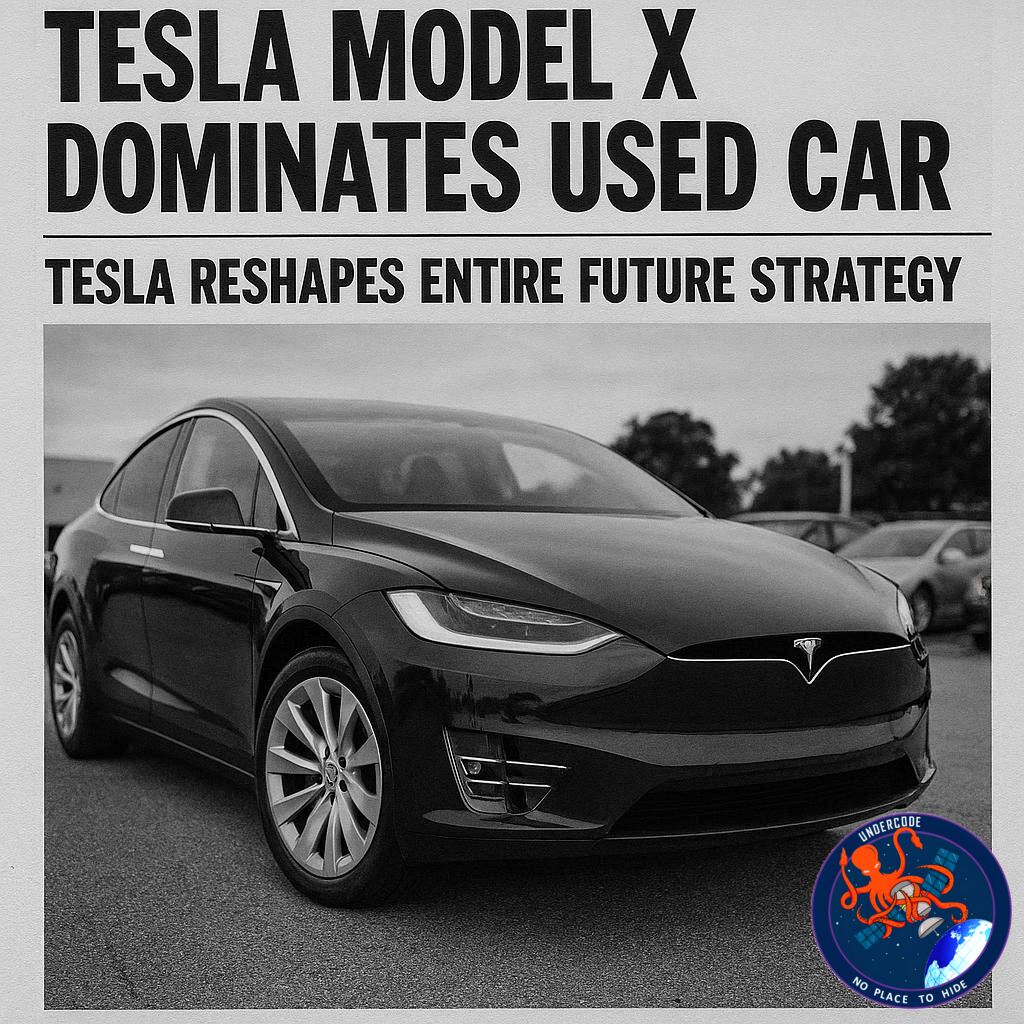
The used car market in the United States has delivered an unexpected shock, and at the center of it is the Tesla Model X. Once considered a niche luxury electric SUV, it has now become the fastest-selling used vehicle in the country. In just over 25 days on average, it disappears from listings, outpacing nearly every competitor, including traditional hybrids and premium gasoline SUVs. This surge is not happening in isolation. It reflects a broader reshaping of Tesla’s product strategy, production priorities, and long-term technological direction. While Tesla prepares to phase out its flagship luxury models, demand for them in the secondary market is intensifying rather than fading. At the same time, Tesla is pushing aggressively into robotics, heavy trucking, and next-generation autonomy software, signaling a company in the middle of a structural transformation.
the Original (Used Car Market Shock & Tesla Transition)
The Tesla Model X has become the fastest-selling used car in the United States, averaging just 25.6 days on the market during Q1. It outperformed all other vehicles, including the Lexus RX 350h, which ranked second. Other Tesla models such as the Cybertruck, Model Y, and Model S also appeared in the top rankings, showing strong secondary-market demand across the brand.
Tesla has reportedly confirmed plans to discontinue both the Model S and Model X to prioritize production capacity for its Optimus humanoid robot at its Fremont Factory. This marks a major strategic shift away from luxury passenger EVs toward robotics and AI-driven manufacturing.
Despite this, Tesla vehicles continue to hold unusually stable resale values. While non-Tesla EVs dropped over 10% in value year-over-year, Tesla prices remained almost unchanged. Gasoline vehicles declined moderately by around 2.8%, highlighting Tesla’s resilience in depreciation compared to competitors.
Industry analyst Karl Brauer noted that non-Tesla EVs are losing value much faster than Tesla vehicles or hybrids. Market data shows EV adoption is rising, but competition among non-Tesla brands is increasing, causing price pressure and depreciation.
The Model X’s strong performance is partly attributed to its potential discontinuation, which may have increased scarcity and demand in the used market. Buyers who want Tesla’s premium SUV are increasingly turning to second-hand models as new production winds down.
In parallel, Tesla’s Cybertruck faced criticism after a stripped-down rear-wheel-drive variant performed poorly in sales. It lacked key features while offering only a modest price reduction, leading to weak demand and eventual discontinuation of that trim.
Tesla Semi production has officially scaled up, with a planned output of up to 50,000 units annually. Built in Nevada, the Semi benefits from vertically integrated battery production and is positioned to reduce freight costs significantly compared to diesel trucks.
Finally, Tesla is rolling out updates for older Hardware 3 vehicles, introducing a “FSD V14 Lite” version. While full unsupervised autonomy is not possible on HW3, Tesla is attempting to maintain software support, extending functionality for older cars and reinforcing customer trust.
What Undercode Say:
The Model X Becomes a Scarcity Asset in a Transitioning Tesla Portfolio
The rapid turnover of the Model X in the used market reflects a classic scarcity-driven valuation spike. When a flagship product is officially nearing the end of production, demand often shifts from new units to preserved used inventory. In this case, Tesla’s move away from luxury SUVs toward robotics and mass-market EVs has unintentionally strengthened the resale appeal of its premium models.
Tesla’s Strategic Pivot Away from Luxury EV Identity
Tesla is no longer positioning itself primarily as a luxury automotive manufacturer. The planned discontinuation of Model S and Model X signals a deliberate repositioning toward AI systems, robotics, and scalable platforms like Model 3, Model Y, and future autonomous services. This reduces product complexity but also ends an era where Tesla competed directly with premium German automakers.
Resale Market Stability Shows Brand Strength, Not Just Product Demand
Tesla’s near-flat depreciation compared to steep declines in other EVs suggests something beyond product popularity—it indicates brand insulation. While most EV manufacturers are experiencing pricing volatility due to oversupply and competition, Tesla benefits from ecosystem loyalty, software perception, and early-market dominance.
Cybertruck Weak Trim Failure Exposes Demand Sensitivity to Value Perception
The RWD Cybertruck trim demonstrates a clear market signal: Tesla buyers are extremely value-sensitive even within premium segments. A $10,000 discount was not enough to offset feature reductions, proving that Tesla’s audience prioritizes capability over entry pricing. Weak demand for stripped-down variants highlights limits in product segmentation strategy.
Tesla Semi Signals a Quiet Revolution in Industrial Transport
Unlike consumer vehicles, the Semi represents Tesla’s strongest structural advantage in energy economics. Lower fuel costs, reduced maintenance, and integrated battery production create a long-term competitive moat. If scaling succeeds, diesel trucking economics could face sustained pressure over the next decade.
Software Legacy Management Becomes a Strategic Necessity
The HW3 update strategy reflects Tesla’s challenge of maintaining customer trust while hardware generations diverge rapidly. By introducing “Lite” versions of advanced software, Tesla avoids alienating early adopters while still advancing AI capability on newer platforms. This dual-track approach may define future automotive software ecosystems.
Market Reality: Tesla Is Splitting Into Two Companies in Practice
One side of Tesla is becoming a high-volume EV and energy producer. The other is evolving into an AI and robotics company. The Model X surge in the used market is not just a pricing anomaly—it is a reflection of a brand in transition, where legacy products gain value precisely because they no longer represent the company’s future direction.
Fact Checker Results
✔ Strong Data Consistency in Market Trends
The reported used-car market rankings align with known EV resale behavior trends, especially Tesla’s historically lower depreciation rates compared to competitors.
✔ Strategic Shift Claims Match Public Tesla Direction
Tesla’s pivot toward robotics and AI-driven systems is consistent with publicly stated long-term goals, including Optimus development and reduced emphasis on niche luxury EV models.
✔ Cybertruck Trim Analysis Supported by Market Behavior
The poor reception of low-cost, feature-reduced trims aligns with documented consumer preference patterns in Tesla’s buyer base.
📊 Prediction
Tesla Model X Value Will Continue Rising in the Used Market Short-Term
As production winds down, scarcity effects are likely to intensify. Expect continued strong resale performance until supply stabilizes or demand shifts toward newer Tesla platforms.
Tesla Will Fully Exit Luxury EV Segment by Late 2020s
Model S and Model X discontinuation signals a long-term phase-out of traditional premium EV positioning in favor of mass-market autonomy and robotics integration.
Heavy Transport Could Become Tesla’s Next Major Disruption Frontier
If Tesla Semi scaling succeeds as planned, diesel freight economics may face structural disruption, particularly in high-mileage logistics networks.
🕵️📝Let’s dive deep and fact‑check.
References:
Reported By: www.teslarati.com
Extra Source Hub (Possible Sources for article):
https://www.quora.com
Wikipedia
OpenAi & Undercode AI
Image Source:
Unsplash
Undercode AI DI v2
Bing
🔐JOIN OUR CYBER WORLD [ CVE News • HackMonitor • UndercodeNews ]
📢 Follow UndercodeNews & Stay Tuned:
𝕏 formerly Twitter 🐦 | @ Threads | 🔗 Linkedin | 🦋BlueSky | 🐘Mastodon


