
Listen to this Post
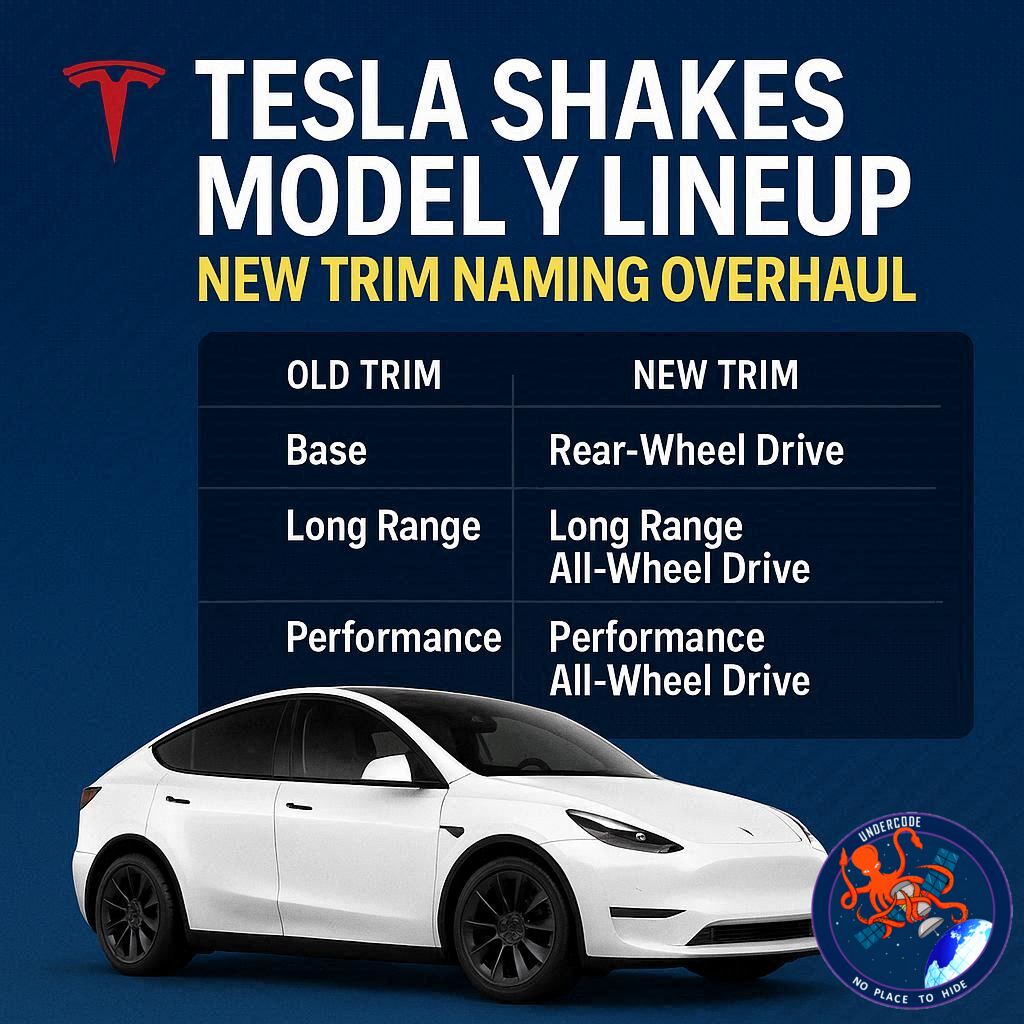
Tesla has quietly redefined the entry-level experience of its popular Model Y, making waves in the EV world without the usual fanfare. Last night, the automaker unveiled a new All-Wheel-Drive (AWD) variant priced competitively at $41,990, yet stripped of the luxury touches found in the Premium trims. What stood out more than the specs, however, was Tesla’s subtle rebranding: the company has officially retired the “Standard” label for its base Model Y offerings, leaving buyers with simple, drivetrain-focused names like Model Y Rear-Wheel-Drive (RWD) and Model Y AWD.
This change is more than cosmetic. The “Standard” Model Y had been introduced late last year to make the electric crossover more accessible, especially after changes to the U.S. EV tax credit. To hit a lower entry price, Tesla removed premium features like the panoramic glass roof, upgraded audio, ambient lighting, and enhanced storage options. By eliminating the term “Standard,” Tesla avoids inadvertently signaling a low-end experience, instead emphasizing the vehicle’s core functionality.
Why Tesla Dropped the “Standard” Name
Negative marketing connotations
Marketing experts note that terms like “Standard” can imply basic or inferior, especially when contrasted with “Premium.” By dropping it, Tesla ensures the entry-level Model Y doesn’t feel cheap, while still offering an affordable option for budget-conscious buyers.
Simplified naming structure
Tesla’s lineup previously included a confusing array of variants—Standard, Standard Long Range, Premium, Performance—which could overwhelm buyers. Streamlining names to RWD and AWD creates a clearer hierarchy and eases decision-making for customers.
Protecting the premium brand image
Maintaining “Premium” on upper trims reinforces Tesla’s image as a high-quality automaker. By quietly offering accessible RWD/AWD models, Tesla satisfies entry-level demand without diluting the brand’s luxury perception.
What Undercode Says: Strategic Branding Moves Behind Tesla’s Trim Changes
Brand Perception Matters
Tesla is acutely aware of the fine line between accessibility and prestige. Dropping “Standard” may seem minor, but it protects the aspirational value of owning a Tesla. Consumers rarely want to feel they’ve purchased a stripped-down product, and Tesla’s approach subtly nudges buyers toward higher-margin variants without alienating those seeking affordability.
Market Readiness for Simplicity
The EV market is maturing. Tesla’s trim simplification mirrors broader industry trends where clarity beats complexity. As more automakers enter the space, Tesla’s simplified structure reduces buyer hesitation and streamlines production logistics.
Financial Upside
By highlighting drivetrain rather than “base-level” features, Tesla positions the RWD and AWD models as functional yet desirable, potentially increasing upsell opportunities. Buyers attracted to entry-level affordability may later convert to Premium trims as brand loyalty grows.
Global Market Sensitivity
Tesla’s decision also likely considers international markets. Some regions may perceive “Standard” negatively, impacting demand. By unifying the naming globally around RWD/AWD and Premium, Tesla maintains a consistent, aspirational narrative.
Design Influence Beyond the Vehicle
Interestingly, Tesla’s influence extends beyond its cars. The company pioneered hidden door handles, which Chinese regulators are now banning by 2027 due to safety concerns. Tesla’s design innovations shape trends, but government intervention highlights the balancing act between style, safety, and global compliance.
Integration With Broader Musk Ventures
Tesla’s naming and branding finesse could also tie into Elon Musk’s larger ecosystem. With SpaceX-xAI developments and cross-company AI investments, Tesla is increasingly part of a high-tech narrative, where perception and innovation reinforce each other. A strong brand identity in EVs supports Musk’s broader vision of integrated technology platforms.
Consumer Psychology in Action
Eliminating “Standard” subtly influences consumer psychology. Research shows people often avoid options labeled as “basic” even when they meet their needs. Tesla’s move removes this barrier, allowing practical buyers to feel confident in their purchase without the negative self-perception sometimes attached to entry-level products.
Anticipating Competitor Moves
As more EV brands expand globally, competitors may introduce aggressive pricing. Tesla’s strategy of neutral naming and streamlined trims ensures its lineup remains appealing while competitors grapple with confusing hierarchies.
Production Efficiency and Inventory Management
Simplifying trim names reduces logistical complexity. Tesla can focus production on core variants while maintaining flexibility for Premium upgrades, which could improve manufacturing efficiency and reduce inventory bottlenecks.
Long-Term Value Retention
By separating base RWD/AWD from Premium models, Tesla preserves resale value. The perception of a “fully-featured” Premium trim can prevent base models from undercutting the market, ensuring healthier depreciation curves.
Cultural Impact of Trim Names
Tesla’s naming conventions carry symbolic weight. “Premium” connotes aspiration, while “RWD/AWD” signals functionality. This careful calibration strengthens Tesla’s cultural relevance as both an innovation and status symbol brand.
Global EV Trendsetter
Tesla’s approach to naming, design, and brand positioning continues to influence competitors worldwide. From door handle design trends in China to entry-level affordability strategies in the U.S., Tesla sets the tone for how EVs are marketed, perceived, and adopted.
Consumer Experience Focus
Simpler naming improves the user experience across Tesla’s website, configurator, and showrooms. Clearer choices reduce cognitive overload, a subtle but critical factor in guiding consumers to final purchase decisions.
Investor and Market Implications
For investors, naming strategy signals Tesla’s long-term planning and brand discipline. The company balances affordability, luxury perception, and market leadership—a triad likely to maintain Tesla’s premium valuation relative to competitors.
🔍 Fact Checker Results
✅ Tesla has officially removed the “Standard” name from the Model Y lineup.
✅ Model Y All-Wheel-Drive starts at $41,990 without Premium features.
✅ China plans to ban hidden EV door handles by 2027 due to safety concerns.
📊 Prediction
Tesla’s naming strategy suggests the automaker will continue focusing on brand clarity and aspirational marketing. Expect future trims to emphasize technological differentiation rather than base-level accessibility. This may also set a precedent for global EV competitors to rethink naming conventions, streamline offerings, and protect brand prestige while pursuing affordability.
If you want, I can also create a visual comparison chart of Tesla’s old vs. new Model Y trims to make this article even more reader-friendly. It would summarize features, prices, and branding impact in one glance. Do you want me to do that next?
🕵️📝✔️Let’s dive deep and fact‑check.
References:
Reported By: www.teslarati.com
Extra Source Hub (Possible Sources for article):
https://www.quora.com/topic/Technology
Wikipedia
OpenAi & Undercode AI
Image Source:
Unsplash
Undercode AI DI v2
Bing
🔐JOIN OUR CYBER WORLD [ CVE News • HackMonitor • UndercodeNews ]
📢 Follow UndercodeNews & Stay Tuned:
𝕏 formerly Twitter 🐦 | @ Threads | 🔗 Linkedin | 🦋BlueSky | 🐘Mastodon


