
Listen to this Post
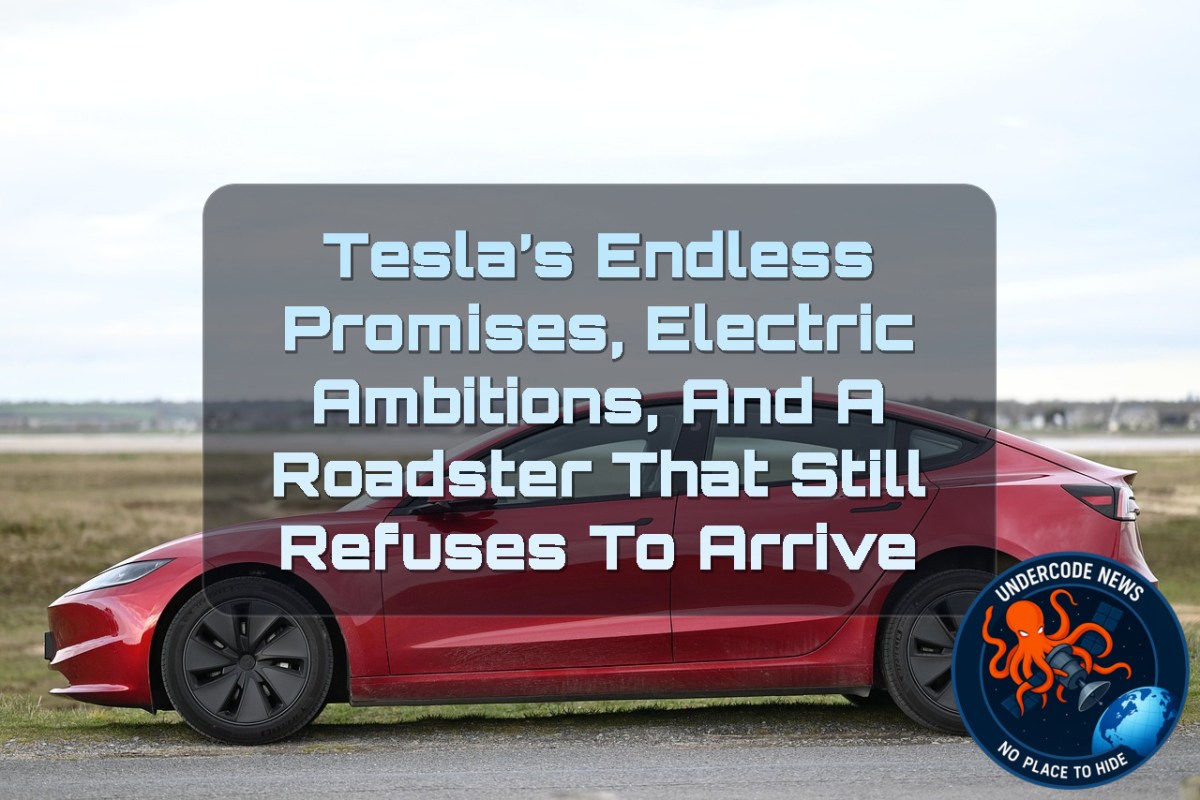 A Roadster That Has Become a Test of Patience
For Tesla fans, the next-generation Roadster was supposed to be the car that changed the definition of a performance vehicle. Years after its dramatic unveiling, however, the Roadster has become something almost as famous as the car itself: a symbol of Tesla’s ability to promise extraordinary technology while keeping customers waiting for the moment when those promises finally become reality.
Now, Elon Musk is teasing the Roadster unveiling yet again, reviving excitement around a vehicle that has spent years trapped between prototype, engineering project, and futuristic dream. At the same time, Tesla is pushing aggressively into home energy storage and autonomous transportation, while its long-running labor dispute in Sweden has finally reached an unexpected conclusion.
Taken together, these developments reveal something important about Tesla in 2026. The company is no longer simply selling electric cars. It is attempting to build an ecosystem around energy, autonomy, software, robotics, and transportation, while continuing to operate under Musk’s philosophy of pushing technology beyond conventional limits.
The problem is that ambition and execution do not always move at the same speed.
Elon Musk Teases the Tesla Roadster Yet Again
Elon Musk has once again reignited speculation surrounding the long-delayed Tesla Roadster unveiling.
A video from an earlier appearance on the Joe Rogan Experience was reposted on X, highlighting Musk’s previous comments about the upcoming Roadster event. The post described the future presentation as something that would be unforgettable, and Musk agreed with the assessment.
The timing immediately attracted attention because Musk had also recently suggested that flying cars could become a reality. That statement naturally brought the Roadster back into the conversation because Tesla and SpaceX have previously discussed the possibility of using cold-gas thrusters to provide the vehicle with unusual capabilities.
For ordinary sports cars, acceleration and handling are the headline features. Tesla appears to be aiming considerably higher.
The Roadster Has Become More Than a Sports Car
The second-generation Roadster was originally introduced as a technological statement rather than simply another Tesla model.
Its proposed specifications were extraordinary, with Tesla previously discussing blistering acceleration, an extremely high top speed, long driving range, and an optional SpaceX package intended to push the vehicle into territory normally associated with science fiction.
That ambition may help explain why the Roadster has taken so long.
A conventional performance car can be engineered around established technologies. A vehicle designed to demonstrate technologies that barely exist in commercial automotive form is a completely different challenge.
Tesla has repeatedly suggested that the Roadster remains under active development. Last year, Tesla vehicle engineering executive Lars Moravy said the company was preparing a major demonstration and described the technology being developed as exceptionally impressive.
Those comments generated another wave of excitement.
But excitement does not put a vehicle into production.
Another Delay Has Tested Tesla Fans
Tesla’s more recent updates indicated that the Roadster remained in design development and that multiple potential unveiling dates had been considered.
April was reportedly one possibility before the event was pushed toward August.
Now August has arrived, yet the company has still not provided a definitive public timetable.
That uncertainty is becoming increasingly significant because the Roadster was first introduced years ago. Every additional delay changes the conversation from “When will Tesla reveal it?” to “How long can Tesla keep delaying it?”
That is a much more difficult question.
Franz von Holzhausen Offers Another Hint
Tesla chief designer Franz von Holzhausen recently told Jay Leno that the Roadster event would happen “very soon.”
For Tesla enthusiasts, those words are enough to restart speculation.
But “very soon” is also one of the most dangerous phrases surrounding a vehicle that has already experienced years of delays.
Tesla has repeatedly demonstrated that its development timelines can change dramatically when engineering challenges become more complicated than expected.
The Roadster therefore needs more than another teaser.
It needs a date.
Why Tesla May Be Delaying the Roadster
There is a reasonable argument that Tesla’s Roadster delay is connected to the company’s desire to make the vehicle dramatically different from existing electric sports cars.
Tesla is not simply competing with Porsche, Ferrari, Rimac, or other high-performance manufacturers on acceleration.
It appears to want the Roadster to become a technology showcase.
That could include extreme battery performance, advanced torque control, sophisticated aerodynamics, next-generation software, and potentially the controversial SpaceX-inspired propulsion package.
Every additional technology layer introduces another engineering problem.
The more revolutionary the Roadster becomes, the harder it is to transform the prototype into a reliable production vehicle.
Tesla Energy Introduces a Different Kind of Innovation
While the Roadster continues to wait for its moment, Tesla Energy is moving forward with a much more practical product.
Tesla has introduced a Powerwall Lease program in Texas that combines home battery storage with Tesla Electric.
The concept is straightforward.
Customers lease two Powerwall units and receive a monthly credit through qualifying Tesla energy programs. Under the described structure, the base payment is approximately $122 per month during the first year, while an $87 monthly credit can reduce the effective cost to roughly $35 per month, before applicable taxes.
The customer also pays a one-time $100 order fee.
A $35 Monthly Backup Power Proposition
The most attractive part of the program is the effective monthly price.
At roughly $35 after the applicable credit, Tesla is attempting to make whole-home battery backup more accessible to households that might otherwise consider Powerwall ownership too expensive.
The lease includes installation for the standard configuration and uses two Powerwall units.
That means the customer is not simply buying a battery.
They are effectively buying energy resilience as a service.
Storm Watch Adds Another Layer of Protection
Tesla’s Storm Watch feature is particularly relevant in regions where severe weather can disrupt electricity supplies.
The system monitors weather conditions and can prepare the batteries ahead of anticipated storms by charging them to higher levels.
When the grid fails, the Powerwalls can automatically provide backup electricity to the home.
For households dealing with hurricanes, severe thunderstorms, winter storms, or other grid disruptions, the value is obvious.
A battery system can keep refrigerators operating, preserve internet connectivity, power medical equipment where appropriate, maintain lighting, and keep other essential household systems functioning.
The Texas Market Is Strategically Important
The program is currently limited to selected areas of Texas where customers have retail electricity choice.
That restriction is important because
Customers must remain enrolled in Tesla Electric and satisfy the program requirements to maintain the monthly credit.
This creates a recurring relationship between Tesla and the customer rather than a one-time hardware transaction.
That could ultimately be more valuable to Tesla than simply selling Powerwalls.
Tesla Is Turning Batteries Into a Grid Resource
The deeper strategy behind programs like this is virtual power plants.
Thousands of residential batteries can collectively behave like a distributed power station.
Instead of having energy stored in one giant facility, Tesla can potentially coordinate batteries across many homes and use them to help balance electricity demand.
The homeowner receives backup protection.
Tesla receives access to a flexible energy resource.
The grid receives additional capacity.
That three-way relationship could become one of Tesla Energy’s most important advantages.
Customers Need to Watch the Fine Print
The $35 figure should not be interpreted as a universal Powerwall price.
The credit depends on enrollment, eligibility, installation approval, and continued participation in Tesla’s electricity programs.
Customers with unusual electrical configurations, permitting requirements, or infrastructure upgrades may face additional costs.
Solar panels are also excluded from this particular lease arrangement.
In other words, the headline number is attractive, but the real economics depend on the customer’s individual situation.
Tesla Cybercab Gets a High-Profile Test
Tesla’s autonomous ambitions received another boost after Florida Governor Ron DeSantis rode in a Cybercab at a closed testing facility.
The governor described the experience as impressive after the vehicle navigated a series of simulated hazards, including a child entering the road, a crash scenario involving police vehicles, and another vehicle cutting across its path.
The test took place at SunTrax, a large Florida proving ground designed for autonomous and connected-vehicle testing.
The Cybercab Has No Steering Wheel or Pedals
The Cybercab represents one of
Instead of asking the driver to control the car, the concept is built around autonomous transportation.
Passengers enter the vehicle, sit down, and interact with an onboard screen.
There is no conventional steering wheel.
There are no traditional pedals.
That creates a completely different relationship between humans and automobiles.
The vehicle is no longer primarily a machine that a person drives.
It becomes a transportation service that a person occupies.
Governor DeSantis Still Raised the Most Important Question
Despite praising the Cybercab, DeSantis also emphasized the obvious concern surrounding autonomous transportation: safety.
An autonomous vehicle cannot simply be impressive.
It must be predictable.
It must recognize unusual situations.
It must react appropriately when other drivers behave irrationally.
And most importantly, it must fail safely when its systems encounter something unexpected.
A vehicle that performs perfectly 99.9 percent of the time is not automatically safe enough if the remaining fraction produces catastrophic outcomes.
SunTrax Provides a Controlled Environment
The SunTrax facility gives Tesla and other autonomous-driving companies an opportunity to test scenarios that would be dangerous to reproduce on public roads.
The track can simulate environmental and traffic conditions including rain, pedestrians, hills, and complex roadway situations.
Tesla, Waymo, and Beep are among the companies using the facility.
This matters because autonomous driving development requires enormous quantities of edge-case testing.
The real challenge is rarely driving down an empty road.
The real challenge is what happens when everything goes wrong at the same time.
Tesla’s Florida Expansion Matters
Tesla has been expanding its autonomous transportation ambitions in Florida while continuing to operate safety-supervised services.
Miami was added to its Robotaxi operations in July, followed by Orlando and Tampa.
The Cybercab demonstration does not by itself prove that Tesla has solved autonomous driving.
However, having a state governor publicly experience the technology can have political and regulatory significance.
Florida has developed one of the more permissive regulatory environments for autonomous vehicles in the United States.
That makes the state an important testing ground for Tesla’s long-term strategy.
Sweden’s Three-Year Tesla Labor Conflict Ends
In another major Tesla development,
The confrontation began in October 2023 and developed into one of the most persistent labor disputes surrounding Tesla anywhere in the world.
IF
Tesla resisted.
The conflict escalated.
And eventually, the dispute became much larger than a normal workplace disagreement.
Sympathy Strikes Expanded the Pressure
The Swedish dispute eventually involved more than
Postal workers, dockworkers, electricians, and other tradespeople participated in sympathy actions.
Repair and service operations were affected.
Work connected to warranty repairs and other Tesla-related services encountered disruptions.
The strategy was designed to make it increasingly difficult for Tesla to operate normally without engaging with organized labor.
For years, neither side appeared willing to retreat.
IF Metall Says Its Principles Have Not Changed
IF
Instead, the union says the action can no longer achieve its intended effect.
The union has also argued that Tesla effectively bought out striking members, providing them with financial incentives while leaving the underlying disagreement unresolved.
That interpretation is strongly critical of Tesla.
Tesla, however, has continued to operate without accepting the collective agreement demanded by the union.
The practical result is that the three-year confrontation has ended without the kind of labor settlement IF Metall originally sought.
The Swedish Dispute Becomes a Global Lesson
The outcome is significant because Sweden has a deeply established culture of collective bargaining.
Tesla’s resistance therefore placed the company directly against a labor model that is central to the country’s industrial system.
The dispute became a test of whether
It did.
But surviving the confrontation does not mean the issue disappears.
The debate over worker organization, collective bargaining, and Tesla’s employment practices will continue in other markets.
Tesla’s Bigger Strategy Is Becoming Clearer
These stories may appear unrelated.
The Roadster is a sports car.
Powerwall is an energy product.
Cybercab is an autonomous vehicle.
The Swedish conflict is a labor issue.
But together they reveal the scale of
Tesla is increasingly attempting to become an integrated technology company rather than simply an automaker.
Cars generate data.
Batteries store energy.
Software coordinates vehicles.
Virtual power plants connect homes.
Autonomous vehicles create transportation networks.
And the company continues to use its enormous brand visibility to attract attention to technologies that remain under development.
What Undercode Say:
Tesla’s Biggest Asset Is Still Its Ability to Create Anticipation
The Roadster story demonstrates one of
The company knows how to create anticipation.
A single sentence from Musk can trigger enormous discussion.
A reposted video can revive years-old speculation.
A comment from a Tesla executive can send fans searching for clues.
That attention has commercial value.
But attention eventually needs to become a product.
The Roadster Is Facing a Credibility Test
Every delay makes the Roadster more important as a credibility test.
Tesla can delay a product once.
It can delay it twice.
But after years, consumers begin measuring the company against its promises rather than its intentions.
The next Roadster unveiling therefore needs to deliver something substantial.
A simple refreshed prototype may not be enough.
Tesla needs a demonstration capable of explaining why the wait was necessary.
Extreme Technology Creates Extreme Engineering Problems
The proposed Roadster is ambitious precisely because it attempts to combine several difficult technologies.
Battery performance creates thermal challenges.
Extreme acceleration creates mechanical stress.
High-speed stability creates aerodynamic demands.
Advanced software requires extensive validation.
Thruster technology introduces another entirely different engineering problem.
Each element may be achievable independently.
Making them work together reliably is the real challenge.
The Cybercab Represents a Much Bigger Opportunity
The Cybercab may ultimately matter more to Tesla than the Roadster.
The Roadster can become a halo product.
The Cybercab could become an entirely new business model.
If Tesla can operate autonomous vehicles profitably, it could potentially earn revenue from transportation rather than relying exclusively on vehicle sales.
That changes the economics of the company.
Autonomy Is Also
The autonomous strategy carries enormous regulatory and reputational risk.
Every successful test increases confidence.
Every serious failure could generate the opposite effect.
This is why closed-track demonstrations are useful but insufficient.
The real benchmark is sustained performance in uncontrolled public environments.
Florida Could Become a Critical Testing Ground
Florida’s regulatory environment gives Tesla an opportunity to move quickly.
That could allow the company to gather data faster than competitors operating under stricter regulatory frameworks.
However, regulatory speed should not be confused with technological readiness.
The industry still needs strong safety validation.
Powerwall Shows a Different Tesla
Tesla Energy may actually offer a clearer example of Tesla’s commercial maturity.
The company does not need to convince consumers that electricity storage is futuristic.
Customers already understand the problem.
Power outages are real.
Electricity prices are real.
Storms are real.
Backup power has obvious value.
That makes energy products easier to commercialize than technologies that require consumers to imagine an entirely new future.
The Lease Model Could Change Adoption
Leasing removes part of the upfront financial barrier.
Instead of spending thousands of dollars on equipment, customers can treat energy storage as a recurring service.
That model could dramatically increase adoption if the economics remain attractive.
The key word is if.
Credits, electricity rates, financing terms, and program eligibility will determine whether customers see genuine long-term value.
Virtual Power Plants Could Become
The most interesting part of the Powerwall strategy may not be the battery sitting in a customer’s garage.
It may be the network connecting thousands of those batteries.
A distributed battery fleet can respond to grid conditions.
Tesla can potentially aggregate those resources.
That creates a digital energy platform rather than a collection of isolated home batteries.
Tesla Is Building Multiple Recurring-Revenue Channels
Vehicle sales are transactional.
Energy services can be recurring.
Autonomous transportation can be recurring.
Electricity management can be recurring.
Software can be recurring.
That shift could eventually make
Sweden Demonstrates the Cost of Independence
Tesla’s Swedish labor dispute also demonstrates the company’s willingness to absorb prolonged pressure to preserve its operating model.
The company endured years of strikes and sympathy actions.
That strategy carried costs.
But it also preserved
Whether that is sustainable everywhere remains an open question.
Labor Relations Could Become More Important as Tesla Scales
The larger Tesla becomes, the more difficult it will be to treat labor relations as a secondary issue.
A global company operating factories, service centers, energy operations, and autonomous fleets has thousands of employees across multiple legal systems.
Different countries have different expectations.
Tesla’s approach may work in one market and create serious friction in another.
The Roadster Needs More Than Hype
Tesla has built an enormous mythology around the Roadster.
That mythology can be useful.
But it can also become a trap.
The longer consumers wait, the higher their expectations become.
Eventually, the real car has to compete against the fantasy version that exists in people’s imaginations.
A Successful Reveal Could Reset the Conversation
If Tesla finally unveils a production-ready Roadster with genuinely revolutionary capabilities, years of frustration could disappear remarkably quickly.
Tesla has done this before.
The
The Roadster has that potential.
But Another Delay Would Be Painful
Another vague teaser without a concrete event date would probably generate a different reaction.
Fans may still be excited.
Investors may become more skeptical.
The automotive industry may simply move on.
And competitors will continue releasing high-performance electric vehicles while Tesla’s halo model remains unfinished.
Tesla’s Future Depends on Execution
The
The question is execution.
Can Tesla turn prototypes into products?
Can it turn products into reliable services?
Can it scale those services economically?
Can it satisfy regulators?
Can it maintain customer trust?
Those questions are more important than another impressive demonstration.
Tesla Is Attempting Several Transformations at Once
Most automakers are focused on electric vehicles.
Tesla is trying to simultaneously transform automotive transportation, energy storage, autonomous mobility, software, and potentially robotics.
That is extraordinarily difficult.
It also explains why
The Energy Business May Provide Stability
If autonomous driving takes longer than expected, Tesla Energy can still grow.
If the Roadster remains delayed, Powerwall can still generate revenue.
If Cybercab deployment moves slowly, energy storage remains a tangible market.
That diversification gives Tesla strategic flexibility.
The Company Is Betting on an Integrated Ecosystem
The long-term vision appears increasingly interconnected.
A Tesla vehicle can become part of an autonomous fleet.
A Tesla home can become part of an energy network.
A Tesla battery can support the electrical grid.
A Tesla application can connect these services.
The real product may ultimately be the ecosystem itself.
Tesla’s Most Important Product May Not Be a Car
That sounds strange for an automaker.
But
That is why Cybercab and Powerwall deserve as much attention as the Roadster.
The Roadster Still Has Symbolic Power
Despite all these strategic developments, the Roadster remains important.
It is the car that represents
It is also the product that has tested the patience of the company’s most enthusiastic supporters.
When it finally arrives, it will be judged not only as a vehicle, but as a statement about Tesla’s ability to deliver on long-standing promises.
Tesla Has Entered Its Execution Era
For years,
Now the company is entering an era where possibility is no longer enough.
Consumers want functioning products.
Regulators want demonstrated safety.
Employees want predictable labor relationships.
Investors want sustainable economics.
And customers want
That is the real story behind these seemingly unrelated developments.
Deep Analysis
Monitor Tesla-Related Security and Service Infrastructure
For organizations managing Tesla-connected infrastructure, the broader lesson is that increasingly connected vehicles and energy systems expand the attack surface.
Administrators should monitor endpoints, APIs, mobile applications, network gateways, and authentication systems.
A basic Linux workflow can begin with:
sudo ss -tulpn
This helps identify listening network services on Linux systems that may support connected infrastructure.
Inspect Active Network Connections
Administrators can also review established connections with:
sudo ss -tunap
Unexpected external connections should be investigated rather than automatically trusted.
Review Authentication Activity
On Linux servers supporting vehicle, energy, or enterprise integrations, administrators can review authentication events with:
sudo journalctl --since "24 hours ago" | grep -Ei "authentication|failed|login|sudo"
Repeated failed authentication attempts can indicate password attacks, credential abuse, or misconfigured services.
Search for Suspicious Processes
A simple process review can help identify unusual activity:
ps aux --sort=-%cpu | head -20
High resource consumption does not automatically indicate compromise, but unexplained processes deserve investigation.
Check System Integrity
Administrators can examine recently modified files using:
sudo find /etc /usr/local/bin -type f -mtime -2 -ls
This should be combined with known-good baselines because legitimate software updates can also modify system files.
Review Scheduled Tasks
Persistence mechanisms frequently rely on scheduled execution.
Administrators can inspect cron configuration with:
crontab -l
sudo ls -la /etc/cron.
Unexpected entries should be investigated against change-management records.
Examine System Logs
A broader log review can be performed with:
sudo journalctl -p warning..alert --since "24 hours ago"
This can highlight system warnings and errors that deserve further investigation.
Protect Connected Energy Systems
Home energy systems should never be treated as isolated appliances.
They are connected computing environments.
Users should enable strong account security, use unique credentials, keep applications updated, and avoid exposing management interfaces directly to the public internet.
Separate IoT From Critical Systems
Organizations should place connected devices and energy-management equipment on appropriately segmented networks.
A simple firewall policy should follow the principle of least privilege.
The objective is straightforward: compromise of one connected device should not automatically provide access to unrelated systems.
Tesla’s Expansion Makes Security More Important
As Tesla connects vehicles, energy storage, autonomous transportation, and software services, cybersecurity becomes increasingly important.
The larger the ecosystem becomes, the more valuable the associated accounts, APIs, telemetry, and infrastructure become to attackers.
Security therefore has to evolve alongside
✅ Roadster Development
Tesla has continued to describe the next-generation Roadster as being under development, while Musk and Tesla executives have repeatedly teased a future demonstration.
✅ Powerwall Lease Details
The Texas Powerwall Lease described above uses two Powerwalls and can reduce the effective monthly cost to approximately $35 after the stated credit, subject to eligibility and program requirements.
✅ Sweden Labor Dispute
IF Metall has ended its industrial action against Tesla after the prolonged dispute that began in 2023, marking the end of a major three-year confrontation.
Prediction
(+1) Roadster Reveal Becomes
Tesla is likely to eventually use the Roadster as a major technology demonstration rather than treating it as a conventional vehicle launch.
(+1) Energy Services Continue Expanding
Tesla is likely to expand lease, virtual power plant, and electricity-management programs as residential battery adoption grows.
(+1) Cybercab Testing Accelerates
Closed-track validation and expanding Robotaxi operations are likely to continue as Tesla works toward broader autonomous deployment.
(-1) Another Roadster Delay Could Damage Enthusiasm
If Tesla announces another postponement without providing a firm demonstration date, consumer excitement could begin turning into skepticism.
(-1) Autonomous Driving Will Not Become Risk-Free Overnight
Even with successful demonstrations, autonomous vehicles will continue to face difficult edge cases, regulatory scrutiny, and public safety expectations.
(+1)
The combination of Powerwall, electricity services, and virtual power plants could eventually become one of Tesla’s most important recurring-revenue opportunities.
The Road Ahead for Tesla
Tesla’s latest developments tell a story of a company caught between extraordinary ambition and the difficult reality of execution.
The Roadster remains the ultimate symbol of that tension. It promises technology that could redefine what an electric sports car can do, but every delay raises the expectations surrounding its eventual arrival.
Meanwhile, Powerwall is turning Tesla’s energy ambitions into a more practical service, Cybercab is pushing the company toward a driverless future, and the end of the Swedish labor conflict closes one of the longest-running battles surrounding Tesla’s global operations.
The next chapter will not be determined by another teaser alone.
It will be determined by delivery.
If Tesla can transform its most ambitious ideas into reliable products and profitable services, the company could move far beyond its identity as an electric-car manufacturer.
But if the promises continue to arrive faster than the products, even Tesla’s enormous ability to generate excitement will eventually face its limits.
For the Roadster, the message is simple.
Fans have waited long enough.
Now they want to see the future, not another promise of it.
▶️ Related Video (82% Match):
🕵️📝Let’s dive deep and fact‑check.
🎓 Live Courses & Certifications:
Join Undercode Academy for Verified Certifications
🚀 Request a Custom Project:
Secure, high-velocity infrastructure and disruptive technological engineering. Contact our engineering team for high-tier development and proprietary systems:
[email protected]
💎 Smart Architecture | 🛡️ Secure by Design | ⭐ Trusted by Thousands
References:
Reported By: www.teslarati.com
Extra Source Hub (Possible Sources for article):
https://www.facebook.com
Wikipedia
OpenAi & Undercode AI
Image Source:
Unsplash
Undercode AI DI v2
🔐JOIN OUR CYBER WORLD [ CVE News • HackMonitor • UndercodeNews ]
📢 Follow UndercodeNews & Stay Tuned:
𝕏 formerly Twitter 🐦 | @ Threads | 🔗 Linkedin | 🦋BlueSky | 🐘Mastodon | 📺Youtube


