
Listen to this Post
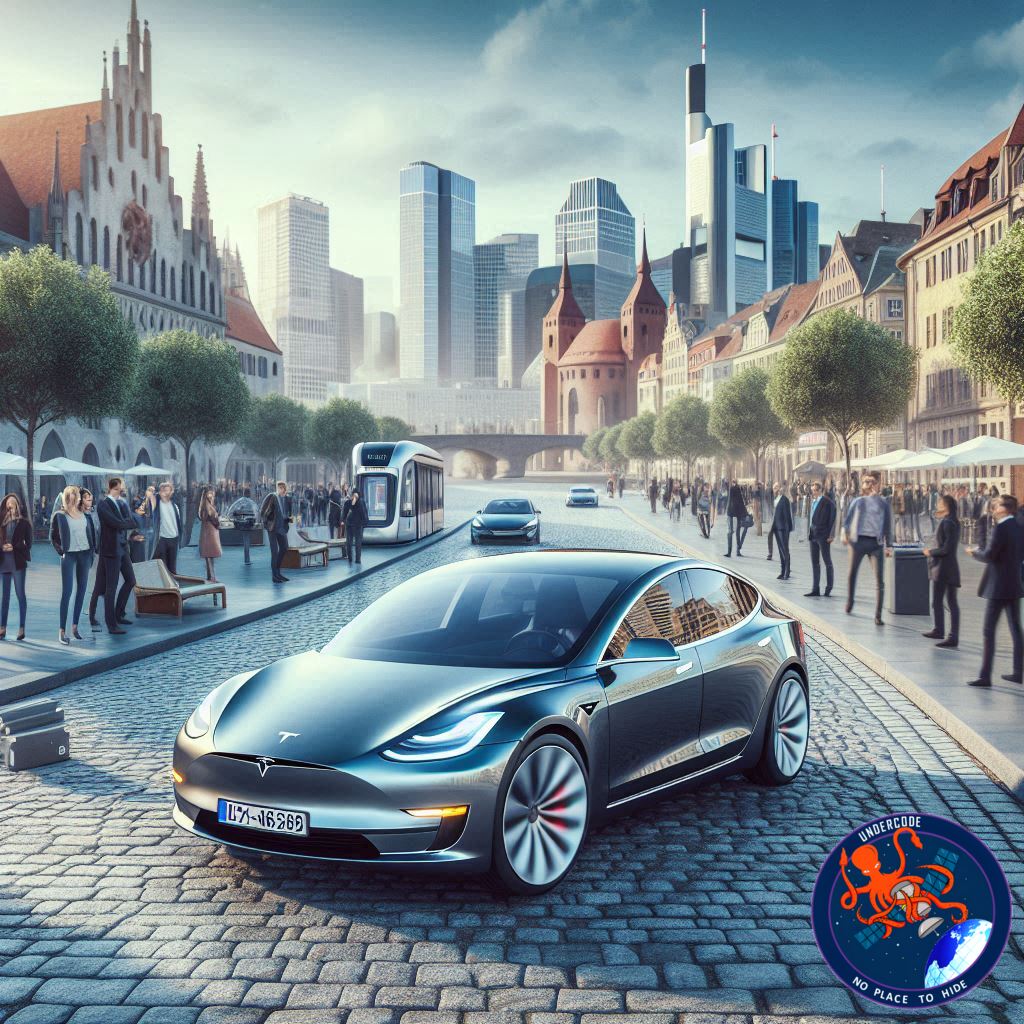
Introduction: Tesla’s Multi-Front Offensive in Europe and Beyond
Tesla is entering 2026 with unmistakable momentum. Across Europe, the company is simultaneously expanding its Full Self-Driving (Supervised) demonstrations, opening new regional markets, navigating labor disputes, and reinforcing its long-term autonomy narrative through bold statements from CEO Elon Musk. Taken together, these moves reveal a company pressing hard on sales, perception, and technological leadership—while accepting friction as the cost of speed.
the Original
Tesla has been unusually active across Europe in recent weeks, signaling a coordinated effort to strengthen its presence and boost vehicle demand. One of the most visible initiatives is the expansion of its Full Self-Driving (Supervised) ride-along program. Originally launched in Italy, France, and Germany, the initiative has now reached Hungary, Finland, and Spain. The program allows members of the public to sit in the passenger seat and observe FSD Supervised navigating real-world conditions such as dense city traffic and complex road layouts. Tesla has positioned these demonstrations as a way to familiarize both consumers and regulators with the system’s practical capabilities, and early feedback has been largely positive.
At the same time, Tesla has formally entered Slovakia through a high-profile pop-up store and multi-day public event in Bratislava. Held at the Eurovea Mall Promenade, the launch featured test drives, vehicle displays—including the Cybertruck—and family-oriented attractions. Tesla’s humanoid robot Optimus also made an appearance, while local Tesla owners organized a coordinated light show to welcome the brand. Tesla has indicated that the pop-up is a stepping stone toward a permanent showroom and possibly a service center, following a pattern previously used in markets such as Czechia and Lithuania. Slovakia already hosts six Supercharging sites with 46 chargers, giving Tesla a ready infrastructure base.
Beyond expansion, Tesla continues to manage controversy. In Sweden, the company has maintained its vehicle storage agreement at the Port of Trelleborg despite ongoing labor union blockades. While unions have criticized the port’s cooperation on moral grounds, the agreement remains active, allowing Tesla to continue importing vehicles through alternative logistics channels. Separately, Tesla marked its first Cybertruck deliveries in the United Arab Emirates, highlighting continued global rollout of its newest vehicle.
Overlaying all of this are Elon Musk’s recent comments on X, where he argued that Tesla and SpaceX operate on exponential, not linear, growth curves. Musk pointed to autonomy, robotics, and space-based energy as forces that could fundamentally reshape economic scale. He also reiterated that Tesla’s autonomy efforts—along with projects like Optimus and the upcoming Cybercab—are nearing pivotal moments, with Cybercab production still targeted for April following ongoing winter testing in Alaska.
What Undercode Says:
Tesla’s recent actions in Europe are not random marketing flourishes—they represent a deliberate attempt to collapse the distance between promise and proof. By expanding FSD Supervised ride-alongs, Tesla is doing something most automakers avoid: putting unfinished, controversial technology directly in front of the public. This is risky, but strategically coherent. In a regulatory environment as cautious as Europe’s, familiarity can be as powerful as certification.
The choice of countries is also telling. By moving beyond core markets like Germany and France into Hungary, Finland, Spain, and Slovakia, Tesla is targeting regions with strong automotive cultures but less entrenched resistance to new entrants. These markets often move faster once consumer interest is activated, and Tesla’s pop-up-first strategy minimizes upfront risk while testing demand in real time.
Slovakia, in particular, is a symbolic win. As a country deeply embedded in traditional automotive manufacturing, Tesla’s arrival sends a signal that electric and autonomous futures are no longer abstract concepts reserved for Western Europe. The presence of Optimus at the launch event was not accidental—it reinforces Tesla’s narrative that it is not just a car company, but a platform for automation.
The Swedish labor dispute underscores Tesla’s willingness to absorb reputational friction in exchange for operational continuity. Rather than retreat, the company has quietly optimized around the blockade, maintaining imports through legal and logistical workarounds. This approach may not win hearts in union leadership, but it preserves sales momentum—something Tesla appears unwilling to sacrifice during a critical expansion phase.
Elon Musk’s commentary on exponential growth, while often dismissed as aspirational, aligns with Tesla’s current behavior. Autonomy demos, Cybercab testing in extreme conditions, and repeated references to Optimus all serve one purpose: anchoring today’s vehicle sales to tomorrow’s economic narrative. If Tesla can convince markets and regulators that autonomy is not speculative but inevitable, short-term controversies become background noise.
Taken together, Tesla’s European push looks less like a sales campaign and more like a pressure test—of regulators, infrastructure, labor systems, and public perception. The company is betting that speed, visibility, and persistence will outpace resistance. History suggests that when Tesla commits to this kind of multi-front expansion, it rarely does so without a longer endgame in mind.
Fact Checker Results
Tesla’s expansion of FSD Supervised ride-alongs to additional European countries is confirmed by company statements.
The Slovakia pop-up launch, Supercharger count, and Optimus appearance align with local reports and Tesla’s social media posts.
Union blockades in Sweden have not terminated Tesla’s storage agreement at the Port of Trelleborg, according to Swedish media.
Prediction
If Tesla’s FSD demonstrations continue without major incidents, European regulators may soften their stance on supervised autonomy pilots within the next 12–18 months. Combined with gradual Cybercab production and deeper market penetration in Central and Eastern Europe, Tesla is likely to convert today’s visibility push into measurable sales growth—while positioning autonomy as its defining advantage for the next decade.
🕵️📝✔️Let’s dive deep and fact‑check.
References:
Reported By: www.teslarati.com
Extra Source Hub (Possible Sources for article):
https://www.reddit.com/r/AskReddit
Wikipedia
OpenAi & Undercode AI
Image Source:
Unsplash
Undercode AI DI v2
Bing
🔐JOIN OUR CYBER WORLD [ CVE News • HackMonitor • UndercodeNews ]
📢 Follow UndercodeNews & Stay Tuned:
𝕏 formerly Twitter 🐦 | @ Threads | 🔗 Linkedin | 🦋BlueSky | 🐘Mastodon


