
Listen to this Post
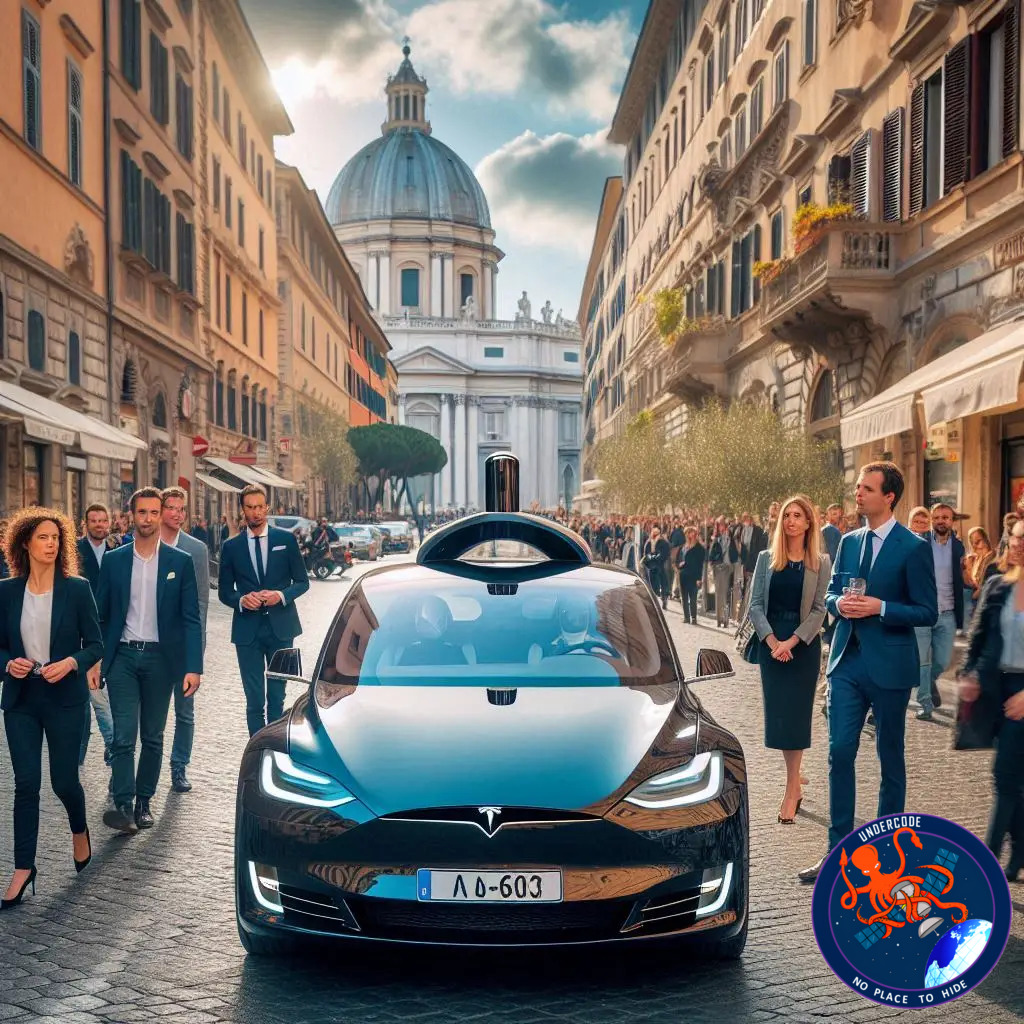
Tesla’s push for Full Self-Driving (FSD) technology in Europe is gaining momentum, with high-profile demonstrations and growing attention from both officials and media. The company is showcasing how its advanced driver-assistance system can safely navigate complex urban environments, while also highlighting the competitive edge it holds over traditional automakers hesitant to adopt self-driving tech. Recent events in Italy and France, coupled with Tesla’s ongoing developments in AI robotics and FSD licensing efforts, reveal a clear pattern: Tesla is positioning itself not just as an automaker, but as a technological leader shaping the future of mobility.
Rome Mayor Experiences Tesla FSD Supervised
In Rome, Tesla hosted Mayor Roberto Gualtieri and Mobility Assessor Eugenio Patanè for a hands-on demonstration of FSD Supervised. Using a Model 3 equipped with the system, Tesla showcased how the vehicle can handle real urban traffic—including intersections, roundabouts, pedestrian crossings, and mixed traffic with scooters and bicycles—while keeping the driver in full control. The demonstration emphasized safety and flow, including overtakes and lane changes, all performed under driver supervision.
Investor Andrea Stroppa highlighted on social media that FSD could reduce severe collision risks by up to seven times compared to conventional driving, based on Tesla’s extensive global fleet data. The session underscored that FSD Supervised is designed as an assistance tool, not a replacement for human drivers, though it has the potential to enhance road safety and urban travel efficiency.
French Journalist Describes FSD as “Mind-Blowing”
French tech journalist Julien Cadot tested FSD Supervised in France for Numerama, reporting that the system felt both remarkably safe and human-like in its decision-making. Cadot praised FSD’s ability to navigate complex maneuvers, such as overtaking trucks or maintaining safe distances from cyclists, in ways that mimic intuitive human driving. He noted that FSD’s AI doesn’t just follow rules—it evaluates situations with a “human edge,” allowing the car to act decisively where a cautious human might hesitate.
Cadot’s observations indicate that Tesla’s FSD is significantly more advanced than standard Autopilot, with fluid navigation through chaotic urban environments and precise handling of potentially risky scenarios.
Path to European Rollout
Tesla has already tested over one million kilometers across 17 European countries, refining FSD to adapt to local road conditions. The company has secured approval to operate 19 FSD test vehicles in Spain, with plans for broader European deployment, including Austria, Germany, France, and Italy. Demonstrations to high-profile officials suggest Tesla is aligning closely with regulators to expedite approvals.
Tesla Optimus and Broader AI Ambitions
Beyond FSD, Tesla is advancing its humanoid robot project, Optimus, with recent demonstrations showing improved mobility and potential applications in labor automation. CEO Elon Musk emphasizes the complexity of creating fully functional hands, but overall progress in movement and dexterity suggests Tesla is steadily approaching its goal of practical humanoid robots for both industrial and domestic use.
Legacy Automakers Ignoring FSD
Tesla’s leadership in self-driving technology mirrors its earlier disruption of the EV market. Elon Musk has repeatedly attempted to license FSD to legacy automakers, but they have declined due to regulatory, financial, and strategic concerns. This reluctance mirrors the same dismissive attitude toward EVs a decade ago, when companies underestimated Tesla’s ability to redefine the market.
Current trends show that legacy manufacturers continue to lag in self-driving and EV innovation. This could have long-term consequences for market share, safety standards, and technological relevance, reinforcing Tesla’s position as a disruptive leader in mobility.
What Undercode Say:
Tesla’s European FSD demonstrations serve a dual purpose: proving the technology’s safety and usability while building regulatory goodwill. By giving officials firsthand experience, Tesla is not just marketing a product—it is shaping policy perception. The Rome demo illustrates how well-calibrated AI can navigate chaotic city streets, while Cadot’s review in France shows the technology’s ability to mimic nuanced human decision-making. Together, these events suggest Tesla’s FSD is approaching a threshold where it may be accepted as a mainstream urban driving tool.
The broader implication is that Tesla is creating a feedback loop: real-world testing, media coverage, and regulatory engagement all reinforce credibility and accelerate rollout. The European tests are particularly strategic; by proving competence on complex urban streets, Tesla strengthens its case for regulatory approval, which will be crucial as countries assess legal frameworks for self-driving cars.
Meanwhile, legacy automakers face a familiar predicament. By dismissing Tesla’s offerings, they risk falling further behind technologically and financially. Just as they underestimated EVs, their hesitation on FSD could result in long-term market penalties. Tesla’s strategy—leveraging data, fleet experience, and public demonstrations—creates a barrier that competitors may struggle to overcome, highlighting the company’s ability to turn innovation into both market dominance and regulatory influence.
Tesla’s Optimus project adds another dimension: AI-driven robotics could complement FSD advancements by reinforcing Tesla’s image as an integrated AI and automation leader. This convergence between automotive and robotics could redefine mobility and labor in the next decade, establishing Tesla not merely as a car manufacturer but as a technological ecosystem shaping the future.
The combination of superior technology, regulatory engagement, and public demonstration gives Tesla an almost unrivaled advantage. The company’s meticulous rollout strategy, data-driven safety proofs, and high-profile endorsements suggest that mainstream adoption of FSD in Europe is not a matter of if, but when. Meanwhile, competitors’ slow adoption reflects a repeated pattern of underestimation that could have compounding consequences over the next 5–10 years.
Tesla’s efforts highlight a critical paradigm shift: autonomous technology is not only about convenience, but safety, regulatory integration, and reshaping urban mobility. Cities like Rome, Paris, and Madrid could become testing grounds that demonstrate FSD’s transformative potential. In this context, Tesla is not simply leading a technological race—it is redefining the rules of the road.
Fact Checker Results:
✅ Tesla FSD Supervised reduces collision risks according to company data.
✅ European officials, including Rome’s mayor, have personally tested FSD.
❌ Legacy automakers have declined Tesla’s FSD licensing offers despite repeated attempts.
Prediction:
🚗 Europe’s urban streets may see the first widespread FSD adoption within 2–3 years, starting with supervised deployments in cities already familiar with autonomous technology. Tesla’s proactive regulatory engagement and public demonstrations position it to become the standard-bearer for urban AI driving. Meanwhile, legacy automakers could face increasing pressure to catch up or risk losing market relevance entirely.
🕵️📝✔️Let’s dive deep and fact‑check.
References:
Reported By: www.teslarati.com
Extra Source Hub (Possible Sources for article):
https://www.discord.com
Wikipedia
OpenAi & Undercode AI
Image Source:
Unsplash
Undercode AI DI v2
Bing
🔐JOIN OUR CYBER WORLD [ CVE News • HackMonitor • UndercodeNews ]
📢 Follow UndercodeNews & Stay Tuned:
𝕏 formerly Twitter 🐦 | @ Threads | 🔗 Linkedin | 🦋BlueSky | 🐘Mastodon


