
Listen to this Post
 Introduction: Elon Musk’s Vision Expands Across Roads, Skies, and Power Grids
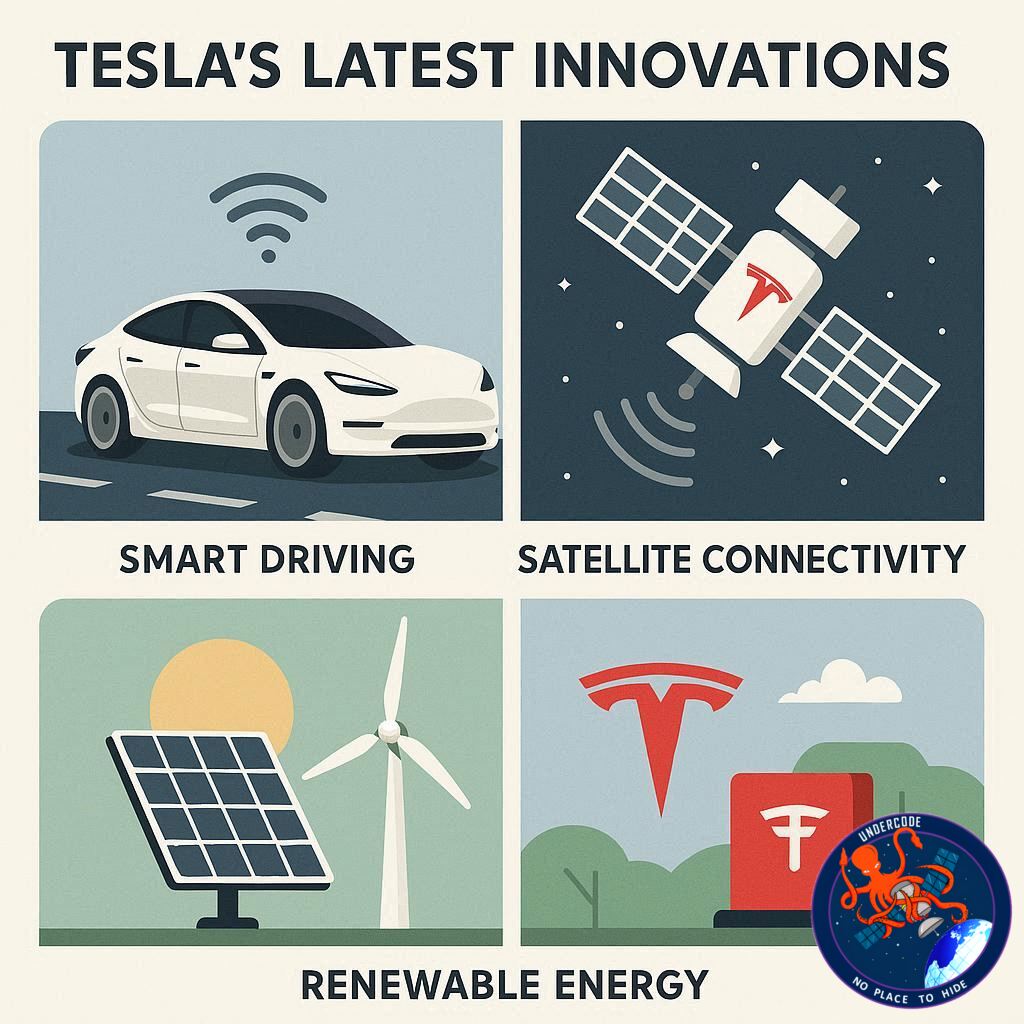
Elon Musk continues to push the boundaries of technology through Tesla, Starlink, and SpaceX initiatives. From advancing Full Self-Driving (FSD) capabilities to integrating renewable energy solutions in large-scale data centers, and expanding satellite-based mobile connectivity in Europe, Musk’s ventures are reshaping multiple industries. Recent developments highlight Tesla’s commitment to safety and convenience, Starlink’s role in global connectivity, and SpaceX’s contribution to coastal resilience in Texas.
Tesla Full Self-Driving Tackles Aggressive Drivers
Tesla’s Full Self-Driving system has introduced a new feature designed to handle tailgaters automatically. A recent video shared on X shows a Tesla on FSD pulling over to the shoulder on wet, winding roads when another vehicle followed aggressively. The system sensed the urgency and opted to let the tailgater pass without human intervention. The driver’s hands remained stationary, and no turn signal input was made, demonstrating FSD’s growing autonomy.
Intelligent Lane and Speed Management
FSD has long adjusted lanes to optimize traffic flow. On highways, it passes slower vehicles in the left lane and moves over for faster traffic in the right lane. Historically, FSD’s speed profiles varied between versions, sometimes requiring manual adjustment from the driver. Now, the system appears to autonomously decide when pulling over is the safest and most efficient course of action, reducing driver involvement in reactive maneuvers.
Tesla Megapack Powers $1.1B AI Data Center in Brazil
Tesla’s Megapack battery systems are set to power a 400MW AI data center in Uberlândia, Brazil, one of Latin America’s largest AI infrastructure projects. Backed by roughly $1.1 billion in private capital, the facility will operate on 100% renewable energy while supporting regional grid stability. By absorbing excess electricity during high supply periods and providing stabilization when needed, the project mirrors successful renewable management strategies in California and Texas. RT-One, leading the initiative, partnered with Hitachi Energy, Siemens, ABB, HIMOINSA, and Schneider Electric to integrate the Megapacks effectively.
Starlink Enables Europe’s First Satellite-to-Phone Service
Starlink, in collaboration with Virgin Media O2, launched Europe’s first satellite-to-smartphone service in the UK. Compatible devices automatically switch to Starlink’s low-Earth orbit satellites when traditional mobile coverage is unavailable. The service initially supports messaging and essential apps like WhatsApp, Google Maps, and weather tools, priced at £3 per month. By leveraging satellite connectivity, O2 can extend coverage to remote areas without building additional infrastructure, aligning with Starlink’s vision of broad, direct-to-device network access.
Starbase, Texas Receives $84.6 Million for Coastal Resilience
Starbase, home to SpaceX’s Starship factory, will benefit from $84.6 million in coastal funding from the Texas General Land Office. This funding supports beach nourishment, dune restoration, shoreline stabilization, habitat restoration, and water quality improvements. CMP and CEPRA programs, with backing from NOAA, GOMESA, and the Texas Legislature, ensure long-term coastal resilience for Starbase and surrounding counties.
What Undercode Says: Tesla and Musk’s Strategic Moves
Full Self-Driving: Safety Meets Convenience
Tesla’s new tailgater response feature addresses a real-world safety issue. By autonomously pulling over for aggressive drivers, FSD minimizes stress and potential accidents while reducing driver input for reactive scenarios. This development demonstrates Tesla’s commitment to refining semi-autonomous systems into more intelligent, context-aware machines.
Adaptive Speed Profiles: Progress with Caveats
FSD’s constantly changing speed profiles have been both a strength and a limitation. While the system adapts to local conditions, inconsistencies sometimes required manual adjustments. The tailgater response feature indicates Tesla is prioritizing situational awareness over rigid adherence to speed algorithms, a promising step toward fully intuitive autonomous driving.
Renewable Energy Integration: Megapack and AI Data Centers
Tesla’s partnership with RT-One exemplifies how energy storage solutions can transform industrial operations. By stabilizing the local grid while serving as a power consumer, Megapack deployments showcase a dual-purpose model that maximizes renewable energy usage. This approach positions Tesla as both a tech and energy infrastructure leader, especially in regions like Brazil with abundant solar and wind energy but grid volatility.
Satellite Connectivity Expansion: Starlink Beyond Broadband
Starlink’s integration with O2 demonstrates the viability of satellite-to-smartphone services in populated regions. This marks a strategic shift from fixed broadband to direct mobile connectivity, potentially reducing reliance on terrestrial infrastructure and accelerating global connectivity. The low cost and automatic switching of devices make adoption seamless, providing a competitive edge against traditional mobile carriers.
Coastal Resilience and Strategic Investments
Starbase’s inclusion in the Texas coastal funding cycle reflects SpaceX’s symbiosis with regional development projects. Investments in infrastructure, habitat restoration, and shoreline stabilization align with broader environmental sustainability goals while securing operational continuity for high-tech manufacturing in coastal areas.
Musk’s Holistic Technology Ecosystem
Taken together, these developments illustrate Musk’s ecosystem approach: Tesla enhances transportation safety and energy resilience, Starlink expands communication access, and SpaceX engages with environmental sustainability. Each initiative strengthens the broader technological and societal framework, reinforcing Musk’s vision of interconnected, future-ready infrastructure.
Market Implications
Tesla’s FSD improvements could accelerate autonomous vehicle adoption, especially in regions where aggressive driving is common. Megapack’s dual-use applications could inspire additional AI-driven industrial projects globally. Starlink’s satellite-to-phone rollout may trigger competition among European telecom operators, while Starbase’s coastal funding reinforces public-private collaboration models for high-tech infrastructure.
Consumer and Investor Confidence
These initiatives collectively enhance brand perception and investor confidence. Tesla demonstrates that it is not only advancing EV technology but also addressing safety and infrastructure challenges. Starlink proves its commercial utility beyond traditional broadband, and SpaceX strengthens local communities, creating a multifaceted value proposition for stakeholders.
🔍 Fact Checker Results
✅ Tesla FSD can autonomously pull over for tailgaters, as demonstrated in verified video footage.
✅ Tesla Megapack integration in Brazil is confirmed by RT-One and backed by $1.1B private investment.
✅ Starlink’s satellite-to-phone service in the UK is operational with O2 partnership.
📊 Prediction
Tesla’s FSD enhancements are likely to increase adoption rates among cautious drivers and may influence regulatory acceptance of semi-autonomous features. Megapack-backed AI data centers could become a model for renewable-powered industrial operations worldwide. Starlink’s satellite-to-phone model may expand across Europe, driving a new era of direct-to-device connectivity, while SpaceX’s engagement in coastal resilience could inspire more tech companies to participate in environmental infrastructure projects.
🕵️📝✔️Let’s dive deep and fact‑check.
References:
Reported By: www.teslarati.com
Extra Source Hub (Possible Sources for article):
https://www.github.com
Wikipedia
OpenAi & Undercode AI
Image Source:
Unsplash
Undercode AI DI v2
Bing
🔐JOIN OUR CYBER WORLD [ CVE News • HackMonitor • UndercodeNews ]
📢 Follow UndercodeNews & Stay Tuned:
𝕏 formerly Twitter 🐦 | @ Threads | 🔗 Linkedin | 🦋BlueSky | 🐘Mastodon


