
Listen to this Post
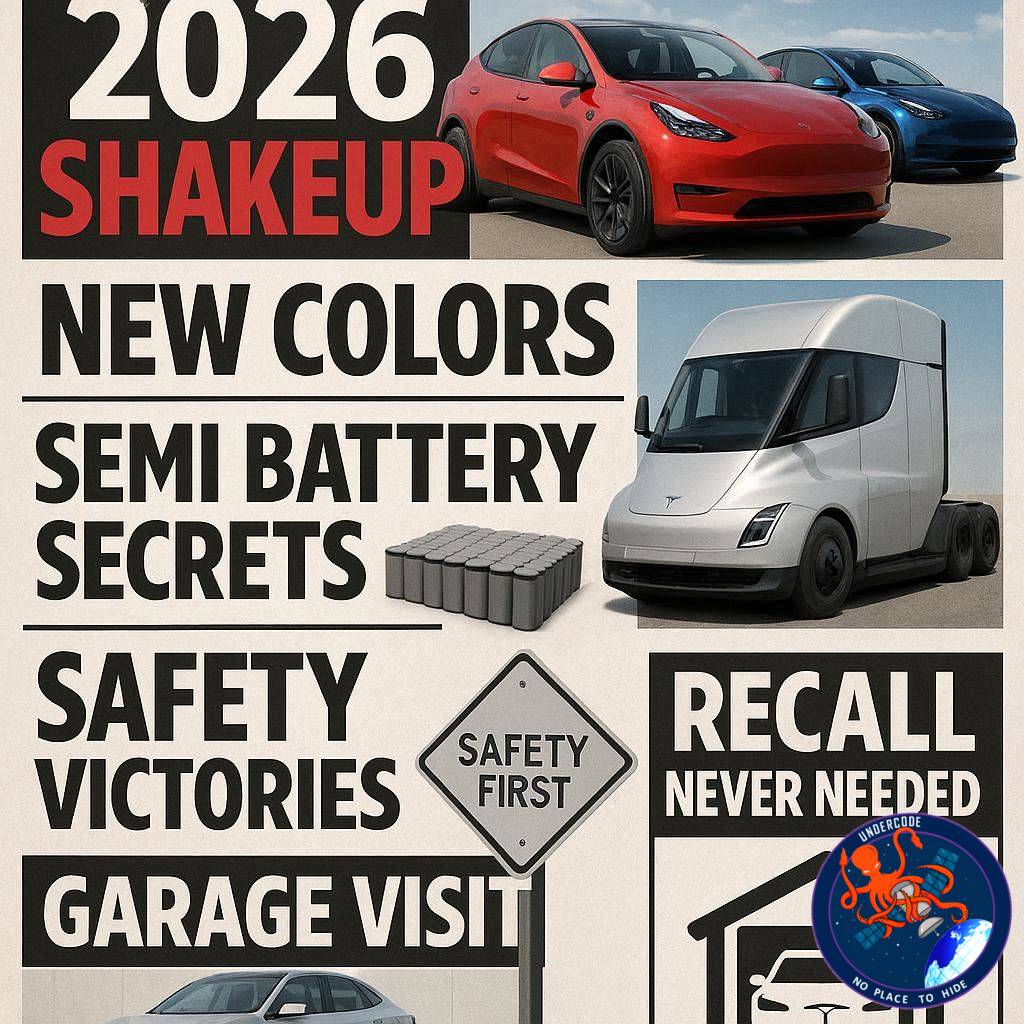
Tesla Expands Beyond Performance and Into Lifestyle Appeal
Tesla is entering a new phase in 2026, and it is no longer just about acceleration numbers, battery range, or futuristic software. The company is now pushing harder into visual identity, customer experience, and mass-market emotional appeal. In a surprising but strategic move, Tesla has refreshed the color palette of its most popular vehicles in the United States, giving buyers new premium-looking blue finishes that instantly modernize the lineup.
The automaker introduced Marine Blue for several Model 3 and Model Y variants, while Frost Blue has arrived exclusively for Performance trims. These colors replace the long-standing Deep Blue Metallic, which had become one of Tesla’s signature shades over the past eight years. The update may sound cosmetic at first glance, but it reflects a broader shift in Tesla’s strategy as competition in the electric vehicle market becomes more aggressive.
Marine Blue delivers a darker ocean-inspired metallic tone that changes under sunlight and gives Tesla’s vehicles a more luxurious appearance. Frost Blue, meanwhile, creates a colder and sportier aesthetic that pairs aggressively with black wheels and red brake calipers. Tesla clearly understands that modern EV buyers want more than efficiency — they want personality and individuality.
The timing is important because Tesla’s refreshed Model 3 and Model Y designs are entering a market filled with rivals from China, Europe, and legacy automakers. Instead of relying solely on hardware redesigns, Tesla is using smaller visual improvements to keep excitement alive while maintaining manufacturing efficiency.
The company’s decision to bring previously premium-exclusive colors from Model S and Model X into the mainstream lineup also reveals a more democratized branding approach. Tesla appears to be blending luxury identity into its mass-market vehicles, allowing buyers to feel they are receiving high-end styling without paying flagship-level prices.
At the same time, Tesla continues strengthening its position in commercial transportation. A new filing from the California Air Resources Board finally revealed official battery capacities for the Tesla Semi, ending years of speculation. The Long Range Tesla Semi carries an enormous usable battery pack rated at 822 kWh, while the Standard Range version includes 548 kWh.
Those numbers instantly confirm how serious Tesla is about dominating the freight market. The Long Range version aligns closely with Tesla’s advertised 500-mile target, while the Standard Range configuration supports around 325 miles under full load conditions. For an electric truck operating at Class 8 commercial scale, these figures are massive.
The filing also confirmed the Semi uses NCMA lithium-ion chemistry and shares impressive power output ratings between both versions. This matters because fleet operators prioritize reliability and operational consistency more than flashy features. Tesla appears focused on proving the Semi is commercially viable rather than experimental.
Production ramp-up in Nevada adds another major layer to the story. Tesla’s vertically integrated approach — manufacturing 4680 battery cells in the same complex where the Semi is assembled — could eliminate the supply chain issues that delayed the truck program for years. If Tesla achieves its goal of producing 50,000 Semi trucks annually, it could fundamentally disrupt North America’s freight industry.
Beyond aesthetics and trucking, Tesla also scored one of its most significant regulatory victories yet. The 2026 Model Y became the first vehicle ever to pass the National Highway Traffic Safety Administration’s new Advanced Driver Assistance Systems benchmark under the updated NCAP program.
The tests covered critical safety technologies including pedestrian automatic emergency braking, lane keeping assistance, blind spot intervention, and collision warning systems. Passing all categories places Tesla ahead of much of the industry at a time when regulators are demanding more real-world accountability from autonomous and semi-autonomous systems.
This achievement is particularly important because Tesla’s Full Self-Driving ambitions remain controversial in some circles. Critics have repeatedly argued that regulators need stronger oversight and measurable standards before autonomous technology becomes mainstream. Tesla’s success under the new NHTSA benchmark gives the company a powerful argument that its systems are not only advanced but independently validated.
The victory also strengthens consumer trust. Buyers increasingly want reassurance that automation technology improves safety instead of introducing unpredictable risks. Tesla can now market the Model Y not only as technologically advanced but as government-verified under one of the toughest ADAS frameworks ever introduced.
Another headline involving Tesla focused on a recall affecting nearly 219,000 vehicles due to a rearview camera software delay. However, the incident became less about the issue itself and more about how modern vehicle software is changing the meaning of recalls.
The glitch caused the rearview camera image to appear with delays of up to 11 seconds after shifting into reverse. Regulators determined this violated federal rear visibility standards. Yet Tesla resolved the issue almost immediately through an over-the-air software update.
By the time regulators officially published the recall notice, over 99 percent of affected vehicles had already received the fix remotely. Owners never needed to visit service centers, replace hardware, or even leave their homes.
This situation highlights how Tesla’s software-first architecture gives it a major advantage over traditional automakers. Older manufacturers still depend heavily on dealership networks and physical repairs. Tesla treats vehicles more like connected devices capable of continuous improvement.
Elon Musk has repeatedly criticized the use of the word “recall” for software fixes, arguing that the term creates unnecessary panic and inaccurately groups minor OTA updates with serious mechanical defects. Whether regulators eventually change the terminology or not, the broader industry shift is undeniable.
Cars are becoming rolling computers, and Tesla remains ahead in adapting to that reality.
What Undercode Says:
Tesla Is Quietly Repositioning Itself as a Lifestyle Technology Giant
Tesla’s recent moves reveal a company that understands electric vehicles are entering a mature phase. Early adopters once cared almost exclusively about battery range and acceleration. That era is fading. Consumers now expect EVs to compete emotionally with luxury and lifestyle brands.
The introduction of Marine Blue and Frost Blue may seem minor compared to battery breakthroughs or autonomous driving announcements, but psychologically, it matters. Tesla is learning that design freshness keeps consumer attention alive between major hardware refreshes.
This strategy mirrors what Apple has done for years with iPhones. Small visual changes create the perception of innovation while maintaining the same manufacturing ecosystem underneath. Tesla appears increasingly inspired by tech-industry product cycles rather than traditional automotive timelines.
The Semi battery disclosure is arguably more important than the color changes. An 822 kWh pack is enormous by passenger vehicle standards and confirms Tesla is betting aggressively on high-capacity commercial electrification. More importantly, the efficiency numbers suggest Tesla has achieved meaningful energy optimization despite the truck’s massive size.
If Tesla successfully scales Semi production, it could pressure diesel freight economics faster than many analysts expected. Commercial operators care about long-term operational costs more than ideology. If Tesla can deliver lower maintenance costs alongside competitive charging infrastructure, freight electrification could accelerate rapidly.
The Nevada production facility is another critical advantage. Vertical integration has always been Tesla’s hidden weapon. While competitors struggle with fragmented suppliers and geopolitical battery constraints, Tesla continues centralizing production and battery development. That approach improves cost control and manufacturing speed simultaneously.
The NHTSA safety victory may become even more valuable than Tesla’s marketing team realizes. Autonomous driving remains one of the most politically sensitive technological shifts in transportation history. Public trust is fragile. Independent regulatory validation gives Tesla credibility that advertising alone cannot buy.
Passing rigorous ADAS testing also increases pressure on competitors. Automakers that previously treated driver-assistance systems as optional luxury features may now face stronger regulatory expectations and consumer scrutiny.
The recall story exposes another major transformation inside the auto industry: software is replacing mechanical servicing as the core maintenance model. Tesla solved a federally recognized issue before most drivers even knew it existed. That capability fundamentally changes ownership expectations.
Traditional dealerships may face long-term disruption because OTA updates reduce dependency on physical repair infrastructure. Tesla’s approach effectively decentralizes vehicle maintenance.
However, Tesla still faces risks despite these achievements. Increased competition from Chinese EV manufacturers remains a serious threat, especially in affordability and manufacturing scale. Companies like BYD are expanding rapidly and applying pricing pressure across global markets.
Tesla also faces growing scrutiny over Full Self-Driving branding and real-world safety expectations. Even with NHTSA validation, regulators globally remain cautious about autonomous deployment. One high-profile incident could rapidly reshape public perception.
Another challenge is consumer fatigue. Tesla dominated headlines for years because it represented radical innovation. As EVs become mainstream, maintaining excitement becomes harder. Cosmetic upgrades and software improvements help, but Tesla eventually needs another transformational leap to preserve its technological mystique.
The Semi program could become that next leap if executed correctly. Heavy trucking is one of the most difficult sectors to electrify profitably. Success there would strengthen Tesla’s image as a company solving problems competitors still avoid.
The company’s strongest advantage remains integration. Tesla controls software, battery production, charging networks, manufacturing, and increasingly even customer experience. Most automakers still operate through fragmented ecosystems that slow innovation.
This integrated structure explains why Tesla can react faster than competitors during recalls, production shifts, or regulatory changes.
Another overlooked factor is branding psychology. Tesla has evolved beyond being just an automaker. For many consumers, it functions more like a technology identity brand. Owners are buying into an ecosystem, not simply transportation hardware.
That emotional attachment gives Tesla resilience even during controversial periods. Buyers often tolerate issues they would never accept from traditional automakers because they perceive Tesla as futuristic rather than conventional.
The blue color expansion also signals Tesla understands visual customization matters more than ever in saturated EV markets. As electric cars become common, buyers seek differentiation. Paint options suddenly become strategic rather than cosmetic.
Overall, Tesla’s 2026 direction suggests the company is entering a more mature and calculated phase. Instead of chasing headlines through shock value alone, Tesla is refining its ecosystem piece by piece — improving aesthetics, scaling commercial transportation, strengthening safety credibility, and reinforcing software superiority simultaneously.
That combination could prove more dangerous to competitors than any single revolutionary product launch.
🔍 Fact Checker Results
✅ Tesla Really Did Introduce New Blue Paint Options
Marine Blue and Frost Blue are officially available on select Model 3 and Model Y trims in North America, replacing Deep Blue Metallic.
✅ Tesla Semi Battery Capacities Were Confirmed Publicly
California regulatory filings verified the Tesla Semi battery capacities at 822 kWh for Long Range and 548 kWh for Standard Range configurations.
✅ The Model Y Became the First Vehicle to Pass NHTSA’s New ADAS Benchmark
The 2026 Tesla Model Y officially passed all newly introduced NHTSA ADAS evaluation categories under the updated NCAP program.
📊 Prediction
Tesla’s Software Ecosystem Could Become More Valuable Than Its Cars
Over the next several years, Tesla’s biggest advantage may no longer be battery technology alone. Its software infrastructure, OTA update ecosystem, autonomous driving data, and vertically integrated manufacturing could evolve into a platform business far more difficult for competitors to replicate.
Commercial EV Expansion May Reshape Freight Economics
If Tesla successfully scales Semi production and charging infrastructure simultaneously, the trucking industry could witness one of the fastest operational cost disruptions in modern transportation history.
Regulatory Validation Will Become the New EV Battleground
Future EV competition may shift away from raw acceleration and range wars toward safety certification, autonomous reliability, and software trustworthiness. Tesla’s early success with federal ADAS benchmarks gives it a potentially massive head start.
🕵️📝Let’s dive deep and fact‑check.
References:
Reported By: www.teslarati.com
Extra Source Hub (Possible Sources for article):
https://www.reddit.com
Wikipedia
OpenAi & Undercode AI
Image Source:
Unsplash
Undercode AI DI v2
Bing
🔐JOIN OUR CYBER WORLD [ CVE News • HackMonitor • UndercodeNews ]
📢 Follow UndercodeNews & Stay Tuned:
𝕏 formerly Twitter 🐦 | @ Threads | 🔗 Linkedin | 🦋BlueSky | 🐘Mastodon


