
Listen to this Post
Introduction
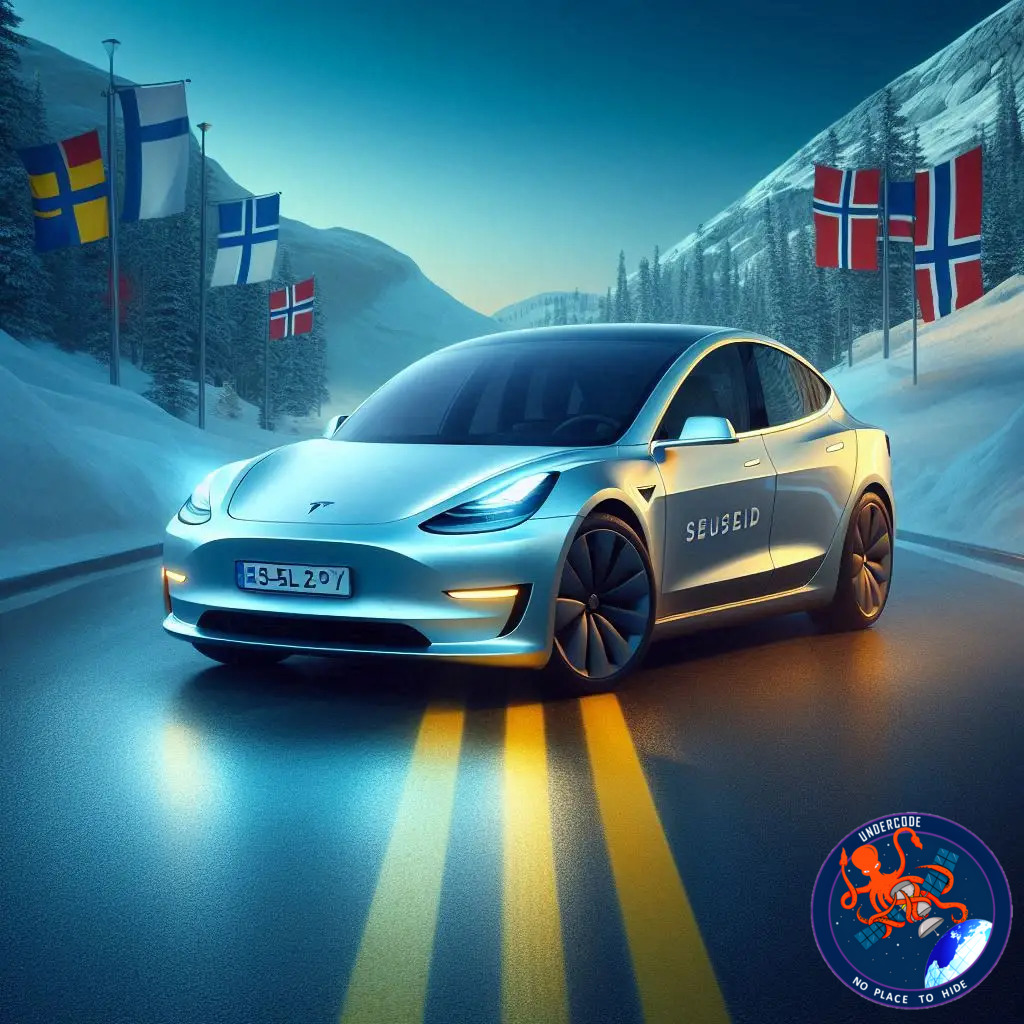
Norway has long been the world’s quiet testing ground for the future of electric mobility. With over 95% of new cars being fully electric, the Norwegian market doesn’t just follow EV trends—it defines them. In this environment, where competition is fierce and consumer expectations are sky-high, two familiar names have once again captured the spotlight: the Tesla Model 3 and the Tesla Model Y. Despite mounting challenges from Hyundai, Volkswagen, Peugeot, and premium European brands, Tesla’s two global best-sellers have secured top rankings in Norway’s influential annual car-buying roundup. Their wins come at a moment when global Tesla sales show mixed signals, manufacturing shifts are underway, and the company pushes harder than ever to expand its Full Self-Driving (FSD) footprint. This is the story of why Norway still chooses Tesla—and what the bigger picture reveals.
Tesla’s Double Victory in Norway
Norway’s annual list of best car purchases crowned the Tesla Model 3 and Model Y as the top picks in their respective categories. The decision wasn’t sentimental; it was grounded in price, efficiency, build quality, and everyday usability—qualities Norwegians rely on in one of the world’s most EV-dependent car ecosystems.
Model 3 Holds Its Crown Among Compact EVs
Reviewers reaffirmed the Tesla Model 3 as the strongest choice in the compact EV segment, emphasizing its range advantage, low running costs, and new interior upgrades. Even small changes, like the return of the turn-signal stalk—a feature Norwegian drivers had loudly missed—boosted the sedan’s ergonomics.
A Benchmark Competitors Are Still Chasing
Hyundai’s Ioniq 6, Volkswagen’s ID.3, and Peugeot’s compact EVs have made notable progress, yet they still fall short of Tesla’s price-to-capability lead. Every trim of the Model 3 was rated as “best value for money,” creating a gap the competition is struggling to close.
Model Y Wins Top Honors in the Family Segment
The refreshed Tesla Model Y was praised for its comfort improvements, better styling, and cabin refinements—all without major price increases. Spaciousness, safety ratings, and real-world range sealed its victory. Norway continues to favor the Model Y even as the model sees inconsistent sales trends in other markets.
Upgrades Matter in a Mature EV Market
A more elegant profile, softer ride quality, and better materials helped elevate the Model Y beyond rivals like Hyundai’s Ioniq 5, the Skoda Enyaq, and Volkswagen ID.4. Norwegian reviewers went as far as calling it the country’s best family-car purchase overall.
Giga Berlin Responds to Global Demand
Meanwhile, Tesla Gigafactory Berlin is scaling up production with two full shifts, driven in part by rising Model Y orders. Some units are now being exported to Canada due to market conditions and trade tensions affecting U.S. deliveries.
Berlin Still Only Produces Model Y
Unlike factories in Texas, Fremont, or Shanghai that produce multiple models, Giga Berlin remains a Model Y-exclusive facility. With Performance and Standard variants added, more ramping is needed to meet worldwide demand.
Norway’s Sales Explosion Before New Taxes
Norway is facing an upcoming tax increase on vehicles, triggering a surge in Tesla demand as buyers rush to secure tax-friendly EVs before the deadline. Tesla has already shattered Norway’s all-time annual sales record—surpassing a Volkswagen milestone that stood untouched since 2016.
Success Without FSD: A Rare Advantage
Perhaps the most surprising detail: Tesla achieved all this despite its biggest selling feature, Full Self-Driving, still not being approved in Norway or Europe. Tesla is working toward EU approval, and when it arrives, it could reshape the European EV hierarchy entirely.
Tesla’s Unprecedented Free FSD Trial
Tesla has launched a 30-day free FSD trial for owners in the U.S., Canada, Mexico, and Puerto Rico. Version 14 introduces new features like Speed Profiles and Arrival Options. The company is aggressively pushing adoption as only 12% of the Tesla fleet currently pays for FSD.
Subscription Momentum Over Upfront Purchases
At $99 per month, the subscription model is far more popular than the $8,000 outright purchase. This trial is aimed at converting skeptics by letting owners experience supervised autonomy firsthand.
Advertising: A Strategic Shift
Long resistant to advertising, Tesla has now begun placing targeted ads for FSD—especially on X—marking one of the biggest strategic shifts in company history. Elon Musk’s new compensation package directly ties rewards to achieving 10 million active paid FSD users, making FSD adoption a corporate priority.
Robotaxi Ambitions Drive the Transition
FSD is the foundation of Tesla’s robotaxi vision. The company sees autonomous ride-sharing as its long-term growth engine, potentially overshadowing traditional vehicle sales.
Comprehensive Summary (30-line paragraph)
Norway—a global EV leader with more than 95% of new vehicles being electric—has once again highlighted Tesla’s dominance by naming the Model 3 and Model Y as the top car purchases of the year. The Tesla Model 3 secured its position as the best compact EV thanks to its performance, range, and recent cabin updates, including the return of the turn-signal lever, which drivers have praised. Reviewers noted that every trim offers exceptional value, keeping rivals like Hyundai, Volkswagen, and Peugeot behind in the cost-to-capability race. The Tesla Model Y also claimed the top family-car spot, benefiting from ride-quality improvements, better materials, and subtle design upgrades that elevated its premium feel without a price hike. Reviewers emphasized its interior space, real-world range, and strong safety ratings, making it an ideal choice for families. This recognition comes as Tesla Gigafactory Berlin expands to two full shifts to support growing global demand, exporting vehicles even to Canada amid tariff complications. Norway is currently experiencing a massive Tesla sales surge ahead of new tax increases, with Tesla breaking the country’s all-time annual sales record—remarkably achieved without Full Self-Driving being available there. At the same time, Tesla has launched an aggressive new FSD strategy, offering a 30-day free trial for eligible owners across North America and initiating a broader advertising push on social media platforms. This marks a shift from Tesla’s long-standing non-advertising philosophy, aligning with Elon Musk’s compensation goals tied to achieving 10 million paid FSD subscriptions. The company’s focus on FSD is intertwined with its robotaxi ambitions, which Tesla views as its long-term strategic future. Tesla’s double win in Norway illustrates both the strength of its current lineup and the momentum behind its broader technological and commercial transition.
What Undercode Say:
Tesla’s performance in Norway is less about brand power and more about technical consistency paired with strategic timing. Norway has become a stress test for the global EV market, and Tesla’s ability to outrank rivals in this environment reveals something crucial: value still wins over novelty. The Model 3’s efficiency and long-range credibility remain unmatched by competitors who rely heavily on marketing but struggle with cold-weather range loss or inconsistent software. Norwegian buyers are pragmatic; they prioritize engineering over aesthetics, which is why Tesla continues to thrive even as some global markets register declining trends.
The Model Y’s victory underscores an important shift: customers expect premium comfort in addition to performance. Tesla’s refreshed ride dynamics and interior improvements are not radical but carefully incremental—exactly what a mature EV market expects. This method aligns with Tesla’s broader strategy of continuous refinement rather than dramatic redesigns.
Giga Berlin’s expansion also signals a turning point for Tesla’s European operations. Producing only the Model Y allows extreme production specialization, lowering error rates and optimizing supply chains. The decision to export units to Canada suggests that Tesla is balancing global demand through a flexible distribution model, mitigating risks tied to tariffs or regional slowdowns.
The most significant strategic development, however, is the FSD adoption push. Tesla’s free trial and advertising efforts indicate that the company is transitioning from purely engineering-driven growth to a hybrid model that balances innovation with brand outreach. The fact that FSD adoption is only at 12% reveals a gap between product capability and consumer trust. Closing that gap is essential if Tesla intends to scale robotaxi operations in the future.
Tesla’s new advertising presence, particularly for FSD, is a subtle acknowledgment that the company can no longer rely solely on Elon Musk’s influence or organic enthusiasm. As EV competition intensifies, Tesla must communicate not just its hardware advantages but also its software ecosystem—a domain where rivals are catching up rapidly.
The robotaxi ambition remains the wildcard. If Tesla achieves functional, broadly approved FSD, the economics of car ownership will shift dramatically. Norway’s strong EV infrastructure and early adoption culture make it a likely early beneficiary of such a transition, potentially transforming Tesla’s Nordic presence further.
Ultimately, Tesla’s dual victory in Norway is more than a regional win. It represents the convergence of engineering maturity, strategic manufacturing, and a renewed push in autonomy. The company’s next challenge is ensuring that FSD’s promise becomes reality—because the future of Tesla depends as much on software adoption as it does on producing great electric vehicles.
Fact Checker Results:
Tesla Model 3 and Model Y were indeed ranked top in Norway’s annual best-buy list. ✅
Giga Berlin has officially expanded to two full shifts to meet demand. ✅
FSD is still not approved for Norway or broader Europe. ❌ (Not available yet)
Prediction
Norway’s EV landscape will likely strengthen Tesla’s position even further once FSD gains European approval. 🚗
As global manufacturing stabilizes, Model Y demand will grow, especially in emerging export regions. 🌍
Tesla’s new advertising approach will significantly increase FSD adoption over the next 18 months. 📈
🕵️📝✔️Let’s dive deep and fact‑check.
References:
Reported By: www.teslarati.com
Extra Source Hub (Possible Sources for article):
https://www.linkedin.com
Wikipedia
OpenAi & Undercode AI
Image Source:
Unsplash
Undercode AI DI v2
Bing
🔐JOIN OUR CYBER WORLD [ CVE News • HackMonitor • UndercodeNews ]
📢 Follow UndercodeNews & Stay Tuned:
𝕏 formerly Twitter 🐦 | @ Threads | 🔗 Linkedin | 🦋BlueSky | 🐘Mastodon


