
Listen to this Post
Introduction: The Global EV War Heats Up
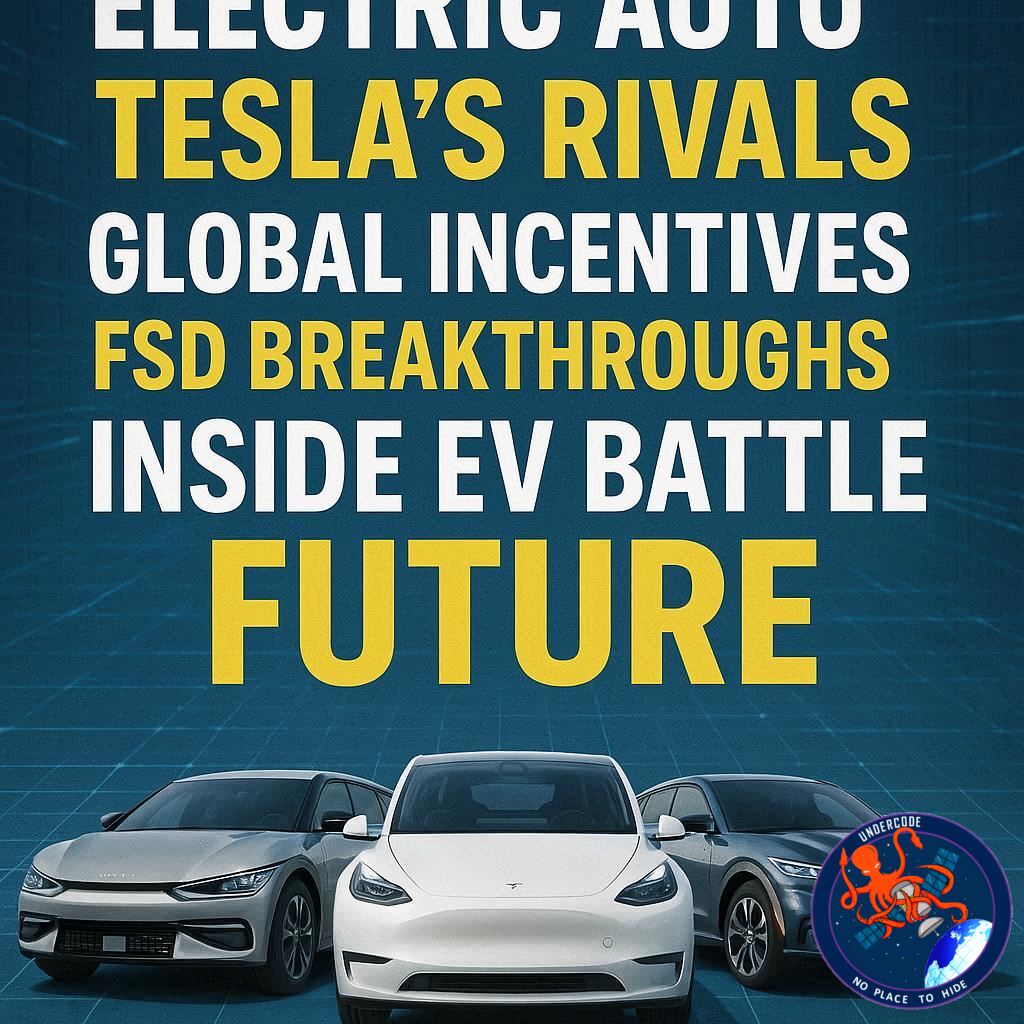
The electric vehicle market has turned into a high-stakes battleground where Tesla and its rivals are pushing harder than ever to win customers. From shocking recommendations by competing CEOs to irresistible incentives, groundbreaking autonomous driving projects, and even labor disputes, the EV world is buzzing with developments. In recent weeks, Xiaomi stunned the industry by telling eager buyers of its new YU7 crossover to consider Tesla’s Model Y instead, as demand for its own model has skyrocketed beyond production capacity. Meanwhile, Tesla is ramping up its Q3 sales push with bold incentives like free lifetime Supercharging, testing its Full Self-Driving (FSD) in India’s notoriously chaotic streets, and even breaking a nearly two-year labor standoff in Sweden. Here’s a full breakdown of the latest developments and what they mean for the future of electric mobility.
the Original
Xiaomi’s YU7 crossover has taken China’s EV market by storm, receiving an astonishing 240,000 orders within just 18 hours of launch. Demand is so overwhelming that customers face a staggering 56–59 week wait time. Facing this bottleneck, Xiaomi CEO Lei Jun took the unusual step of suggesting potential buyers consider competitors — explicitly naming Tesla’s Model Y, Xpeng G7, and Li Auto i8 — for those who need a car sooner. Tesla’s Model Y, already the world’s best-selling vehicle for two consecutive years, remains a hot favorite globally thanks to its technology and driver assistance features like City Autopilot, especially in China’s competitive EV landscape.
In Canada, Tesla is offering free lifetime Supercharging on all inventory Model 3 units as part of its Q3 sales push, extending the perk to the United States for Canadian drivers. This move could save drivers hundreds of dollars monthly and is aimed at maximizing sales before the U.S. EV tax credit winds down.
On the technology front, Tesla is expanding its FSD program into India, a market known for extreme traffic complexity. Job postings in Delhi and Mumbai suggest the company is collecting real-world driving data to train its autonomous systems, potentially preparing for a wider rollout. Elon Musk also teased FSD V14, promising a 10x increase in parameter count, reduced driver nags, and dramatic improvements in safety.
In labor news, Tesla Sweden reached a turning point in its 600-day standoff with the IF Metall union. The union, which had blocked operations in various ways, is now open to alternative resolutions that don’t involve a formal collective agreement. Tesla has maintained that its working conditions already exceed industry norms, and changes made during the dispute may have helped soften the union’s stance.
What Undercode Say:
Tesla is playing a multi-front game — and right now, it’s winning key battles in technology, market positioning, and operations. Xiaomi’s unprecedented demand for the YU7 is proof that Tesla’s supremacy is no longer unchallenged, but Lei Jun’s unexpected endorsement of the Model Y actually reinforces Tesla’s prestige. It’s rare for a rival CEO to openly recommend a competitor’s product, and this may subtly enhance Tesla’s reputation for reliability and availability in the EV space.
The free lifetime Supercharging offer in Canada is more than a sales gimmick — it’s a calculated strike at potential range anxiety and long-term ownership costs. While charging savings may not normally be transformative, making them zero can have a major psychological and financial impact for high-mileage drivers. More importantly, this incentive can create brand loyalty; once drivers experience Tesla’s Supercharger network, switching brands becomes less attractive.
Tesla’s decision to test FSD in India is a bold strategic move. Indian urban driving is often chaotic, blending pedestrians, two-wheelers, buses, and unpredictable road layouts. If Tesla can refine its AI to handle these conditions, it could position itself as the leader in autonomous systems worldwide. This “final boss” approach to AI training could make FSD far more adaptable in less controlled environments across emerging markets.
The labor dispute resolution in Sweden is a case study in corporate resilience. Tesla didn’t concede to a collective agreement, but instead adapted operationally until the union recognized that a middle ground was possible. This outcome demonstrates that Tesla can navigate intense regulatory and labor pressures without fundamentally altering its core business model.
Taken together, these events show that Tesla’s competitive strategy is evolving — from purely product-focused to a more holistic approach involving incentives, global market adaptation, and technological breakthroughs. While rivals like Xiaomi will continue to challenge Tesla on price and design, Tesla’s infrastructure, brand equity, and software innovation remain powerful weapons in the EV war.
✅ Fact Checker Results
Xiaomi did confirm 240,000 YU7 orders in under 18 hours.
Tesla’s free lifetime Supercharging offer for Canadian Model 3 inventory is officially announced and includes U.S. charging.
Tesla’s FSD V14 development and India job postings are verified via Tesla Careers and Elon Musk’s statements.
🔮 Prediction
Expect Tesla’s FSD program to expand aggressively into new, complex markets within the next 18 months, with India serving as the ultimate proving ground. If successful, Tesla could leap ahead of competitors in real-world autonomous performance — a move that may also boost sales in emerging economies and cement its role as the global EV leader, even as challengers like Xiaomi grow stronger.
🕵️📝✔️Let’s dive deep and fact‑check.
References:
Reported By: www.teslarati.com
Extra Source Hub:
https://www.quora.com
Wikipedia
OpenAi & Undercode AI
Image Source:
Unsplash
Undercode AI DI v2
🔐JOIN OUR CYBER WORLD [ CVE News • HackMonitor • UndercodeNews ]
📢 Follow UndercodeNews & Stay Tuned:
𝕏 formerly Twitter 🐦 | @ Threads | 🔗 Linkedin | 🦋BlueSky | 🐘Mastodon


