
Listen to this Post
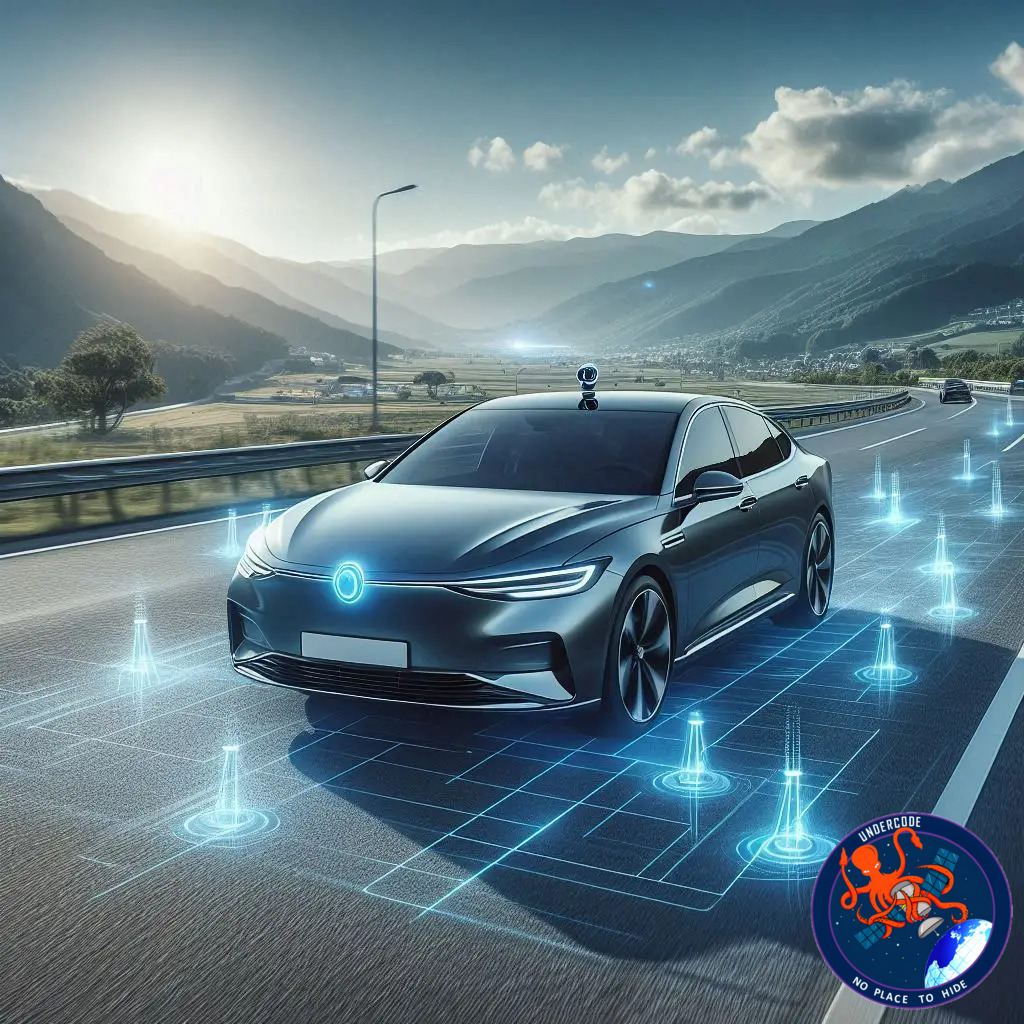
Elon Musk, the CEO of Tesla, has recently shared an updated estimate regarding the vast amount of training data required to achieve safe unsupervised Full Self-Driving (FSD) capabilities. Musk emphasized that 10 billion miles of data are necessary, citing the “super long tail of complexity” in real-world driving scenarios. This update came in response to a post from Paul Beisel, a former Apple and Rivian engineer, who analyzed the challenges in reaching true autonomy. Beisel noted that Tesla’s lead in data-driven FSD development puts it far ahead of potential rivals, who may struggle to catch up due to the scale and complexity of the task.
This new estimate comes after Tesla’s FSD program has already accumulated over 7 billion miles of driving data by the end of 2025, with over 2.5 billion of those miles occurring on inner-city roads. Musk had originally estimated that regulatory approval for autonomous driving would require just 6 billion miles, showing the massive gap between earlier projections and the current reality. While Tesla’s FSD technology is nearing 7 billion miles, the challenges of achieving full autonomy—especially overcoming the “long tail” of rare driving scenarios—remain daunting.
Musk’s comment also resonates with statements he made about Nvidia’s AI challenges, where he noted that getting to 99% of the solution is relatively easy, but solving the complex remaining 1% of driving scenarios is a significant hurdle. As Tesla pushes forward with its training and development, the company’s leadership in data accumulation places it in a strong position to continue advancing toward the goal of true unsupervised FSD.
What Undercode Says: The Complexities of FSD and Tesla’s Lead
Tesla’s leadership in autonomous driving is undeniable, but
This “super long tail of complexity” Musk references underscores the fact that autonomous vehicles must be prepared for every possible driving scenario—no matter how rare or unusual. From sudden weather changes to unpredictable road conditions, the real world presents an almost infinite variety of challenges that simulations simply cannot account for. This is why data collection in real-world conditions is essential for training the AI systems behind Tesla’s FSD.
Tesla’s ability to gather data at such a massive scale is part of what sets it apart from its competitors. While other companies in the autonomous vehicle space may be working with simulation data or limited real-world testing, Tesla’s data-driven approach allows it to continuously improve and refine its FSD systems in ways that others cannot easily replicate.
However, despite
As the industry continues to evolve, the challenge of achieving fully unsupervised FSD will require more than just data; it will demand breakthroughs in AI decision-making, sensor technology, and regulatory frameworks. Tesla’s data-driven approach places it ahead of the curve, but it remains to be seen whether any company can reach the 10 billion-mile milestone without encountering new obstacles.
🔍 Fact Checker Results
✅ Tesla’s Full Self-Driving program is indeed close to 7 billion miles driven, with over 2.5 billion miles driven on inner-city roads.
✅ Elon Musk’s statement about needing 10 billion miles of data to achieve safe unsupervised driving is an updated estimate based on real-world complexities.
✅ Other companies, including Nvidia and Rivian, have acknowledged the challenges of reaching true autonomy through simulations alone.
📊 Prediction
Looking ahead, Tesla is likely to continue leading the charge in data collection for autonomous driving, but reaching the 10 billion-mile mark will take time and substantial resources. It’s expected that as the company nears this milestone, advancements in AI will also accelerate, allowing for more rapid progress in safety and efficiency. However, this will not be a simple road; challenges in edge-case scenarios, regulatory approval, and competition from other autonomous vehicle programs will shape the timeline for truly unsupervised self-driving cars. By 2030, we may see full regulatory approval for FSD systems that rely on such vast data, marking a major milestone in automotive innovation.
🕵️📝✔️Let’s dive deep and fact‑check.
References:
Reported By: www.teslarati.com
Extra Source Hub (Possible Sources for article):
https://www.medium.com
Wikipedia
OpenAi & Undercode AI
Image Source:
Unsplash
Undercode AI DI v2
Bing
🔐JOIN OUR CYBER WORLD [ CVE News • HackMonitor • UndercodeNews ]
📢 Follow UndercodeNews & Stay Tuned:
𝕏 formerly Twitter 🐦 | @ Threads | 🔗 Linkedin | 🦋BlueSky | 🐘Mastodon


