
Listen to this Post
 Why Millions of Headphone Users Are Quietly Damaging Their Ears Without Realizing It
Wireless earbuds and noise-canceling headphones have become permanent accessories in modern life. People wear them while working, exercising, commuting, studying, and even sleeping. Convenience and immersive sound have made headphones more popular than ever, but there is a growing health concern hidden behind this daily habit. Listening to music at high volume for long periods is slowly damaging hearing for millions of people worldwide, especially younger users who rarely think about long-term consequences.
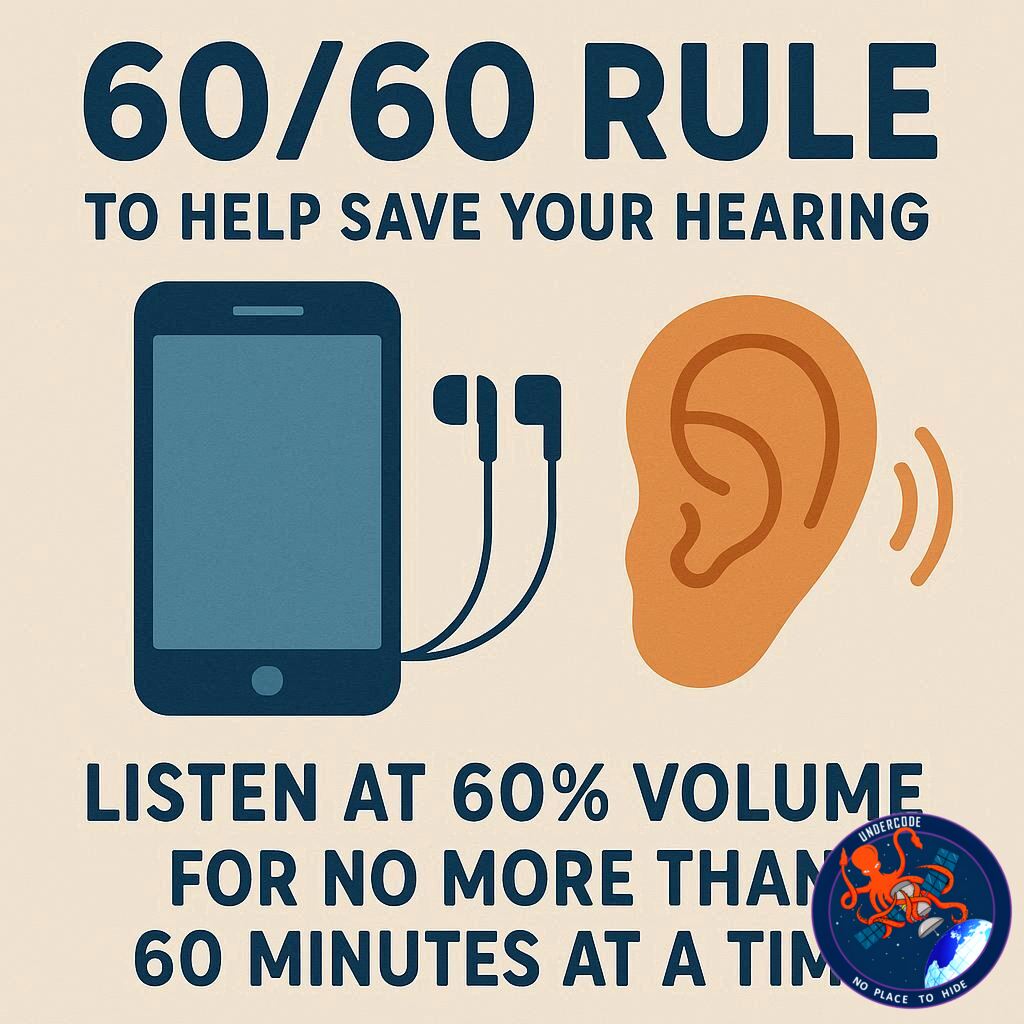
Health experts continue warning that hearing damage is not something that can simply be repaired later. Once the tiny sensory cells inside the ear are destroyed, they never regenerate. That reality is driving renewed attention toward the “60-60 rule,” a simple listening habit that could significantly reduce the risk of permanent hearing loss. The rule recommends listening at no more than 60% volume for a maximum of 60 minutes at a time before taking a break.
The article highlights how this guideline is becoming increasingly important in a world dominated by earbuds and constant audio exposure. Hearing health is not only connected to sound perception but also to broader cognitive wellness. Studies cited by medical researchers, including findings from the 2020 Lancet commission report, indicate that hearing impairment is one of the major modifiable risk factors linked to dementia development later in life. In simple terms, protecting hearing today may also help protect brain health in the future.
The science behind hearing damage is alarming. Inside the inner ear lies the cochlea, a spiral-shaped organ responsible for transforming sound vibrations into electrical signals for the brain. Tiny hair cells within the cochlea perform the critical work of detecting and amplifying sound. Loud audio exposure gradually damages these microscopic structures. Unlike many other cells in the human body, these sensory hairs do not grow back. Once destroyed, hearing loss becomes permanent.
The article explains that sound levels above 85 decibels can become dangerous over time. That threshold is roughly comparable to the noise produced by a gas-powered lawnmower. Unfortunately, many headphones easily exceed those levels, especially in noisy environments where users instinctively raise the volume to overpower background sound.
Modern smartphones and wearable devices are beginning to address this problem with hearing protection tools. Devices from companies like Apple, Samsung, and Google now include hearing health tracking systems capable of monitoring audio exposure. Some headphones can even warn users when they have been listening at unsafe levels for too long.
The article particularly focuses on the ecosystem surrounding the Apple Watch and AirPods. These devices can monitor environmental sound levels and provide notifications when surroundings become dangerously loud. During an Atlanta Falcons game, the author’s Apple Watch reportedly recorded sound peaks of 114 decibels, a level capable of causing hearing damage within approximately 15 minutes of exposure.
Noise cancellation technology also enters the discussion. Experts caution that active noise cancellation, commonly known as ANC, should never replace professional hearing protection equipment in industrial or high-risk environments. Workers in construction zones or factories still require certified hearing protection like earmuffs or earplugs. However, ANC can still provide important benefits in everyday life.
By reducing surrounding environmental noise, ANC headphones allow users to listen comfortably at lower volume levels. Instead of turning music up to dangerous levels in crowded gyms, busy trains, or loud offices, users can maintain safer listening habits while still enjoying clear audio. A study published in the Journal of Audiology and Otology in 2022 supports this idea, suggesting that headphones with effective isolation may reduce recreational noise exposure in noisy settings.
The gym example in the article illustrates this clearly. The author’s smartwatch measured environmental sound levels around 104 decibels during a crowded workout session. Meanwhile, AirPods with active noise cancellation reduced surrounding sound exposure significantly, helping keep listening levels under the critical 85-decibel threshold during exercise.
The broader message is straightforward but important: hearing damage rarely feels immediate. Most people only realize the severity after years of gradual deterioration. Ringing ears, difficulty understanding speech, and increased sound sensitivity often appear slowly, making the danger easy to ignore until the damage becomes irreversible.
Technology companies are increasingly integrating hearing awareness features into consumer electronics because audio consumption habits are intensifying globally. Streaming services, podcasts, gaming, and remote work all contribute to longer listening sessions. The convenience of always-connected audio has unintentionally normalized unsafe listening behavior.
The 60-60 rule may sound overly cautious to some users, but medical evidence strongly supports moderation. Small behavioral adjustments today could prevent lifelong hearing complications tomorrow. As headphone technology becomes more sophisticated, users are also expected to become more responsible in how they consume audio.
What Undercode Say:
The most fascinating part of this discussion is not the technology itself but the psychology behind headphone use. Modern consumers rarely associate entertainment devices with long-term physical damage. People instinctively fear smoking, poor diet, or lack of exercise, yet very few treat excessive headphone volume as a health risk. That disconnect is dangerous.
The rise of premium audio culture has intensified the issue. Consumers are spending hundreds of dollars on immersive sound systems, studio-quality earbuds, and spatial audio experiences designed to make music feel more powerful and emotional. The better the sound quality becomes, the more users tend to increase listening time. Audio consumption is no longer occasional; it is continuous.
Another overlooked factor is emotional dependency. Headphones have evolved beyond entertainment tools. They now function as emotional shields against stress, social anxiety, workplace distractions, and urban noise. Many people wear earbuds for hours simply to avoid interacting with their surroundings. That creates constant sound exposure even when users are not actively listening to music.
The article correctly highlights the relationship between hearing health and cognitive decline. This connection deserves far more public attention. Research increasingly suggests that hearing loss may accelerate social isolation and reduced cognitive stimulation, both of which are strongly associated with dementia risks. In that context, protecting hearing becomes more than preserving audio quality; it becomes part of long-term neurological care.
Technology companies deserve some credit for adding hearing safety features, but there is also an uncomfortable contradiction. The same companies warning users about hearing damage are simultaneously marketing louder, more immersive, bass-heavy experiences. Audio brands constantly advertise “powerful sound” and “maximum immersion,” indirectly encouraging prolonged high-volume listening.
Noise cancellation technology represents an especially interesting shift. In the past, users increased volume because outside noise interfered with listening clarity. ANC changes that equation entirely. If properly used, it could become one of the most important hearing-protection innovations for consumers in decades. Lower external noise naturally reduces the urge to raise playback volume.
However, ANC also creates a hidden psychological effect. Some users become so isolated from their environment that they lose awareness of actual sound intensity. When the outside world disappears, volume levels can feel deceptively safe even when they remain dangerously high. Comfort does not always equal safety.
The gym example from the article reflects a larger modern reality. Fitness centers, public transport systems, airports, and urban spaces are becoming increasingly loud. People are unconsciously trapped in a constant battle between environmental noise and personal audio volume. The louder society becomes, the louder individuals listen through headphones.
Young audiences are particularly vulnerable because hearing damage accumulates silently over time. Teenagers and young adults often assume hearing loss is an “old person’s problem,” but early auditory damage is now appearing much earlier than previous generations. Some audiologists already report seeing hearing profiles in young adults that once appeared primarily among older factory workers.
The article also indirectly reveals how wearable technology is evolving into preventive healthcare infrastructure. Smartwatches are no longer just fitness trackers. They are becoming environmental health monitors capable of detecting dangerous sound exposure, sleep issues, heart irregularities, and stress patterns. Future generations of wearables may eventually intervene automatically by lowering dangerous volume levels in real time.
There is also a social dimension rarely discussed. Loud headphone usage often reflects urban overstimulation and mental fatigue. People increasingly seek escape through personal audio bubbles because modern environments are crowded, noisy, and psychologically exhausting. In many cases, excessive headphone dependence is symptomatic of broader lifestyle stress.
The simplicity of the 60-60 rule is what makes it effective. It does not demand expensive medical intervention or radical lifestyle change. It introduces moderation rather than restriction. Those are usually the health habits people maintain longest.
Yet compliance remains difficult because audio addiction is normalized. Streaming platforms, social media clips, gaming sessions, and podcasts encourage endless consumption. Algorithms are designed to maximize engagement, not hearing preservation. Users often lose track of time entirely while wearing headphones.
The next major frontier may involve AI-driven hearing protection systems. Future devices could dynamically adjust volume based on environmental noise, listening duration, and historical exposure data. Instead of passive warnings, headphones may eventually become active health guardians.
The article ultimately exposes a modern paradox: people invest heavily in premium audio experiences while unintentionally risking the very sense required to enjoy them. Hearing remains one of the most underappreciated aspects of long-term health until deterioration becomes impossible to ignore.
📊 Prediction
🔮 Noise-canceling headphones will increasingly evolve into health-focused devices rather than purely entertainment products.
📉 Governments and health organizations may eventually introduce stricter hearing safety regulations for consumer audio devices aimed at younger users.
🎧 Future smartphones and earbuds will likely include AI-powered automatic hearing protection systems as standard features within the next decade.
🔍 Fact Checker Results
✅ Medical research does support the connection between hearing loss and increased dementia risk.
✅ Sound exposure above 85 dBA is widely recognized as potentially harmful over prolonged periods.
❌ Active noise cancellation alone is not considered sufficient protection for industrial or extremely loud occupational environments.
▶️ Related Video (86% Match):
🕵️📝Let’s dive deep and fact‑check.
References:
Reported By: www.zdnet.com
Extra Source Hub (Possible Sources for article):
https://stackoverflow.com
Wikipedia
OpenAi & Undercode AI
Image Source:
Unsplash
Undercode AI DI v2
Bing
🔐JOIN OUR CYBER WORLD [ CVE News • HackMonitor • UndercodeNews ]
📢 Follow UndercodeNews & Stay Tuned:
𝕏 formerly Twitter 🐦 | @ Threads | 🔗 Linkedin | 🦋BlueSky | 🐘Mastodon


