
Listen to this Post
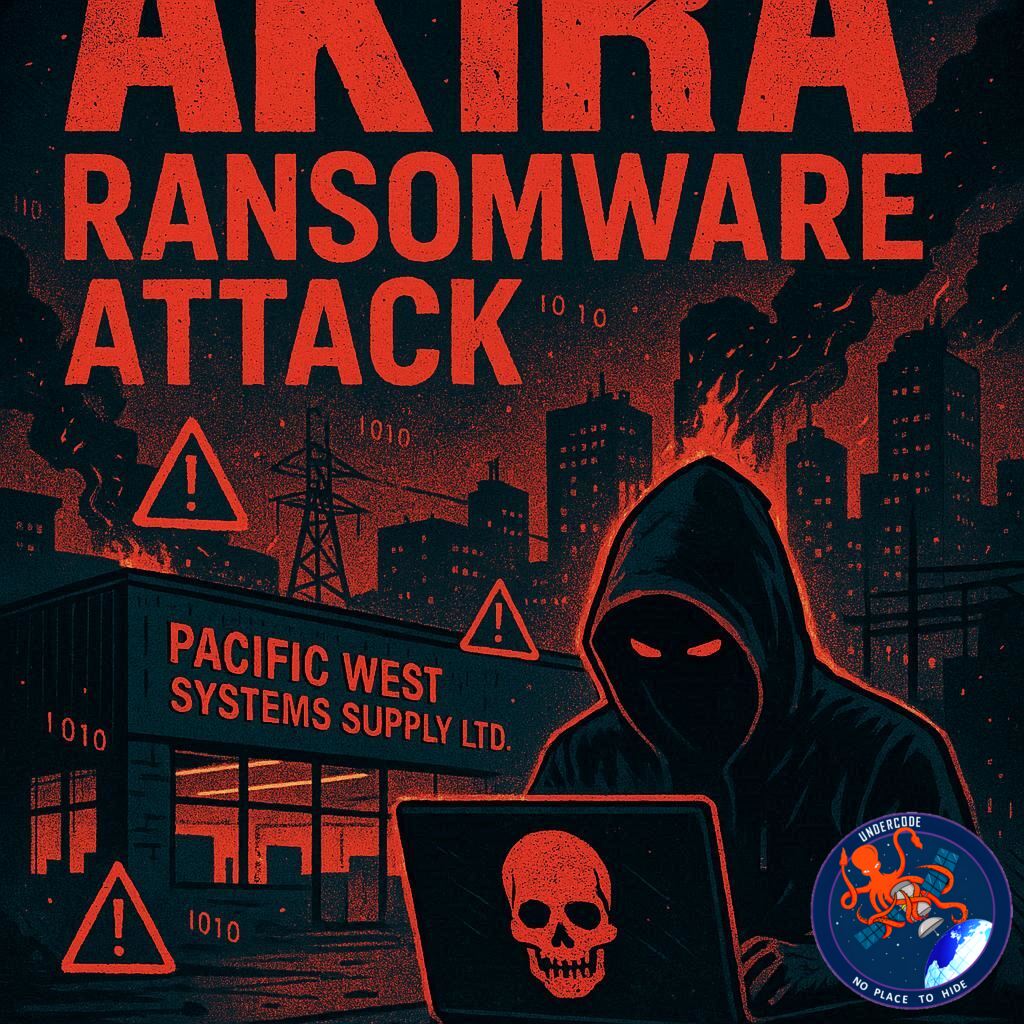
In the ever-evolving battlefield of cybersecurity, another corporation has fallen prey to the dark hands of digital extortion. The notorious hacker group Akira has claimed responsibility for a large-scale ransomware attack on Pacific West Systems Supply Ltd., a major distributor in the construction supply chain. The group is reportedly threatening to release 224GB of sensitive corporate data, including employee records, financial statements, and client information, unless a ransom demand is met.
This incident, emerging in late October 2025, once again underscores how even well-established companies remain vulnerable to sophisticated cyber offensives. The attackers’ tactics fit a disturbing pattern — infiltrate, encrypt, and extort — leaving organizations cornered between paying a digital ransom or risking catastrophic data exposure.
The leaked data reportedly includes high-value internal files, potentially exposing not just financial details but also trade secrets, client contracts, and private communications. Such exposure can trigger cascading damage: from financial losses and operational disruptions to irreparable reputational harm.
Cyber experts note that Akira has been active across multiple sectors since its emergence in early 2023, often targeting mid-sized to large companies with weak endpoint protection or outdated network configurations. The group’s hallmark is precision — they identify high-impact vulnerabilities, often through phishing or credential theft, and deploy ransomware strains tailored to cripple essential systems.
Pacific West Systems Supply Ltd., a key player in the North American supply chain ecosystem, now faces the daunting task of damage control — both in restoring its operations and in reassuring clients and partners that their information remains secure.
This attack also raises crucial questions about preparedness: Are companies truly adapting to modern cyber warfare, or are they still playing catch-up in a game where the rules evolve daily?
While the exact ransom amount demanded by Akira remains undisclosed, cybersecurity analysts suggest that the threat of data release could push the company toward negotiation. In many similar cases, failure to pay has led to full data dumps on dark web forums, turning private crises into public scandals.
Governments and cybersecurity authorities are once again emphasizing the need for stronger preventive frameworks — routine audits, rapid incident response mechanisms, and investment in AI-driven threat detection systems. But as long as human error and outdated systems persist, the hackers’ playground remains wide open.
This latest strike on Pacific West Systems Supply Ltd. isn’t just another cybercrime headline; it’s a cautionary tale of what happens when security becomes an afterthought in the age of relentless digital threats.
What Undercode Say:
The Akira ransomware incident reveals more than just a data breach — it exposes a chronic failure in corporate cybersecurity culture. Too often, companies treat digital protection as a cost rather than a core investment. The result? Breaches that could have been prevented become existential threats.
Analyzing Akira’s behavior over time, one pattern stands out: strategic opportunism. The group doesn’t attack randomly. It targets organizations at the intersection of high data value and moderate cyber maturity — businesses large enough to pay, but not advanced enough to fend off an intrusion.
Pacific West Systems fits that profile. As a regional distributor handling vast client data, it’s a prime target for ransomware actors. If confirmed, the 224GB of compromised information could include everything from invoices and employee payrolls to confidential supplier negotiations. Such a dataset isn’t just valuable for extortion — it can also feed identity theft, insider trading, and competitive espionage.
From a technical lens, Akira’s toolkit has evolved. The group often employs double extortion tactics, encrypting files while also exfiltrating sensitive data to ensure leverage. Even if a victim restores its systems from backup, the stolen data remains a weapon unless a ransom is paid.
But this raises an ethical dilemma — should companies ever pay? Law enforcement agencies worldwide, including the FBI and Interpol, strongly advise against it. Payment funds further attacks, encourages criminal continuity, and rarely guarantees full data deletion. Yet, in moments of crisis, when operational continuity and customer trust hang in the balance, the moral high ground often crumbles under pressure.
Another critical aspect is public transparency. Companies hit by ransomware frequently go silent, fearing reputational damage. But silence erodes trust faster than the attack itself. Pacific West Systems must strike a balance between confidentiality and honesty — disclosing impact scope while demonstrating control and accountability.
The incident also reaffirms an uncomfortable truth: cybersecurity is no longer just an IT issue. It’s a boardroom responsibility, an investor concern, and a customer expectation. Failure to integrate risk management into corporate strategy is no different than leaving the company vault open.
Looking ahead, we can expect regulators to intensify scrutiny, especially around industries managing critical infrastructure or financial data. Compliance will no longer suffice — resilience will.
This attack, like many before it, is a signal flare — a warning to every business operating in the digital economy. The threat isn’t going away; it’s evolving. And in this arms race, complacency is the most dangerous vulnerability of all.
Fact Checker Results:
✅ Akira has an active history of ransomware operations since 2023.
✅ Pacific West Systems Supply Ltd. is a legitimate construction supply firm affected by a claimed cyberattack.
❌ No public confirmation yet that ransom negotiations have occurred or payment was made.
Prediction: 🔮
Expect Akira to intensify its campaigns through 2026, possibly expanding into new sectors like logistics and manufacturing. Companies ignoring patch management or using legacy software will remain prime targets. Governments may soon introduce mandatory breach disclosure laws, forcing firms to report attacks within 48 hours — a move that could reshape global cybersecurity accountability.
🕵️📝✔️Let’s dive deep and fact‑check.
References:
Reported By: x.com
Extra Source Hub (Possible Sources for article):
https://www.linkedin.com
Wikipedia
OpenAi & Undercode AI
Image Source:
Unsplash
Undercode AI DI v2
Bing
🔐JOIN OUR CYBER WORLD [ CVE News • HackMonitor • UndercodeNews ]
📢 Follow UndercodeNews & Stay Tuned:
𝕏 formerly Twitter 🐦 | @ Threads | 🔗 Linkedin | 🦋BlueSky | 🐘Mastodon


