
Listen to this Post
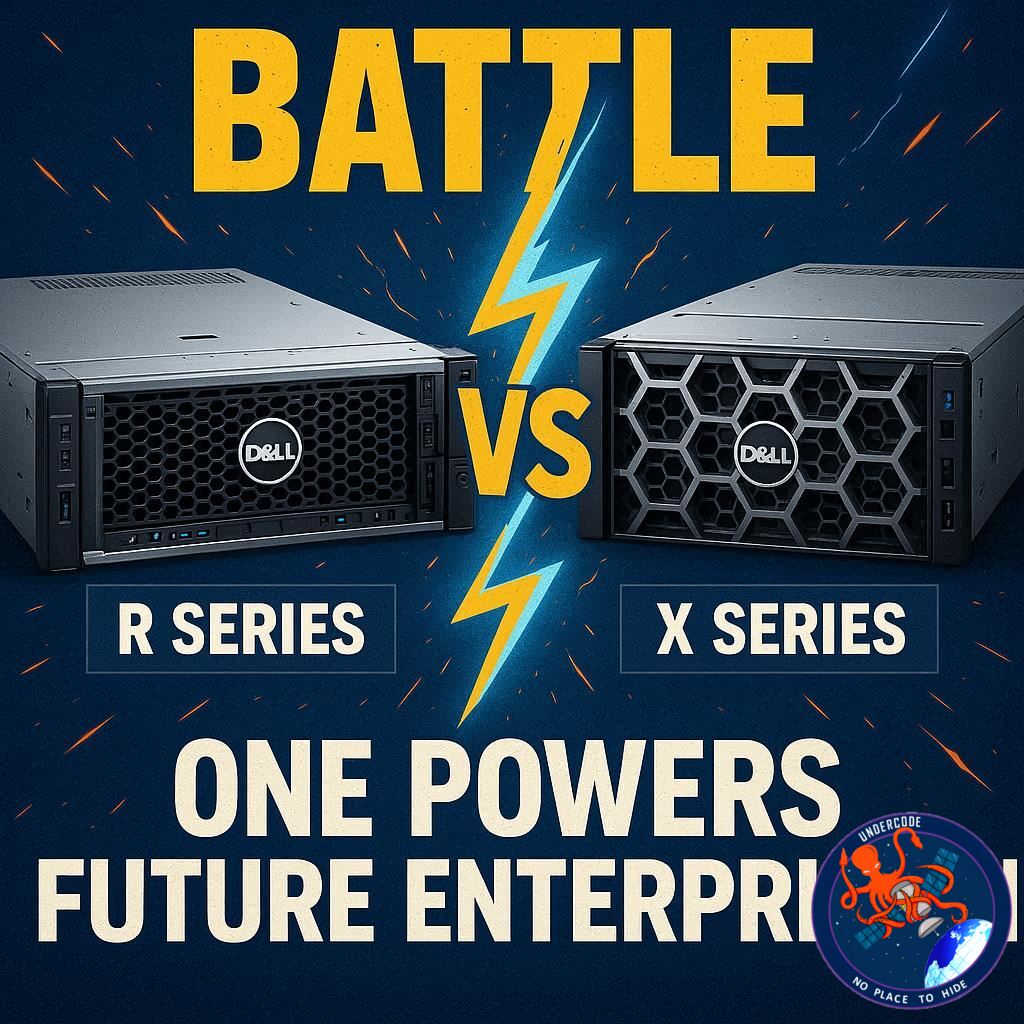 In the evolving world of enterprise computing, choosing the right server can make or break your company’s AI ambitions. With Dell’s PowerEdge lineup, the decision often comes down to two contenders: the R-Series and the XE-Series. One represents reliability, stability, and broad usability. The other symbolizes raw AI performance, speed, and future-proof design. But which one truly fits your organization’s vision? Let’s break down how these two server families compare and where the real value lies in Dell’s quest to power enterprise AI.
Understanding Dell’s PowerEdge Lineup
For modern businesses, servers are more than just storage boxes — they’re the engines driving digital transformation. Dell’s PowerEdge R-Series offers a traditional yet high-performing infrastructure solution, optimized for virtualization, databases, ERP, and data warehousing. Meanwhile, the PowerEdge XE-Series represents the future of AI computing, purpose-built for deep learning, machine learning, real-time analytics, and high-performance computing (HPC).
The R-Series is a trusted workhorse for enterprises looking for stability and efficiency in everyday workloads. It provides robust CPU performance, flexible RAM configurations, and dependable storage scalability. However, when it comes to GPU acceleration and the heavy lifting required by AI, it starts to show its limits.
The XE-Series, by contrast, was designed for complexity. It can handle multiple GPUs per node, making it ideal for environments where AI models need constant training and inference. Whether it’s real-time data analytics, autonomous vehicle simulations, or large-scale deep learning, the XE-Series thrives in demanding AI ecosystems.
PowerEdge R vs XE: The Purpose Behind the Machine
There’s no absolute “better” option between R and XE. It’s all about alignment with business goals. The R-Series fits enterprises that rely on stable, predictable computing — think of virtualization, databases, or business analytics. The XE-Series, however, is the choice for innovators, tech-heavy firms, and research institutions building advanced AI frameworks.
Both systems support Linux and Windows environments, with Dell’s proprietary Integrated Dell Remote Access Controller (iDRAC) and OpenManage Enterprise tools ensuring simplified management. These features allow IT administrators to automate tasks, monitor performance, and enhance server security from a single pane of glass.
In short:
R-Series: Best for traditional workloads and virtualization.
XE-Series: Tailored for AI, deep learning, and HPC performance.
Scalability: Building for Today and Tomorrow
Future scalability is where the XE-Series pulls ahead. As AI continues to evolve, businesses must plan for larger models, heavier data processing, and real-time decision-making. The XE-Series is built with this in mind — capable of hosting multiple GPUs, supporting future expansion, and running complex AI models efficiently.
The R-Series, on the other hand, can scale within its own limits but remains tied to traditional data center constraints. Its design prioritizes reliability and power efficiency, not the extreme compute density required by next-generation AI.
So, while R-Series servers excel in cost-effectiveness and low power consumption, the XE-Series shines as a future-proof investment for organizations that want to embrace AI’s full potential.
Automation and Intelligent Management
Dell knows that managing servers can drain valuable time and resources. That’s why both PowerEdge lines include automation tools like Dell AIOps, iDRAC, and OpenManage. Dell AIOps, in particular, brings intelligent automation powered by AI to streamline operations, predict potential issues, and ensure energy efficiency.
Security is another shared strength. Dell embeds each PowerEdge server with advanced protections, including silicon root of trust and cryptographically signed firmware, minimizing risks in an increasingly hostile cyber landscape.
Hardware Power: CPU, GPU, and Memory Balance
The true distinction lies under the hood. The R-Series depends mainly on CPU-driven processing, often powered by Intel Xeon or AMD EPYC processors. While GPUs can be added, their integration is limited compared to the XE-Series’ native design for high-density GPU workloads. For AI and deep learning, the XE-Series dominates with its broader bandwidth, NVMe storage, and optimized GPU support.
Simply put:
R-Series: Ideal for versatile, data-heavy workloads.
XE-Series: Engineered for AI inference, deep learning, and high-performance simulations.
Deployment, Energy, and Cooling
Power consumption tells another story. The R-Series typically runs below 2kW, making it efficient for standard enterprise data centers. The XE-Series, however, demands more — between 6kW and 10kW — due to its GPU-intensive configurations. That means organizations choosing the XE-Series must invest in advanced cooling and power management systems, such as 48V power distribution and liquid or hybrid cooling solutions.
It’s a trade-off between energy efficiency and AI capability. The R-Series saves on operating costs, while the XE-Series pays dividends in computational power and long-term innovation.
Use Cases: Choosing Based on Purpose
PowerEdge R-Series serves businesses running ERP systems, analytics platforms, and virtualization workloads. It’s found in universities, financial institutions, and corporate data centers that prioritize reliability over experimental AI.
PowerEdge XE-Series, on the other hand, powers industries pushing the frontier — from AI model training to autonomous system development, edge AI deployments, and industrial IoT. It’s the backbone for organizations leveraging real-time data intelligence.
FeaturePowerEdge R-SeriesPowerEdge XE-SeriesPrimary UseVirtualization, databases, analyticsAI, ML, deep learning, HPCServer SpecsDual CPUs, high RAM, flexible storageMulti-GPU nodes, NVMe, AI-ready acceleratorsScalabilityIncremental upgradesMultiple GPUs per nodeDeploymentStandard data centersAI and high-density environmentsCost vs ROILower initial costFaster AI ROIUse CasesERP, file storage, business appsAI inference, industrial IoT, real-time analytics
What Undercode Say:
Dell’s PowerEdge strategy showcases a clear understanding of where the enterprise market is heading. The R-Series stands as the pragmatic choice for organizations that value cost efficiency, predictability, and low maintenance. It’s reliable, time-tested, and integrates easily into existing IT ecosystems.
But the XE-Series is where the future is forged. It’s designed for AI growth, representing Dell’s vision for enterprises that want to stay ahead of the curve. It’s not just a server — it’s a bridge to the next generation of intelligent infrastructure.
From an analyst’s standpoint, this divide mirrors the broader transformation across the tech landscape: the shift from data management to data intelligence. Businesses once obsessed with storage and virtualization now demand insights, predictions, and real-time learning.
Dell’s AI-ready XE-Series enables precisely that. Yet, this advancement comes at a cost — higher energy demands, stricter environmental requirements, and greater initial investment. Organizations must therefore evaluate their AI maturity before diving in.
If your business is experimenting with machine learning or early-stage AI, an R-Series can serve as a foundation, allowing incremental upgrades. But for those fully embracing AI-driven transformation — from healthcare diagnostics to smart manufacturing — the XE-Series is the natural progression.
Ultimately, this isn’t just about servers. It’s about strategic vision. Choosing between R and XE reflects how ready your organization is for the next decade of AI innovation.
🔍 Fact Checker Results
✅ Both PowerEdge R-Series and XE-Series support Windows and Linux with Dell’s iDRAC and OpenManage tools.
✅ XE-Series servers are built for AI, HPC, and deep learning workloads, featuring multi-GPU configurations.
❌ R-Series cannot match XE-Series scalability or GPU density for high-end AI tasks.
📊 Prediction
💡 Within the next five years, Dell’s XE-Series is expected to dominate in AI-focused industries, particularly healthcare, finance, and autonomous technology.
🚀 The R-Series will remain vital for traditional enterprise workloads, but hybrid models combining R and XE infrastructure will become the new norm.
🌐 As AI workloads surge, energy-efficient cooling innovations will define the next generation of Dell’s PowerEdge architecture.
🕵️📝✔️Let’s dive deep and fact‑check.
References:
Reported By: www.techradar.com
Extra Source Hub (Possible Sources for article):
https://www.quora.com/topic/Technology
Wikipedia
OpenAi & Undercode AI
Image Source:
Unsplash
Undercode AI DI v2
Bing
🔐JOIN OUR CYBER WORLD [ CVE News • HackMonitor • UndercodeNews ]
📢 Follow UndercodeNews & Stay Tuned:
𝕏 formerly Twitter 🐦 | @ Threads | 🔗 Linkedin | 🦋BlueSky | 🐘Mastodon


