
Listen to this Post
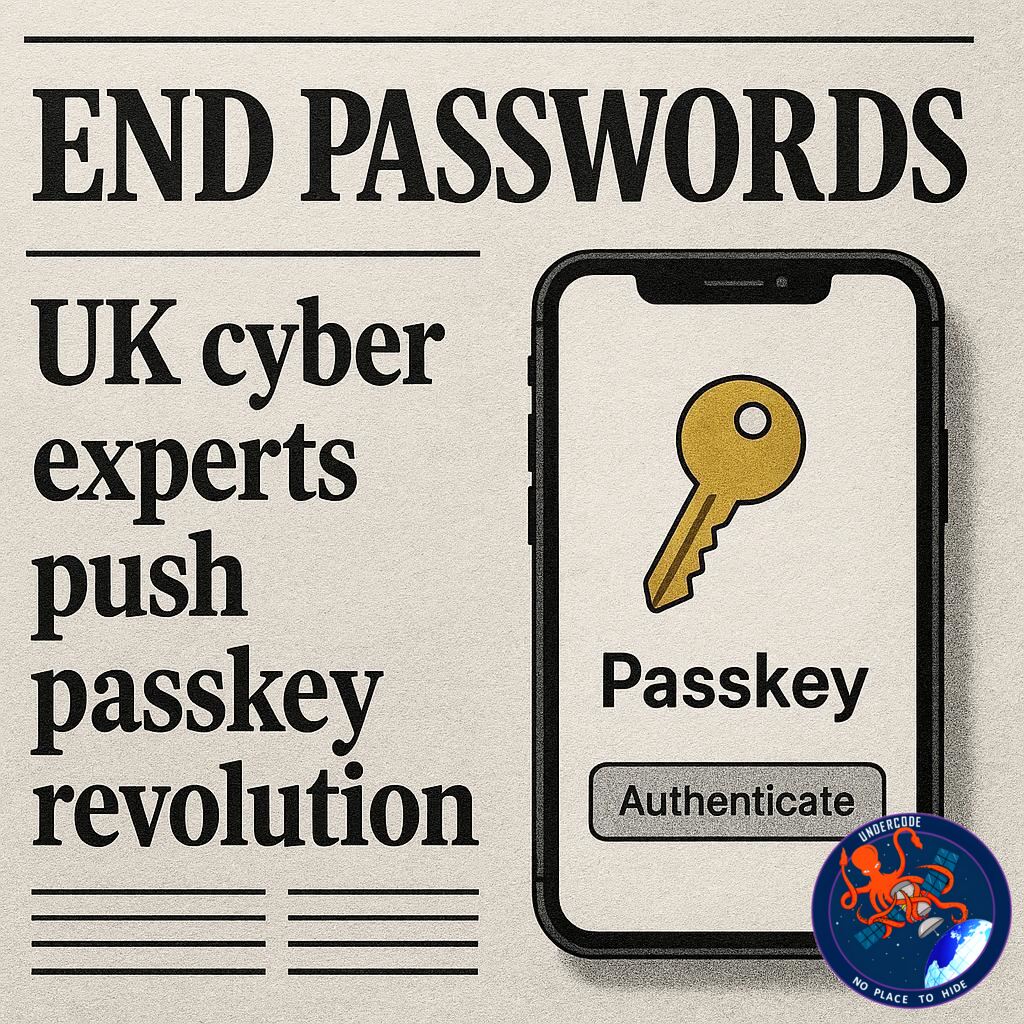
A New Era in Digital Security Begins
The cybersecurity landscape is undergoing a quiet but powerful transformation. In a recent advisory, the National Cyber Security Centre has urged individuals and organizations to move away from traditional passwords and adopt passkeys as a more secure alternative. This shift is not just a recommendation but a response to the growing wave of phishing attacks and credential theft that continue to exploit human error and outdated authentication systems.
Why Passwords Are Becoming Obsolete
For decades, passwords have been the primary line of defense for online accounts. However, their weaknesses are now impossible to ignore. Users often reuse passwords across multiple platforms, choose weak combinations, or fall victim to phishing scams that trick them into revealing sensitive credentials. Even with added layers like two-factor authentication, attackers have found ways to bypass these protections.
The UK’s cybersecurity authority highlights that passkeys eliminate many of these vulnerabilities. Unlike passwords, passkeys are tied to a specific device and use cryptographic methods to authenticate users. This means there is no password to steal, guess, or reuse. As a result, phishing attacks become significantly less effective, and credential theft is drastically reduced.
What Are Passkeys and How Do They Work
Passkeys rely on public-key cryptography, where a pair of keys is generated. One key remains securely stored on the user’s device, while the other is stored on the service’s server. When a user attempts to log in, the system verifies the cryptographic signature rather than asking for a password. This process is seamless and often integrated with biometric authentication such as fingerprints or facial recognition.
This approach not only enhances security but also improves user experience. There is no need to remember complex passwords or rely on password managers. Authentication becomes faster, simpler, and more reliable.
When Passwords Still Matter
Despite the advantages of passkeys, the transition is not yet universal. Many platforms still rely on traditional authentication systems. In such cases, the National Cyber Security Centre recommends using password managers and enabling two-factor authentication as a fallback.
Password managers help generate and store strong, unique passwords for each account, reducing the risk of reuse. Meanwhile, two-factor authentication adds an additional verification step, making it harder for attackers to gain access even if a password is compromised.
The Bigger Picture of Cybersecurity Evolution
This recommendation reflects a broader shift in cybersecurity strategy. Instead of relying on users to maintain complex passwords, the industry is moving toward systems that minimize human involvement in security processes. Passkeys represent a step toward a passwordless future, where authentication is both stronger and more user-friendly.
At the same time, emerging technologies bring new challenges. Recent discussions in the cybersecurity community have highlighted vulnerabilities in advanced AI systems, such as tokenization issues in language models. These developments show that while one area of security improves, new attack surfaces continue to emerge.
What Undercode Say:
The push toward passkeys is not just a technical upgrade but a philosophical shift in how we approach security. For years, the burden of protection has been placed on users, forcing them to remember increasingly complex passwords and stay vigilant against phishing attempts. This model has clearly failed, not because users are careless, but because the system itself is flawed.
Passkeys flip this dynamic. They remove the weakest link in cybersecurity, which is human memory and behavior. By relying on cryptographic authentication tied to devices, the system becomes inherently more secure. However, this also introduces new dependencies. Users must now trust their devices and the ecosystems that manage these cryptographic keys.
Another critical angle is adoption. Technology shifts often fail not because they are ineffective, but because they are inconvenient or poorly implemented. For passkeys to succeed, major platforms must adopt them universally, and users must find them easy to use. If the experience is fragmented or confusing, people will revert to привыч familiar methods, even if they are less secure.
There is also a geopolitical dimension. National cybersecurity agencies like the National Cyber Security Centre are setting the tone for global standards. Their endorsement of passkeys signals to companies and governments worldwide that passwordless authentication is the future. This could accelerate adoption but may also create disparities between regions that adopt quickly and those that lag behind.
On the threat side, attackers will inevitably adapt. While passkeys eliminate traditional phishing, they may open the door to new forms of attacks, such as device compromise or biometric spoofing. Cybersecurity is a constant arms race, and no solution remains foolproof forever.
The mention of AI-related vulnerabilities, such as token manipulation in advanced models, adds another layer of complexity. As systems become more sophisticated, the attack surface expands in unexpected ways. Security professionals must now think beyond traditional threats and consider how emerging technologies can be exploited.
Ultimately, the move toward passkeys represents progress, but it is not a silver bullet. It is part of an ongoing evolution in cybersecurity, where each improvement brings new challenges. The key is not to seek perfection, but to continuously adapt and stay ahead of emerging threats.
Fact Checker Results
✅ Passkeys are widely recognized as more secure than traditional passwords due to cryptographic authentication.
✅ The National Cyber Security Centre has officially recommended passkeys as a primary defense.
❌ Passkeys alone cannot eliminate all cyber threats, especially those targeting devices or new technologies.
Prediction
The next five years will likely see major tech platforms fully integrate passkeys, making passwords increasingly rare.
Cybercriminals will shift focus toward device-level attacks and biometric spoofing as traditional phishing declines.
Global cybersecurity policies will begin standardizing passwordless authentication as a baseline requirement for digital services.
🕵️📝✔️Let’s dive deep and fact‑check.
References:
Reported By: x.com
Extra Source Hub (Possible Sources for article):
https://www.github.com
Wikipedia
OpenAi & Undercode AI
Image Source:
Unsplash
Undercode AI DI v2
Bing
🔐JOIN OUR CYBER WORLD [ CVE News • HackMonitor • UndercodeNews ]
📢 Follow UndercodeNews & Stay Tuned:
𝕏 formerly Twitter 🐦 | @ Threads | 🔗 Linkedin | 🦋BlueSky | 🐘Mastodon


