
Listen to this Post
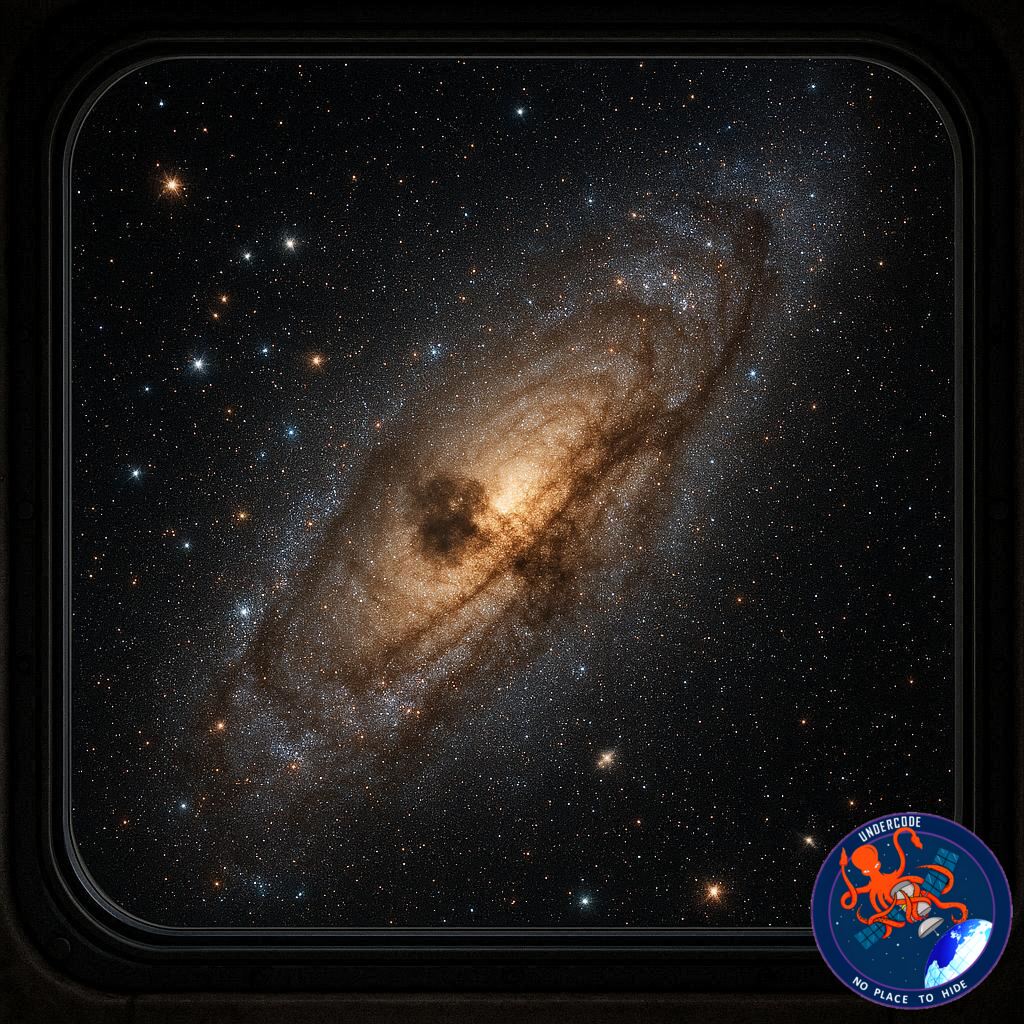
The universe is full of cosmic wonders that challenge our understanding of how galaxies form, evolve, and sometimes fade into quiet maturity. One such intriguing object is NGC 1266, a galaxy that has captured astronomers’ attention with its unusual structure and dynamic internal processes. Located approximately 100 million light-years away in the constellation Eridanus, this lenticular galaxy is a cosmic laboratory for studying the intricate relationship between star formation, galactic mergers, and supermassive black holes.
NGC 1266 presents a curious face. While it appears to hint at a spiral structure, it lacks the characteristic arms of typical spiral galaxies. Its bright central bulge is surrounded by reddish-brown clumps and filaments of dust, partially obscuring its features. Beyond the galaxy itself, red, blue, and orange light from more distant galaxies punctuates the black cosmic backdrop, offering a stunning celestial canvas. Classified as a lenticular galaxy, NGC 1266 represents a transitional stage between spiral and elliptical galaxies. These “lens-shaped” galaxies have flattened disks and bright central bulges, like spirals, yet they show little to no ongoing star formation, akin to ellipticals.
However, what truly makes NGC 1266 fascinating is its status as a post-starburst galaxy. These rare galaxies, accounting for only about one percent of the local galactic population, have recently undergone intense star formation but now show a marked decline in the birth of new stars. In NGC 1266’s case, astronomers believe a minor galactic merger roughly 500 million years ago triggered a wave of star formation while funneling gas into its central supermassive black hole. This influx of matter activated the black hole, creating an energetic active galactic nucleus (AGN). Powerful jets and winds emitted by the AGN likely swept away or disrupted much of the galaxy’s remaining star-forming gas, leaving only a sparse core where star birth continues.
Hubble Space Telescope observations reveal gas outflows and highly disturbed interstellar material throughout NGC 1266. Stellar nurseries are confined to the galaxy’s core, while turbulence and shockwaves prevent the surrounding gas from collapsing into new stars. Such processes make post-starburst galaxies like NGC 1266 ideal for studying how supermassive black holes influence their host galaxies and the mechanisms that halt star formation, offering critical insights into galactic evolution.
What Undercode Say:
NGC 1266 exemplifies the complex interplay between galactic mergers, star formation, and black hole activity. Its post-starburst status provides a rare glimpse into the transitional phase of galaxy evolution. By analyzing its structure and dynamics, astronomers gain insights into several key astrophysical processes. First, minor mergers play a significant role in shaping galaxies by increasing the central mass and triggering bursts of star formation. In NGC 1266, the merger not only fueled star formation but also drove gas into the central black hole, illustrating how galactic interactions can simultaneously foster creation and suppression of stars.
The galaxy’s AGN demonstrates the impact of supermassive black holes on their host galaxies. The strong outflows observed suggest that the black hole actively regulates star formation by expelling gas and creating turbulence in the interstellar medium. This feedback mechanism is critical to understanding why some galaxies abruptly stop forming stars and evolve into quiescent elliptical galaxies. NGC 1266, therefore, offers empirical evidence supporting theoretical models of AGN feedback, a cornerstone concept in modern astrophysics.
Moreover, NGC 1266’s lenticular form highlights its transitional nature. Unlike spirals with prominent arms or elliptical galaxies with smooth profiles, lenticulars like this one occupy an intermediate evolutionary stage. Their study informs how galaxies evolve from star-forming systems into passive structures, bridging gaps in our understanding of cosmic history. Observational data from Hubble and other telescopes provide a detailed snapshot of these processes in action, showcasing the utility of multi-wavelength astronomy in unraveling complex galactic phenomena.
From an analytical perspective, NGC 1266 underscores the delicate balance between star birth and suppression. The interplay of mergers, central black holes, and gas dynamics shapes the life cycle of galaxies, influencing their size, morphology, and stellar content. Future studies of similar post-starburst galaxies will refine our knowledge of cosmic evolution, revealing patterns that dictate why some galaxies remain vibrant while others quiet down. In this way, NGC 1266 serves not only as a cosmic curiosity but as a blueprint for the forces shaping the universe.
Fact Checker Results:
NGC 1266 is indeed a lenticular galaxy approximately 100 million light-years away in Eridanus.
The galaxy is correctly classified as a post-starburst system, which is rare in the local universe.
Observational evidence confirms that the AGN is actively expelling gas, limiting star formation in the galaxy.
Prediction:
Based on current observations, NGC 1266 is likely to continue evolving into a quiescent elliptical galaxy over the next few hundred million years. Its central black hole will maintain its influence on the surrounding gas, preventing significant new star formation. As the galaxy’s interstellar medium stabilizes, NGC 1266 may develop a smoother, more uniform profile, losing its lenticular characteristics and resembling other mature elliptical galaxies. Future multi-wavelength surveys may reveal faint remnants of its turbulent past, helping astronomers trace the life cycle of post-starburst systems and refine models of galactic evolution across the cosmos.
🕵️📝Let’s dive deep and fact‑check.
References:
Reported By: science.nasa.gov
Extra Source Hub (Possible Sources for article):
https://stackoverflow.com
Wikipedia
OpenAi & Undercode AI
Image Source:
Unsplash
Undercode AI DI v2
Bing
🔐JOIN OUR CYBER WORLD [ CVE News • HackMonitor • UndercodeNews ]
📢 Follow UndercodeNews & Stay Tuned:
𝕏 formerly Twitter 🐦 | @ Threads | 🔗 Linkedin | 🦋BlueSky | 🐘Mastodon


