
Listen to this Post
 Introduction: A New Era of Searching Is Quietly Taking Over
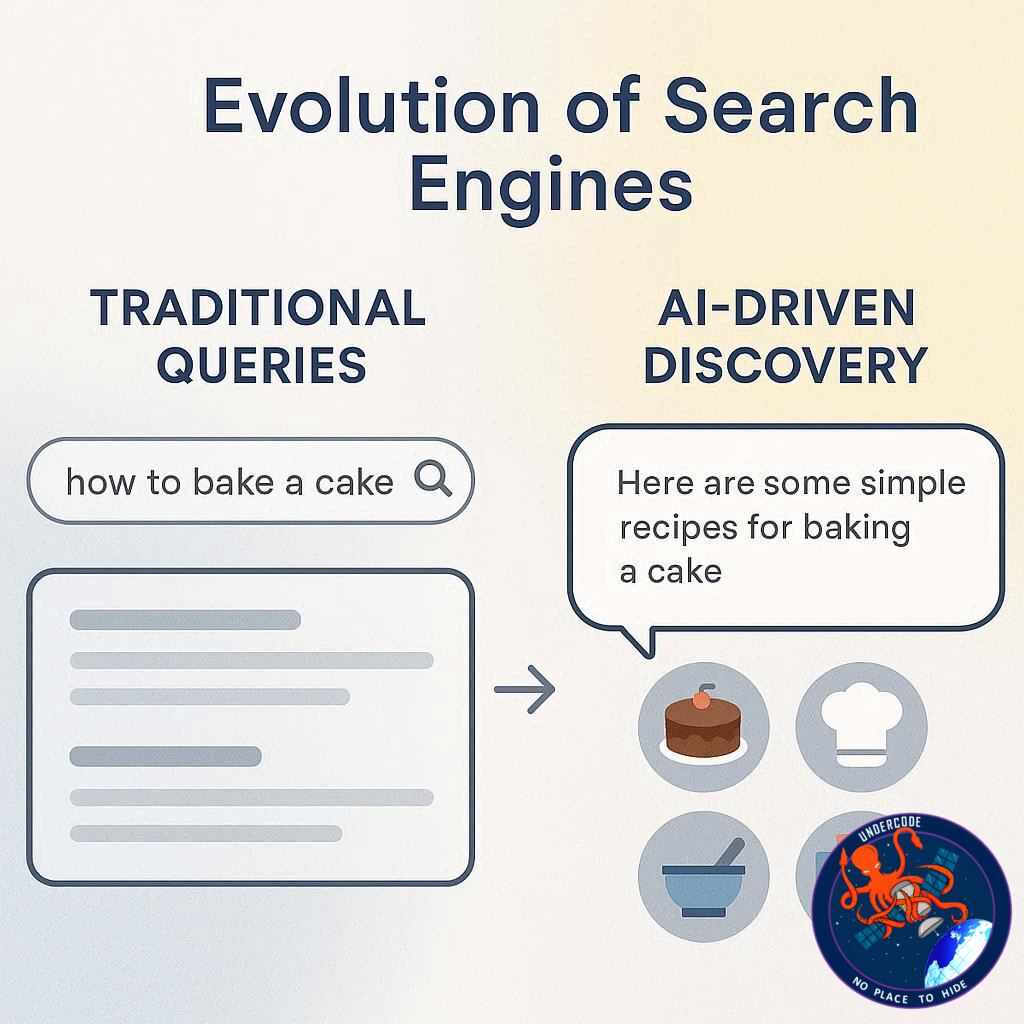
Search engines are no longer just tools for finding links, they are becoming intelligent systems that interpret intent, summarize knowledge, and sometimes even replace the need to click through to websites. What once started as a simple list of blue links has transformed into a dynamic, AI-powered ecosystem where answers are delivered instantly. Yet behind all the innovation, a deeper question is emerging: are businesses and users truly ready to abandon traditional search, or is data from classic search engines still the backbone of the internet economy?
The Shift from Traditional Search to AI-Powered Experiences
The landscape of search engines is undergoing a dramatic transformation. AI-powered search tools are rapidly gaining traction, offering users conversational answers instead of static results. Platforms like Google are integrating features such as AI Overviews, which summarize content directly within search pages. These summaries aim to reduce the need for users to visit multiple websites, delivering concise information instantly. While this may seem like a major convenience for users, it also introduces new challenges for publishers and businesses that rely heavily on traffic from search engines.
Despite the rise of AI-driven search, traditional search data remains essential for companies. Businesses still depend on search engine data to understand user behavior, track trends, and optimize their online presence. Tools like APIs continue to play a crucial role in extracting valuable insights from search engines, ensuring that companies can adapt to changing user preferences. This reliance highlights a paradox: while AI is reshaping how people search, the foundational data from traditional search engines remains irreplaceable.
Google’s Expanding AI Ecosystem and Its Implications
Google continues to push forward with its AI initiatives, expanding features like AI Overviews to more than 100 countries. These tools are designed to simplify the user experience by providing quick answers and reducing the need to read full articles. However, this convenience comes at a cost. Publishers may see reduced traffic as users find the information they need directly on search pages without clicking through.
In addition, Google has introduced new features aimed at improving content discovery, such as the Preferred Sources option. This feature allows users to prioritize content from their favorite publishers, potentially giving them more control over the information they consume. While this may help users filter out unwanted content, it also raises questions about information bias and the narrowing of perspectives.
Rising Competition: Alternatives to Google Search
As Google continues to dominate the search market, competitors are finding new ways to attract users. Platforms like Perplexity AI offer alternative search experiences, focusing on conversational and AI-driven responses. These tools provide a different approach to information retrieval, appealing to users who want faster and more intuitive answers.
Meanwhile, Microsoft is taking a more aggressive approach by promoting its Bing search engine through incentives. The company has even introduced a sweepstakes program with a $1 million reward, aiming to encourage users to switch from Google. This strategy reflects the intense competition in the search engine market and highlights the difficulty of challenging Google’s dominance.
Legal Pressure and the Future of Search Monopolies
The search engine industry is also facing increasing legal scrutiny. A recent court ruling determined that Google holds an illegal monopoly in the search market. This decision could lead to significant changes in how search engines operate and how users access information. While some changes may promote competition and innovation, others could disrupt the familiar user experience that billions rely on daily.
The outcome of this legal battle may reshape the entire search ecosystem, potentially opening the door for new players and technologies. However, it also introduces uncertainty, as users and businesses alike wait to see how regulations will impact the tools they depend on.
The Role of AI in Education and Knowledge Discovery
Beyond search, AI is also making its way into education. Google’s “Learn About” tool represents a new approach to learning, offering interactive and personalized educational experiences. This shift demonstrates how AI is expanding beyond search engines and into broader knowledge-sharing platforms.
These tools have the potential to revolutionize how people learn, making information more accessible and engaging. However, they also raise concerns about accuracy, bias, and the reliability of AI-generated content. As AI becomes more integrated into everyday life, ensuring the quality and credibility of information will be more important than ever.
What Undercode Say: The Hidden Tension Between Convenience and Control
The current evolution of search engines reveals a deeper conflict that is often overlooked. On the surface, AI-powered search appears to be a natural progression, faster answers, less effort, and a more streamlined experience. But beneath that convenience lies a shift in control. Users are no longer navigating the web themselves; instead, algorithms are deciding what information is relevant, summarizing it, and presenting it in a pre-digested format.
This creates a subtle but powerful dependency. When users stop clicking through to original sources, they lose exposure to diverse viewpoints and nuanced arguments. AI summaries, no matter how advanced, are still interpretations. They compress complex ideas into simplified outputs, which can sometimes distort the original context. Over time, this could reshape how people understand information, prioritizing speed over depth.
From a business perspective, the implications are even more significant. Websites that rely on organic traffic may face declining visibility as AI answers replace traditional search results. This forces companies to rethink their strategies, shifting focus from ranking on search engines to becoming authoritative sources that AI systems choose to reference. The competition is no longer just for user attention, but for algorithmic trust.
The introduction of features like Preferred Sources hints at an attempt to return some control to users, but it also introduces new risks. If users only consume content from selected sources, the diversity of information could shrink. This creates echo chambers where people are exposed only to perspectives they already agree with, limiting critical thinking and broader understanding.
Meanwhile, the aggressive tactics by competitors like Microsoft highlight how difficult it is to disrupt Google’s dominance. Financial incentives may attract short-term attention, but they do not necessarily change user habits. Search behavior is deeply ingrained, and shifting it requires more than rewards, it requires a fundamentally better experience.
The legal challenges facing Google add another layer of complexity. Breaking up or regulating a dominant player could foster competition, but it could also fragment the user experience. Users may end up navigating multiple platforms instead of relying on a single, unified system. While this could encourage innovation, it might also introduce confusion and inefficiency.
AI in education further amplifies these concerns. Tools designed to simplify learning can be incredibly powerful, but they also risk oversimplifying knowledge. True understanding often comes from exploration, questioning, and exposure to multiple sources. If AI becomes the primary gateway to information, maintaining intellectual curiosity becomes a challenge.
Ultimately, the future of search is not just about technology, it is about balance. The balance between speed and depth, convenience and control, automation and human judgment. The companies that succeed will be those that recognize this tension and find ways to empower users rather than replace their decision-making processes.
Fact Checker Results
✅ AI Overviews expanding globally is accurate and reflects Google’s recent rollout strategy
✅ Microsoft offering financial incentives to promote Bing adoption is a verified campaign
❌ AI completely replacing traditional search is false, businesses still rely heavily on search data
Prediction
📊 AI-driven search will dominate user interfaces, but hybrid models combining traditional and AI search will persist
📊 Regulatory pressure on major search engines will increase, potentially reshaping market competition
📊 Content creators will shift strategies toward authority-building to remain visible in AI-generated results
▶️ Related Video (86% Match):
🕵️📝✔️Let’s dive deep and fact‑check.
References:
Reported By: www.techradar.com
Extra Source Hub (Possible Sources for article):
https://www.discord.com
Wikipedia
OpenAi & Undercode AI
Image Source:
Unsplash
Undercode AI DI v2
Bing
🔐JOIN OUR CYBER WORLD [ CVE News • HackMonitor • UndercodeNews ]
📢 Follow UndercodeNews & Stay Tuned:
𝕏 formerly Twitter 🐦 | @ Threads | 🔗 Linkedin | 🦋BlueSky | 🐘Mastodon


