
Listen to this Post
Introduction
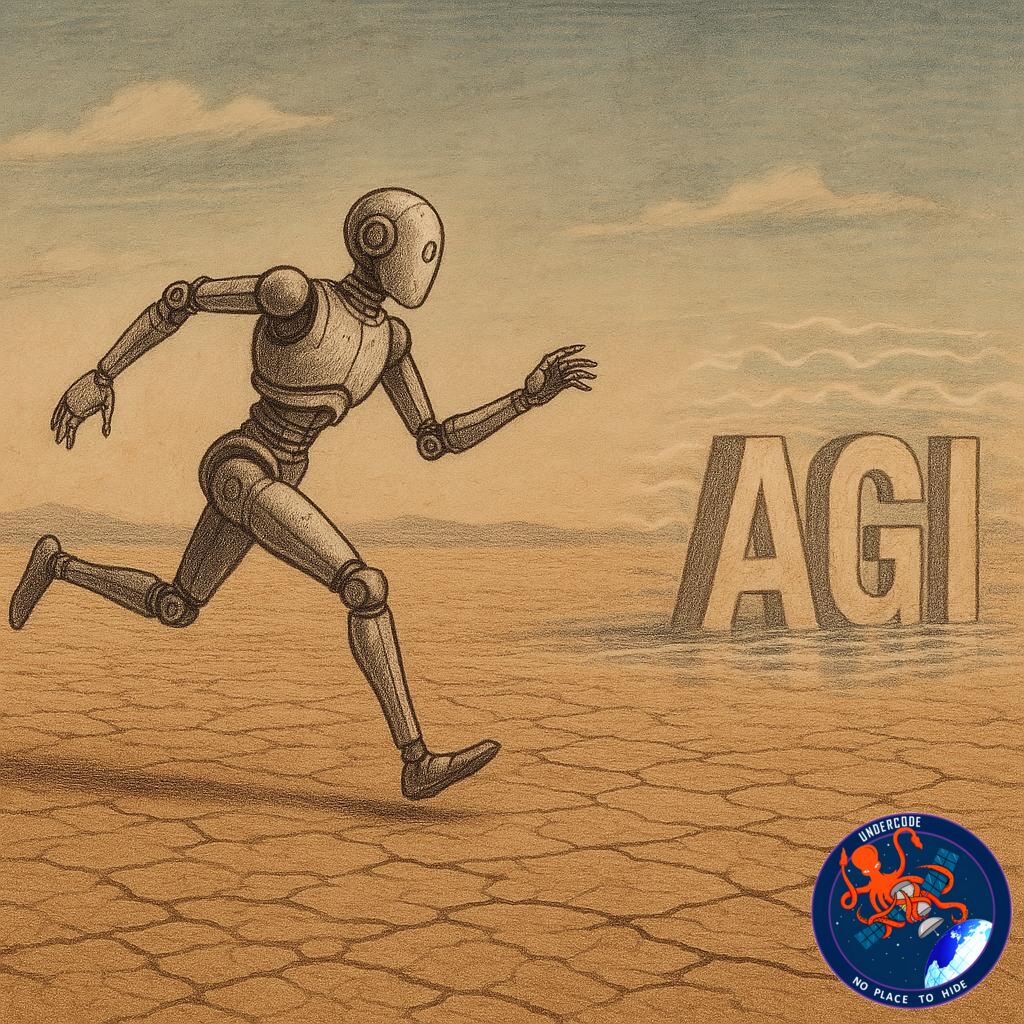
For decades, Artificial General Intelligence (AGI) has been portrayed as the ultimate goal of human innovation — the moment machines become as capable, creative, and adaptable as people. Yet, as the world races toward that elusive milestone, a growing number of experts are beginning to question whether the finish line even exists. In a recent conversation on CNN’s Global Public Square (GPS), Fareed Zakaria sat down with journalist and author Karen Hao, whose book Empire of AI explores the chaotic pursuit of intelligent machines. Their discussion uncovered the deep paradox at the heart of AGI: the dream that promises human transcendence might instead expose the limits of our own technological ambitions.
The Illusion of Progress: Why AGI Remains Out of Reach
Artificial General Intelligence — often called the “holy grail” of AI — refers to a system capable of human-level reasoning, problem-solving, and creativity across any domain. Unlike narrow AI models like ChatGPT or AlphaGo, AGI would not be limited to predefined tasks. It would think, learn, and adapt independently, much like a human brain.
But in practice, that vision remains far beyond our current reality. As Karen Hao explains, even the most advanced AI models today operate within extremely narrow parameters. They can simulate intelligence but lack understanding, empathy, and consciousness. The gap between mimicking and truly thinking is far greater than the public realizes.
In the interview, Fareed Zakaria presses the central question: When will AGI actually arrive — if ever? Hao responds with cautious realism. Despite massive investments from tech giants like OpenAI, Google DeepMind, and Anthropic, no system has yet demonstrated anything close to general reasoning. Each breakthrough seems to bring not clarity, but more complexity. “We’re building larger models,” she notes, “but we’re not building wiser ones.”
The global race to AGI has become a symbol of both ambition and anxiety. Governments, corporations, and entrepreneurs are locked in a competition that feels almost existential — who will create the first truly thinking machine? Yet many researchers now argue that this obsession might be diverting attention from more immediate and achievable goals. Instead of racing toward a hypothetical future, they suggest focusing on improving AI safety, ethics, and accessibility today.
There’s also the question of why humanity wants AGI in the first place. Some envision it as a tool to solve crises like climate change or disease. Others, however, warn that such power could deepen inequality, displace millions of workers, and centralize control of knowledge in the hands of a few corporations. The pursuit of AGI, Hao suggests, reflects as much about human ego as it does about scientific progress.
The irony is striking: as AI becomes more powerful, its true purpose becomes more uncertain. The more we learn, the more we realize how little we understand about intelligence itself. The path to AGI may not be a straight line of technological evolution, but a mirror reflecting our own philosophical confusion.
What Undercode Say: The Myth, the Market, and the Mind Behind AGI
The idea of AGI has evolved from scientific curiosity into cultural mythology — a promise that technology will one day transcend human limits. But beneath that narrative lies a web of contradictions and incentives that few are willing to confront.
From an analytical perspective, the race to AGI resembles a speculative bubble more than a scientific crusade. Investors pour billions into AI labs chasing “emergent” intelligence, yet the benchmarks of progress remain vague and often self-defined. When OpenAI claims that GPT models are steps toward general reasoning, what metrics prove that? None definitive. Instead, the narrative thrives on the illusion of proximity — the idea that we’re almost there.
This illusion sustains the commercial ecosystem surrounding AI. Every press release about “sparks of AGI” fuels media hype, boosts valuations, and attracts new funding. But behind the excitement, the reality is more mechanical: these models are vast statistical systems trained on human language and behavior. They don’t think; they predict. Their intelligence is an echo of ours.
Philosophically, AGI exposes a deeper tension — the difference between knowledge and understanding. Machines may process more data than any human could, yet they lack the capacity to mean something by it. This absence of intention or self-awareness is what separates simulation from consciousness. Even the most “intelligent” AI systems operate in a void of meaning, guided only by probabilities, not purpose.
Ethically, the AGI race risks amplifying inequality. As Hao’s research suggests, the infrastructure of modern AI — data, energy, and compute — is monopolized by a handful of global corporations. These entities not only define what intelligence means but also control who benefits from it. In that sense, AGI is not just a technological goal but a geopolitical weapon.
The human cost of this pursuit is equally profound. While Silicon Valley dreams of machine minds, the real world faces job displacement, algorithmic bias, and privacy erosion. Each “advancement” introduces new risks — deepfakes, misinformation, autonomous weapons — that society struggles to regulate. The chase for AGI might not just fail; it could distract us from fixing what current AI has already broken.
Undercode argues that the race to AGI reflects a modern myth of immortality. Humanity has always sought to create in its own image — from gods to machines. But perhaps the future of intelligence lies not in surpassing human limits, but in understanding them. The measure of progress should not be whether machines can think, but whether we can think more wisely about the machines we create.
Fact Checker Results
✅ No credible evidence yet supports the claim that AGI is close to realization.
✅ Current AI systems remain narrow and domain-specific, despite marketing language suggesting otherwise.
❌ Public discussions often conflate advanced AI with true general intelligence.
Prediction 🤖
Within the next decade, AGI will remain a theoretical concept rather than a tangible reality. What will evolve instead is Artificial Collaborative Intelligence (ACI) — systems designed to enhance, not replace, human cognition. The future won’t belong to machines that think like us, but to humans who learn to think alongside them.
🕵️📝✔️Let’s dive deep and fact‑check.
References:
Reported By: edition.cnn.com
Extra Source Hub (Possible Sources for article):
https://www.quora.com
Wikipedia
OpenAi & Undercode AI
Image Source:
Unsplash
Undercode AI DI v2
Bing
🔐JOIN OUR CYBER WORLD [ CVE News • HackMonitor • UndercodeNews ]
📢 Follow UndercodeNews & Stay Tuned:
𝕏 formerly Twitter 🐦 | @ Threads | 🔗 Linkedin | 🦋BlueSky | 🐘Mastodon


