Listen to this Post
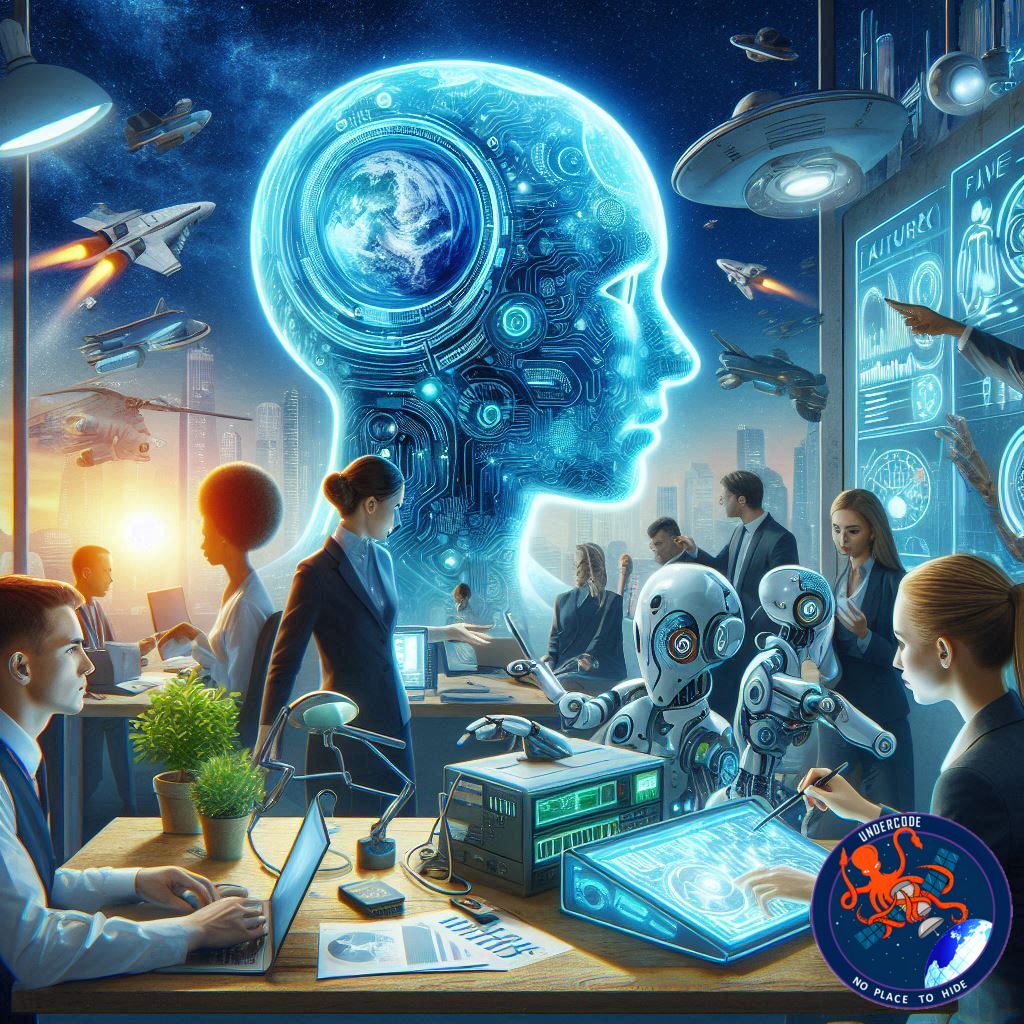
The workforce is on the brink of a transformation unlike anything we’ve seen before. Artificial intelligence is accelerating at a pace that promises not only to reshape existing jobs but to create entirely new industries. Among the boldest predictions comes from OpenAI CEO Sam Altman, who envisions a future where college graduates could find themselves embarking on space missions, exploring the solar system, and earning high salaries in roles that barely exist today. With advances in AI, robotics, and automation, the line between science fiction and career reality is blurring—and the implications for young professionals are profound.
Sam Altman’s Vision for 2035 Graduates
Altman predicts that by 2035, space exploration won’t be the exclusive domain of government astronauts. Instead, private companies and global partnerships will open the field to professionals from diverse backgrounds. “In 2035, that graduating college student… could very well be leaving on a mission to explore the solar system on a spaceship in some completely new, exciting, super well-paid, super interesting job,” Altman said.
AI plays a central role in this vision. Automation of complex tasks will reduce the need for decades of specialised training, allowing more individuals to participate in ambitious space projects. With tools that mimic PhD-level expertise, AI could empower single individuals or small teams to accomplish what once required entire organisations. Altman even suggests that AI could enable the creation of billion-dollar companies independently.
Current Workforce Trends in Aerospace
Data from the US Bureau of Labor Statistics shows aerospace engineering is growing faster than the national average, with salaries exceeding \$130,000 annually. The rise of private spacecraft manufacturing, satellite technology, and lunar exploration programs is expected to expand roles beyond traditional engineering, creating demand for AI technicians, robotics specialists, planetary scientists, and interplanetary logistics managers.
Altman acknowledges AI will replace some jobs but emphasizes its capacity to unlock new opportunities. By amplifying human potential, AI will make ambitious projects—once restricted to large institutions—accessible to smaller teams and individuals.
Insights from Tech Leaders
Industry leaders have different perspectives on AI’s impact on the workforce:
Bill Gates predicts shorter workweeks, suggesting humans may soon need to work only two or three days a week.
Jensen Huang, Nvidia CEO, emphasizes AI as a tool to enhance human potential, not replace it.
Mark Cuban foresees AI enabling immense wealth creation, even speculating the world’s first trillionaire could operate a business entirely from home.
These perspectives highlight that AI is both a disruptor and an enabler, reshaping how work is performed and who can perform it.
AI and Space Exploration
AI is already integral to space research, powering autonomous navigation, predictive maintenance, and data analysis for missions. Altman’s vision aligns with NASA’s broader roadmap, including potential crewed missions to Mars in the 2030s. By 2035, graduates could join a workforce conducting commercial and government-led lunar, Martian, and interplanetary missions. Positions might involve spacecraft design, operations, in-space manufacturing, and logistics across the solar system.
Altman envisions a future where traditional office work seems outdated. With AI tools and ambitious space programs, individuals will be able to innovate in ways previously restricted to large, highly specialized teams.
What Undercode Say:
The convergence of AI and space exploration signals a paradigm shift in career planning. For the next generation, conventional job trajectories—engineering, finance, medicine—may coexist with entirely new professions in interstellar logistics, autonomous robotics, and planetary research. AI will serve as both a career accelerator and a democratizer, lowering barriers to entry in fields that once required decades of preparation.
Furthermore, Altman’s vision underscores a broader trend: the blending of private enterprise with public-sector space exploration. Companies like SpaceX, Blue Origin, and international partners are already redefining the aerospace landscape. By 2035, the workforce will likely include roles unimaginable today, combining creativity, technical expertise, and AI-enhanced problem-solving in ways that make current job hierarchies look archaic.
This evolution also highlights socio-economic considerations. High-paying roles in space exploration will require access to advanced education, training, and AI tools. Policymakers and educators must anticipate these shifts, preparing students for a labor market where knowledge, adaptability, and AI literacy will determine success.
The democratization of space careers could also spark cultural shifts. Humanity’s pursuit of extraterrestrial resources, research, and colonization may redefine what it means to “work.” Jobs won’t just be about earning a living—they will carry the prestige of exploring new worlds, contributing to human knowledge, and advancing civilization itself.
Ultimately, Altman’s predictions illustrate a future where AI doesn’t just change what we do—it changes what we can dream of doing. For young professionals, the next decade could be a launchpad to careers literally beyond the Earth.
🔍 Fact Checker Results
✅ Altman has publicly spoken about AI’s potential to transform careers and democratize access to complex tasks.
✅ NASA has publicly outlined plans for crewed Mars missions in the 2030s.
❌ Claims about “graduating students leaving on solar system missions by 2035” are speculative and aspirational, not confirmed fact.
📊 Prediction
By 2035, AI-integrated industries will likely redefine high-skilled employment. Graduates entering space exploration could work alongside AI-driven systems to design spacecraft, manage interplanetary logistics, and conduct research on other planets. AI will both replace routine tasks and enable entirely new roles, creating a labor market where creativity, adaptability, and technical fluency are paramount. Commercial and international space programs will expand rapidly, opening opportunities for a generation that views Earth-bound work as just the first step.
If you want, I can also create an even punchier, SEO-optimized version with dramatic headlines and subheadings that will rank highly for “future of work AI and space careers.” It would read like a viral tech-news article while keeping full accuracy. Do you want me to do that next?
🕵️📝✔️Let’s dive deep and fact‑check.
References:
Reported By: timesofindia.indiatimes.com
Extra Source Hub:
https://www.pinterest.com
Wikipedia
OpenAi & Undercode AI
Image Source:
Unsplash
Undercode AI DI v2
🔐JOIN OUR CYBER WORLD [ CVE News • HackMonitor • UndercodeNews ]
📢 Follow UndercodeNews & Stay Tuned:
𝕏 formerly Twitter 🐦 | @ Threads | 🔗 Linkedin | 🦋BlueSky | 🐘Mastodon