
Listen to this Post
Introduction: Social Media’s New Fraud Frontier
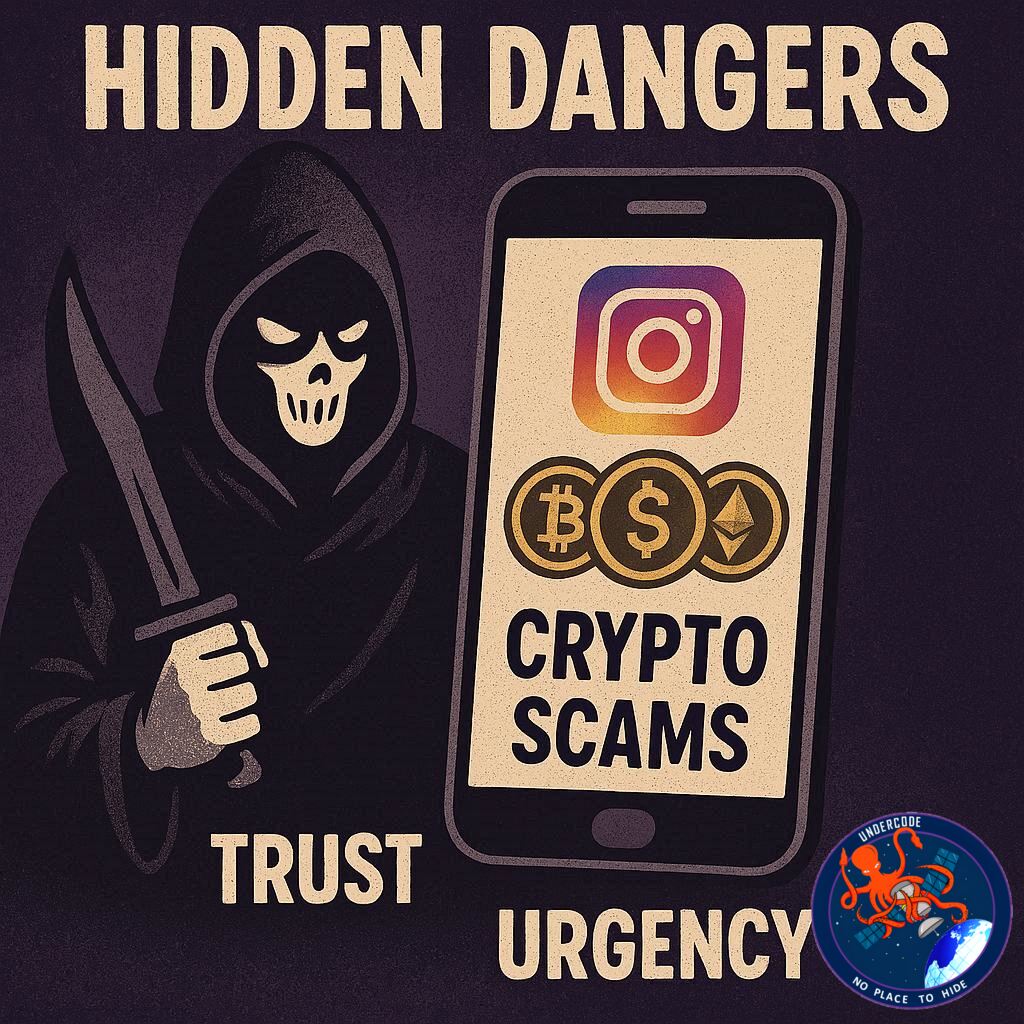
In recent years, Instagram has become more than just a hub for photos and influencer culture—it’s now a prime hunting ground for sophisticated crypto scams. Fraudsters exploit trust, social proof, and psychological pressure to trick users into sending funds they may never see again. From fake trading gurus to cloned influencer accounts, these scams are designed to appear personal, credible, and urgent, making them remarkably effective. Understanding how they operate is crucial for anyone navigating the world of crypto investments online.
Instagram Crypto Scams
Instagram crypto scams take many forms, but they all follow a core blueprint: build trust, simulate credibility, create urgency, and extract money. Fraudsters may pose as traders, investors, crypto educators, or even friends. They often begin without demanding money, using curiosity, admiration, or aspiration to lower the victim’s defenses. Scammers frequently migrate victims to private channels like WhatsApp, Telegram, or fraudulent trading websites, where staged dashboards and fake communities reinforce the illusion of legitimacy.
Repeated payments are common. A victim may pay an initial deposit, a “verification” fee, taxes, or account upgrades, all while believing they’re unlocking high returns. The damage is compounded because cryptocurrencies are typically irreversible, making fund recovery difficult. Instagram’s trust signals—high follower counts, polished aesthetics, and perceived authority—give scammers a shortcut to credibility, sometimes enhanced by hijacked real accounts.
Some scams are slow and manipulative, cultivating emotional trust through friendship or romance before introducing crypto “opportunities.” Others exploit social proof by showing thriving investor communities or staged success stories. Pressure tactics and urgency language push victims toward quick action, often leading to fake dashboards, phantom profits, and withdrawal fees.
Victims of Instagram scams face not just financial loss, but long-term risks: stolen data can lead to identity fraud, compromised accounts can be repurposed for further scams, and exposure of personal information may linger on the dark web. Tools like Bitdefender Digital Identity Protection or Security for Creators are recommended for monitoring risks, safeguarding accounts, and detecting early signs of fraud.
Recognizing scams requires vigilance: legitimate investment professionals don’t cold-message strangers promising fast profits. Common warning signs include unsolicited DMs, guaranteed returns, pressure to move to private messaging apps, and requests for wallet phrases or verification codes. Immediate disengagement and consulting scam detection tools like Bitdefender Scamio are key first steps for protection.
What Undercode Says: Breaking Down the Threat
Scammers Exploit Psychological Levers
Instagram crypto scams succeed because they manipulate both emotional and cognitive responses. By appearing familiar, aspirational, and credible, scammers bypass rational skepticism. Victims are drawn in by social proof, luxury imagery, and staged success stories, creating an illusion of trust that is hard to resist.
Social Proof Is a Powerful Tool
Groups on WhatsApp or Telegram simulate successful investment communities. Screenshots of profits, praise for the “mentor,” and celebratory posts create a consensus effect, making it feel as if everyone is profiting. Even savvy investors can fall for these manufactured communities because human psychology prioritizes perceived group validation over objective analysis.
The Mechanics of Gradual Exploitation
Unlike instant scams, Instagram crypto frauds often unfold over weeks or months. Initial interactions may feel benign—a friendly DM, an insider tip, or a casual conversation. Gradually, the victim is asked for payments under various pretenses: verification fees, withdrawal taxes, or account upgrades. This incremental approach normalizes repeated spending, minimizing suspicion until losses become substantial.
Hijacked Accounts Amplify Credibility
When scammers use real accounts, the perceived legitimacy skyrockets. Followers are more likely to trust recommendations from known or visually credible sources, turning Instagram into a channel for sophisticated social engineering. For creators, this risk is amplified: a hijacked profile can be weaponized to defraud an entire follower base overnight.
Off-Platform Migration Increases Vulnerability
Shifting the interaction to private apps gives scammers more control. They can create fake dashboards, simulate rapid gains, and manipulate the victim without scrutiny. This separation from Instagram’s public ecosystem shields fraudsters and enhances the illusion of legitimacy.
Cryptocurrency’s Irreversibility Magnifies Risk
Unlike traditional payments, crypto transfers are nearly impossible to reverse. Once sent to a scammer-controlled wallet, funds are often unrecoverable. This makes crypto an ideal instrument for fraud, where trust manipulation and irreversible payments intersect dangerously.
Emotional Trust Overrides Logic
Romantic or friendship-based scams exploit emotional vulnerabilities. The victim may feel genuine care and guidance, making them more receptive to investment pitches. Emotional manipulation, coupled with social proof, forms a potent combination that can overwhelm even cautious individuals.
Prevention Strategies Are Clear
Immediate disengagement is critical. Tools like Bitdefender Scamio help detect suspicious links, images, or messages. Victims should avoid negotiating with scammers, refrain from providing additional information, and monitor identity exposure. Reporting scams without shame helps protect the wider community and curtails the fraud ecosystem.
The Core Takeaway
Instagram crypto scams are sophisticated, visually convincing, and psychologically manipulative. They exploit trust, urgency, and social proof to maximize both financial extraction and data theft. Awareness, vigilance, and protective tools remain the best defenses.
🔍 Fact Checker Results
Scam prevalence on Instagram: ✅ Verified, multiple authorities report a surge in social media crypto fraud.
Repeated payment schemes: ✅ Confirmed pattern in crypto scams, including withdrawal fees and verification charges.
Irreversibility of crypto transfers: ✅ Accurate; once sent, recovery is highly unlikely.
📊 Prediction: The Future of Instagram Crypto Scams
Instagram’s continued growth as a social and influencer platform suggests these scams will persist and evolve. Scammers will likely leverage AI-generated content, deepfakes, and increasingly realistic “investment dashboards” to enhance credibility. Off-platform migration strategies will remain central, with WhatsApp, Telegram, and private websites serving as primary channels.
As awareness grows, detection tools will become more integral. Platforms may implement stronger identity verification and fraud-detection algorithms, but scammers will adapt with more personalized and psychologically sophisticated approaches. Victims who rely solely on skepticism without digital protections may still face high risk. Those using monitoring and anti-scam tools, alongside caution and awareness, will mitigate potential losses.
Overall, Instagram crypto scams are set to remain a major cybersecurity challenge, combining visual, social, and financial deception in ways that are likely to intensify as the social media ecosystem expands.
🕵️📝✔️Let’s dive deep and fact‑check.
References:
Reported By: www.bitdefender.com
Extra Source Hub (Possible Sources for article):
https://stackoverflow.com
Wikipedia
OpenAi & Undercode AI
Image Source:
Unsplash
Undercode AI DI v2
Bing
🔐JOIN OUR CYBER WORLD [ CVE News • HackMonitor • UndercodeNews ]
📢 Follow UndercodeNews & Stay Tuned:
𝕏 formerly Twitter 🐦 | @ Threads | 🔗 Linkedin | 🦋BlueSky | 🐘Mastodon


