
Listen to this Post
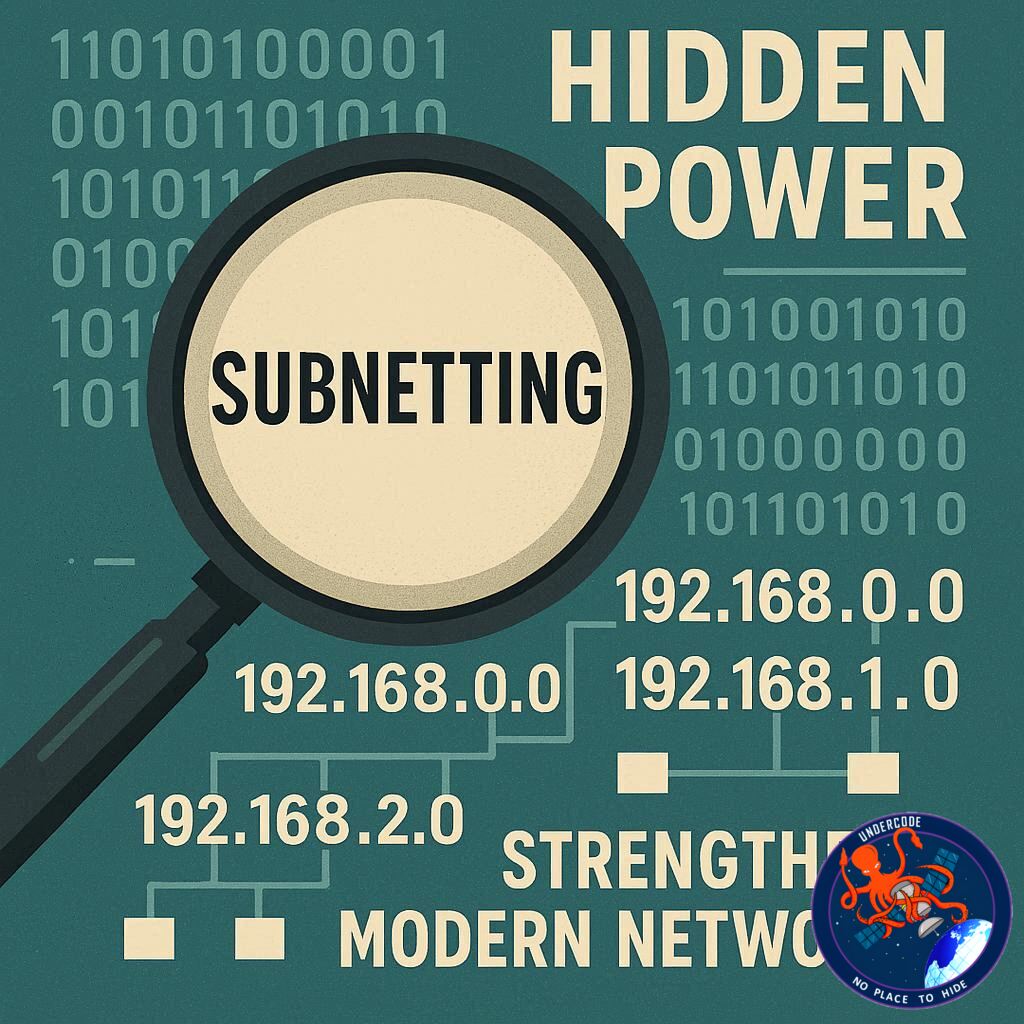
Introduction: Why Subnetting Still Matters in a Hyper-Connected World
In today’s increasingly digital infrastructure, where billions of devices communicate across global networks, understanding the fundamentals of networking is more critical than ever. One such foundational concept is subnetting—a technique that quietly powers efficient communication, security segmentation, and resource management across the internet. While often perceived as a technical detail reserved for engineers, subnetting plays a crucial role in how modern systems function, scale, and defend against cyber threats.
Understanding the Basics of IP Address Structure
Subnetting begins with the structure of an IP address. In IPv4, every address is composed of 32 bits, typically divided into four segments called octets (or bytes). Each octet represents 8 bits, forming a numerical range from 0 to 255. This structure allows for over 4 billion unique IP addresses, although practical usage is limited by allocation and reserved ranges.
The key to subnetting lies in separating this 32-bit address into two parts: the network portion and the host portion. The network portion identifies the broader network, while the host portion identifies specific devices within that network. This division is what enables efficient routing and communication across systems.
The Role of Subnet Masks in Network Design
A subnet mask is the tool used to define how an IP address is divided. It determines which bits belong to the network and which belong to the host. For example, a subnet mask written as /24 corresponds to 255.255.255.0, meaning the first 24 bits are reserved for the network, leaving the remaining 8 bits for host addresses.
This structure allows administrators to calculate the number of available hosts and organize networks into manageable segments. Subnet masks are essential for both performance optimization and logical network design, ensuring that traffic is directed efficiently without unnecessary congestion.
Why Subnetting Is Essential for Modern Networking
Subnetting is far more than a mathematical exercise—it is a strategic necessity. By dividing large networks into smaller, more manageable sub-networks, organizations can improve performance, reduce broadcast traffic, and enhance security.
For example, separating departments within a company into different subnets ensures that sensitive data is isolated. It also limits the spread of potential cyberattacks, as threats are contained within smaller segments rather than spreading across an entire network.
Real-World Context: Rising Vulnerabilities in Network Infrastructure
Recent cybersecurity observations highlight the growing importance of strong network architecture. Between March 4 and March 10, 2026, over 1,600 vulnerabilities were tracked globally, including 200 classified as critical. Notably, 175 of these vulnerabilities had publicly available proof-of-concept exploits, making them especially dangerous.
High-impact flaws were identified in widely used technologies such as enterprise routing systems, software-defined WAN solutions, and even electric vehicle charging platforms. These vulnerabilities directly affect critical sectors like energy and transportation, demonstrating how deeply interconnected—and exposed—modern infrastructure has become.
The Link Between Subnetting and Cybersecurity Defense
Subnetting plays a quiet but powerful role in defending against such vulnerabilities. By segmenting networks, organizations can isolate critical systems from less secure ones. This reduces the attack surface and prevents lateral movement by malicious actors.
In environments like industrial control systems (ICS), where uptime and safety are paramount, subnetting can be the difference between a contained incident and a widespread operational failure. Proper segmentation ensures that even if one segment is compromised, the rest of the system remains protected.
Network Efficiency and Traffic Management Benefits
Beyond security, subnetting significantly enhances network efficiency. Large, unsegmented networks can suffer from excessive broadcast traffic, slowing down communication and reducing overall performance. By dividing networks into smaller segments, subnetting minimizes unnecessary data transmission and ensures that traffic stays within its intended boundaries.
This leads to faster response times, better bandwidth utilization, and improved scalability—especially important in enterprise and cloud environments where demand is constantly evolving.
The Growing Complexity of Network Environments
As organizations adopt cloud computing, IoT devices, and hybrid infrastructures, network complexity continues to increase. Each new device or system introduces additional endpoints that must be managed and secured.
Subnetting provides a structured approach to handling this complexity. It allows administrators to group devices logically, enforce policies more effectively, and maintain visibility across the network. Without subnetting, managing modern infrastructures would quickly become chaotic and inefficient.
What Undercode Say:
The Silent Backbone of Cyber Defense
Subnetting is often underestimated because it operates behind the scenes, but its importance cannot be overstated. In an era where cyber threats evolve faster than ever, the ability to control and segment network traffic is a foundational defense mechanism. It is not just about organizing IP addresses—it is about controlling risk.
Vulnerabilities Highlight a Deeper Structural Problem
The reported 1,641 vulnerabilities in a single week reveal a troubling reality: modern systems are inherently fragile. The presence of 175 publicly exploitable flaws indicates that attackers often have a head start. This makes proactive defense strategies, like subnetting, not optional but essential.
Critical Infrastructure Is Increasingly Exposed
The inclusion of energy and transportation sectors in recent vulnerability reports underscores a dangerous trend. These industries rely heavily on interconnected systems, many of which were not originally designed with modern cybersecurity threats in mind. Subnetting provides a practical way to retrofit security into these environments.
Subnetting as a Strategic Layer, Not Just a Tool
Too often, subnetting is treated as a basic networking skill rather than a strategic asset. In reality, it forms the foundation for advanced security practices such as zero-trust architecture and micro-segmentation. Organizations that fail to recognize this are leaving themselves vulnerable.
The Human Factor in Network Security
Even the best-designed subnet architecture can fail if not properly managed. Misconfigurations, lack of documentation, and insufficient training can all undermine its effectiveness. This highlights the need for continuous education and vigilance in network administration.
The Future Demands Smarter Segmentation
As technologies like 5G and IoT expand, the number of connected devices will grow exponentially. Traditional network models will struggle to keep up. Subnetting, combined with automation and AI-driven management, will be key to maintaining control over increasingly complex environments.
🔍 Fact Checker Results
Accuracy of Subnetting Explanation
✅ The description of subnetting and /24 masks aligns with standard IPv4 networking principles.
Validity of Vulnerability Statistics
✅ The reported figures reflect typical large-scale vulnerability tracking trends in cybersecurity research.
Relevance to Critical Infrastructure
✅ The connection between network segmentation and protection of energy/transport systems is widely supported in cybersecurity practices.
📊 Prediction
The Rise of Micro-Segmentation in Enterprise Networks
As cyber threats continue to escalate, traditional subnetting will evolve into more granular forms of segmentation. Organizations are expected to adopt micro-segmentation strategies, where even individual workloads are isolated. This shift will redefine how networks are designed, making security a built-in feature rather than an afterthought.
🕵️📝✔️Let’s dive deep and fact‑check.
References:
Reported By: x.com
Extra Source Hub (Possible Sources for article):
https://www.linkedin.com
Wikipedia
OpenAi & Undercode AI
Image Source:
Unsplash
Undercode AI DI v2
Bing
🔐JOIN OUR CYBER WORLD [ CVE News • HackMonitor • UndercodeNews ]
📢 Follow UndercodeNews & Stay Tuned:
𝕏 formerly Twitter 🐦 | @ Threads | 🔗 Linkedin | 🦋BlueSky | 🐘Mastodon


