
Listen to this Post
Introduction:
In the silent corridors of the internet, where developers seek trusted tools and open-source software, a growing shadow now lurks. Cybercriminals have begun exploiting the very trust that powers the tech community—by creating near-perfect replicas of legitimate developer websites like Homebrew, LogMeIn, and TradingView. These deceptive sites don’t just trick users; they weaponize that trust, spreading sophisticated macOS infostealers—notably AMOS and Odyssey—that target the heart of the developer ecosystem. The result? A silent digital epidemic spreading through Terminal commands and backdoored binaries, quietly siphoning data from those who build the future of macOS applications.
The Fake Front: When Familiar Faces Turn Malicious
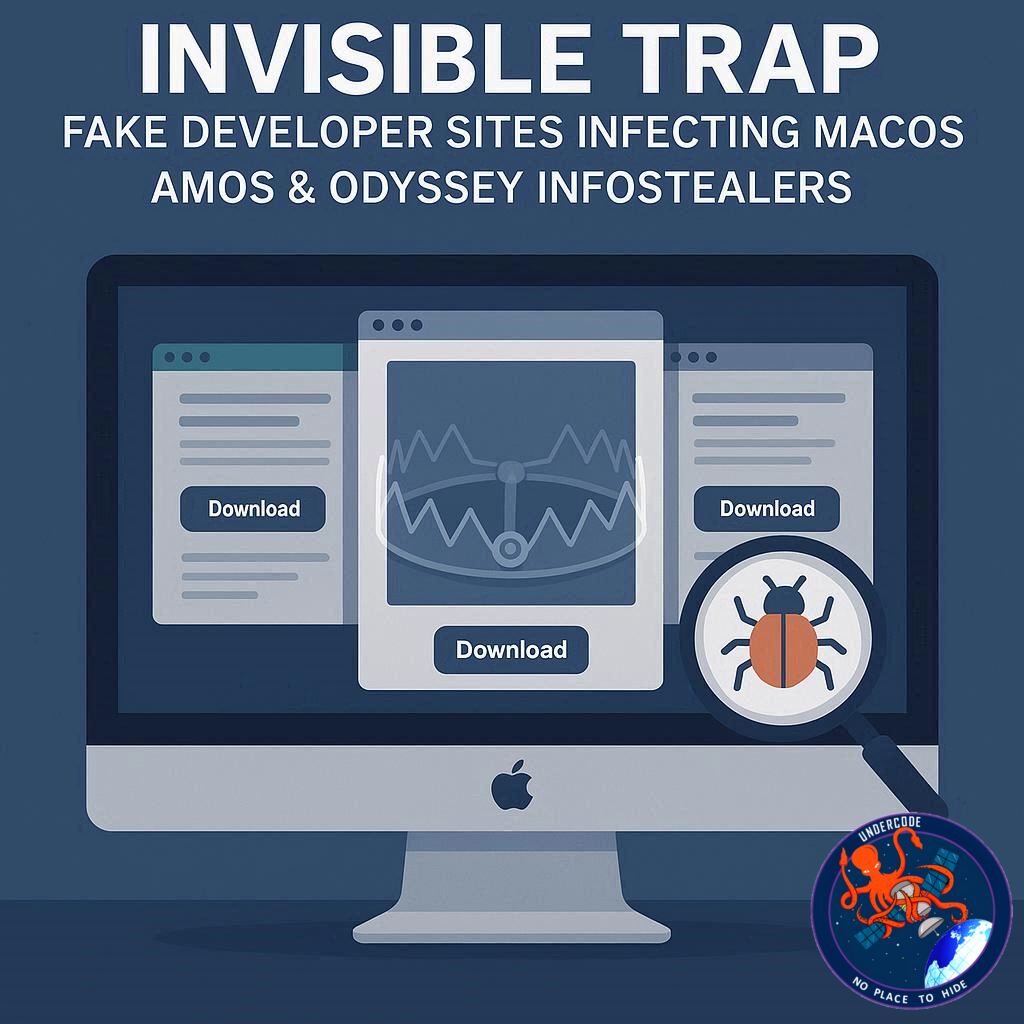
A surge of over 85 fake domains has been uncovered, each impersonating legitimate platforms used daily by macOS developers. The objective: trick unsuspecting users into downloading what appear to be standard updates or installation packages. Once the malicious Terminal command is executed, it silently deploys either AMOS (Atomic macOS Stealer) or Odyssey, two of the most dangerous infostealers currently known to target Apple’s ecosystem.
AMOS, previously infamous for stealing passwords, crypto wallets, and browser data, has now evolved to include a backdoor function, allowing remote attackers persistent access to the victim’s device. This means hackers can not only extract sensitive information but also maintain long-term control, turning compromised Macs into silent spies.
Odyssey, its sibling in crime, specializes in stealth. It disguises its processes to evade Apple’s security frameworks and can manipulate key system files without raising alarms. Together, these two infostealers form a coordinated strike on macOS’s developer base—a demographic often holding valuable API keys, proprietary code, and credentials that could lead to larger network intrusions.
The campaign operates with surgical precision. Cybercriminals set up cloned sites with pixel-perfect designs, matching the official branding, SSL certificates, and download paths of real companies. For developers seeking speed and efficiency, a quick “brew install” or a “curl” command copied from a tutorial could be the start of a full compromise.
Investigators estimate that this malware-as-a-service operation has expanded across multiple hosting providers and DNS registrars, making takedowns a game of digital whack-a-mole. Many of the fake domains redirect to real sites after execution—an extra layer of deceit designed to keep victims unaware.
These malicious campaigns underline a deeper threat: the manipulation of trust within developer culture. Unlike typical malware aimed at consumers, these operations target those who have root access and often manage corporate repositories or production servers, magnifying the impact of every single infection.
Experts suggest that this shift marks a new phase in macOS threat evolution—from opportunistic attacks to precision-engineered campaigns that blend social engineering, supply chain infiltration, and advanced persistence mechanisms.
What Undercode Say:
This campaign represents a strategic escalation in the battle for macOS security. Traditionally, Apple’s environment was perceived as inherently safer due to its sandboxing and app notarization model. But this wave of attacks exploits the weakest link in any security system: human trust.
When cybercriminals mimic Homebrew or TradingView, they’re not just forging a URL—they’re forging a sense of credibility. Developers, pressed for time and accustomed to Terminal-based workflows, rarely verify SSL fingerprints or check domain provenance before executing commands. The attackers understand this psychology perfectly.
From a technical standpoint, AMOS’s new backdoor feature signals a worrying trend. macOS malware is no longer focused solely on one-time data theft—it’s about persistent exploitation. The ability to maintain command-and-control access opens the door for espionage, ransomware, and lateral movement within enterprise networks.
The inclusion of Odyssey further amplifies this concern. Its stealth capabilities make it ideal for long-term infiltration, especially in environments where logs and endpoint detection are minimal. Imagine a compromised MacBook syncing automatically to GitHub or pushing code to a CI/CD pipeline—suddenly, a local infection becomes a supply chain risk.
Undercode analysis also points to a growing economic ecosystem behind these attacks. Infostealers like AMOS are being sold on underground forums as “plug-and-play” tools, meaning low-skill operators can launch full-scale macOS campaigns with minimal setup. This democratization of cybercrime creates scalability that security teams are struggling to match.
The timing of this campaign is no coincidence either. As Apple tightens its privacy frameworks and transitions more deeply into ARM-based systems, cybercriminals are adapting faster than expected, developing payloads designed to bypass system integrity protection (SIP) and signature enforcement.
The wider implication? macOS is no longer the “safe zone” of personal computing. It has become a high-value battleground—and the developer community is the new frontline. Companies relying on Apple infrastructure must now expand their security posture beyond antivirus tools, adopting domain intelligence systems, command validation layers, and behavioral monitoring for Terminal-based workflows.
Undercode believes this attack wave is more than just a one-off operation; it’s a proof-of-concept for the future of macOS cyberwarfare. The merging of fake developer ecosystems, malicious automation, and multi-stage payloads suggests that threat actors are investing heavily in trust subversion as a long-term strategy.
In short: macOS security can no longer rely on reputation. The battle has moved from the operating system to the mind of the developer.
Fact Checker Results:
✅ Over 85 fake domains confirmed by cybersecurity monitors.
✅ AMOS variant now includes backdoor capability.
❌ No evidence yet of mass exploitation in corporate environments, though risks remain high.
Prediction: 💻🔥
Over the next six months, expect macOS-focused phishing ecosystems to multiply, especially targeting developer communities and SaaS platforms. Cybersecurity firms will begin releasing domain verification plug-ins for Homebrew-like installers, while Apple may introduce enhanced code-signing alerts for Terminal-based package downloads.
The war for macOS security won’t be fought in malware samples—it will be fought in the commands developers choose to trust.
🕵️📝✔️Let’s dive deep and fact‑check.
References:
Reported By: x.com
Extra Source Hub (Possible Sources for article):
https://www.github.com
Wikipedia
OpenAi & Undercode AI
Image Source:
Unsplash
Undercode AI DI v2
Bing
🔐JOIN OUR CYBER WORLD [ CVE News • HackMonitor • UndercodeNews ]
📢 Follow UndercodeNews & Stay Tuned:
𝕏 formerly Twitter 🐦 | @ Threads | 🔗 Linkedin | 🦋BlueSky | 🐘Mastodon


