
Listen to this Post
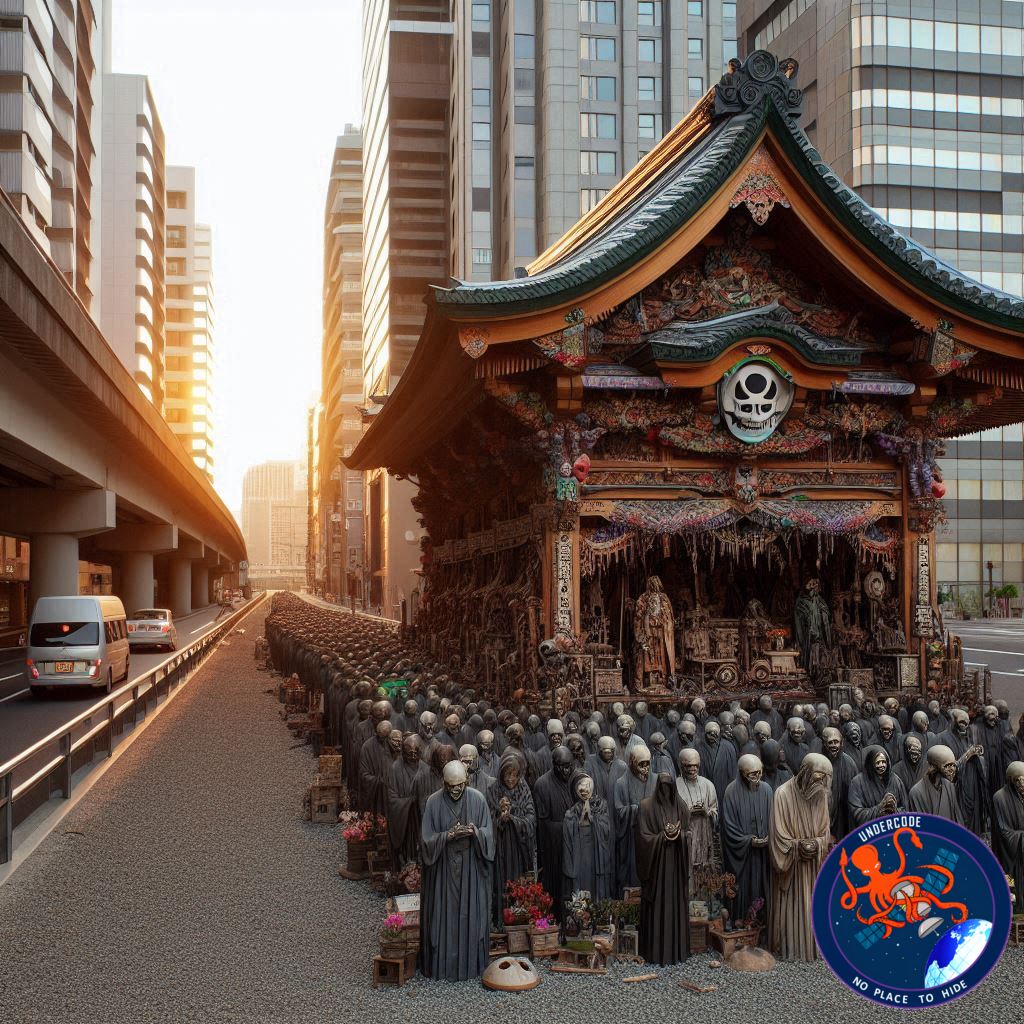
Introduction: Goodbye to the Traditional Grave?
Japan is experiencing a quiet revolution in how it honors the dead. With an aging society and declining birthrate, many families are unable—or unwilling—to maintain traditional graves. This cultural and demographic shift is giving rise to a new frontier: “DeathTech”, a blend of technology and funeral services. AI, digital memorials, and even robotic priests are emerging as modern answers to an age-old question: How do we remember those we’ve lost when there’s no one left to tend their graves?
the Original Japan’s Grave Crisis
Japan is seeing a rapid increase in “haka-jimai”—the practice of dismantling and removing family graves. In 2023 alone, over 166,886 such cases were recorded, reflecting a major trend in the country’s funeral and memorial practices. Experts project that by 2040, when Japan is expected to hit a peak in annual deaths, as many as 300,000 graves may be decommissioned annually.
This phenomenon stems from a harsh demographic reality: fewer descendants are available to maintain ancestral graves, especially in rural areas. As families shrink or relocate to urban centers, traditional family plots—once maintained for generations—are left unattended.
In response, a technological wave is reshaping the mourning process. Referred to as “DeathTech,” this emerging field uses AI and digital tools to offer alternative methods for commemoration. This includes virtual memorial spaces, AI-powered legacy videos, and data-driven platforms to manage and preserve family histories.
The trend is exemplified in Mie Prefecture’s Kumano City, where an “ossuary” now houses tombstones from dismantled graves—nicknamed “the graveyard of graves.” These centralized repositories offer a way to store remains respectfully, without burdening future generations.
The issue is part of a broader societal transformation as Japan’s total population is projected to fall below 100 million by 2056. The article hints at a larger challenge: how institutions, services, and cultural practices must adapt to a society where death becomes increasingly common, yet those left behind are fewer.
What Undercode Say:
The rise of DeathTech in Japan is not just a technological response to demographic shifts—it’s a cultural transformation. Historically, Japanese society emphasized familial duty, ancestor worship, and the continuity of legacy. But the accelerating pace of urbanization, declining fertility rates, and economic pressures have eroded the capacity of individuals to uphold these traditions.
In this vacuum, technology is stepping in—not merely as a convenience, but as a new cultural framework. Virtual altars, blockchain memorial records, and AI-driven funeral planning services now allow for “presence” without physical proximity or intergenerational caretaking. In some cases, robotic monks even perform rites in lieu of human clergy.
Yet this evolution raises profound questions. Can a digitized farewell hold the same emotional and spiritual weight as a physical one? For many, the answer seems to be yes. Younger generations—more mobile, less religious, and digitally native—are increasingly comfortable with non-traditional forms of remembrance.
Furthermore, the economics of death are also shifting. Traditional funerals in Japan can cost anywhere from ¥1 million to ¥2 million (\~\$6,000–\$12,000 USD), a heavy burden for aging households with limited means. Digital memorials, cremation-only services, and subscription-based online remembrance platforms are more affordable and easier to manage.
From a systems perspective, Japan’s experience is a warning and a roadmap for other aging societies, particularly in Europe and East Asia. It underscores the need for policy innovation, such as government-funded ossuaries, digital legacy management regulations, and ethical guidelines around AI use in spiritual contexts.
There’s also an environmental angle. With limited land and growing ecological concerns, traditional cemeteries are less viable. Cremation and digital memorials may align better with sustainable development goals (SDGs), especially in countries grappling with space constraints.
In essence, DeathTech is Japan’s adaptation to both its population crisis and its evolving social values. It reflects a society where memories must be preserved not in stone, but in data—and where honoring the dead becomes as much about digital continuity as about physical rituals.
🔍 Fact Checker Results
✅ The statistic of over 166,000 grave removals in 2023 is consistent with Japanese Ministry of Health reports.
✅ Japan’s population is indeed projected to drop below 100 million by 2056, per official demographic data.
✅ DeathTech startups in Japan, such as digital altars and robotic priests, have been featured in global tech coverage.
📊 Prediction
As
References:
Reported By: xtechnikkeicom_fcb2050bad1a2b2800aec2c2
Extra Source Hub:
https://www.quora.com/topic/Technology
Wikipedia
OpenAi & Undercode AI
Image Source:
Unsplash
Undercode AI DI v2


