
Listen to this Post
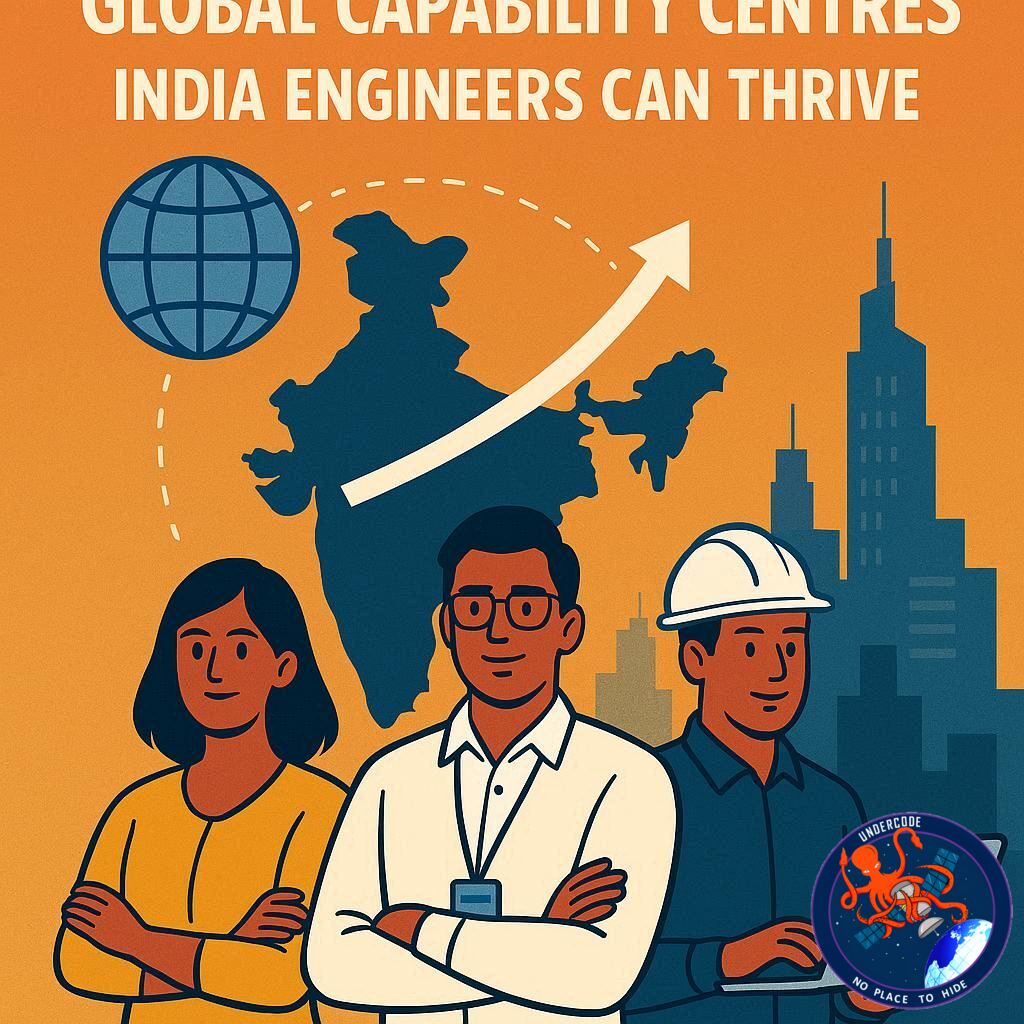
Over the past few years, India’s IT services hiring has faced a slowdown, yet a parallel story of growth is unfolding quietly but powerfully. Global Capability Centres (GCCs) of multinational corporations are expanding rapidly, with both existing centres scaling up and new ones entering the market. Industry analysts predict that by 2030, India could host over 2,500 GCCs, employing more than three million professionals. The majority of this demand will be in technology and engineering roles, signaling a seismic shift in where and how talent is needed. For engineers, the message is clear: opportunities haven’t disappeared—they’ve migrated, and the expectations have evolved.
GCCs Are Redefining Engineering Roles
Unlike traditional IT services, GCCs no longer follow a one-size-fits-all approach. Krishnakumar Thirumalai Seshadri of Lenovo India emphasizes that hiring focuses on engineers aligned with specific customer technologies and domains. Success hinges on deep expertise in a particular tech stack and a strong understanding of the business context, such as BFSI, retail, or manufacturing. Equally important is delivery maturity—engineers who consistently meet KPIs and operate in structured, outcome-driven environments stand out. Familiarity with agile practices like Scrum has become essential as customers demand faster, iterative development cycles.
Ownership Over Task Execution
Pratik Nath from Epsilon notes that modern GCCs are no longer mere delivery centres—they own end-to-end capabilities spanning engineering, analytics, strategy, and AI adoption. Candidates with traditional IT backgrounds must demonstrate how they went beyond task completion, showing accountability through performance, optimisation, and tangible business impact. The persistent gaps GCCs encounter are often not technical but mindset-related. Many engineers excel at solving defined problems but struggle when briefs are unclear. Success in GCCs requires problem-framing, critical questioning, and making informed trade-offs.
Shift Toward AI and Data-Centric Engineering
SAP India has embraced a similar evolution, prioritizing core engineering fundamentals like software development, cloud-native design, integration, and security. Yet the emphasis is shifting from application-centric to AI- and data-centric engineering. Engineers must navigate SAP and non-SAP data landscapes, embedding AI directly into business processes rather than treating it as an add-on. Certifications matter, but practical reasoning—explaining design choices, their impact on performance, cost, or customer experience—carries far more weight.
Real-World Systems and Accountability
Companies like Qlik and Availity highlight the importance of real-world problem-solving. For Qlik, cloud-native development, automation, and API-driven architectures are critical, while AI adoption demands proficiency across the full data lifecycle. In healthcare tech, Availity requires every engineer to be AI-native, integrating AI tools to enhance quality and efficiency. Accountability is paramount; platform failures have real-world consequences for patients, insurers, and providers. Engineers must adopt product thinking, ownership, and leadership that spans geographies.
Deep Specialisation in Complex Domains
In semiconductor and data-centre infrastructure, depth and breadth are even more critical. Marvell Technology prioritizes engineers with expertise across silicon, systems, and software to build end-to-end infrastructure solutions. Despite India’s scale, genuine exposure to product-grade problem-solving remains limited, creating a premium for engineers who combine technical depth with systems thinking.
What Undercode Say: GCCs as the New Frontier for Engineers
GCCs represent a structural shift in India’s technology landscape, transitioning from transactional IT services to strategic, outcome-driven hubs. Engineers are no longer evaluated purely on technical skills; the calculus now includes domain fluency, business impact, and accountability for outcomes. GCCs value ownership, product thinking, and the ability to navigate ambiguity across global contexts. This evolution reflects a broader trend: technology roles are converging with business strategy, making AI, data, and cloud-native skills indispensable.
AI adoption, in particular, has accelerated the need for engineers who understand how technology drives measurable results, not just theoretical knowledge. GCCs prefer engineers who can embed AI directly into workflows, optimize processes, and reduce errors—skills that require a combination of technical mastery and applied judgment. Similarly, cloud-native systems demand engineers proficient in API-driven architectures, integration, and automation. These are not optional; they form the backbone of scalable, resilient, and AI-ready global operations.
The GCC model also highlights a cultural shift: engineers must operate across time zones and geographies, navigate diverse work cultures, and take responsibility for end-to-end outcomes. Success requires moving beyond task execution to strategic problem ownership. In sectors like healthcare and semiconductors, where stakes are high, the ability to merge deep technical knowledge with cross-domain integration separates average performers from top-tier engineers.
For Indian engineers, the opportunity is unprecedented. GCCs offer pathways to influence global products, contribute to strategic business decisions, and work on cutting-edge technologies. The bar for entry is higher, but the rewards—in skills, career trajectory, and impact—are substantial. Engineers prepared to adopt AI-native approaches, embrace product thinking, and cultivate cross-domain expertise will thrive in this evolving ecosystem.
Fact Checker Results
✅ India is projected to host over 2,500 GCCs by 2030, employing more than three million professionals.
✅ GCCs increasingly prioritize AI, data, and cloud-native engineering over traditional IT services skills.
❌ Certifications alone are not sufficient for hiring; practical impact and problem-solving ability are decisive.
Prediction
📊 By 2030, India will solidify its position as a global hub for AI-driven engineering and cloud-native systems. GCCs will continue to redefine professional skillsets, emphasizing ownership, cross-domain expertise, and AI integration. Engineers who align with this model will not only secure employment but become key drivers of global innovation and business strategy.
▶️ Related Video (82% Match):
🕵️📝✔️Let’s dive deep and fact‑check.
References:
Reported By: timesofindia.indiatimes.com
Extra Source Hub (Possible Sources for article):
https://www.digitaltrends.com
Wikipedia
OpenAi & Undercode AI
Image Source:
Unsplash
Undercode AI DI v2
Bing
🔐JOIN OUR CYBER WORLD [ CVE News • HackMonitor • UndercodeNews ]
📢 Follow UndercodeNews & Stay Tuned:
𝕏 formerly Twitter 🐦 | @ Threads | 🔗 Linkedin | 🦋BlueSky | 🐘Mastodon


