
Listen to this Post
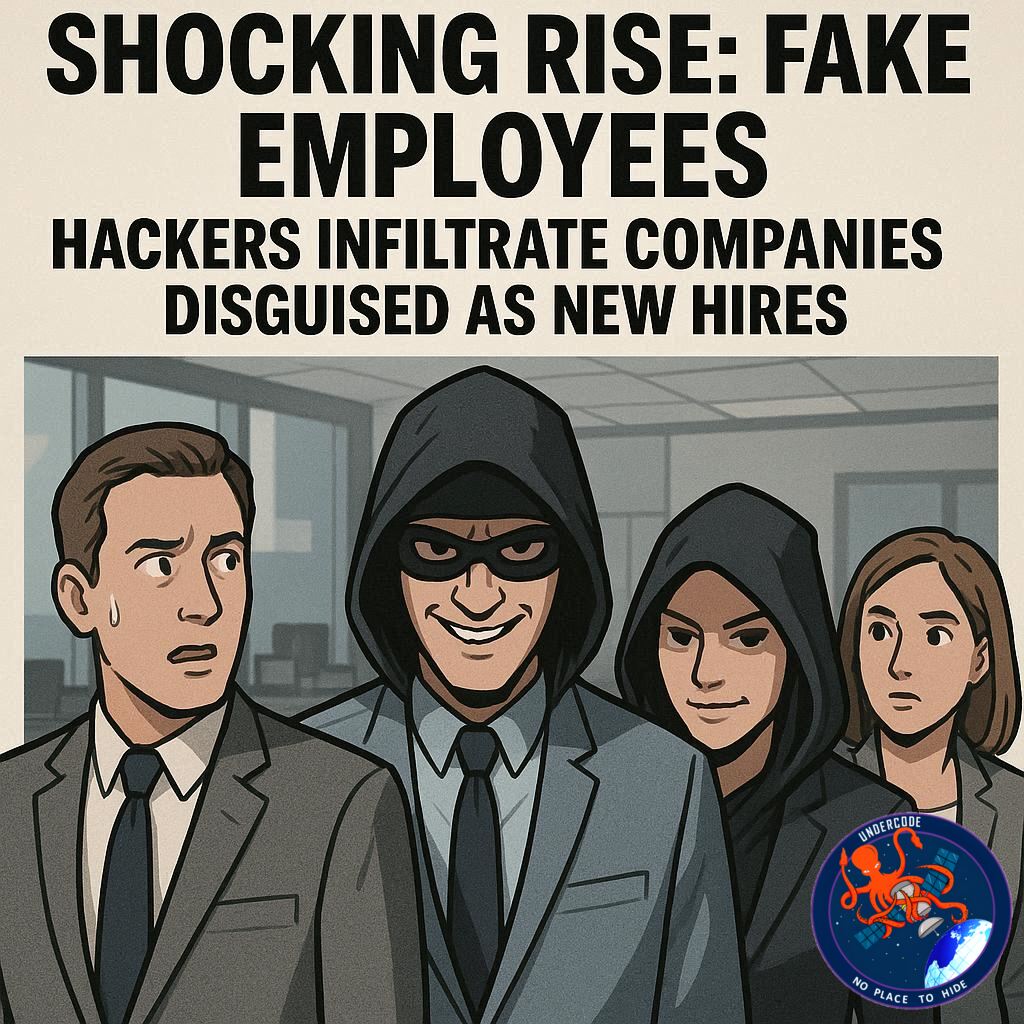
Introduction: A New Breed of Cyber Threat
Imagine welcoming a brilliant new engineer into your team — polished resume, glowing references, seamless interviews. They log in, contribute code, attend meetings, and impress everyone with their efficiency. Yet beneath the professional exterior hides not a team player but a cybercriminal. This isn’t phishing or a ransomware attack; it’s a brand-new infiltration tactic that turns your hiring process into the entry point for cyber espionage.
The Modern Identity Crisis in Hiring
The once-familiar world of cyberattacks has shifted. Today, attackers don’t always come through malicious links or infected attachments; instead, they enter through your HR department. This tactic, known as hiring fraud, creates a dangerous illusion of trust.
Take “Jordan from Colorado.” On paper, Jordan was a perfect hire: verified background checks, credible digital footprint, strong references. Within days of starting, Jordan had access to code repositories, internal systems, and sensitive data. Colleagues saw only a hardworking teammate. In truth, Jordan was an adversary with the keys to the kingdom.
From Phishing to Fake Hires
Organizations worldwide have spent years strengthening defenses against phishing. Despite these efforts, phishing has only grown — up 49% since 2021, with AI now generating convincing fake emails at scale. But the Jordan case demonstrates an evolution. Why break in through the front door when HR can open it willingly?
Instead of tricking users with emails, attackers now manipulate hiring workflows. And with the surge in remote work, the risks have multiplied. Companies that once relied on in-person interviews now depend on virtual meetings — an environment ripe for deepfakes, spoofed identities, and AI-coached candidates.
Why Hiring Fraud Is Escalating
Remote work has erased geographical barriers, creating immense opportunities but also new vulnerabilities. In-person intuition and subtle social cues no longer play a role. Instead, attackers exploit the gaps left by virtual hiring processes.
Identity is now the ultimate perimeter. Attackers can fabricate references, manipulate interview appearances, and even clone voices with AI. That means “Jordan from Colorado” could just as easily be an AI-powered deepfake based thousands of miles away.
The North Korean Example: State-Sponsored Hiring Fraud
This isn’t hypothetical. Reports reveal more than 320 documented cases of North Korean operatives infiltrating companies by posing as remote IT workers. This campaign surged by 220% in just one year.
Using AI-generated profiles, deepfake video, and real-time voice manipulation, these operatives slipped through standard hiring checks. In some cases, American collaborators provided fake workstations, domestic addresses, and company-issued hardware to help foreign agents appear legitimate. The result: stolen data, siphoned salaries, and compromised enterprise networks.
The Castle & Moat Security Dilemma
Companies often react by locking everything down. But blanket restrictions choke productivity. Employees struggle, exceptions pile up, and security teams unknowingly rebuild the old “castle and moat” model — strong walls but free movement once inside.
Unfortunately, if a fake employee infiltrates such a system, the damage is limitless. The very controls meant to keep attackers out collapse under real-world conditions.
Zero Standing Privileges: The Way Forward
The solution isn’t harsher restrictions but smarter access management. Zero Trust principles — “never trust, always verify” — must now extend into the hiring space through Zero Standing Privileges (ZSP).
Key pillars of ZSP include:
No default access: every identity starts with minimal rights.
Just-in-Time (JIT) and Just-Enough-Privilege (JEP): temporary access only when needed, automatically revoked afterward.
Audit trails: every permission granted or removed is recorded.
This ensures that even if an attacker slips in, their access remains too restricted and temporary to cause catastrophic damage.
A Practical Roadmap to ZSP
Organizations can start small by piloting ZSP in their most sensitive systems for two weeks. Track approval workflows, access requests, and auditing to measure efficiency and resilience. Once validated, scale it across departments.
BeyondTrust’s Entitle platform is one solution, designed to automate ZSP by minimizing persistent privileges while allowing fast, auditable, temporary access when business needs demand it. Done correctly, ZSP strikes the balance between productivity and protection.
What Undercode Say: 🔍
The issue of fraudulent hires represents one of the most overlooked risks in cybersecurity. Unlike phishing or ransomware, which most companies already anticipate, fake employees bypass all those defenses.
Identity as the New Battlefield
As more enterprises hire remotely, attackers can exploit gaps in virtual onboarding. Background checks and references are easily falsified in the digital era. Add deepfakes into the mix, and the illusion becomes nearly perfect. This means cybersecurity strategies must evolve beyond firewalls and phishing detection.
Economic and Political Drivers
The North Korean infiltration campaigns highlight the geopolitical side of hiring fraud. It’s not only cybercriminal groups but also nation-states exploiting these methods for espionage and financial gain. This raises questions about how governments, HR platforms, and tech providers will regulate global remote work.
Productivity vs. Security: The Eternal Struggle
Companies that overcorrect by restricting access risk crippling their own teams. This tension between security and usability is where most organizations fail. Attackers exploit both extremes: too much openness provides easy access, while excessive restrictions encourage insecure workarounds.
The Business Imperative
ZSP is more than a security framework — it’s a business enabler. By ensuring employees only have access when needed, organizations avoid granting long-term privileges that attackers can exploit. This aligns IT operations with cybersecurity in a way that enhances, rather than hinders, performance.
Future Landscape of Hiring Fraud
We can expect AI-driven fraud to intensify. Attackers will refine deepfake video interviews, fake credentials, and even real-time biometric spoofing. Organizations that fail to adapt will face insider threats not from disgruntled staff but from operatives who were never employees to begin with.
In short, the fake employee is no longer a far-fetched story — it’s already happening, and it’s accelerating. Companies that act now, implementing ZSP and robust identity verification, will be far better prepared for this new era of infiltration.
Fact Checker Results ✅❌
✅ Verified cases confirm North Korean operatives posed as remote hires.
✅ Phishing remains a growing threat, but hiring fraud now represents a critical blind spot.
❌ The myth that stronger firewalls alone can prevent this type of attack is misleading.
Prediction 🔮
Hiring fraud will become one of the top three cyberattack vectors within the next five years. AI-generated candidates will fool even advanced HR systems, forcing companies to adopt biometric verification, real-time monitoring, and universal adoption of ZSP frameworks. The future workplace will demand not just securing systems — but securing the very identities of those we welcome onto our teams.
🕵️📝✔️Let’s dive deep and fact‑check.
References:
Reported By: thehackernews.com
Extra Source Hub:
https://www.quora.com/topic/Technology
Wikipedia
OpenAi & Undercode AI
Image Source:
Unsplash
Undercode AI DI v2
🔐JOIN OUR CYBER WORLD [ CVE News • HackMonitor • UndercodeNews ]
📢 Follow UndercodeNews & Stay Tuned:
𝕏 formerly Twitter 🐦 | @ Threads | 🔗 Linkedin | 🦋BlueSky | 🐘Mastodon


