
Listen to this Post
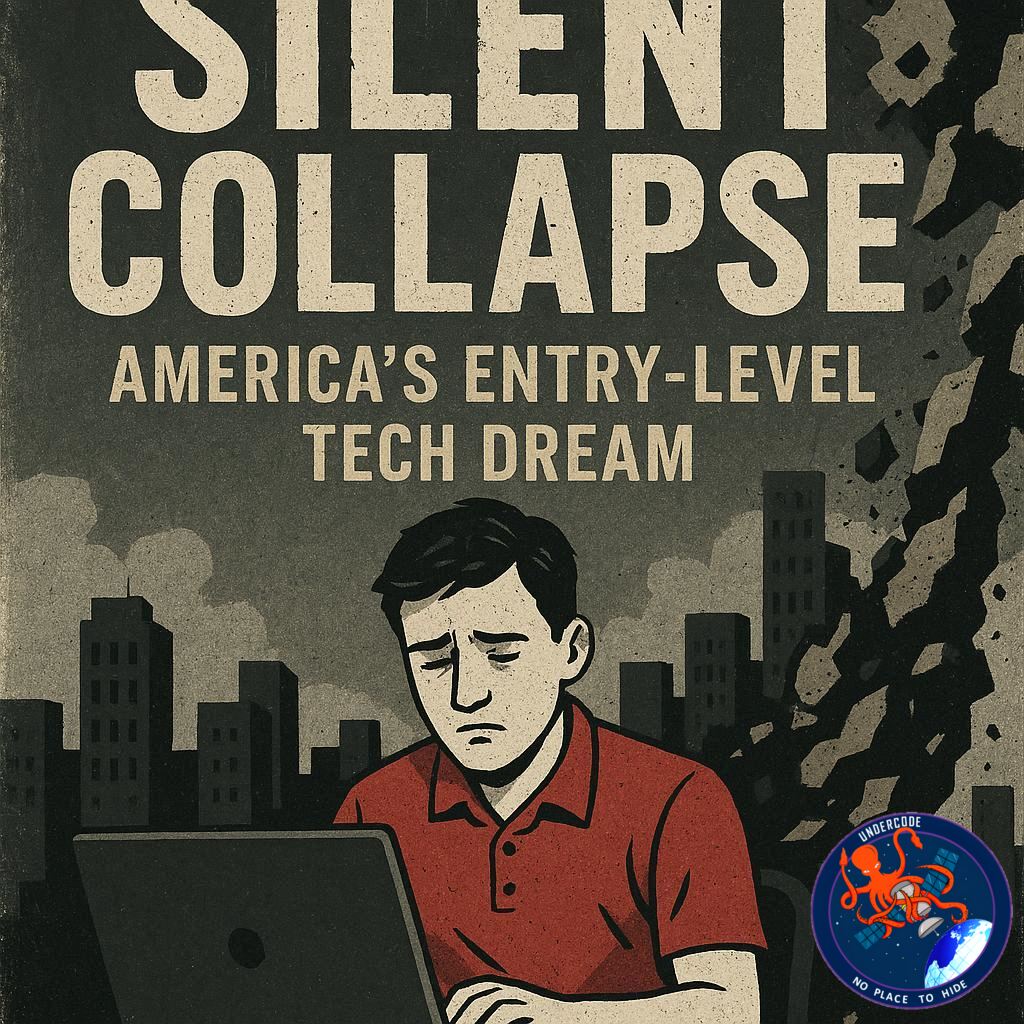
Introduction:
Once seen as the golden ticket to a prosperous career, a computer science degree is now leaving many young Americans stranded in uncertainty. The once-booming tech industry—once fueled by endless innovation and soaring demand for fresh talent—has slowed to a crawl. Graduates with the latest coding skills are struggling to find jobs, even as artificial intelligence reshapes the very roles they trained for. Add to that a volatile economic climate marked by unpredictable trade policies and fluctuating interest rates, and the promise of a stable career in tech suddenly feels like an illusion.
The Shrinking Path for Young Tech Graduates
Hundreds of thousands of recent computer science graduates in the U.S. are finding themselves on the wrong side of a structural shift. Over the past year, many have struggled to secure employment, and the situation shows little sign of improving. While the Federal Reserve’s recent interest rate cuts aim to stimulate hiring and growth, the deeper problem lies beyond monetary policy—it’s rooted in uncertainty, automation, and evolving global trade dynamics.
After slashing rates last month to boost the labor market, the Fed plans another cut soon. But while cheaper borrowing can encourage businesses to hire, it cannot erase the unease caused by President Donald Trump’s sweeping economic reforms. From tariff-heavy trade wars to unpredictable negotiations with China and Canada, the U.S. business environment remains murky. Companies are hesitant to invest in expansion—or in new employees—when the rules of global commerce are constantly shifting.
Federal Reserve Governor Christopher Waller acknowledged the delicate balance during an October event, stating that layoffs and reduced hiring linked to AI are likely to increase—especially for college-educated workers. His stance is clear: the disruption must be allowed to happen, with faith that the long-term benefits of AI will outweigh short-term pain.
Yet for young Americans entering the workforce, “short-term pain” feels like a crushing reality. Job postings in the tech and mathematics industries are down roughly 35% since 2020, according to Indeed. While AI and data-centric roles are rising, traditional entry-level positions—developers, designers, software engineers—are vanishing.
Economist Laura Ullrich of Indeed explains the paralysis succinctly: “The labor market has been frozen because people are just having a hard time making decisions.” Businesses want stability before they hire, but stability remains elusive as tariffs, trade tensions, and automation collide.
Trump’s Liberation Day tariffs initially rattled markets but have since led to selective trade successes. However, the administration’s continued disputes—like halting talks with Canada and challenging China on rare earth exports—keep uncertainty high. As Rich Lesser of Boston Consulting Group put it, “Everyone realizes substantial tariffs are now most likely here to stay. And now we have to navigate it.”
That navigation, however, has left recent graduates adrift.
A Conference Board survey of 130 CEOs found that 68% plan to maintain or shrink their workforce, signaling that corporate America expects more turbulence ahead. The Fed can make money cheaper, but it cannot create demand for entry-level tech jobs in an era when AI performs those same tasks faster, cheaper, and without complaint.
Nomura’s David Seif describes the dilemma as a mismatch: “You have a lot of people who are new computer science graduates, but there doesn’t seem to be enough demand for these entry-level workers.”
At the same time, a Google study found that 90% of tech professionals now use AI in their daily work, underscoring the pace of transformation. The shift isn’t temporary—it’s structural. As Oxford Economics’ Matthew Martin notes, “Computer and mathematical science occupations are disproportionately exposed to automation and displacement.”
For students who once saw coding as the future, the future arrived too fast. As one graduate, Abraham Rubio, put it: “It feels like I’m competing with AI just to get my foot in the door.”
What Undercode Say:
The crisis unfolding in America’s tech job market isn’t merely cyclical—it’s evolutionary. We are witnessing the collision of two powerful forces: rapid technological disruption and geopolitical uncertainty. The Federal Reserve’s actions can influence credit and investment, but they cannot rewrite the structural script that AI has introduced into the labor economy.
This generation of computer science graduates faces a reality their professors never prepared them for: the “entry-level” is disappearing. Traditionally, tech firms onboarded fresh graduates to perform routine coding, testing, and maintenance work. But AI now excels at those very tasks. Generative models write code, debug software, and even manage workflows that once required teams of junior developers. What remains are higher-level, conceptual roles—positions that demand not just technical ability but creative and strategic thinking.
In effect, the bottom rung of the ladder has vanished.
What this means for the labor market is profound. The U.S. isn’t facing a shortage of skills—it’s facing a shortage of opportunity at the entry level. The idea of “paying your dues” in tech through years of repetitive work no longer applies. Instead, companies seek hybrid talent—individuals who can manage AI systems, interpret data, and innovate within automated frameworks. The pipeline from classroom to cubicle has been severed.
Meanwhile, corporate caution compounds the issue. Tariffs and trade uncertainty have created a hesitation loop in boardrooms. No CEO wants to commit to large-scale hiring when the next trade announcement could upend supply chains or cost structures. Add to that the lingering anxiety from years of economic shocks—pandemics, inflation, geopolitical conflicts—and we have a workforce frozen in indecision.
This combination—AI disruption plus economic unpredictability—is redefining what it means to be “job-ready.” Graduates may have technical fluency, but they lack the AI literacy and adaptability modern employers demand. The new competitive edge isn’t coding speed; it’s creative application.
There’s also a cultural dimension. The promise of tech once symbolized innovation and upward mobility. Now, it’s tinged with insecurity. Graduates who studied hard for years to enter a prestigious field are discovering that success depends on how well they can work with machines, not against them. Those who embrace this shift—by mastering AI tools, exploring interdisciplinary roles, or venturing into entrepreneurship—may ultimately thrive.
But the system itself must adapt. Universities need to update curricula faster. Employers must recognize potential beyond résumés filled with traditional coding experience. And policymakers should craft incentives that encourage human-AI collaboration rather than competition.
Because make no mistake: this is not a temporary downturn—it’s a structural transformation. And those who fail to adjust will find themselves left behind in the algorithmic tide.
Fact Checker Results:
✅ Fed rate cuts confirmed and ongoing through late 2025–2026 projections.
✅ Job postings in tech and math sectors down roughly 35% since 2020 (Indeed data).
❌ No clear evidence yet that rate cuts have led to increased entry-level tech hiring.
Prediction 🔮
If current trends persist, the next two years could see a split labor market emerge in tech—AI engineers, data specialists, and automation designers will thrive, while generalist developers face prolonged underemployment. By 2027, universities may pivot toward AI-integrated curricula, but for now, America’s young coders stand at a crossroads—waiting for an industry that may never look the same again.
🕵️📝✔️Let’s dive deep and fact‑check.
References:
Reported By: edition.cnn.com
Extra Source Hub (Possible Sources for article):
https://www.linkedin.com
Wikipedia
OpenAi & Undercode AI
Image Source:
Unsplash
Undercode AI DI v2
Bing
🔐JOIN OUR CYBER WORLD [ CVE News • HackMonitor • UndercodeNews ]
📢 Follow UndercodeNews & Stay Tuned:
𝕏 formerly Twitter 🐦 | @ Threads | 🔗 Linkedin | 🦋BlueSky | 🐘Mastodon


