
Listen to this Post
Introduction:
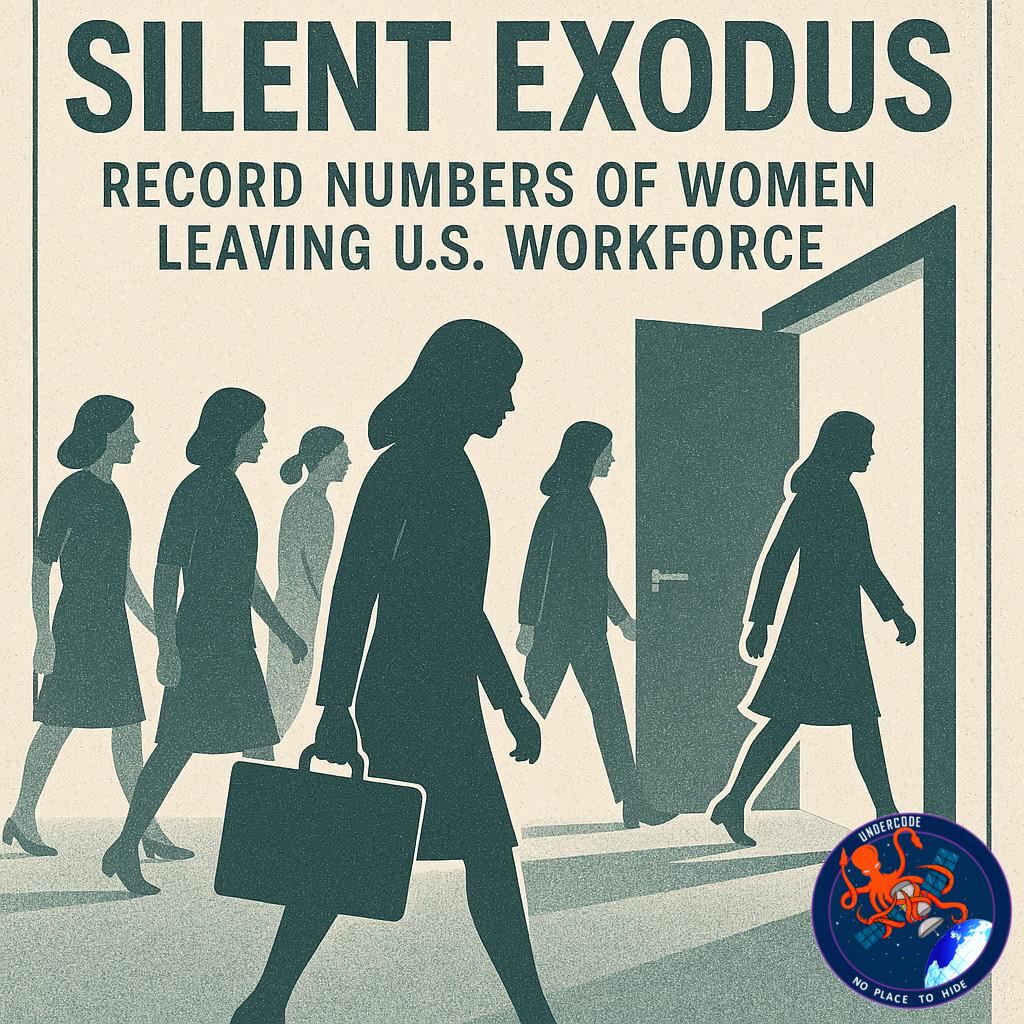
Something unsettling is unfolding in the American labor market. Despite a stable economy and near-record employment levels, women are quietly disappearing from the workforce at one of the highest rates in modern history. The phenomenon, echoing the early pandemic’s “she-cession,” signals a crisis far deeper than temporary job loss. It reveals a social and economic fault line — one that intertwines childcare, workplace inequality, and shifting political winds. Behind every statistic lies a story of exhaustion, sacrifice, and disillusionment.
The Great Female Exodus — A Crisis Hidden in Plain Sight
An alarming trend has emerged in 2025: nearly 455,000 women have left the U.S. labor force between January and August, according to Bureau of Labor Statistics data. This mass withdrawal marks one of the sharpest declines on record outside of the pandemic years. Economists warn that if this continues, it could undo decades of hard-won progress and stunt America’s long-term economic growth.
Before COVID-19, women were driving labor market expansion. Female participation among prime working-age adults (25–54 years old) was rising faster than men’s, fueled by opportunities in healthcare, education, and social services — industries traditionally dominated by women. Higher education levels and broader access to once male-dominated professions signaled a shift toward gender parity in the workplace.
Then came 2020. Within a month, nearly 22 million Americans lost their jobs, and women made up 55% of that number. The workforce participation rate for women collapsed, falling over three percentage points — a seismic move in labor market terms. Recovery was painfully slow. Female-dominated industries such as education, hospitality, and caregiving were hit hardest. With childcare costs skyrocketing and schools closed, many mothers were forced into impossible choices between career and caregiving.
By 2023, the rebound seemed promising. Remote and hybrid work enabled millions of women to return, pushing participation rates to an all-time high of 78.4%. But that progress has stalled — and in 2025, it’s sliding backward again, settling around 77.7%. Experts fear this new retreat may last longer and cut deeper.
The Mothers Who Left — and the System That Failed Them
The reasons behind this decline are layered and systemic. Childcare costs continue to spiral out of control, with providers trapped in financial binds and families facing unaffordable bills. University of California–Berkeley researchers describe the sector as “in crisis,” marked by worker shortages, underfunding, and “childcare deserts.”
As a result, women with children under five are leaving the workforce at more than twice the rate of others, particularly those with college degrees or higher. Highly educated women — once the fastest-growing segment of the labor force — are now disappearing at record pace.
Their exit has a ripple effect. Businesses lose skilled employees, productivity slows, and entire families face long-term income gaps. “When women stop working, the financial damage extends to the next generation,” said economist Diane Swonk. “Children of working mothers generally fare better — economically and socially.”
Black Women Among the Most Affected
The second-largest group leaving the workforce is Black women, who remain overrepresented in sectors vulnerable to layoffs and underrepresented in positions of economic stability. As the economy cools and job demand softens, marginalized workers — often lacking the financial cushion of wealthier peers — bear the brunt.
Adding to the pressure are return-to-office mandates that strip away the flexibility women gained during the pandemic. Remote work had been a lifeline for mothers and caregivers. Now, rigid schedules and reduced autonomy are pushing many back into the home, whether they choose to or not.
Political Shifts and Policy Reversals
Federal policy changes have also played a role. The Trump administration’s cuts to public sector jobs — a major source of employment for women and especially for Black women — have intensified the downturn. Rollbacks on diversity, equity, and inclusion programs, alongside social messaging that encourages women to “return to the home,” have further eroded progress.
Meanwhile, the White House maintains that its policies benefit women by fostering “a dynamic economy that creates opportunities for all Americans.” It points to measures such as expanded tax credits and child investment accounts as evidence of support. Yet for many working mothers, these policies feel too little, too late.
Human Stories Behind the Numbers
The data is chilling, but the stories are heartbreaking. A senior executive leaves her job after burnout from juggling C-suite responsibilities and two toddlers. A federal lawyer resigns to care for her aging father. A first-time mother walks away from her dream job because childcare costs outstrip her mortgage.
Their decisions are rarely about ambition or skill — they’re about survival. “I gave everything to that job,” said one woman. “But my mental and physical health collapsed. I had to stop.”
Each story underscores the same truth: the American workplace, as it stands, is still not built to accommodate women’s realities.
What Undercode Say:
The ongoing female exodus from the U.S. labor force is not just a statistical blip — it’s a societal warning flare. The data points to a convergence of economic and cultural forces that expose how fragile women’s progress truly is when systemic support erodes.
At its core, this crisis is about infrastructure — not inspiration. America’s economy depends on women, yet its institutions still fail to support them. The U.S. remains one of the only developed nations without universal childcare or guaranteed paid parental leave. The cost of daycare in major cities rivals that of rent or tuition, pushing families — especially women — into untenable trade-offs.
From a macroeconomic perspective, this shift has profound implications. Women’s labor force participation directly correlates with GDP growth. Every percentage point lost in female participation means billions in potential productivity wiped out. Moreover, as highly educated women leave, industries lose not just workers but innovation — the very resource modern economies thrive on.
This regression also mirrors a deeper cultural fatigue. The pandemic blurred boundaries between home and work, and while flexibility brought opportunity, it also intensified burnout. Many women now question whether “leaning in” is worth it when the system keeps leaning back.
Policy decisions are amplifying the divide. Cuts to public sector roles disproportionately impact women, as do weakened labor protections. At the same time, cultural rhetoric around “traditional family roles” subtly pressures women to prioritize home over career, reframing economic failure as personal choice.
Technology adds another layer. The rise of AI is transforming white-collar jobs — often the very fields where women made post-pandemic gains. Automation, downsizing, and algorithmic bias all threaten to squeeze women out of decision-making positions they fought decades to enter.
Yet amidst the decline, there’s potential. The labor market’s current turbulence could spark a reimagining of work itself — one where flexibility, care infrastructure, and inclusivity aren’t perks but pillars. The challenge is whether policymakers and employers will act before this exodus becomes a long-term economic scar.
If women’s departure continues at this pace, the U.S. risks not only a gender gap but a growth gap — one that could define the decade ahead.
Fact Checker Results:
✅ Women’s labor force participation hit a record high of 78.4% in 2023 before slipping to 77.7%.
✅ Childcare costs and public sector job cuts are primary drivers of the female workforce decline.
❌ Claims that the current economy equally benefits all workers are not supported by workforce participation data.
Prediction: 🌍💼
If the structural barriers remain unaddressed, the U.S. could see its female participation rate fall below 77% by mid-2026. However, with targeted childcare reforms, expanded hybrid work options, and inclusive hiring policies, this exodus could reverse — transforming today’s crisis into tomorrow’s recovery story.
🕵️📝✔️Let’s dive deep and fact‑check.
References:
Reported By: edition.cnn.com
Extra Source Hub (Possible Sources for article):
https://www.pinterest.com
Wikipedia
OpenAi & Undercode AI
Image Source:
Unsplash
Undercode AI DI v2
Bing
🔐JOIN OUR CYBER WORLD [ CVE News • HackMonitor • UndercodeNews ]
📢 Follow UndercodeNews & Stay Tuned:
𝕏 formerly Twitter 🐦 | @ Threads | 🔗 Linkedin | 🦋BlueSky | 🐘Mastodon


