
Listen to this Post
The New Age of Cyber Warfare
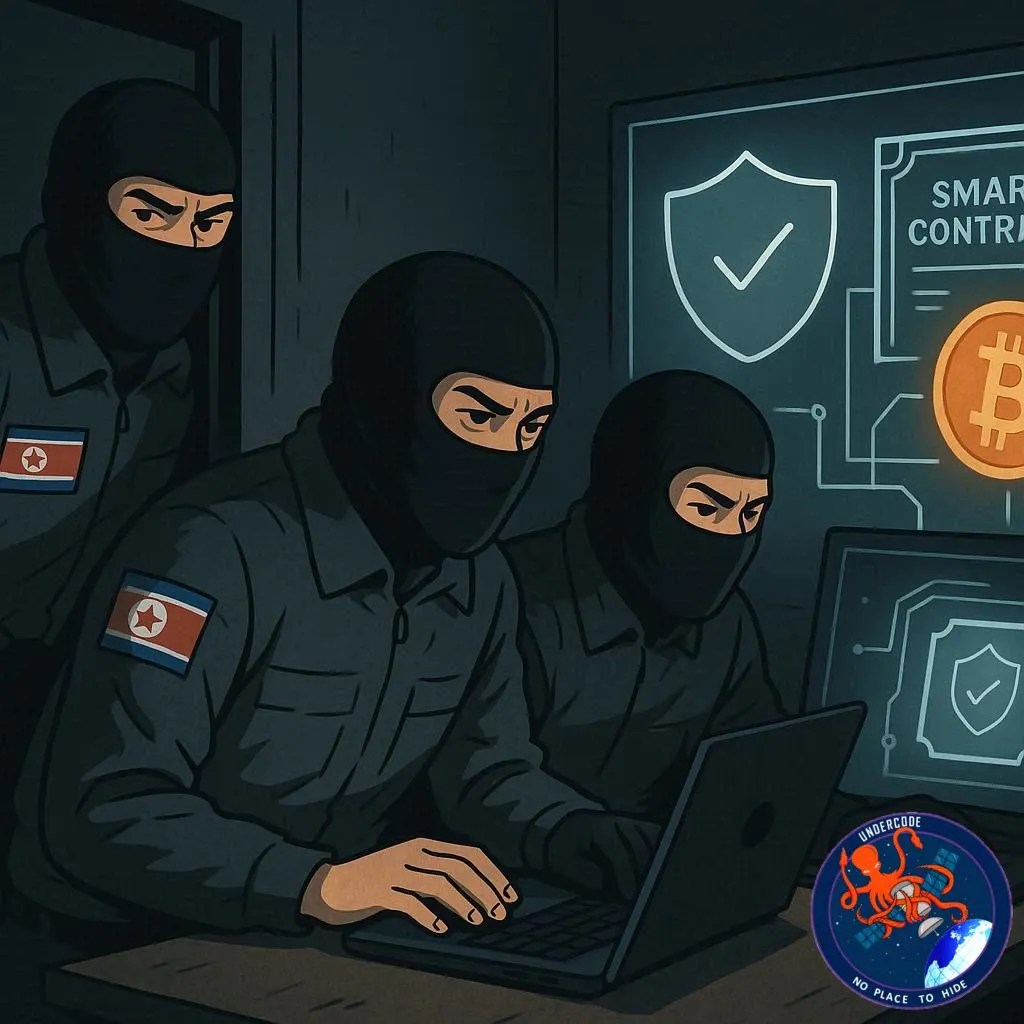
In the world of digital currencies, innovation often moves faster than security. This week, a chilling report surfaced revealing how North Korean state-sponsored hacker groups—UNC5342 and UNC5142—have turned Ethereum and BNB smart contracts into sophisticated cyberweapons. Their strategy? Use cheap, publicly accessible smart contracts as bait for unsuspecting crypto developers, deploying staged malware through seemingly harmless interactions.
The attacks, according to cybersecurity researchers, unfold through a meticulous blend of social engineering and blockchain exploitation. Developers are lured into engaging with smart contracts that appear legitimate but contain hidden payloads. Once the interaction occurs, the malware discreetly installs itself, gaining access to the victim’s wallet infrastructure, code repositories, and developer environments.
The appeal for attackers is obvious. Low-cost smart contracts can be deployed for just a few dollars, allowing threat actors to scatter traps across decentralized networks without raising suspicion. Unlike traditional phishing campaigns, which rely on external websites or email lures, these attacks are native to the blockchain itself. That makes them incredibly hard to detect and even harder to trace.
UNC5342 and UNC5142—two hacker units long associated with the Lazarus Group—are known for their adaptability. They’ve shifted from high-profile crypto exchange hacks to more nuanced infiltration methods. The recent use of smart contracts marks a major evolution in their tactics, blending financial motives with espionage-grade precision.
Analysts say these groups have mastered the art of camouflage. Their malicious contracts often mimic open-source development tools or protocols, hiding in plain sight among the legitimate projects developers trust. The result is a stealthy infection chain that begins in a decentralized ecosystem and ends with compromised infrastructure, data leaks, and drained crypto assets.
For the broader blockchain industry, this revelation is a wake-up call. It’s no longer enough to secure exchanges and wallets; even smart contract interactions—once seen as trustless and transparent—have become potential points of failure. The fusion of blockchain logic and cyber deception signals a darker era in decentralized security.
What Undercode Say:
The cyberwar between nations has officially entered the realm of decentralized finance. What makes this latest campaign by North Korean threat actors particularly alarming is not just the technical sophistication—it’s the psychological manipulation driving it.
Let’s dissect the layers:
Weaponizing Trust: Smart contracts were designed to automate trust through code. By corrupting this principle, hackers exploit the very foundation of Web3 ideology. Developers, who rely on open-source transparency, are being attacked through their own confidence in code integrity.
Economic Efficiency of Attacks: The brilliance—if one can call it that—of these operations lies in their cost-efficiency. Deploying malicious contracts costs less than $10, yet the potential payoff runs into millions. It’s cyberwarfare operating on a startup budget.
Social Engineering in a Decentralized Age: Traditional phishing relied on deception via communication channels—emails, texts, fake sites. Now, the manipulation is embedded directly into blockchain interactions. Developers are tricked not by fake messages but by code that looks functional and harmless.
Steganography in Blockchain: UNC5342 and UNC5142 are not just writing malicious code—they’re hiding payloads within transaction metadata and contract events. This means detection tools focused on front-end anomalies often miss the real infection vectors buried deep in execution layers.
Supply Chain Implications: Once infected, developers unintentionally propagate the malware by deploying tainted code to repositories or smart contract platforms. A single breach can ripple across an entire ecosystem, much like how SolarWinds’ compromise spread across U.S. government networks in 2020.
Global Cyber Policy Blind Spots: International sanctions on North Korea target banks, trade, and weapons programs—but not blockchain abuse. These operations thrive in legal gray zones, where attribution is murky and law enforcement jurisdiction is limited.
Psychological Operations (PsyOps) Layer: Beyond stealing crypto, these campaigns aim to erode confidence in decentralized systems. If developers start distrusting smart contracts, the ideological backbone of Web3 collapses. This creates both financial and social instability—a goal perfectly aligned with North Korea’s strategic playbook.
Future Threat Vectors: Expect to see this tactic evolve. Smart contracts linked to NFTs, DAOs, and DeFi platforms could become attack vectors. As AI-driven coding tools like Copilot assist developers, hackers may soon plant poisoned code suggestions or malicious dependencies through AI-driven pipelines.
In essence, this isn’t just about malware—it’s about weaponized code trust. The traditional lines between developer, user, and attacker are blurring, replaced by an invisible battlefield embedded in decentralized logic.
For blockchain security teams, the next frontier isn’t antivirus or firewalls—it’s behavioral smart contract auditing and real-time transaction forensics. The industry must rethink what “security” means when the code itself can betray you.
Fact Checker Results
✅ Verified: UNC5342 and UNC5142 are real North Korean-linked cyber groups.
✅ Confirmed: Smart contracts on Ethereum and BNB can be used to host or trigger malicious payloads.
❌ Not Confirmed: The exact number of developers or assets compromised has not been disclosed publicly.
Prediction 🔮
In 2026, we will likely see a surge in malicious smart contract ecosystems—entire webs of contracts designed to interact and camouflage each other. AI-driven malware will autonomously deploy and adapt, making human detection nearly impossible.
The next great crypto heist won’t come from exchange hacks—it will come from developers themselves, unknowingly coding the enemy’s weapon.
🕵️📝✔️Let’s dive deep and fact‑check.
References:
Reported By: x.com
Extra Source Hub (Possible Sources for article):
https://www.discord.com
Wikipedia
OpenAi & Undercode AI
Image Source:
Unsplash
Undercode AI DI v2
Bing
🔐JOIN OUR CYBER WORLD [ CVE News • HackMonitor • UndercodeNews ]
📢 Follow UndercodeNews & Stay Tuned:
𝕏 formerly Twitter 🐦 | @ Threads | 🔗 Linkedin | 🦋BlueSky | 🐘Mastodon


