
Listen to this Post
A Leadership Exit Amid Digital Turbulence
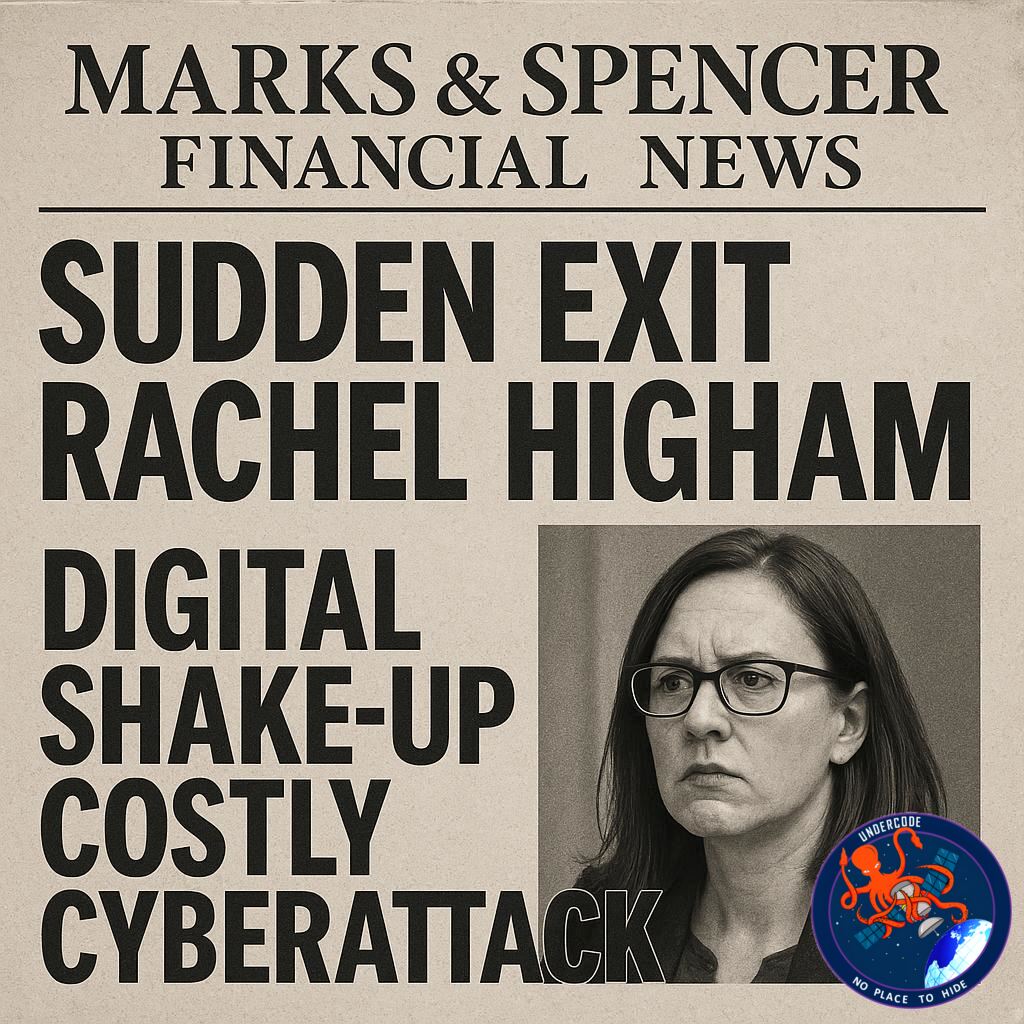
Rachel Higham, the Chief Digital and Technology Officer at Marks & Spencer (M&S), is stepping down from her position, just months after the company faced one of the most damaging cyberattacks in its history. According to a Reuters report citing Sky News, her departure was announced internally and confirmed through a company memo. Higham, who previously held senior roles at WPP and BT Group, joined M&S in June 2023 to lead its digital transformation efforts.
The memo stated that Higham had chosen to “take a break from work,” suggesting her departure was voluntary rather than enforced. M&S described her as “a steady hand and calm head at an extraordinary time,” praising her contributions during a challenging year. The exit comes as M&S continues to recover from a major cyberattack in April, attributed to the hacking group known as Scattered Spider. The incident reportedly caused hundreds of millions of pounds in damage, disrupting the retailer’s systems, online services, and logistics operations.
The company’s spokesperson also confirmed that Higham’s departure triggered an internal reshuffle. Sacha Berendji, a veteran M&S executive, will now oversee the digital and technology division alongside his responsibilities for property and store development. Meanwhile, Thinus Keeve, who recently joined as retail director, will now report directly to Chief Executive Stuart Machin.
The April cyberattack had far-reaching consequences. It compromised internal networks, halted click-and-collect services, and forced M&S to temporarily suspend several online operations. While the retailer has since restored most digital functions, including its e-commerce and collection systems, the financial fallout remains significant. The company projected that the breach could reduce its operating profit for the 2025/26 financial year by around £300 million ($405 million). However, M&S anticipates that insurance claims and stricter cost management will help offset roughly half of the losses.
Interestingly, sources told Sky News that M&S does not plan to immediately replace Higham, suggesting a possible shift in strategy or confidence in Berendji’s expanded leadership scope. It also remains unclear whether Higham received any form of severance or payoff, as the company has declined to comment on that detail.
This leadership transition arrives at a sensitive time. As M&S continues its digital overhaul, the role of technology leadership becomes even more critical. Higham’s exit, while framed as a personal decision, coincides with rising pressure on companies to strengthen their cybersecurity frameworks and crisis management systems in the wake of increasing cyber threats.
What Undercode Say:
Higham’s departure is far from a simple “career break” story. It symbolizes a deeper tension between digital ambition and corporate resilience in an era of relentless cyber risk. When a company like M&S—historically known for its retail legacy rather than digital innovation—faces a cyberattack of this magnitude, it exposes how vulnerable even established brands can be when transformation outpaces infrastructure.
From a strategic standpoint, Higham’s short tenure raises questions about the alignment between M&S’s digital vision and its operational readiness. Bringing in a leader from BT and WPP hinted at a push toward aggressive modernization. Yet, the aftermath of the attack suggests that internal systems and contingency frameworks may not have evolved fast enough to support this new digital momentum.
There’s also a psychological layer. For executives, leading digital reinvention after a cyber catastrophe is exhausting. The weight of responsibility, stakeholder scrutiny, and the constant fear of recurrence can make “taking a break” seem both necessary and symbolic—a quiet retreat from an impossible pressure point.
M&S’s decision not to replace Higham could indicate a pivot in strategy. Instead of focusing on a single digital visionary, the company might be adopting a decentralized leadership model, blending technology oversight into broader business operations. With Sacha Berendji now handling digital, technology, and property, M&S may be attempting to streamline authority and accelerate recovery efforts. But this consolidation also risks diluting technological focus at a time when cyber resilience demands full attention.
Financially, the £300 million hit underscores the true cost of digital vulnerability. While M&S expects insurance coverage to absorb half the damage, that still leaves a staggering amount unprotected. The breach’s impact on profit margins, consumer confidence, and shareholder trust may linger for years. In the retail sector, where customer loyalty and data integrity are paramount, reputation recovery is as important as financial repair.
From an industry perspective, this event is a warning shot. Retailers have become prime targets for cybercriminals due to their vast consumer databases and interconnected supply chains. Scattered Spider’s attack on M&S is part of a broader wave of high-profile cyber incidents targeting corporations with extensive online footprints. Companies that fail to harden their cybersecurity posture are likely to face not just operational disruptions but leadership crises as well.
Ultimately, Higham’s exit tells a larger story about leadership in the digital age. It’s no longer enough to innovate; leaders must anticipate, defend, and adapt faster than the threats themselves. The modern Chief Digital Officer’s role is now inseparable from risk management. In M&S’s case, losing that strategic voice amid a rebuilding phase could either pave the way for a leaner, more integrated structure—or leave a dangerous vacuum in digital oversight.
The coming months will reveal whether M&S’s reorganization will steady the ship or expose deeper fractures. For now, the brand’s resilience will depend not just on insurance claims or new systems, but on its ability to rebuild internal confidence and external credibility simultaneously.
🔍 Fact Checker Results:
✅ Rachel Higham’s departure from M&S was confirmed via an internal company memo reported by Reuters and Sky News.
✅ The cyberattack in April 2025 was linked to the hacker group Scattered Spider, causing an estimated £300 million in financial impact.
❌ M&S has not officially announced any replacement for Higham, despite rumors of a potential internal successor.
📊 Prediction:
M&S’s immediate future depends on how swiftly it can strengthen its cybersecurity infrastructure and stabilize leadership confidence. 💻
Expect the company to adopt AI-based threat detection tools and external cybersecurity partnerships within the next year. 🔐
If the restructured leadership proves effective, M&S could turn this crisis into a defining moment of digital resilience by 2026. 🚀
🕵️📝✔️Let’s dive deep and fact‑check.
References:
Reported By: timesofindia.indiatimes.com
Extra Source Hub (Possible Sources for article):
https://www.medium.com
Wikipedia
OpenAi & Undercode AI
Image Source:
Unsplash
Undercode AI DI v2
Bing
🔐JOIN OUR CYBER WORLD [ CVE News • HackMonitor • UndercodeNews ]
📢 Follow UndercodeNews & Stay Tuned:
𝕏 formerly Twitter 🐦 | @ Threads | 🔗 Linkedin | 🦋BlueSky | 🐘Mastodon


