
Listen to this Post
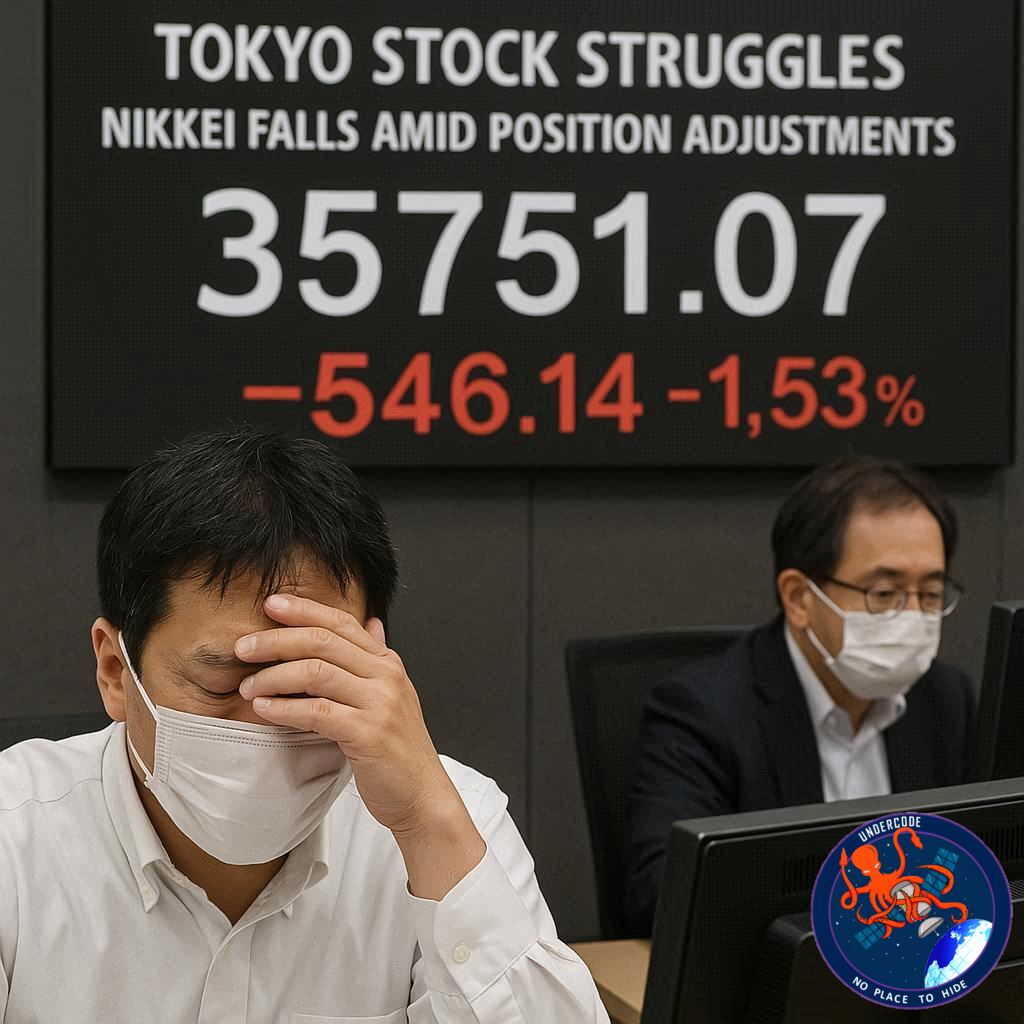
Introduction: Market Faces Pressure at September-End
The Tokyo stock market faced turbulence during the morning session on September 30, as the Nikkei 225 continued its decline, briefly dropping by more than 300 points before partially recovering. A mix of position adjustments by domestic institutional investors, concerns about U.S. government funding, and selling pressure in AI-related stocks created a cautious trading environment. While the market initially opened higher following Wall Street’s overnight gains, selling activity soon dominated, leaving investors uncertain about the near-term direction.
Nikkei 225 Decline and Investor Adjustments
During the morning close, the Nikkei 225 settled at 45,023.48, down 20.27 points (0.05%) compared with the previous day. The decline was primarily driven by end-of-quarter portfolio adjustments by institutional investors, a common practice at fiscal checkpoints. Many chose to secure profits by selling stocks with strong unrealized gains, preparing funds for fresh strategies in the second half of the fiscal year starting in October.
Selling Pressure on AI-Related Stocks
AI-related companies such as SoftBank Group, Advantest, and Fujikura faced strong selling pressure. These stocks had previously gained momentum from the AI boom but became targets for profit-taking amid valuation concerns. The selling wave briefly pushed the Nikkei down by more than 300 points.
Profit Realization Adds Market Weight
The market is also facing expectations that profit realization at the beginning of the fiscal half-year may be larger than usual. By converting unrealized gains into cash, institutional investors are better positioned to reallocate capital into new strategies. However, this shift has temporarily weighed on market sentiment.
U.S. Government Shutdown Concerns
Global uncertainty further pressured Japanese equities. The U.S. Congress has yet to approve a stopgap budget bill, raising fears of a partial government shutdown if no deal is reached by September 30. Such a shutdown would delay the release of crucial economic indicators, including the October 3 employment data, potentially complicating the Federal Reserve’s monetary policy decisions.
Morning Movement and Investor Sentiment
Despite the gloomy outlook, the Nikkei opened higher in the morning, carried by the momentum of Wall Street’s rally. After heavy selling in early trading, the index showed resilience, with buying support emerging after 10 a.m. Some market participants pointed out that Japan avoided the traditional “summer slump” this year, with the Nikkei hitting record highs during summer, suggesting ongoing optimism for further gains in the future.
Sector and Stock Highlights
The broader Tokyo Stock Price Index (TOPIX) edged up by 2.83 points (0.09%) to 3,134.40. Similarly, the JPX Prime 150 Index rebounded. Trading volume on the TSE Prime reached about 914.97 million shares, with a value of 2.1584 trillion usd. Declining stocks numbered 1,033, while 525 gained and 55 were flat.
Fast Retailing, Toyota, Honda, and Kawasaki Heavy were among the notable decliners. Oil-related shares such as INPEX and Idemitsu Kosan also slipped due to concerns about oversupply after reports of increased production from oil-exporting countries. On the other hand, TDK, Konami Group, Tokyo Electron, Ebara, and Fujifilm rose, showing resilience in select technology and industrial sectors.
What Undercode Say:
The Nikkei’s continued decline on September 30 highlights the delicate balance between profit-taking strategies and underlying optimism in Japan’s stock market. The timing of the drop is not coincidental—it aligns with fiscal adjustments and reflects institutional investors’ need to rebalance portfolios. This pattern is typical at quarter-ends, but the scale of selling in AI-related stocks adds an important signal.
AI shares, particularly SoftBank Group and semiconductor-linked names, had experienced heavy inflows earlier this year. The fact that these companies are now under profit-taking pressure suggests that valuations may have run ahead of fundamentals. Investors are essentially recalibrating their exposure to sectors that have been hyped but carry significant risks if growth expectations fall short.
The U.S. government shutdown threat compounds the unease. Japanese investors watch the U.S. closely, as disruptions in U.S. data flow could delay the Fed’s next interest rate moves, which in turn affects global liquidity and risk appetite. The potential postponement of employment figures, in particular, is critical—without this data, the Fed could adopt a cautious approach, which markets dislike because it extends uncertainty.
Interestingly, the resilience of the Nikkei after 10 a.m. indicates that buyers remain on standby. This reflects a longer-term bullish outlook for Japanese equities. The structural reforms in corporate governance, rising shareholder returns, and weaker usd have continued to draw foreign capital into Japan. That underlying support is why the market did not completely collapse despite the 300-point plunge earlier in the morning.
Oil-related stocks’ weakness tells another story. The drop in crude oil prices due to production increase expectations shows how sensitive Japanese markets remain to global commodity dynamics. Energy importers like Japan typically benefit from lower oil prices, but oil-linked corporates face immediate losses. This creates a split performance, visible in today’s trade where technology firms rose while resource-linked stocks fell.
The broader implication is that Japanese equities are caught between two narratives: near-term caution due to fiscal and political headwinds, and longer-term optimism driven by structural growth and foreign interest. For traders, this means volatility will remain high in October, especially as new earnings reports and global policy decisions emerge.
Another angle worth noting is the absence of the traditional summer slump in Japan this year. This is not trivial—it signals robust investor interest even in typically slow months. If this momentum carries forward, the downside from profit-taking could be limited, and the Nikkei may regain upward momentum once fiscal adjustments conclude.
Overall, the market today reflects a tug-of-war: institutional investors locking in profits versus buyers betting on a bullish longer-term trajectory. The outcome in the next few weeks will depend heavily on external factors like the U.S. government budget standoff and the Fed’s policy stance, alongside Japan’s own corporate earnings season.
Fact Checker Results
✅ Nikkei fell for the morning session, briefly dropping over 300 points.
✅ AI-related stocks like SoftBank and Advantest were hit by strong selling.
❌ Market sentiment is not entirely bearish, as selective buying supported a rebound.
Prediction
The Nikkei may continue facing short-term volatility in early October due to U.S. political uncertainty and ongoing profit-taking by institutions. However, underlying optimism, foreign inflows, and structural reforms in Japan could fuel a rebound, potentially pushing the index toward fresh highs once the fiscal adjustment phase stabilizes. 📈
🕵️📝✔️Let’s dive deep and fact‑check.
References:
Reported By: xtechnikkeicom_24198ba33df1ed416dda8a56
Extra Source Hub:
https://www.linkedin.com
Wikipedia
OpenAi & Undercode AI
Image Source:
Unsplash
Undercode AI DI v2
🔐JOIN OUR CYBER WORLD [ CVE News • HackMonitor • UndercodeNews ]
📢 Follow UndercodeNews & Stay Tuned:
𝕏 formerly Twitter 🐦 | @ Threads | 🔗 Linkedin | 🦋BlueSky | 🐘Mastodon


