
Listen to this Post
📖 Introduction: The eSIM Evolution Nobody Saw Coming
For years, the humble SIM card was the unsung hero of mobile connectivity. That tiny chip made switching phones as simple as swapping a memory card. But then came eSIM—a fully digital alternative that promised a future without trays, tools, or tiny cards to lose. At first, the shift felt more like a curse than a convenience. Early adopters, tech reviewers, and even casual users often found themselves lost in a maze of carrier menus, QR codes, and confusing activation steps.
Yet, change has a funny way of catching up with comfort. What started as a tech headache is slowly becoming one of the most underrated upgrades in modern smartphones. And one carrier, T-Mobile, seems to have cracked the code to make it truly painless.
🚀 The Journey from SIM to eSIM: A Story of Frustration Turned Simplicity
Switching phones used to be easy. Pop out the SIM card, slot it into a new device, and you were ready to go. That’s how tech reviewers like the author lived—jumping from phone to phone, juggling reviews, and never giving it a second thought. Then came Apple’s bold move: removing the physical SIM tray in favor of eSIM-only models starting with the iPhone 14 in the U.S.
Initially, it was chaos. Moving to eSIM meant calling customer service, explaining the situation, and waiting through a tedious setup process. It was so inconvenient that even tech-savvy users gave up after a few months. When Google followed suit with its Pixel 10 series—also skipping the SIM tray—many prepared for another painful transfer.
Except this time, something unexpected happened.
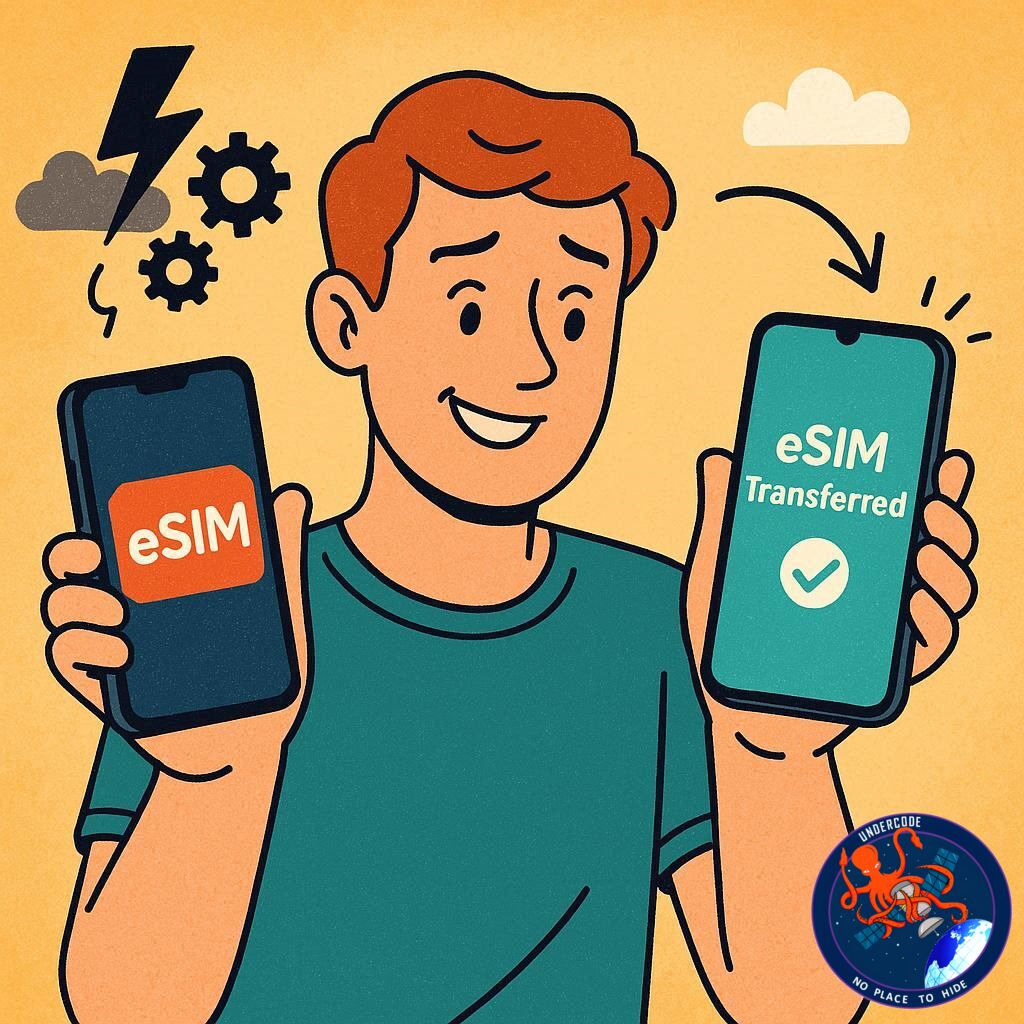
T-Mobile had quietly rolled out a new feature within its T-Life app, allowing users to switch eSIMs directly between devices. The process became simple: open the app, tap “Manage,” select your line, and choose “SIM transfer or activation.” Enter a few numbers—the IMEI and EID—and wait for a confirmation text. Within minutes, the eSIM was active on the new phone. No long calls, no waiting, no frustration.
Apple’s own iOS Quick Transfer also played its part, enabling seamless eSIM swaps between iPhones, and even from iPhone to Android. For once, technology worked exactly as promised.
💡 Why eSIMs Matter: More Than Just a Missing Tray
The beauty of eSIMs isn’t just about eliminating a physical card. They’re embedded directly into the device, freeing up internal space for better components and improved water resistance. Without a SIM tray, phones can be more compact, more durable, and even pack larger batteries.
Manufacturers love them because fewer openings mean fewer hardware vulnerabilities. Carriers love them because it adds a small “lock-in” effect—users can’t easily pop out their SIM and switch to a competitor. It’s a mix of practicality and strategy, and for users, the balance is finally tipping toward convenience.
📱 T-Mobile’s Game-Changing Move
T-Mobile’s eSIM system now stands out as one of the most user-friendly on the market. The integration within the T-Life app marks a major leap forward, offering users full control without needing to visit a store or spend time on the phone.
Still, there’s room for improvement. For instance, entering long IMEI and EID numbers could be automated, just as Mint Mobile (a T-Mobile subsidiary) already does. T-Mobile also restricts eSIM transfers to devices already activated on its network—something that limits flexibility for power users who juggle multiple phones.
Yet, despite these small hiccups, the experience today is light-years ahead of what it was just a couple of years ago. eSIM technology is finally catching up with its promise, thanks to carriers adapting to Apple and Google’s push for a SIM-free future.
What Undercode Say: The Digital Identity Revolution
The shift from SIM to eSIM represents more than just a hardware upgrade—it’s a transformation of how digital identity is handled in the mobile ecosystem. In traditional SIM systems, the card itself was the identity token. Whoever held it, owned the connection. eSIM flips that logic: now, identity lives in encrypted software, remotely managed, and easily transferable.
From a cybersecurity perspective, this is revolutionary. It reduces the risk of SIM-swapping attacks, one of the most common forms of identity theft used to hijack phone numbers and accounts. For enterprises, it means faster device deployment and improved management for employees.
From a business standpoint, T-Mobile’s innovation signals a strategic maturity. Rather than resisting change, the carrier embraced automation, integrating it directly into consumer-facing apps. This not only streamlines the experience but builds user trust—a currency far more valuable than data itself.
The success of T-Mobile’s system also hints at a broader trend: the convergence of hardware and digital ecosystems. Apple and Google are nudging the industry toward universal, software-driven connectivity. The carriers that adapt will thrive; those that don’t may struggle to remain relevant.
Another dimension is environmental. By removing the need for physical SIM cards, packaging, and plastic trays, millions of small plastic components are kept out of landfills each year. In an industry often criticized for e-waste, this move quietly supports sustainability without demanding sacrifice from the consumer.
But the story isn’t over. The next frontier may be multi-device eSIM synchronization, allowing one number to function seamlessly across phones, tablets, smartwatches, and even laptops. Imagine a world where your digital identity follows you like an invisible thread, instantly accessible wherever you sign in.
Of course, this convenience raises privacy questions. If carriers can activate and deactivate connections remotely, what stops them from tracking more than necessary? Regulation will need to evolve alongside technology to maintain balance between control and consumer freedom.
Still, what’s clear is that eSIM is no longer an inconvenience—it’s the bridge to a smarter, more fluid, and interconnected digital life.
🔍 Fact Checker Results
✅ T-Mobile now supports full eSIM transfers within its T-Life app.
✅ Apple’s iOS Quick Transfer works across iPhones and Android devices.
❌ eSIM switching isn’t yet universal across all carriers or devices.
📊 Prediction
In the next three years, physical SIM cards will begin to fade from mainstream flagship phones entirely 📱.
Carriers like T-Mobile will expand their eSIM management features into cross-platform ecosystems 🌐.
And users, once resistant to the change, will soon wonder why they ever needed a tiny piece of plastic to stay connected 🔮.
🕵️📝✔️Let’s dive deep and fact‑check.
References:
Reported By: www.zdnet.com
Extra Source Hub (Possible Sources for article):
https://www.quora.com/topic/Technology
Wikipedia
OpenAi & Undercode AI
Image Source:
Unsplash
Undercode AI DI v2
Bing
🔐JOIN OUR CYBER WORLD [ CVE News • HackMonitor • UndercodeNews ]
📢 Follow UndercodeNews & Stay Tuned:
𝕏 formerly Twitter 🐦 | @ Threads | 🔗 Linkedin | 🦋BlueSky | 🐘Mastodon


