
Listen to this Post
Introduction
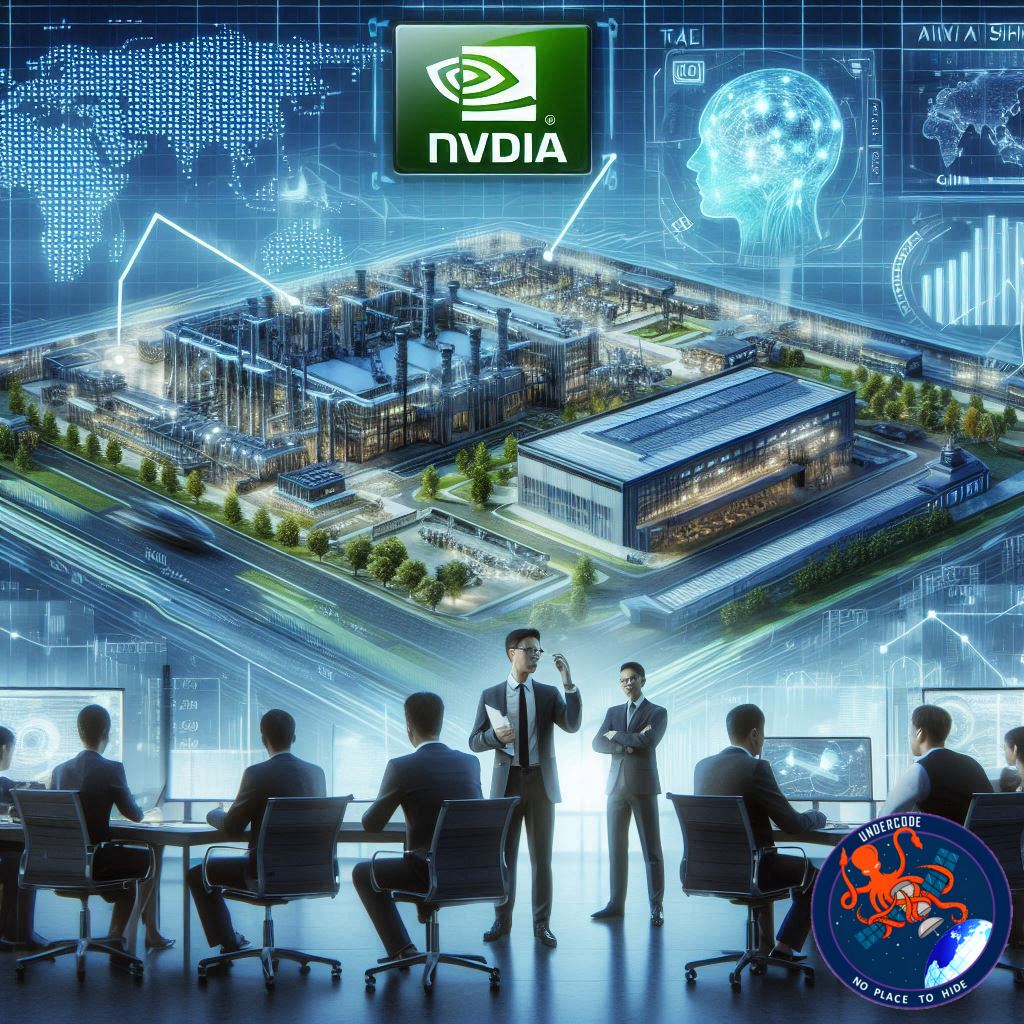
A political tremor rippled through Washington and Silicon Valley after President Trump announced he would lift the export blockade on Nvidia’s H200 chips to China, but only under one extraordinary condition. For every sale of these high-performance AI processors, the United States government will collect 25 percent of the revenue. The move mixes geopolitics with raw economic leverage, turning semiconductor exports into a channel for national profit and strategic control. The announcement immediately ignited debate across the technology sector, raising questions about whether this is a shrewd balancing act or a risky concession in the global AI race.
Main Summary (≈30 lines)
A Shift in U.S. Tech Policy Toward China
President Trump revealed on Truth Social that his administration will allow Nvidia to resume exports of the H200 AI chip series to China. These chips sit one generation behind Nvidia’s most advanced architecture and were previously restricted under U.S. export controls designed to slow China’s access to cutting-edge AI hardware.
A Financial Deal Wrapped in National Security
Instead of granting permission for free, Trump introduced an unprecedented profit-sharing framework. The U.S. government will receive 25 percent of all revenue generated by these H200 sales. He said the same structure will apply to AMD, Intel, and other major U.S. chip developers involved in exporting earlier-generation semiconductor technology to China.
A Strategy With Historical Precedent
This arrangement echoes a deal struck earlier this year in which Nvidia and AMD agreed to pay the U.S. 15 percent of their China revenue from the down-tuned H20 chip in exchange for export licenses. The new 25 percent rate substantially raises the government’s cut and reflects a more aggressive economic stance.
Lingering Security Concerns Among U.S. Officials
Defense hawks immediately expressed concern. Many fear China could use even slightly older generations of Nvidia chips to strengthen its military AI capabilities, including autonomous weapons, battlefield simulations, and intelligence systems. For months, national security agencies have argued that even “legacy AI chips” exceed what China can produce domestically.
Trump’s Conditions for National Security
Trump insisted that strict security requirements will remain in place, although he didn’t specify what those conditions are. The newest Nvidia Blackwell architecture remains fully blocked, and the Rubin generation set for 2026 is expected to continue under restrictions as well.
China’s Possible Lack of Interest
Nvidia CEO Jensen Huang has publicly questioned whether Chinese buyers even want the older H200 series, suggesting that China may prefer to rely on its own rapidly improving domestic chip alternatives. Still, the sheer scale of China’s AI industry makes the U.S. decision economically significant.
Silence From Nvidia
Nvidia did not respond to requests for comment, but Huang has long argued that selling AI chips to China actually helps the U.S. maintain influence over the global technology stack. He has warned that total bans could push China to accelerate local innovation in ways that ultimately weaken American dominance.
A Gamble With Economic and Geopolitical Stakes
The administration’s move blends profit, diplomacy, and national strategy. It opens a controlled window for U.S. firms to tap China’s enormous AI demand while keeping the most advanced hardware under lock and key. But the risks remain deeply contested.
What Undercode Say:
A Pivot Designed to Balance Power and Profit
This policy shift is less about generosity toward China and more about redefining U.S. leverage in the semiconductor economy. By inserting the federal government directly into the sales pipeline, Washington gains a financial stake in China’s AI development without relinquishing control over next-generation chips. The deal effectively turns U.S. hardware dominance into a recurring revenue stream for national interests.
Why the 25 Percent Matters
The jump from 15 percent to 25 percent signals an emboldened strategy. It changes the export narrative from “regulation” to “taxation as diplomacy.” This percentage is steep enough to influence corporate decision-making but still low enough to keep Nvidia interested in maintaining a presence in the Chinese market, which remains too large to ignore.
Economic Leverage as a Strategic Weapon
This policy uses market dominance rather than trade bans as the main instrument of control. Instead of fully blocking China’s access, the U.S. is channeling that access through a pay-to-participate model. It’s a calculated way to limit China’s advancement while still extracting value from its demand. The result is a hybrid framework that serves economic, political, and national security agendas simultaneously.
The Military Concern Is Real but Nuanced
Critics are right to warn that even older Nvidia chips carry immense computing power. But U.S. officials understand something deeper: China’s domestic semiconductor push is accelerating. Blocking everything, indefinitely, could unintentionally strengthen China’s resolve to build alternatives. By allowing older chips in, the U.S. keeps China partially dependent on American technology rather than forcing total independence.
How Nvidia Might Play This Game
Nvidia has always operated with one foot in innovation and the other in diplomacy. The company benefits from selling older inventory to China while reserving its most profitable and powerful lines for Western markets. This deal likely gives Nvidia a predictable export pathway, even if it comes at a cost.
Why Trump Framed It This Way
The political framing is deliberate. Trump is using the narrative of “America taking its cut” to present the move as strength rather than concession. By ensuring revenue for the government, he positions the policy as a win for taxpayers and a blow to competitors like China who must now pay a premium to access U.S. tech.
China’s Dilemma
If China rejects the older chips, it accelerates its dependence on local alternatives. If it accepts them, it pays the U.S. directly for every AI computation performed. Both outcomes serve U.S. strategic goals. China’s response will signal how confident it is in the maturity of its domestic chip capabilities.
A Complex, High-Stakes Dance
This policy is neither a simple sale nor a softening of restrictions. It’s a shift toward monetizing geopolitical influence, a reflection of how power is now measured in silicon rather than steel. As AI becomes the backbone of modern militaries and economies, chip exports have become the new battlefield for control and strategy.
🔍 Fact Checker Results
The U.S. will take 25 percent of H200 sales tied to China. ✅ True
Nvidia’s latest Blackwell chips are being exported to China. ❌ False
Trump confirmed similar conditions will apply to AMD and Intel. ✅ True
📊 Prediction
China will initially purchase limited quantities of H200 chips while accelerating investment in domestic AI accelerators. Over time, the U.S. will expand the profit-sharing model to other tech sectors, using revenue-linked permissions as a tool of influence. Nvidia will likely treat China as a secondary market, prioritizing Western customers while still extracting profit under the new framework.
🕵️📝✔️Let’s dive deep and fact‑check.
References:
Reported By: axioscom_1765231745
Extra Source Hub (Possible Sources for article):
https://www.discord.com
Wikipedia
OpenAi & Undercode AI
Image Source:
Unsplash
Undercode AI DI v2
Bing
🔐JOIN OUR CYBER WORLD [ CVE News • HackMonitor • UndercodeNews ]
📢 Follow UndercodeNews & Stay Tuned:
𝕏 formerly Twitter 🐦 | @ Threads | 🔗 Linkedin | 🦋BlueSky | 🐘Mastodon


