
Listen to this Post
A Beloved Chicken Chain Caught in a Cybersecurity Crossfire
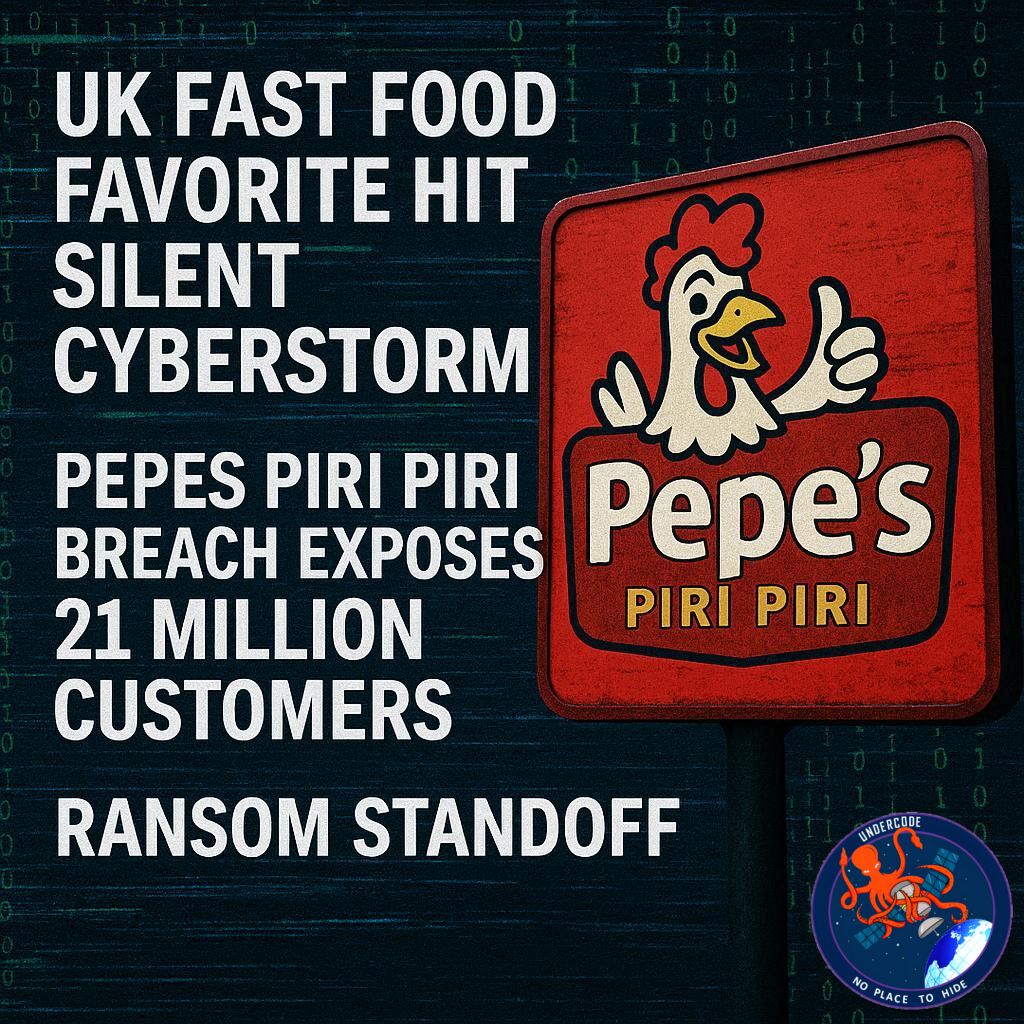
Pepe’s Piri Piri, a widely recognized UK fast-food brand known for its flame-grilled chicken and loyal customer base, has reportedly become the latest casualty in a growing wave of cyberattacks targeting consumer-facing businesses. According to cybersecurity monitoring sources, the company suffered a data breach after allegedly refusing to pay a ransom demand, resulting in the exposure of approximately 2.1 million customer records linked to its loyalty program.
How the Incident Came to Light
The breach was first highlighted by Cybersecurity News Everyday, a threat-monitoring account that tracks ransomware activity, data leaks, and cyber incidents globally. The report cites information originally shared by hendryadrian.com and classifies the incident as a medium-severity breach, suggesting substantial data exposure without confirmed catastrophic system damage.
Scale of the Data Exposure
Roughly 2.1 million customer records were reportedly affected in the incident. While full technical details have not been publicly disclosed by Pepe’s Piri Piri at the time of reporting, the leaked data is believed to include loyalty program information, which often contains personally identifiable details such as names, email addresses, phone numbers, and transaction histories.
Loyalty Programs as a Prime Target
Loyalty systems are increasingly attractive to cybercriminals because they aggregate large volumes of verified customer data in one place. In the case of Pepe’s Piri Piri, the compromised records were allegedly tied to customers who signed up for rewards, discounts, and promotional offers—making the breach particularly sensitive from a privacy standpoint.
The Ransom Refusal Factor
The report indicates that the breach occurred after Pepe’s Piri Piri refused to comply with a ransom demand. This detail is significant, as it aligns with a growing trend in ransomware operations where attackers leak or sell stolen data as retaliation when victims decline to pay.
Medium Severity, High Reputational Risk
Although the incident has been rated as medium severity by threat monitors, the reputational impact for a consumer brand can be far more severe than the technical rating implies. Fast-food chains rely heavily on repeat customers and brand trust, both of which can be eroded quickly following a publicized data breach.
No Immediate Official Statement
As of the time the incident circulated on social platforms, there was no widely reported official statement from Pepe’s Piri Piri confirming or denying the breach. This silence leaves customers relying on third-party cybersecurity reports rather than direct communication from the company itself.
A Familiar Pattern in the Food Industry
Pepe’s Piri Piri is not alone. Over the past few years, restaurants and fast-food chains across Europe and North America have increasingly found themselves targeted by cybercriminals, often due to outdated systems, fragmented franchise IT environments, and heavy reliance on third-party vendors.
What Undercode Say:
A Warning Sign for Consumer-Focused Brands
From Undercode’s perspective, this incident highlights a persistent misconception among fast-food and retail chains—that they are too small or too routine to attract serious cyber threats. In reality, brands like Pepe’s Piri Piri sit on vast pools of monetizable customer data, making them highly attractive targets.
The Ransomware Business Model at Work
The alleged ransom refusal followed by data exposure fits neatly into the modern ransomware playbook. Attackers no longer rely solely on encryption; data exfiltration and public shaming have become equally powerful leverage tools, especially against brands sensitive to public perception.
Loyalty Data Is More Dangerous Than It Looks
Many companies underestimate the risk associated with loyalty program databases. Even if payment card data is not involved, detailed customer profiles can fuel phishing campaigns, identity fraud, and long-term social engineering attacks.
Silence Can Amplify Damage
The lack of immediate, clear communication can often do more harm than the breach itself. When companies delay acknowledging incidents, speculation fills the gap, and customers tend to assume the worst about both the scale of the breach and the company’s preparedness.
Medium Severity Does Not Mean Medium Impact
Threat severity ratings are often technical in nature. From a business standpoint, exposing millions of customer records—even without financial data—can trigger regulatory scrutiny, customer churn, and lasting trust issues.
The UK Market Is Heating Up for Attackers
The UK has become an increasingly attractive target due to its dense concentration of consumer brands, widespread digital loyalty adoption, and strict data protection laws that attackers know companies fear violating.
Refusing Ransom Is Ethically Sound—but Risky
While refusing to pay ransom is generally encouraged by law enforcement and security experts, it is not without consequences. Organizations must be prepared for data leaks and have crisis-response strategies ready before making that decision.
Cybersecurity Is No Longer Optional Overhead
Incidents like this reinforce that cybersecurity is not an IT expense but a core business function. For fast-food chains operating on thin margins, underinvestment in security can lead to disproportionately large fallout.
Third-Party Risk Remains a Blind Spot
Many restaurant chains rely on external vendors for apps, loyalty platforms, and marketing systems. A single weak link in that ecosystem can expose millions of records, even if the core business systems remain intact.
A Case Study in Modern Breach Economics
This reported breach serves as a real-world example of how attackers monetize refusal: steal first, demand ransom second, and leak data third. It is a model that continues to prove effective against consumer-facing brands.
🔍 Fact Checker Results
✅ The breach report originates from a known cybersecurity monitoring source and references hendryadrian.com.
✅ The figure of 2.1 million exposed customer records is consistently cited across the report.
❌ No official public confirmation from Pepe’s Piri Piri has been identified at the time of reporting.
📊 Prediction
Fast-food chains across the UK are likely to face increased ransomware and data-extortion attempts throughout 2026, with loyalty programs remaining a primary target. Brands that fail to modernize security controls and incident-response communication strategies may see customer trust erode faster than regulatory penalties alone could ever cause.
🕵️📝✔️Let’s dive deep and fact‑check.
References:
Reported By: x.com
Extra Source Hub (Possible Sources for article):
https://www.reddit.com
Wikipedia
OpenAi & Undercode AI
Image Source:
Unsplash
Undercode AI DI v2
Bing
🔐JOIN OUR CYBER WORLD [ CVE News • HackMonitor • UndercodeNews ]
📢 Follow UndercodeNews & Stay Tuned:
𝕏 formerly Twitter 🐦 | @ Threads | 🔗 Linkedin | 🦋BlueSky | 🐘Mastodon


