
Listen to this Post
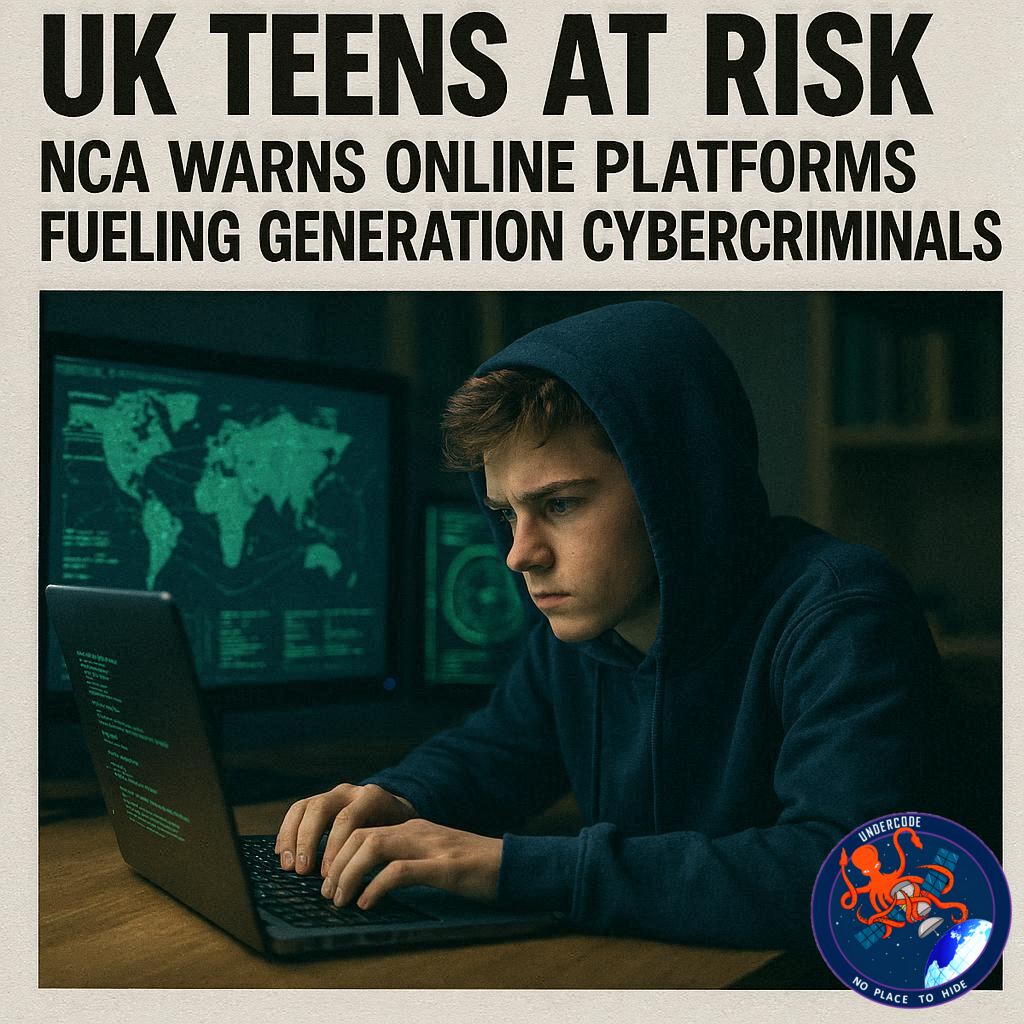
The United Kingdom is facing a digital crime wave that goes beyond hacking and fraud—its youngest citizens are increasingly being drawn into cybercrime, terrorism, and sexual exploitation through online platforms. Graeme Biggar, director general of the UK’s National Crime Agency (NCA), sounded the alarm this week, highlighting how technology is no longer just a tool for criminals—it is reshaping crime itself. From online radicalization to AI-assisted scams, the digital landscape is creating new threats that are faster, global, and more harmful than ever before.
The Digital Threat Landscape
In his address launching the NCA’s National Strategic Assessment, Biggar painted a stark picture: the same toxic online spaces that host social media and gaming communities are also grooming teenagers to commit serious crimes. Algorithms designed to engage users are inadvertently—or in some cases deliberately—exposing minors to radical ideologies, violent content, and criminal networks. Biggar warned, “Technology is no longer simply a tool that criminals use. It is reshaping crime itself: accelerating it, globalizing it, and making it more harmful.”
The boundaries between different types of crime are increasingly blurred. Cyber-attacks are no longer the domain of nation-states alone; criminal gangs are exploiting the same vulnerabilities. Similarly, money laundering networks now serve not just conventional criminals, but also terrorists and hostile foreign actors. Biggar emphasized that crime must be seen as a single ecosystem rather than many separate ones.
Targeting “The Com” and Other Online Networks
The NCA has previously singled out dangerous online communities like “The Com,” a network of English-speaking groups known for violent and sadistic crimes. These networks often overlap with cybercrime collectives such as Scattered Spider, ShinyHunters, and Lapsus$. Since taking over as chair of the Five Eyes Law Enforcement Group (FELEG) in September 2025, the NCA has intensified its focus on these groups, highlighting the growing intersection between online radicalization and cybercrime.
Rising Cybercrime and Online Fraud
Biggar reported a troubling year of breaches and scams affecting both public and private sectors, including TfL, Jaguar Land Rover, M&S, the Co-op, and Kido nurseries. While most attacks still originate overseas, UK-based attackers are now combining sophisticated malware with social engineering tactics, targeting human vulnerabilities alongside technical ones.
Online fraud, particularly investment scams, is surging, and so is “sextortion” and sadistic exploitation. AI is amplifying the problem, with algorithms accelerating and normalizing harmful behavior. Biggar stressed that cybersecurity cannot focus solely on systems—it must also address human and process vulnerabilities within organizations and supply chains.
Law Enforcement Wins and the Role of Technology
Despite the growing threat, Biggar offered cautious optimism. He cited successes such as the takedown of Lockbit ransomware operations, a 27% increase in fraud convictions, and roughly 1,000 monthly arrests in child sexual abuse cases. Technology that criminals exploit can also be used by law enforcement: cryptocurrency transactions can be traced, and online anonymity can be uncovered.
The newly announced Online Crime Centre, part of the government’s fraud strategy, aims to accelerate data sharing between government agencies, private industry, and across sectors. This initiative seeks to close the gap between cybercriminal innovation and law enforcement response.
What Undercode Say: The Growing Digital Ecosystem of Crime
The NCA’s warnings signal a fundamental shift in how crime operates in the 21st century. Teenagers are no longer passive users of technology—they are being actively groomed by algorithms and online networks into criminal behavior. Platforms that thrive on engagement inadvertently serve as incubators for cybercrime, extremism, and sexual exploitation.
The convergence of cybercrime, terrorism, and fraud creates a single ecosystem of risk. For example, money laundering networks now support both financial fraud and organized crime, while nation-state attacks often mirror the tactics of criminal groups. Biggar’s insistence that technology is reshaping crime underscores the urgent need for proactive, systemic responses.
Organizations and governments face a dual challenge: they must protect their systems and infrastructure, but also train personnel and supply chains to resist manipulation. AI, while a tool for criminals, is also a force multiplier for law enforcement. Algorithms can be leveraged to detect patterns of behavior, track illicit transactions, and uncover hidden networks.
Online radicalization cannot be addressed in isolation from cybercrime. Interventions must be multi-layered, combining digital literacy, law enforcement coordination, platform accountability, and AI-assisted monitoring. The rise of UK-based attackers indicates that domestic cybercrime is evolving, and localized expertise will be essential to counter it.
Ultimately, the NCA’s strategic vision highlights that the fight against digital crime is not just about technology—it is about reshaping societal resilience to the online ecosystem. Platforms, regulators, and law enforcement must work in tandem to prevent teenagers from being drawn into this complex web of modern crime.
Fact Checker Results ✅❌
✅ Biggar’s statements align with NCA reports on rising cybercrime and online exploitation.
✅ Evidence of UK-based attackers combining malware with social engineering is documented in recent breaches.
❌ Claims about algorithmic radicalization require further empirical studies to quantify scale and impact.
Prediction 🔮
Teen-targeted cybercrime and online radicalization are likely to increase over the next five years, driven by AI-enabled manipulation and sophisticated social engineering. Law enforcement will increasingly leverage AI and cross-sector data sharing to identify threats, but without platform accountability, the risk to teenagers will continue to grow. Early intervention programs, AI-assisted monitoring, and stricter platform oversight could slow this trend, but the digital crime ecosystem will remain a critical battleground.
🕵️📝✔️Let’s dive deep and fact‑check.
References:
Reported By: www.infosecurity-magazine.com
Extra Source Hub (Possible Sources for article):
https://www.discord.com
Wikipedia
OpenAi & Undercode AI
Image Source:
Unsplash
Undercode AI DI v2
Bing
🔐JOIN OUR CYBER WORLD [ CVE News • HackMonitor • UndercodeNews ]
📢 Follow UndercodeNews & Stay Tuned:
𝕏 formerly Twitter 🐦 | @ Threads | 🔗 Linkedin | 🦋BlueSky | 🐘Mastodon


