
Listen to this Post
Introduction
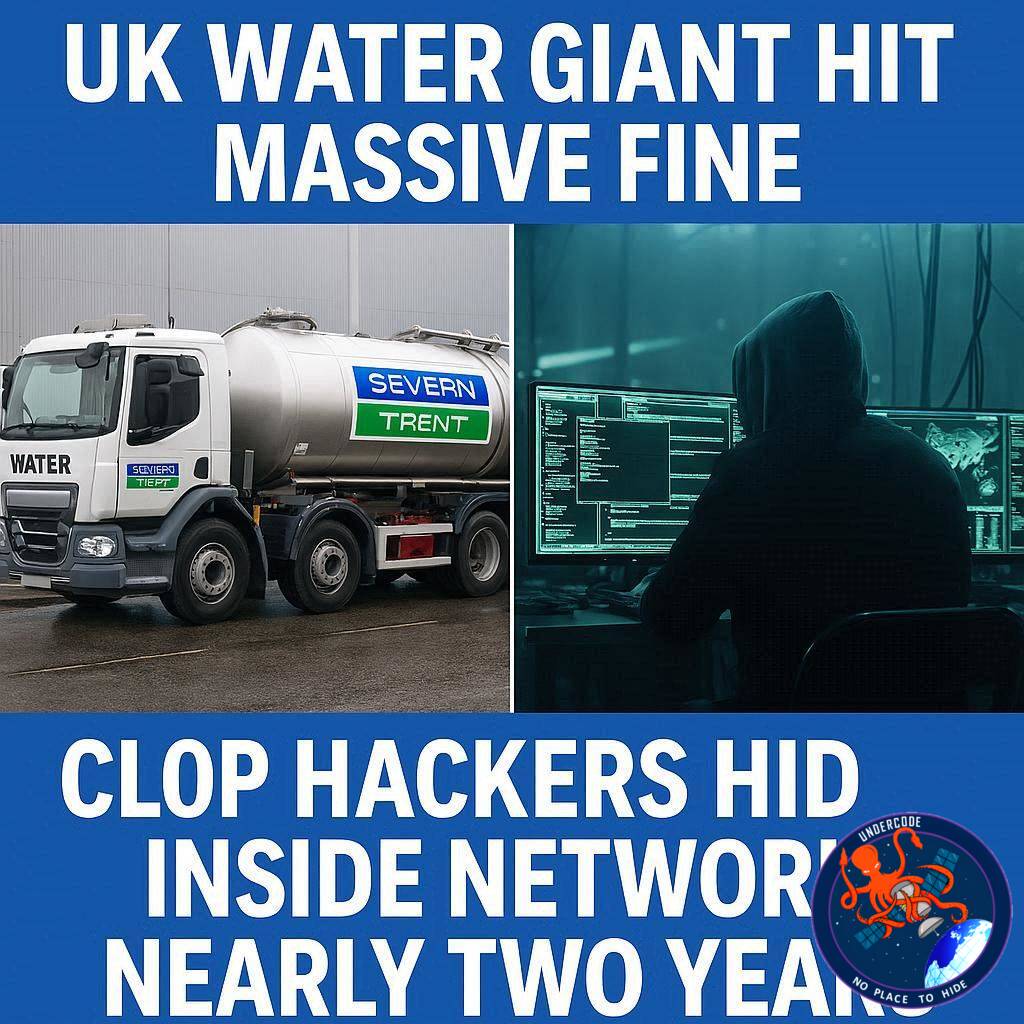
The cybersecurity crisis surrounding critical infrastructure in the United Kingdom has taken another alarming turn after South Staffordshire Water was fined nearly $1.2 million USD following a devastating cyberattack linked to the notorious Cl0p ransomware group. Authorities revealed that hackers remained undetected inside the company’s systems for close to two years, exploiting weak monitoring systems and a dangerous ZeroLogon vulnerability that should have been patched long before the breach occurred.
The attack exposed sensitive information belonging to hundreds of thousands of customers and employees, raising fresh concerns about how utility providers protect essential services from increasingly sophisticated cybercriminals. The case has now become one of the clearest examples of how poor cybersecurity hygiene can evolve into a national-level risk.
Cl0p Hackers Exploited Weak Security Controls
Investigators found that the attackers gained long-term access to South Staffordshire Water’s internal systems through the infamous ZeroLogon vulnerability, a flaw that previously shook the cybersecurity world because of how easily it allowed attackers to take control of Windows domain controllers.
Instead of detecting suspicious activity early, the company allegedly failed to implement effective monitoring mechanisms. This oversight gave hackers a rare opportunity to quietly operate within the network for almost two years without triggering a sufficient response.
The scale of exposure was severe. Personal and operational data belonging to approximately 633,887 individuals, including customers and staff members, was compromised during the intrusion. Regulators concluded that the organization failed to maintain adequate cybersecurity safeguards expected from a company managing critical public infrastructure.
The financial penalty reached £963,900, which converts to approximately $1.21 million USD. While significant, many cybersecurity analysts argue the reputational damage could ultimately prove far more expensive than the regulatory fine itself.
Why the ZeroLogon Vulnerability Remains Dangerous
ZeroLogon became globally infamous after Microsoft disclosed the vulnerability several years ago. The flaw allows attackers to bypass authentication protocols within Windows environments, making it possible to gain administrative privileges with shocking ease.
Although patches have long existed, organizations that delayed updates or maintained outdated systems remained vulnerable. South Staffordshire Water’s case demonstrates how even older vulnerabilities continue causing catastrophic damage when companies fail to modernize security operations.
Cybercriminal groups like Cl0p actively search for neglected systems because legacy infrastructure often contains weak defenses, outdated authentication methods, and insufficient visibility tools.
Critical Infrastructure Under Growing Cyber Threat
Water providers, electricity operators, healthcare institutions, and transportation systems have become major targets for ransomware gangs and state-linked threat actors. These organizations control essential services that millions of people rely on daily, making them attractive victims for extortion campaigns.
Hackers understand that infrastructure providers often prioritize operational continuity over cybersecurity modernization. Many rely on aging industrial systems that were never designed to withstand modern cyberattacks.
The South Staffordshire Water breach illustrates how a single overlooked vulnerability can create long-term exposure across an entire organization. When attackers remain hidden for extended periods, they gain opportunities to move laterally, harvest credentials, exfiltrate sensitive data, and potentially prepare destructive attacks.
Cl0p’s Expanding Cybercrime Operations
The Cl0p ransomware group has repeatedly appeared in high-profile global cyber incidents involving corporations, educational institutions, and government-related entities. The gang is known for combining data theft with extortion tactics, pressuring victims by threatening to leak stolen information publicly.
Over recent years, Cl0p has shifted toward exploiting zero-day vulnerabilities and supply-chain attacks instead of relying solely on traditional ransomware deployment. This evolution has made the group especially dangerous because organizations may already be compromised long before encryption or extortion demands appear.
Security experts warn that Cl0p’s operations reflect a broader trend within cybercrime ecosystems: stealth-first intrusions. Attackers increasingly prioritize persistence, reconnaissance, and credential harvesting before launching visible attacks.
Monitoring Failures Became the Core Problem
One of the most troubling revelations from the investigation was not merely the existence of the vulnerability itself, but the company’s inability to detect malicious behavior over an extended period.
Modern cybersecurity frameworks emphasize continuous monitoring, endpoint detection, behavior analytics, and threat intelligence integration. Had these controls been properly implemented, unusual authentication patterns and privilege escalations linked to ZeroLogon could likely have been identified much earlier.
Instead, the attackers reportedly operated with minimal resistance, demonstrating how dangerous poor visibility can become in enterprise environments.
Regulatory Pressure Is Increasing Worldwide
Governments and regulatory agencies are becoming increasingly aggressive toward organizations that fail to protect consumer data and critical systems.
Utility companies now face mounting pressure to comply with stricter cybersecurity standards, conduct regular vulnerability assessments, and improve incident response planning. Regulators no longer view cyberattacks solely as unavoidable criminal acts; they increasingly examine whether preventable negligence contributed to the breach.
The South Staffordshire Water fine sends a strong message across the infrastructure sector: failing basic cybersecurity responsibilities may carry substantial financial and legal consequences.
What Undercode Says:
Long-Term Intrusions Are Becoming the New Normal
The most disturbing part of this breach is not the fine itself. It is the fact that attackers managed to remain hidden for nearly two years inside a critical infrastructure provider. That timeline signals a major visibility crisis within enterprise cybersecurity.
Modern attackers rarely smash through systems loudly anymore. They enter quietly, establish persistence, and slowly expand their reach while organizations continue operating normally. In many cases, victims discover the compromise only after regulators, researchers, or ransomware leaks expose the truth publicly.
Legacy Infrastructure Is the Weakest Link
Critical infrastructure operators frequently depend on outdated technologies because replacing industrial systems is expensive and operationally risky. Unfortunately, attackers understand this reality very well.
Water companies, energy providers, and transportation operators often maintain hybrid environments where modern cloud systems coexist with decades-old operational technology. That combination creates massive attack surfaces with inconsistent security standards.
The South Staffordshire Water incident demonstrates how one unpatched vulnerability can become an open doorway into an entire organization.
Compliance Does Not Equal Security
Many organizations mistakenly believe passing audits means they are secure. In reality, cybersecurity compliance often measures documentation rather than actual defensive capability.
Attackers do not care whether a company completed annual compliance paperwork. They exploit weak authentication, poor monitoring, neglected updates, and employee mistakes.
This case highlights the difference between theoretical security and operational security. A network may appear compliant on paper while remaining dangerously exposed in practice.
Cl0p Represents a New Generation of Cybercriminals
Groups like Cl0p operate more like intelligence agencies than traditional hackers. They conduct reconnaissance, exploit supply chains, target developers, and leverage automation to scale attacks globally.
Their recent association with attacks involving Jenkins plugins, GitHub Actions, developer environments, and CI/CD pipelines shows a strategic evolution. Instead of attacking only end-user organizations, they increasingly target software ecosystems themselves.
Compromising developer infrastructure allows attackers to infiltrate multiple downstream victims simultaneously.
Supply-Chain Attacks Are Escalating Rapidly
The related Checkmarx and Jenkins plugin compromise mentioned alongside this incident reveals a larger industry problem: trusted software dependencies are becoming attack vectors.
Developers frequently install plugins, extensions, Docker images, and automation tools without deeply auditing their security posture. Attackers exploit that trust relationship to steal credentials, API keys, and sensitive deployment secrets.
This trend is especially dangerous because compromised developer tools can silently spread malware across thousands of organizations before detection occurs.
Cybersecurity Spending Alone Will Not Solve the Problem
Many corporations invest heavily in cybersecurity products while neglecting operational maturity. Buying expensive software means little if organizations lack skilled analysts, incident response teams, and proactive threat hunting capabilities.
The South Staffordshire Water breach appears to reflect systemic operational weaknesses rather than merely a technology gap.
Security requires constant visibility, rapid patch management, behavioral monitoring, and organizational accountability. Without those elements, even large investments fail to stop persistent attackers.
Nation-State Risks Cannot Be Ignored
Critical infrastructure attacks are no longer viewed purely as criminal incidents. Governments increasingly worry that vulnerabilities exploited by ransomware groups could also be leveraged by hostile nation-state actors during geopolitical crises.
Water systems, energy grids, and telecommunications networks represent strategic targets capable of causing public disruption far beyond financial damage.
That reality raises the stakes dramatically for infrastructure cybersecurity worldwide.
Public Trust Is Quietly Eroding
Consumers expect utilities to provide stable and secure services. When breaches expose personal information and reveal years-long undetected intrusions, public confidence suffers.
Trust is difficult to rebuild once customers realize attackers operated undetected inside essential infrastructure providers for extended periods.
Future regulatory actions will likely become more severe as governments attempt to reassure the public that critical sectors are being properly protected.
🔍 Fact Checker Results
✅ Verified Fine Amount
South Staffordshire Water was reportedly fined £963,900, equivalent to approximately $1.21 million USD, following the cybersecurity investigation.
✅ Confirmed ZeroLogon Exploitation
The reported breach involved exploitation of the ZeroLogon vulnerability, a real and previously documented Windows authentication flaw.
✅ Customer Data Exposure Claims Align
Reports consistently mention exposure affecting approximately 633,887 customers and employees connected to the breach investigation.
📊 Prediction
Cybersecurity Regulations for Utilities Will Tighten Aggressively
This incident will likely accelerate cybersecurity regulation across utility providers in the UK and beyond. Governments are expected to introduce stricter patch management rules, mandatory breach disclosure timelines, and continuous security auditing requirements for critical infrastructure operators.
Attackers Will Continue Targeting Software Supply Chains
The simultaneous focus on Jenkins plugins, Docker ecosystems, GitHub Actions, and developer tools signals that software supply-chain attacks will dominate future cybercrime campaigns. Organizations relying heavily on automation pipelines may face increased exposure unless stronger verification and isolation controls are implemented.
Multi-Year Undetected Breaches Will Become More Commonly Disclosed
As regulatory investigations improve and ransomware leak sites continue publishing stolen data, more companies may discover that attackers remained inside their environments for far longer than initially believed. The era of quick “smash-and-grab” cyberattacks is rapidly evolving into persistent stealth operations designed for maximum long-term damage.
🕵️📝Let’s dive deep and fact‑check.
References:
Reported By: x.com
Extra Source Hub (Possible Sources for article):
https://www.instagram.com
Wikipedia
OpenAi & Undercode AI
Image Source:
Unsplash
Undercode AI DI v2
Bing
🔐JOIN OUR CYBER WORLD [ CVE News • HackMonitor • UndercodeNews ]
📢 Follow UndercodeNews & Stay Tuned:
𝕏 formerly Twitter 🐦 | @ Threads | 🔗 Linkedin | 🦋BlueSky | 🐘Mastodon


