
Listen to this Post
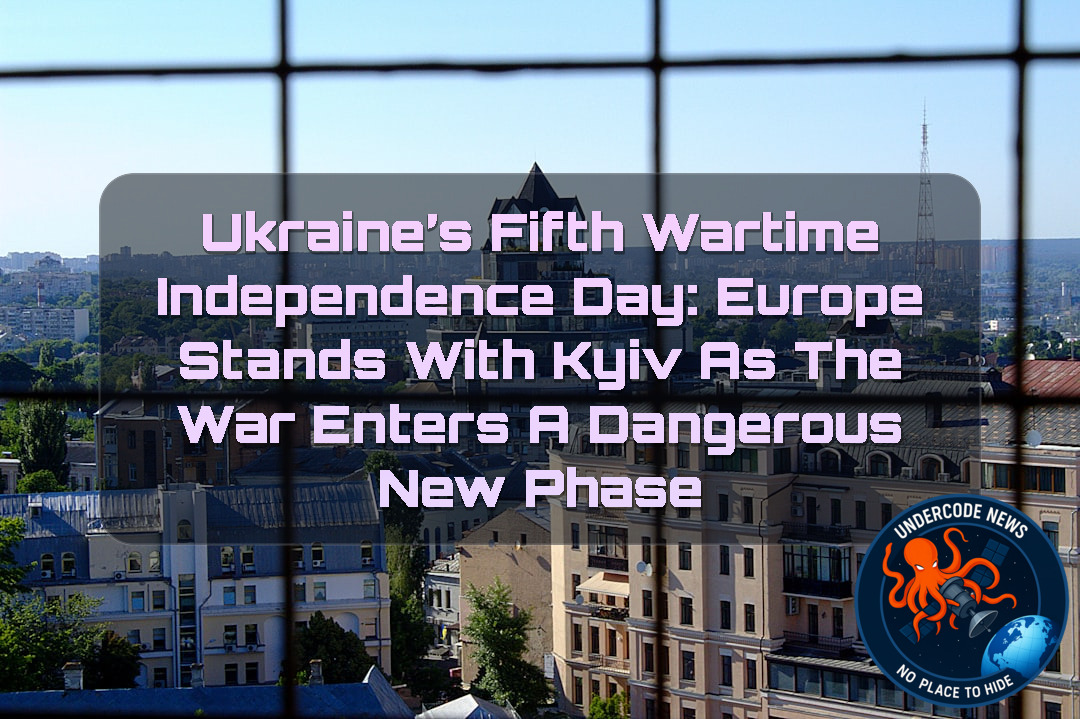
A Defiant Independence Day in Kyiv
Ukraine marked another emotional Independence Day under the shadow of war, with European leaders gathering in Kyiv to stand alongside President Volodymyr Zelenskyy and the Ukrainian people. Five years into the full-scale invasion, the ceremony was less a traditional national celebration and more a powerful demonstration of resistance, sovereignty, and determination.
The presence of senior European officials sent a clear political message: Ukraine’s independence remains a central European issue, and its allies are preparing to support the country through another difficult winter.
Yet the absence of senior representatives from the Trump administration was impossible to ignore. While European leaders traveled to Kyiv, US envoys Steve Witkoff and Jared Kushner stayed away, despite their prominent roles in Washington’s diplomatic engagement surrounding the war.
For Ukraine, the contrast was striking. European governments were physically present in Kyiv, promising continued military and political support at a moment when Russian attacks are intensifying and Ukrainian air defenses are under growing pressure.
Europe Arrives in Kyiv as Ukraine Celebrates Its Survival
European leaders arrived in Kyiv on Monday as Ukraine commemorated 35 years of independence and its fifth Independence Day since Russia launched its full-scale invasion in February 2022.
UK Prime Minister Andy Burnham made his first overseas trip since taking office by traveling to Kyiv, joining European Council President António Costa and other senior European representatives.
French President Emmanuel Macron and German Chancellor Friedrich Merz participated remotely as the leaders coordinated through the Coalition of the Willing, a diplomatic and military framework focused on supporting Ukraine.
The symbolism was particularly important. Kyiv has repeatedly argued that Ukraine’s security is inseparable from Europe’s security, and the presence of European leaders during such a sensitive anniversary reinforced that argument.
A €6.1 Billion European Military Commitment
The European Union announced a new military assistance package worth €6.1 billion, equivalent to roughly $7.1 billion, underlining Europe’s determination to keep supplying Ukraine.
The timing matters enormously.
Ukraine is entering another winter of war while facing intensified Russian missile and drone attacks. Kyiv has warned that its stocks of advanced interceptor missiles are under increasing pressure, making additional air-defense assistance one of its most urgent military requirements.
The new European commitment therefore goes beyond symbolism. It represents an attempt to ensure Ukraine has the weapons and defensive capabilities necessary to continue resisting Russian attacks.
António Costa Sends a Message of Defiance
Speaking alongside Zelenskyy, António Costa praised Ukrainians for their courage and bravery, describing their resistance as an inspiration to the world.
Costa also made
He argued that international law must prevail and that Russia cannot be allowed to succeed through military force.
The European Council president emphasized that the European Union cannot simply remain neutral while international law is being violated. His message reflected a broader European position: supporting Ukraine is not only about defending one country but also about defending the principle that borders cannot be changed by force.
Costa further linked today’s military support to Ukraine’s longer-term European future, reiterating the commitment to Ukraine’s eventual integration into the European Union.
Britain Compares Ukraine’s Resistance to Its Own History
UK Prime Minister Andy Burnham used one of Britain’s most powerful historical references when speaking to Ukrainians.
He compared Ukraine’s struggle against Russia with Britain’s resistance to Nazi Germany during the Second World War, telling Ukrainians that Britain had once kept the flame of European freedom alive and that Ukraine now carries that responsibility in the 21st century.
The comparison was deliberately emotional.
It placed
Burnham also promised further British assistance with
Britain to Support Ukrainian Missile Production
UK Defence Minister Luke Pollard confirmed that Britain will share technology with Ukraine to support domestic production of the long-range SCALP missile.
That announcement could prove strategically significant.
Ukraine has increasingly sought to build its own defense-industrial capacity rather than relying exclusively on weapons supplied from abroad. Domestic production can reduce vulnerability to delays, shortages and changing political circumstances among international partners.
The ability to manufacture more long-range weapons inside Ukraine could also give Kyiv greater flexibility in responding to Russian military pressure.
The Noticeable Absence of Trump Administration Officials
One of the most politically significant details of the Independence Day gathering was not who attended, but who did not.
Steve Witkoff and Jared Kushner, two senior figures involved in the Trump administration’s diplomatic efforts surrounding the war, did not travel to Kyiv.
Their absence attracted attention because there had been speculation that Ukraine’s Independence Day could provide an opportunity for their first visit to the Ukrainian capital in their current roles.
Neither has traveled to Kyiv despite repeated diplomatic contacts with Russian officials and multiple visits by Witkoff to Moscow.
The contrast was particularly visible on a day when European leaders were willing to stand directly beside Zelenskyy.
Former US Officials Still Appeared in Kyiv
The absence of current Trump administration representatives did not mean that all American involvement disappeared from the anniversary.
Former Vice President Mike Pence and Keith Kellogg, Trump’s former special envoy for Ukraine, traveled to Kyiv over the weekend and attended events connected with the anniversary.
Their presence demonstrated that Ukraine continues to maintain relationships across the American political spectrum.
Nevertheless, the difference between former officials appearing in Kyiv and sitting US administration representatives remaining absent was politically meaningful.
Zelenskyy Remembers the Doubts About Ukraine’s Survival
In his Independence Day address, Zelenskyy returned to one of the defining moments of the war: the widespread expectation in early 2022 that Ukraine might not survive the Russian assault.
He recalled how intelligence assessments had questioned whether Ukraine could remain independent and warned that it could potentially fall under Russian influence.
But the predicted collapse never came.
Ukrainian forces resisted the initial Russian offensive, prevented the capture of Kyiv and eventually forced Russian troops to withdraw from northern Ukraine.
Five years into the full-scale invasion, Ukraine remains an independent state.
That fact alone has become one of the central themes of the country’s modern national identity.
Ukraine Refuses to Become a Bargaining Chip
Zelenskyy’s Independence Day message was built around a simple principle: Ukraine’s future cannot be decided without Ukrainians.
He rejected the idea that his country could become a bargaining chip in negotiations between powerful foreign capitals.
That position is especially important as international diplomatic efforts continue to explore potential pathways toward ending the war.
For Kyiv, any peace settlement must preserve Ukraine’s sovereignty rather than simply freeze the consequences of Russia’s invasion.
The Independence Day speech therefore served not only as a celebration but also as a warning that Ukraine will resist any attempt to determine its future without its participation.
The Human Cost Behind the Celebration
There was little room for triumphalism during the anniversary.
Zelenskyy and First Lady Olena Zelenska began the day by honoring Ukrainian soldiers who died defending the country.
The president later presented some of
These ceremonies reflected the enormous price Ukraine has paid for maintaining its independence.
Every year of continued resistance has come with additional casualties, destroyed cities, displaced families and profound psychological trauma.
Independence Day therefore carries a dual meaning in wartime Ukraine: it celebrates survival while remembering those who paid the ultimate price for it.
No Traditional Military Parade
Kyiv did not stage the traditional large-scale military parade through the city.
Instead, Ukraine showcased domestically produced drones and other defense technologies.
That decision reflected the reality of modern warfare.
The Ukrainian battlefield has become increasingly dominated by unmanned systems, electronic warfare, precision weapons, intelligence networks and rapidly evolving military technology.
Displaying drones instead of tanks and ceremonial formations sent a message about what Ukraine believes will determine its ability to survive in the future.
Ukraine’s Drone Revolution
Ukraine’s domestic drone industry has become one of the most important components of its military strategy.
Ukrainian companies and military units have developed increasingly sophisticated unmanned systems for reconnaissance, artillery targeting, battlefield strikes and long-range attacks.
The rapid evolution of this sector has allowed Ukraine to compensate, at least partially, for shortages in conventional weapons.
It has also transformed Ukraine into a major testing ground for modern warfare.
The technologies developed during this conflict could influence military doctrine far beyond Eastern Europe.
Russia Intensifies Its Attacks
The Independence Day celebrations came at an increasingly dangerous point in the war.
Russia has intensified ballistic missile and drone attacks against Ukrainian cities, creating mounting civilian casualties and placing extraordinary pressure on Ukraine’s air-defense network.
The pattern is particularly concerning as winter approaches.
Russia has repeatedly targeted energy infrastructure and other critical systems during previous winters, raising fears that the coming months could once again bring attacks designed to disrupt electricity, heating and basic civilian life.
The Air-Defense Crisis
Ukraine’s most immediate military concern is increasingly clear: it needs more interceptor missiles.
Zelenskyy has warned that deliveries of Patriot interceptors have fallen significantly even as Russian missile attacks have increased.
Kyiv is seeking at least 300 additional interceptors before winter.
That number illustrates the scale of the problem.
Modern air-defense systems are expensive, sophisticated and difficult to manufacture quickly. Ukraine cannot simply replace every interceptor it fires.
Meanwhile, Russia can continue launching drones and missiles in large numbers, forcing Ukrainian defenders to make difficult decisions about which threats receive the most valuable defensive ammunition.
Why Winter Could Become a Turning Point
Winter has repeatedly been used by Russia as an opportunity to attack Ukraine’s energy infrastructure.
The combination of freezing temperatures, electricity shortages and damaged infrastructure can create enormous pressure on civilians even when the military front changes very little.
Ukraine therefore wants to enter the winter with stronger air defenses, larger ammunition reserves and more reliable energy infrastructure.
European governments understand that preventing a humanitarian crisis could also prevent another major wave of displacement across the continent.
Supporting
Europe’s Strategic Calculation
European support for Ukraine is increasingly driven by a calculation that extends beyond the immediate war.
If Russia succeeds in achieving its objectives through military force, European governments fear that the consequences could extend across the continent.
A successful Russian campaign could encourage further territorial aggression, weaken confidence in European security arrangements and undermine the principle that sovereign states have the right to determine their own futures.
For many European leaders, supporting Ukraine is therefore an investment in the broader European security order.
The Question of American Leadership
The absence of senior Trump administration officials in Kyiv highlights a complicated question about America’s future role in the conflict.
Europe has increasingly discussed the need to assume greater responsibility for Ukraine’s security, particularly as uncertainty surrounding long-term US involvement continues.
The United States remains enormously important to Ukraine because of its military capabilities, intelligence resources and diplomatic influence.
But European governments are clearly preparing for a world in which they may have to carry a larger share of the burden.
Ukraine’s EU Future
European leaders also emphasized that
Ukraine wants eventual membership in the European Union, and European officials continue to frame Ukraine’s political and economic future as part of the European project.
EU membership would represent more than an economic opportunity.
For Ukraine, it would provide another layer of political integration with European institutions and reinforce the country’s separation from Moscow’s sphere of influence.
Independence Has Become More Than a Celebration
Ukraine’s Independence Day has changed fundamentally since 2022.
Before the full-scale invasion, the holiday primarily celebrated the country’s sovereignty and history.
Today, it has become a statement of survival.
Every anniversary carries the memory of those who died, the destruction caused by the war and the determination of millions of Ukrainians who continue to insist that their country belongs to them.
The symbolism is impossible to separate from the battlefield.
Deep Analysis
The Real Meaning of the Kyiv Gathering
The gathering of European leaders in Kyiv was carefully symbolic. By physically traveling to the Ukrainian capital, European governments demonstrated that Russia’s attacks have not succeeded in isolating Ukraine from its allies.
Europe Is Preparing for a Longer War
The latest military commitments suggest European governments are increasingly preparing for a prolonged conflict rather than assuming that diplomacy will quickly produce a settlement.
Air Defense Is Becoming the Central Battle
Ukraine can possess advanced aircraft, drones and artillery, but without sufficient air defense, Russian missiles can continue imposing enormous costs on Ukrainian cities and infrastructure.
Patriot Interceptors Are a Strategic Resource
The shortage of Patriot interceptors demonstrates that
Russia’s Missile Strategy Remains Dangerous
Repeated missile and drone attacks can exhaust
Winter Changes the Equation
A successful winter defense could strengthen
Europe’s Military Industry Matters More Than Ever
The long-term question is whether Europe can expand defense production quickly enough to sustain Ukraine while simultaneously rebuilding its own depleted stockpiles.
Domestic Ukrainian Production Is a Major Advantage
Ukraine’s growing defense industry could reduce dependence on foreign deliveries and allow Kyiv to develop weapons specifically suited to its battlefield requirements.
Long-Range Weapons Could Change the Pressure
The British decision to support domestic production of long-range missile technology could give Ukraine greater operational flexibility over time.
Drones Are Redefining Warfare
The decision to showcase drones rather than stage a traditional military parade reflects how rapidly warfare has changed.
Ukraine Has Become a Laboratory for Modern Combat
Unmanned systems, electronic warfare and AI-assisted technologies are being tested and refined at a pace rarely seen in modern military history.
European Unity Is Being Tested
The war has forced European countries to balance political unity, military spending and economic pressures while maintaining support for Ukraine.
The EU’s €6.1 Billion Package Sends a Message
The new European military assistance package demonstrates that financial and military support remains a central pillar of the EU’s Ukraine strategy.
Ukraine’s Sovereignty Is the Core Issue
At the heart of the conflict is the question of whether Ukraine can determine its own political future without being forced into arrangements dictated by another country.
Zelenskyy Rejects a Settlement Without Ukraine
Ukraine’s leadership continues to insist that any negotiations concerning its territory and future must include Ukraine itself.
The Trump Administration’s Absence Matters
The absence of Witkoff and Kushner does not necessarily indicate a collapse in US-Ukraine relations, but it is politically significant given their involvement in diplomatic efforts surrounding the conflict.
Moscow Has Received Greater Diplomatic Attention
Witkoff’s repeated trips to Moscow contrast sharply with the lack of a Kyiv visit, creating a perception that Russia has received greater direct diplomatic engagement.
Europe Wants a Seat at the Table
European governments increasingly want any future peace negotiations to reflect European security interests as well as Ukrainian concerns.
Ukraine’s Independence Is Now a Security Issue for Europe
The survival of Ukraine has become deeply connected to Europe’s understanding of its own security architecture.
A Russian Victory Would Have Wider Consequences
European governments fear that a decisive Russian victory could weaken deterrence and encourage future challenges to the existing international order.
A Frozen Conflict Would Not Automatically End the Danger
Even if large-scale fighting decreases, Ukraine would still face the possibility of renewed Russian military pressure unless a durable security arrangement is established.
Peace and Security Are Different Questions
Ending active fighting would be one achievement. Creating conditions that prevent another invasion would be a much harder challenge.
Ukraine Needs More Than Ammunition
The country also requires economic stability, energy security, infrastructure reconstruction and long-term investment.
The Civilian Dimension Is Critical
Millions of Ukrainians continue to live with the consequences of destroyed homes, disrupted services and constant security threats.
The Energy System Could Become the Next Major Target
As winter approaches, protecting electricity generation and distribution networks could become almost as important as protecting military facilities.
European Energy Support Could Be Crucial
Emergency energy equipment, generators and financial assistance can reduce the impact of Russian strikes on Ukrainian civilians.
Ukraine’s European Integration Is Accelerating
The war has strengthened Ukraine’s political orientation toward the European Union and reduced the space for arguments that Kyiv should remain within Russia’s sphere of influence.
Independence Has Become an Identity
The experience of resisting invasion has strengthened the idea of Ukrainian independence as something actively defended rather than simply historically declared.
Russia Failed to Capture Kyiv
The survival of the Ukrainian capital remains one of the most consequential outcomes of the first phase of the full-scale invasion.
The Initial Russian Strategy Failed
Russia’s early attempt to rapidly overwhelm Ukraine and force a political collapse did not succeed.
But Ukraine Has Not Won the War
Survival should not be confused with victory. Ukraine continues to face enormous military, economic and demographic challenges.
Russia Still Possesses Significant Resources
Moscow retains substantial military capabilities, manpower and industrial capacity, meaning Ukraine cannot assume that the conflict will end simply because the initial Russian campaign failed.
The Balance Depends on Sustained Support
Western military assistance remains one of the most important variables determining Ukraine’s ability to resist future Russian offensives.
The Next Winter Could Be Politically Important
If Ukraine successfully protects its population and infrastructure, European support could become easier to sustain. A severe humanitarian crisis could generate new political pressure.
Ukraine’s Future Will Depend on More Than the Battlefield
The
The Kyiv Ceremony Was a Strategic Signal
The gathering demonstrated that
The Absence of US Officials Creates Uncertainty
The contrast between European attendance and the absence of current Trump administration representatives will likely remain a point of discussion as diplomatic efforts evolve.
Europe Is Increasingly Taking Ownership
The growing willingness of European governments to provide funding, weapons and political guarantees suggests a gradual shift toward greater European responsibility for Ukraine.
Ukraine’s Independence Remains the Central Objective
Ultimately, the anniversary was about one fundamental principle: Ukraine wants to remain a sovereign country capable of choosing its own future.
What Undercode Say:
The most important message from Ukraine’s fifth wartime Independence Day is that the conflict has evolved from a struggle for survival into a much larger contest over Europe’s future security architecture.
The European leaders who traveled to Kyiv were not simply attending a ceremony. Their presence represented a political commitment at a moment when Ukraine’s military needs are increasing and uncertainty surrounding US involvement remains significant.
The €6.1 billion European military package is particularly important because Ukraine’s greatest immediate vulnerability is no longer simply the availability of weapons. It is the ability to sustain defensive operations over a prolonged period.
Air defense illustrates this perfectly. Ukraine may have some of the world’s most capable defensive systems, but advanced interceptors are expensive and difficult to replace. Russia can exploit that reality by launching large waves of drones and missiles and forcing Ukraine to spend valuable defensive ammunition.
The coming winter could therefore become one of the most important periods of the war.
If Ukraine can protect its cities, energy infrastructure and civilian population, it can demonstrate that Russian missile pressure is failing to achieve its strategic objectives.
If Russia succeeds in causing widespread electricity and heating disruptions, however, Moscow could create a humanitarian crisis without needing to make major territorial gains.
The British decision to support Ukrainian production of long-range SCALP missiles also points toward an important future trend: Ukraine increasingly wants to become an independent producer of sophisticated weapons rather than remain entirely dependent on foreign deliveries.
That shift could fundamentally change the strategic equation.
The absence of Steve Witkoff and Jared Kushner is another issue worth watching. Their absence should not automatically be interpreted as a policy decision against Ukraine, but it highlights the different diplomatic approaches emerging between Washington and European capitals.
Europe’s physical presence in Kyiv sends a clear signal that European governments are unwilling to wait for the future of the continent’s security architecture to be determined elsewhere.
At the same time, Ukraine still needs American capabilities, making transatlantic coordination essential.
The most difficult question is therefore not whether Europe supports Ukraine. It clearly does. The bigger question is whether European countries can sustain military assistance at the scale required if the war continues for years.
Ukraine’s survival has already exceeded many predictions made in February 2022.
But survival alone is not enough.
Ukraine needs a credible long-term security arrangement, functioning economy, reconstruction strategy and path toward deeper European integration.
The Independence Day ceremony therefore represented both an achievement and a warning.
Ukraine has preserved its sovereignty despite extraordinary pressure, but its independence remains under active military threat.
For Europe, the lesson is equally clear: the outcome of the war will influence not only Ukraine’s borders but the rules governing security across the continent for decades.
✅ Ukraine did mark its 35th anniversary of independence in 2026, while the date also represented its fifth Independence Day since Russia’s full-scale invasion began in 2022.
✅ European leaders attended events in Kyiv and European institutions announced substantial additional military support for Ukraine, with air defense remaining a major Ukrainian priority.
❌ The article’s reference to “UK Prime Minister Andy Burnham” should be treated cautiously because the identity and officeholder details are time-sensitive and require verification against current official records before publication.
Prediction
(+1) Europe is likely to continue increasing its financial and military support for Ukraine as the country approaches another difficult winter.
(+1) Ukraine’s domestic defense industry is likely to become increasingly important, particularly in drones, long-range strike systems and other technologies that can reduce dependence on foreign deliveries.
(+1) Air defense will remain one of Kyiv’s highest diplomatic priorities, with additional European and potentially American assistance likely to be sought before winter.
(-1) The shortage of advanced interceptor missiles could become one of Ukraine’s most serious vulnerabilities if Russian missile and drone attacks continue at a high tempo.
(-1) Uncertainty surrounding the level of long-term US engagement could create additional pressure on European governments to fill gaps in military and financial assistance.
(+1) Ukraine’s Independence Day is likely to remain an important symbol of national resilience, particularly as Kyiv continues pursuing closer political and economic integration with the European Union.
▶️ Related Video (74% Match):
🕵️📝Let’s dive deep and fact‑check.
🎓 Live Courses & Certifications:
Join Undercode Academy for Verified Certifications
🚀 Request a Custom Project:
Secure, high-velocity infrastructure and disruptive technological engineering. Contact our engineering team for high-tier development and proprietary systems:
[email protected]
💎 Smart Architecture | 🛡️ Secure by Design | ⭐ Trusted by Thousands
References:
Reported By: www.euronews.com
Extra Source Hub (Possible Sources for article):
https://www.medium.com
Wikipedia
OpenAi & Undercode AI
Image Source:
Unsplash
Undercode AI DI v2
🔐JOIN OUR CYBER WORLD [ CVE News • HackMonitor • UndercodeNews ]
📢 Follow UndercodeNews & Stay Tuned:
𝕏 formerly Twitter 🐦 | @ Threads | 🔗 Linkedin | 🦋BlueSky | 🐘Mastodon | 📺Youtube


